How the Russian state and opposition media both manufactured the image of Konstantin Rudnev as a “cult monster.”
by Rosita Šorytė
Article 9 in a series. Read article 1, article 2, article 3, article 4, article 5, article 6, article 7, and article 8.
Introduction
Modern societies often assume that discrimination against religious or spiritual minorities is the product of state policies or police repression. In fact, long before any court intervenes or any government adopts restrictive measures, the media frequently play a decisive role in shaping public perceptions of unfamiliar religious movements. Through sensationalism, selective reporting, and the uncritical repetition of stereotypes, journalists contribute to the construction of an image of certain groups as inherently dangerous, manipulative, or criminal. Once this image has taken root, repression becomes easier to justify, and the victims of prejudice find themselves isolated, stigmatized, and deprived of the presumption of innocence. The media do not merely reflect social fears; they help create them.
In this article, I will examine how Russian media have contributed to the construction of Konstantin Rudnev as the quintessential “evil cult leader” and his organization, “Ashram Shambala,” as the stereotypical “cult.” In the first part, I analyze the attitude of the official Russian media, those that support the Putin regime and have long used anti-cult rhetoric as a tool of social control. In the second part, I turn to leading opposition media outlets, whose political stances are radically different yet whose treatment of Rudnev is strikingly similar. The peculiarity of the Rudnev case is that, unlike on other political and social subjects, the attitude of pro-regime and opposition media is substantially the same. I will conclude by exploring the reasons for this apparently counter-intuitive phenomenon and how it reveals deeper structural biases that transcend ideological divisions.
The Russian media landscape and the “cults”
In contemporary Russia, the “official” media landscape is not an open marketplace of competing narratives but a tightly managed ecosystem in which prosecutors, intelligence services, and religious authorities shape public perception long before any court reaches a verdict. This system is particularly visible in cases involving minority spiritual movements, where the state, the Russian Orthodox Church, and anti-cult activists collaborate to produce a single, unified story: the “cult” as a monstrous threat to society. The case of Konstantin Rudnev and “Ashram Shambala” is a textbook example of how this machinery operates.
Russian media are formally diverse, but in practice, most outlets—national television, regional newspapers, and major online portals—operate within a framework of political loyalty and prosecutorial dependence. In criminal cases, journalists rarely investigate independently. Instead, they repeat narratives provided by the Investigative Committee, the FSB, or local prosecutors. As independent analyses of the Rudnev trial have documented, the court case itself was riddled with contradictions, unreliable witnesses, and procedural irregularities. Yet none of these complexities appear in mainstream coverage.
The Russian media’s role is not to question but to amplify. When the state, the Orthodox Church, and prosecutors decide that a spiritual teacher is a threat (all the more so when this teacher, as Rudnev does, also criticizes the state and the regime), the media machine begins producing stories that portray him as violent, manipulative, sexually deviant, and dangerous. The result is a public consensus formed before any judicial process begins.
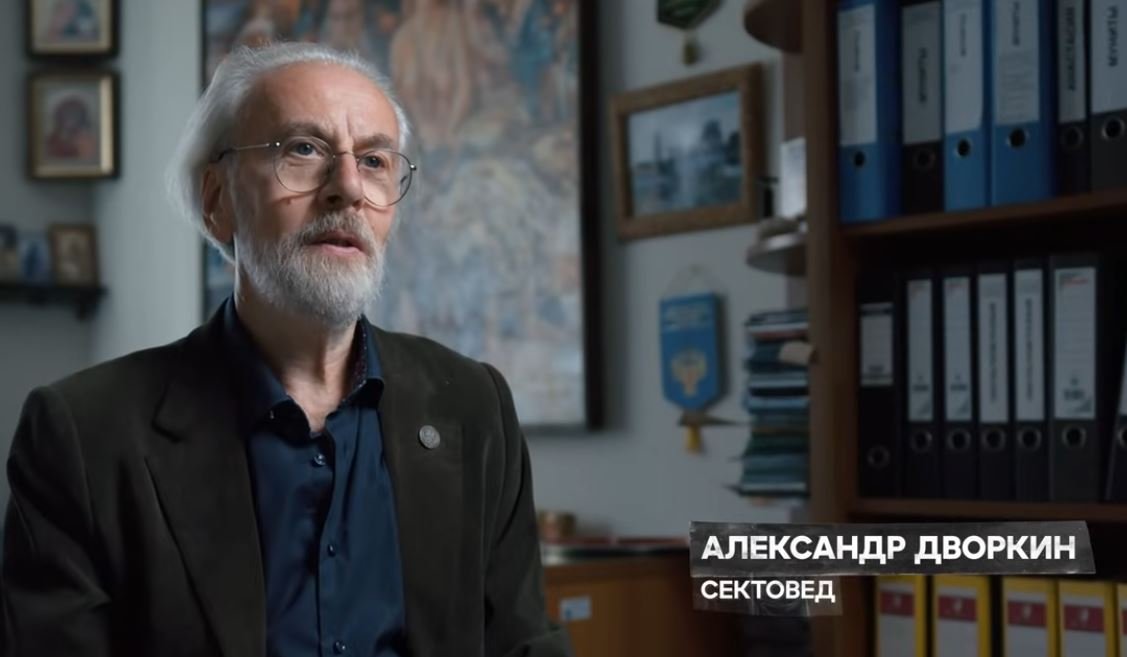
This machinery is reinforced by the Russian Orthodox Church (ROC), which enjoys privileged access to state institutions and media platforms. After a revival following the Soviet Union’s collapse, the ROC began losing members for various reasons. Competition from spiritual minorities was not a main factor. However, the ROC found it easier to blame the “sheep-stealing” by the “cults” than to investigate the deeper reasons for its decline. Anti-cult activists such as Alexander Dvorkin and Alexander Novopashin—both employees of the Church—serve as “experts” in nearly every media report on new religious movements. Their presence ensures that any alternative spirituality is framed as a “totalitarian cult,” regardless of evidence.
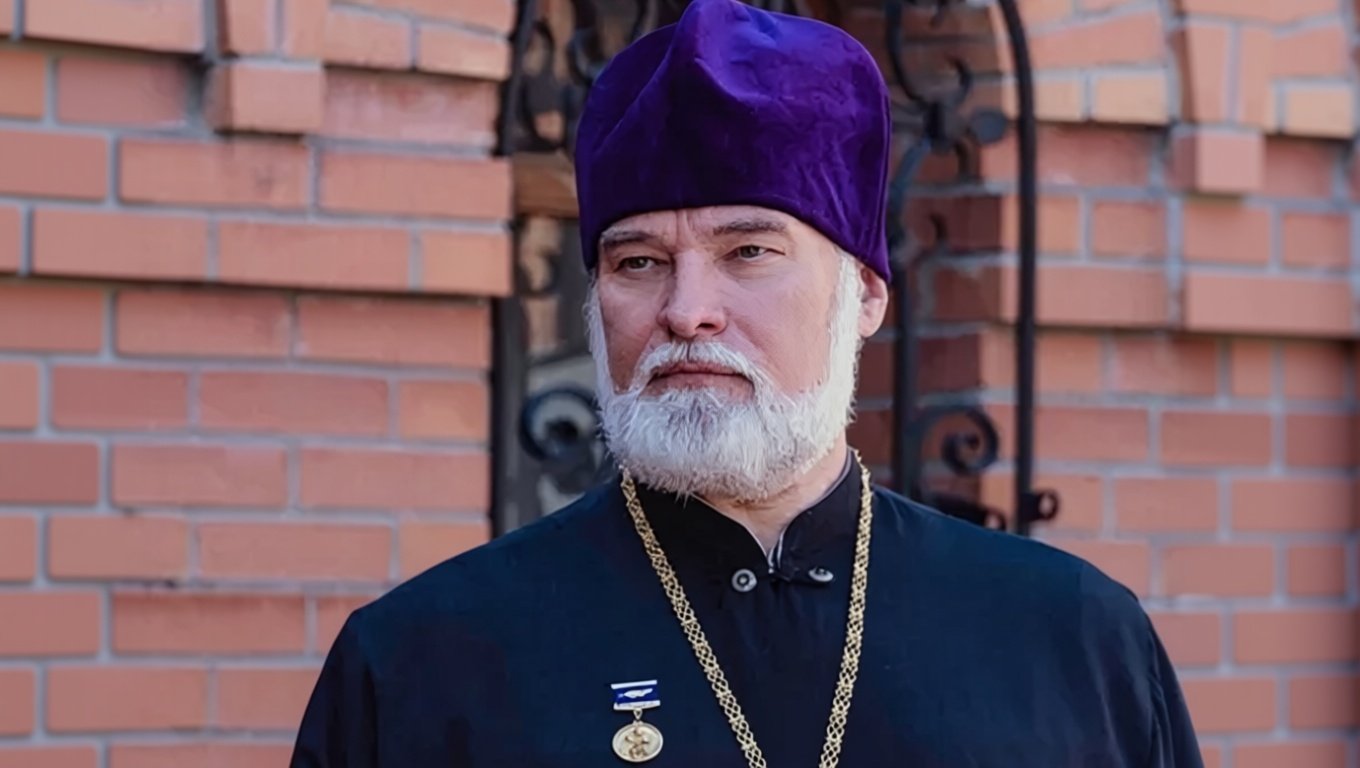
After 2022, Novopashin and Dvorkin became internationally notorious for their support for the war of aggression against Ukraine and their repeated claims that the Ukrainian government was in league with several “cults,” including the Church of Scientology, American Pentecostals, and even Satanists. In fact, their anti-Ukrainian propaganda had started well before. Their attitude and the protests by Ukrainian academics compelled the anti-cult European federation FECRIS, of which Dvorkin had been Vice President between 2009 and 2023, to publicly sever its ties with the Russian branch led by Dvorkin and Novopashin in 2023.
Dvorkin and Novopashin both played key roles in the construction of Rudnev as a public enemy of both the state and the church. Novopashin appeared in several media reports on “Ashram Shambhala” and later claimed that at the time of the investigation that led to Rudnev’s arrest, he “worked alongside investigators, repeatedly witnessing the seizure of evidence from cult members’ apartments,” and deprogrammed some of the “cultists.” This participation of an Orthodox anti-cult priest in the police operation targeting the apartments of the “cult members” is interesting in itself and shows the inextricable ties between the police, intelligence services, anti-cultists and the Orthodox Church in the repression of religious minorities in Russia.
Dvorkin also appeared often in the media, commenting on Rudnev. In 2010, at the time of Rudnev’s arrest, he defined the official line of the governmental media in an interview he gave to “Pravda.ru” on October 7. Dvorkin called “Ashram Shambhala” “one of the most notorious totalitarian cults” and Rudnev “a famous swindler and a conman with a marked sadistic bent.” He then painted a picture of the “cult” aimed at both scaring and titillating the readers. “Adherents of the cult were subjected to severe bullying and participated in collective sexual orgies,” Dvorkin said. “They were tortured, beaten, dipped in the toilet with their heads, their bodies were burned with cigarettes, and their bodies were cut.”
Dvorkin admitted that evidence of these horrific crimes was scarce (and, in fact, even the biased Russian judges later did not make them part of the charges for which Rudnev was sentenced). Members of the alleged “cult” denied that these events ever happened. He had the usual explanation of anti-cult activists: brainwashing. Dvorkin explained that “the will of the sect members was so suppressed that they did not admit that they were victims. So it was very difficult to open a criminal case.”
The pro-regime Russian media’s construction of Rudnev as the “cult monster”
An analytical examination of a sample of articles published in mainline, pro-regime Russian media before and during Rudnev’s trial identifies seven rhetorical themes.
Taken together, they show how the Russian media machine constructs “cult monsters” through a predictable sequence of moves:
Sensationalism
Sexual panic
Occultism and mysticism
Brainwashing and psychological enslavement
Violence, suicides, and death
Financial exploitation
Threat to children and families
The Rudnev case contains all these elements, repeated across dozens of articles and television programs.
First, the case is presented as sensational. Readers are told that it is unique and the manifestation of an extraordinary evil. It deserves their full attention.
Second, the moral panic is framed as sexual panic. The headline of the “Pravda” when Rudnev was arrested was “The Organizer of Occult Orgies Faces Prison.” Readers were duly informed that the group’s rituals included “naked women” and “sex slaves.” Although Rudnev was sentenced for the alleged sexual abuse of one woman—whose testimony changed during the investigation and the trial and was highly problematic—“organizing orgies” was not part of the charges.
Third, to add another even more sensational note, these “orgies” were “occult.” This was the 21st century, not the 16th, yet the ghost of black magic still haunted the media and their audience. While many are fascinated by esotericism and mysticism, they are, by definition, mysterious and thus can also be used to create fear.
Fourth, Dvorkin and the Russian anti-cult movement had both dominated the media narrative about new religious movements for decades and popularized the notion of “brainwashing” as the signature practice of “destructive cults.” Why do people participate in esoteric-occult and sexually deviant groups that no normal person would join? Because they are “brainwashed.” Why do their “victims” deny being victims? Because the “cults” have developed mysterious techniques to control their minds.
Fifth, even if no evidence emerged, the movement and its leaders were connected to suspicious cases of deaths, suicides, and homicides. Already in 2008, the “Komsomolskaya Pravda” had claimed that Rudnev’s “cult members drove at least three people to suicide,” which proved that Rudnev was “the most dangerous cultist in Russia.” No evidence was provided; the claim functioned purely as moral shock. The article may be the source of the story of one “Vladislav Bolshakov,” described as a “cult member” who allegedly “hanged himself in 2002” and “was buried in nearby forest plantations near Rudnev’s cottage in Plotnikovo.” This was presented as a story told by unnamed disgruntled ex-members who “did not remember exactly” the details. It went viral and continues to be repeated, traveling from one medium to another. Yet, the various investigations of Rudnev did not find any buried body nor any evidence that nor any evidence that “Vladislav Bolshakov” hanged himself.
In 2021, however, the lack-of-evidence problem was solved by the popular TNT reality show “Битва экстрасенсов” (“Battle of the Psychics”), a long-running televised competition among self-proclaimed clairvoyants. As reported by a Siberian tabloid, on the show, a Russian psychic, Maxim Levin, a self-styled “Russian sorcerer,” looked at a photograph of Rudnev and pronounced authoritatively, “There are corpses behind him.”
Sixth, as is typical of their coverage of groups stigmatized as “cults,” media reports emphasize money, property, and fraud. Media published lists and images of apartments, cars, and jewelry allegedly connected to the “cult.” Novopashin later claimed that “The investigator who picked Rudnev up on the first night received a very tempting offer from him; as he told me, Rudnev offered him up to a million dollars in hush money.” Again, Rudnev was not charged with attempting to bribe a police officer. Unless the anti-cult priest invented the story, the officer failed to inform the prosecutors. He informed only Novopashin. The same Novopashin reports that when he accompanied the police to raid the apartments of the “cult members,” he found “gold jewelry in a plastic bag” in one of them, as if this were a unique or scandalous detail, or only “cultists” would keep jewels at home.
Seventh, Russian media often portray “cults” as threats to children. They know this danger immediately resonates with their audiences. An anti-Rudnev documentary by the popular television network NTV opens with a mother visiting her son’s grave, reinforcing the narrative of family destruction. Allegedly, the son was a member of Rudnev’s school who committed suicide by jumping from a bridge.
The rhetoric is consistent: “cults” break families, steal children, and destroy parental authority. This aligns with the Russian Orthodox Church’s longstanding position that alternative spiritualities undermine traditional values.
By the time Rudnev was arrested, tried, and sentenced, the public had already been conditioned to view him as a monster. The media had produced hundreds of articles, videos, and television segments portraying him as a sexual predator, occult sorcerer, manipulator, and criminal mastermind. This narrative was not the result of investigative journalism but of a coordinated system in which prosecutors, intelligence services, the Russian Orthodox Church, and anti-cult activists work together to construct “cults” as existential threats.
The Rudnev case demonstrates how easily a spiritual movement can be transformed into a criminal conspiracy through the machinery of state-aligned media. It also shows how difficult it is for courts, scholars, or human rights advocates to challenge a narrative once it has been manufactured.
The media machine does not operate randomly. Rudnev was targeted not only because he founded an independent spiritual movement but also because he criticized the state and the regime. His teachings included elements of anti-authoritarianism, personal autonomy, and rejection of conventional social structures. In a system where spiritual independence is viewed as political dissent, such movements are treated as threats.
Media critical of the regime also target Rudnev
Rudnev, however, is in a very special position, as he has been the victim of media slander twice. He is slandered by the media loyal to the Putin regime. But even anti-regime, dissident media—those critical of the Kremlin—reproduce the same anti-cult narrative and promote the same “experts,” including Alexander Dvorkin and Alexander Novopashin. The monster-making machine is not limited to state propaganda; it has become a cultural reflex.
A few days after Rudnev was liberated from jail in 2021, the secular liberal magazine “Snob” published a series of three articles on the evil of its “cult.” The first told a typical apostate story featuring Elena Zakharova, described as a prominent leader of the “cult” who managed to escape from it. “Apostate” is a technical term used by sociologists to identify the minority of ex-members who turn into crusaders against the group they have left. Most ex-members are not apostates. According to other students I interviewed, Zakharova was indeed a senior student, but she somewhat exaggerated her importance in the accounts she gave after she broke with Rudnev. They also report the break was mostly due to personal reasons, as she expected Rudnev to marry her. When this did not happen, they say, she had the typical reaction of a scorned woman.
The second “Snob” article repeated the usual stories of suicides, orgies, and drug dealings based on early Russian media coverage and on Zakharova’s tall tales. The third article follows Zakharova as she transforms from “cultist” to militant anti-cultist, with a project called “Stopsekta” (Stop the Cult), and features the unavoidable Alexander Dvorkin. Although “Snob” passes for a Westernized magazine, its coverage of the Rudnev case was indistinguishable from state media.
The arrest of Konstantin Rudnev in Argentina in early 2024 produced a wave of Russian media coverage that, at first glance, seemed predictable. State-aligned and specialized anti-cult outlets connected with the Orthodox “cult hunters” repeated the familiar tropes: “cult leader,” “sexual exploitation,” “occult practices,” “dangerous cult.” Yet what was surprising was not the behavior of pro-Kremlin media, which have demonized Rudnev for more than two decades, but the reaction of anti-regime outlets—those that pride themselves on independence, professionalism, and resistance to state propaganda. Among them was “Meduza,” arguably the most respected Russian-language independent news organization in exile, known for its investigative rigor and its consistent criticism of the Putin regime. The “Meduza” coverage of Rudnev’s arrest in Argentina revealed a striking paradox: even anti-regime media, when confronted with unfamiliar religious movements, esoteric groups, or figures stigmatized as “cult leaders,” often reproduce the same narratives as the state.
“Meduza” reporting on the Argentine case is a telling example. The outlet repeated, without critical scrutiny, the most implausible claims made by Argentine prosecutors—claims that would not withstand even minimal journalistic verification. Another dissident outlet, “The Moscow Times,” also reported the same derivative story, mentioning “pseudo-spiritual manipulations” and “extreme control mechanisms.”
One of the allegations was that a Russian woman who had traveled to Argentina to give birth, as thousands do every year to secure Argentine citizenship for their children, had been “trafficked” by Rudnev for “cultic” and sexual purposes and for reorganizing his “cult” there. The story was absurd on its face. The woman was eight months pregnant. The prosecutors’ insinuation that Rudnev required her for sexual exploitation or for organizing a “cult” defies biological reality and common sense. Yet “Meduza” and “The Moscow Times” reported the allegation as fact, without contacting the woman herself, who lives in Moscow. Had they done so, they would have learned what she told investigators and scholars who later interviewed her: she was not trafficked, was not a victim, was not a member of any “cult,” and had never met Rudnev.
In the case of “Meduza,” the reliance on clichés about Rudnev is particularly striking because the outlet normally prides itself on careful sourcing and skepticism toward official narratives. Yet here, confronted with a figure long demonized by Russian media, Meduza reproduced the slander.
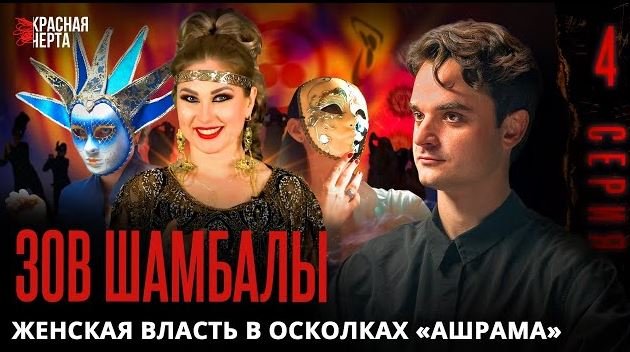
This paradox becomes even more pronounced when we turn to Alexey Pivovarov and his investigative project “Redaktsiya.” In 2025, when Rudnev was arrested in Argentina, he devoted an episode of his program to the case, in which he repeated the usual slander against “Ashram Shambhala” and promoted a documentary series called “Зов Шамбалы” (The Call of Shambhala), released in 2023 by Andrei Lobanov based on his dissertation at the Moscow State Institute of International Relations (MGIMO). Lobanov is interviewed in the “Redaktsiya” video, which acknowledges that “We were helped by Andrei Lobanov, a journalist… who released a major five-part documentary series about the cult.”
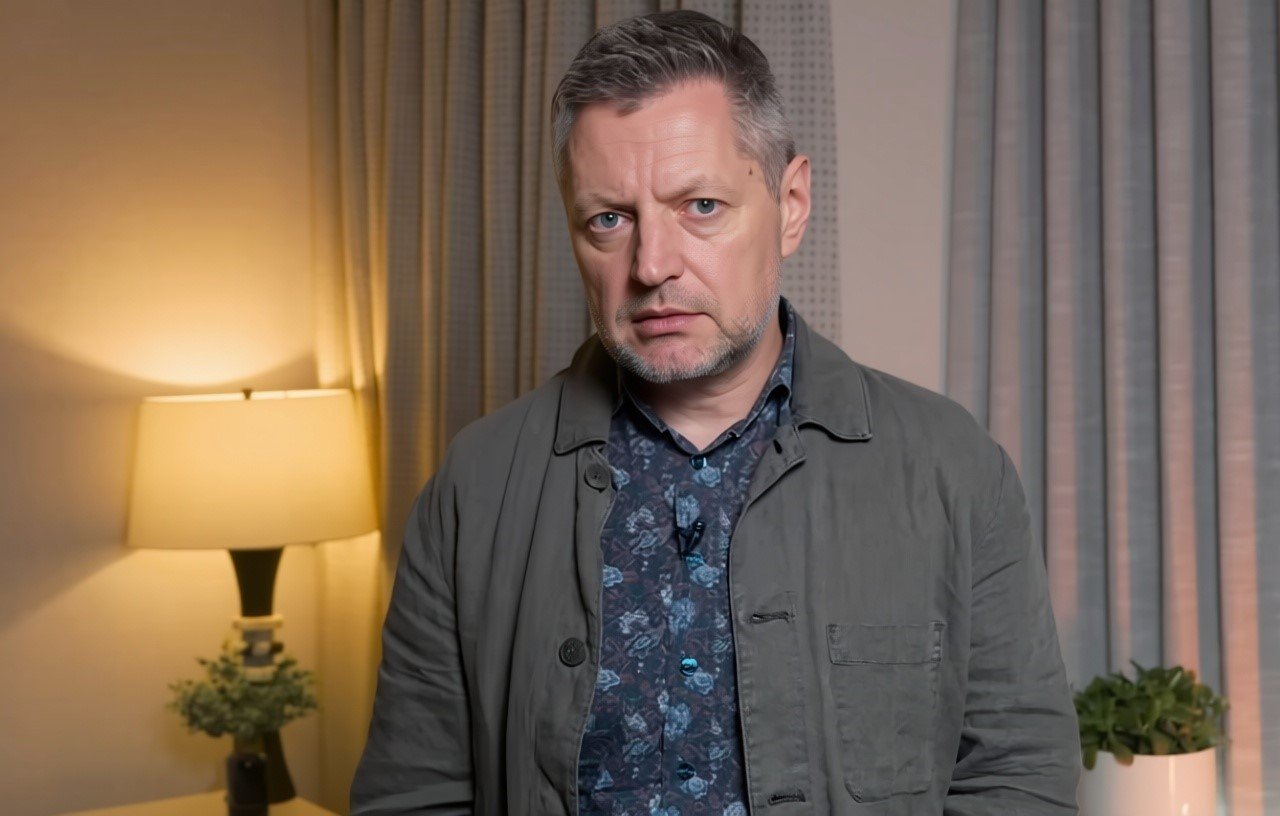
Pivovarov is widely regarded as one of the most influential independent journalists in Russia, a consistent critic of the Putin regime, and a figure whose work is often cited as an example of good investigative journalism. Yet when dealing with Rudnev, Pivovarov adopts the same anti-cult framework as state media. The video shows Lobanov reporting information he received from Alexander Novopashin, a fanatical pro-Kremlin activist and an ardent supporter of the war in Ukraine. Lobanov’s thesis was defended in a university run by the Russian Ministry of Foreign Affairs.
Presumably, Pivovarov would never regard “information” supplied by Novopashin as reliable about Ukraine or even religion in Russia in general. Yet, when it comes to “esoteric cults,” all sorts of unconfirmed statements are reported uncritically. The views of “Redaktsiya” on “cults” are indistinguishable from those of the most extreme state propagandists. The video compares Rudnev’s “cult” to the Japanese terrorist movement Aum Shinrikyo and even to Hitler and Nazism. It repeats familiar accusations of “brainwashing” and atrocity stories by disgruntled ex-members. It reports the story of Rudnev’s arrest in Argentina based exclusively on the prosecutors’ statements. It even claims that in the hospital incident “the young mother was rescued from the cult,” ignoring that the mother emphatically declared that she was not a “victim” nor a member of any “cult” and did not need to be “rescued.”
Pivovarov’s show concludes by lamenting that laws are not effective enough to crack down on “cults” and that such groups typically resist persecution. Yet, if leaders are kept in jail and a significant number of people are arrested, “then a truly severe blow could be dealt to the organization.. At least, that’s what I really hope for.” Coming from a “liberal” media outlet, such statements are surprising.
By giving him a prominent role in a “Redaktsiya” episode. Pivovarov also legitimizes Lobanov and the series “The Call of Shambhala.” Lobanov’s videos present a crude anti-cult perspective and follow a predictable pattern. The first episode introduces Ashram Shambala through the lens of sensationalist allegations, relying heavily on unverified testimony and recycled media narratives. The second episode focuses on coaching, manipulation, and psychological influence (in fact, “brainwashing”), but again without distinguishing between evidence and rumor. The third episode, where Novopashin and Dvorkin appear, presents them as experts on “cults” and allows them to repeat the same anti-cult rhetoric they have used for decades. The last episodes attempt to draw broader conclusions about esoteric movements in Russia, but ultimately reinforce the same stereotypes.
While known for his contempt for the United States, Dvorkin offers a pop-psychology model in “The Call of Shambhala” to identify dangerous “cults,” one that imitates those of Steven Hassan and other American anti-cultists. We learn that the most dangerous “cults” share “five traits: deception during recruitment, manipulation of members’ minds, regulation of all aspects of their lives—that is, totalitarianism—exploitation of members, and the deification of the leader or the organization.” Of course, a malevolent observer may find these traits in several religions, including the Russian Orthodox Church. Dvorkin then applies this model to the Rudnev case: “As for Ashram Shambhala, everything there is just so rigid, so exposed—all the methods of mind manipulation, mind control, and suppression of individuality are so blatantly on display—that you could practically present it as a textbook example of a cult.”
What is most striking is the crude repetition of anti-cult rhetoric throughout both Lobanov’s series and the “Redaktsiya” episode. The language—“manipulation,” “mind control,” “total obedience,” “dangerous cult”—is identical to that used by state media, anti-cult activists, and Orthodox clerical commentators. The series and the episode do not present new evidence, nor do they critically examine the sources of these claims. Instead, they reproduce the narrative constructed around Rudnev since the late 1990s, one that originated in state media campaigns and was later amplified by anti-cult organizations. That Pivovarov does not question the sources and does not realize that theories of “cultic brainwashing” have been discredited for decades as pseudo-scientific by scholars of new religious movements is more than surprising. It raises the question of why anti-Putin media may adopt the same attitude toward Rudnev as pro-Putin media do.
The answer is complex and reveals deep structural features of the Russian media landscape. One explanation is that when it comes to unfamiliar religions and esoteric groups, journalists—regardless of their political orientation—tend to rely on the anti-cult ideology they internalized before becoming dissidents. Many independent journalists began their careers in state-aligned media, where they absorbed the anti-cult framework that has dominated Russian coverage of minority religions since the 1990s. Even after they became critics of the regime, they retained these assumptions that were deeply ingrained in the minds of most Russians, not just journalists.
A second explanation is that some dissidents are not dissidents against the cultural values promoted by the Russian Orthodox Church. They may oppose the political regime, but they share the Church’s suspicion of “non-traditional” religions, esoteric movements, and spiritual teachers. In this sense, anti-regime journalists may diverge from the Kremlin on political matters but converge somewhat with it on certain cultural ones. The anti-cult ideology is not perceived as political and is taken for granted.
But in cases such as “Meduza” and Pivovarov, the main explanation is probably another one. These journalists live in two ecosystems: the Russian media and the international media. They admire Western mainstream media and often draw inspiration from it. Yet Western media have their own well-documented bias against groups stigmatized as “cults.” The “New York Times” coverage of Falun Gong has sometimes mirrored Chinese state narratives. The BBC and other mainstream outlets have treated Scientology with the same hostility found in Russian media, where it is classified as an “undesirable organization.” I have published reviews of a BBC podcast on a Tantric group, a French state television “documentary” on Scientology, and the Lithuanian media’s coverage of a book used to criticize Jehovah’s Witnesses. They all conform to the same model of “The Call of Shambhala.” “Apostate” ex-members and anti-cultists are used as sources, ignoring the voices of actual members and independent scholars.
The reasons for this bias—ranging from secularist assumptions to the influence of anti-cult lobbies—have been studied extensively and need not be analyzed in depth here. What matters is that the bias exists, and that Russian anti-regime media, in imitating Western media, also imitate their anti-cult bias.
One aspect that Russian dissident journalists ignore is that the anti-cult rhetoric prevalent in Western media is, in turn, influenced by Russian sources. As the U.S. Commission for International Religious Freedom (USCIRF) noted in a 2020 report, during his long tenure as Vice President of FECRIS, Dvorkin exported arguments against the “cults” developed within the Russian Orthodox Church and Russian state institutions to the West. Through FECRIS’ lobbying activities, these arguments then penetrated the very Western media that Russian dissidents such as Pivovarov look to as models.
It can be objected that Russian journalists critical of the regime sometimes denounce the repression of Jehovah’s Witnesses and Protestant groups. But so do Western mainline media, though not always or uniformly. The Jehovah’s Witnesses are a large, well-known organization, and the lies about them spread by the Russian regime are so extreme that in the West only the most enraged anti-cultists would support their repression in Russia. Evangelicals and Pentecostals persecuted in Russia may not be popular among Western anti-cultists, but they have their own lobbies with some capacity to influence the media. But when Russia cracks down on small, unfamiliar esoteric groups with teachings that appear “strange,” both Western media and the Russian dissident media that emulate them revert to the “cult” rhetoric—precisely the rhetoric used by the Putin regime and the Russian Orthodox Church.
This convergence has serious consequences. As the Argentine case demonstrates, articles published in Russia—especially those published by anti-Putin dissidents, who cannot be accused of serving the regime—are weaponized abroad. Argentine prosecutors cited Russian media coverage to justify Rudnev’s detention, including articles from outlets that oppose the Kremlin. The paradox is that anti-regime media, by repeating the same slander as state media, inadvertently further the aims of the Russian regime, which is engaged in the transnational persecution of its dissidents.
The demonization of Rudnev, constructed in Russia and reproduced by both pro-regime and anti-regime outlets, has now become part of an international narrative that affects his treatment in Argentina. The attack on Rudnev has also served as a model to slander and prosecute other groups accused of “spiritual abuse.”
The case of Konstantin Rudnev thus reveals a deeper problem: the anti-cult ideology is not confined to authoritarian regimes. It is a global phenomenon, present in both state and independent media, in both authoritarian and democratic societies. In Russia, this ideology crosses political boundaries, uniting pro-Kremlin propagandists and anti-regime journalists in a shared hostility toward minority religions. In the international arena, it allows foreign authorities to weaponize Russian media narratives. The result is a transnational system of persecution that transcends political divisions and is sustained by a shared cultural bias against unfamiliar spiritual movements.
The paradox is therefore not merely Russian. It is global. And the case of Rudnev shows how easily media narratives, once constructed, can travel across borders, be adopted by actors with different political agendas, and produce real consequences for individuals caught in their path.

Rosita Šorytė was born on September 2, 1965 in Lithuania. In 1988, she graduated from the University of Vilnius in French Language and Literature. In 1994, she got her diploma in international relations from the Institut International d’Administration Publique in Paris.
In 1992, Rosita Šorytė joined the Ministry of Foreign Affairs of Lithuania. She has been posted to the Permanent Mission of Lithuania to UNESCO (Paris, 1994-1996), to the Permanent Mission of Lithuania to the Council of Europe (Strasbourg, 1996-1998), and was Minister Counselor at the Permanent Mission of Lithuania to the United Nations in 2014-2017, where she had already worked in 2003-2006. In 2011, she worked as the representative of the Lithuanian Chairmanship of the OSCE (Organization for Security and Cooperation in Europe) at the Office for Democratic Institutions and Human Rights (Warsaw). In 2013, she chaired the European Union Working Group on Humanitarian Aid on behalf of the Lithuanian pro tempore presidency of the European Union. As a diplomat, she specialized in disarmament, humanitarian aid and peacekeeping issues, with a special interest in the Middle East and religious persecution and discrimination in the area. She also served in elections observation missions in Bosnia and Herzegovina, Georgia, Belarus, Burundi, and Senegal.
Her personal interests, outside of international relations and humanitarian aid, include spirituality, world religions, and art. She takes a special interest in refugees escaping their countries due to religious persecution and is co-founder and President of ORLIR, the International Observatory of Religious Liberty of Refugees. She is the author, inter alia, of “Religious Persecution, Refugees, and Right of Asylum,” The Journal of CESNUR, 2(1), 2018, 78–99.
Languages (fluent): Lithuanian, English, French, Russian.