A Buddhism specialist ventures into the study of new religious movements. She caricatures an entire field and forgets a whole category of survivors.
by Massimo Introvigne
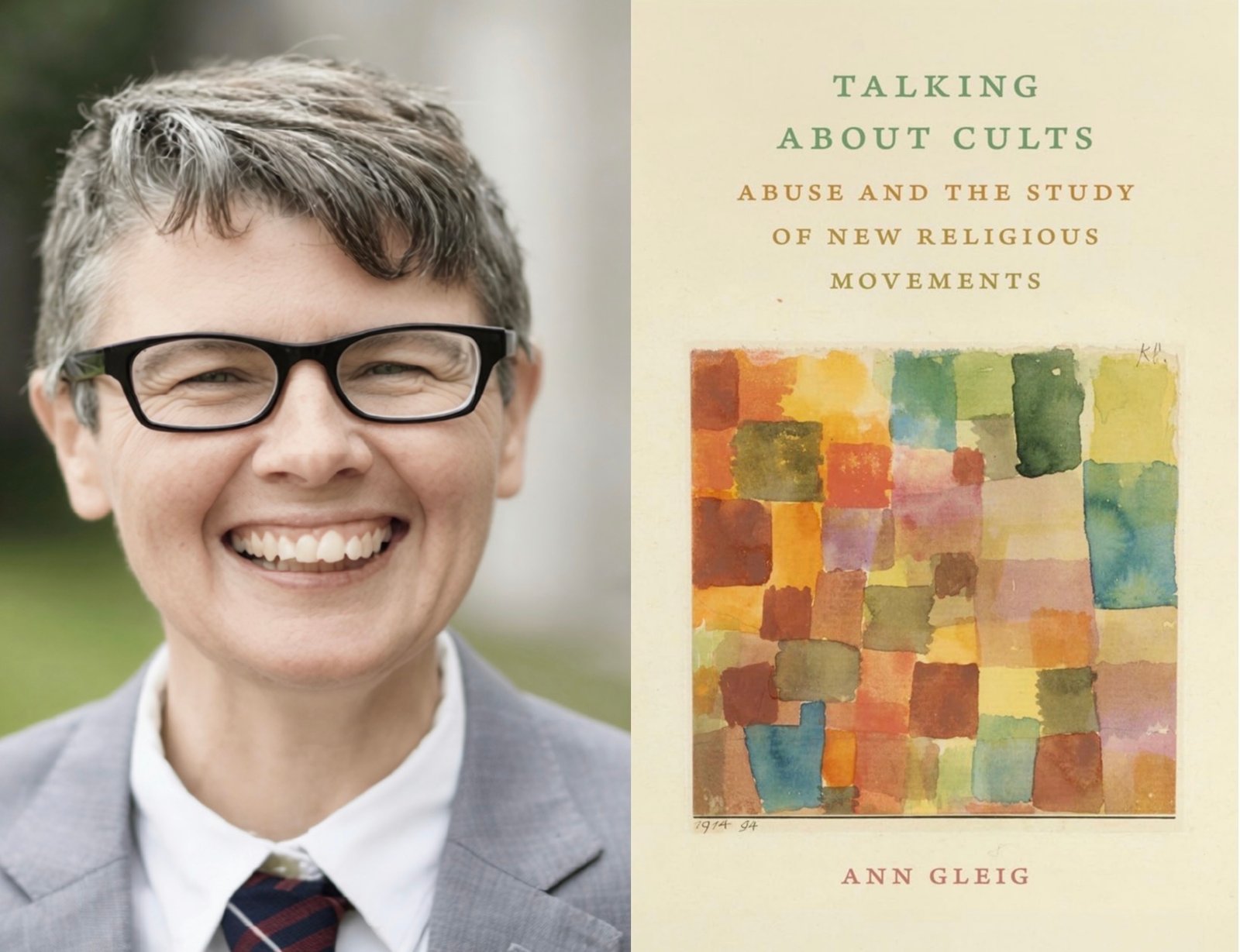
News that Ann Gleig, a scholar of Buddhism, was preparing a book on scholars of new religious movements and on abuses in groups labeled as “cults” filled me with a certain apprehension. Her Facebook vituperations against scholars who, in her opinion, “defend” abusive “cults” had been both insulting and based on a limited acquaintance with the topics she was discussing. Opening “Talking About Cults: Abuse and the Study of New Religious Movements” (Athens: University of Georgia Press, 2026), I felt my worst fears were about to be confirmed. The book begins with an approving quote from an article by Be Scofield, an anti-cult crusader who sources some of her information about “cults” from aliens, angelic messengers, and the “akashic records.” Hardly the most reassuring overture for a volume aspiring to academic respectability.
It would be pointless to object that Scofield’s “private life” should be kept separate from her anti-cult writings. In her self-published 2022 autobiography, “Hunting Lucifer: One Reporter’s Search for Cults and Demons,” she explains that her reliance on paranormal sources belongs to the very method she uses to investigate “cults.” Calling it a private hobby would misrepresent her own account. Equally unconvincing would be the argument that the spirits and aliens stay politely offstage in Scofield’s web articles and only make their entrance in a printed autobiography one has to buy. Scholars are supposed to read beyond the free content.
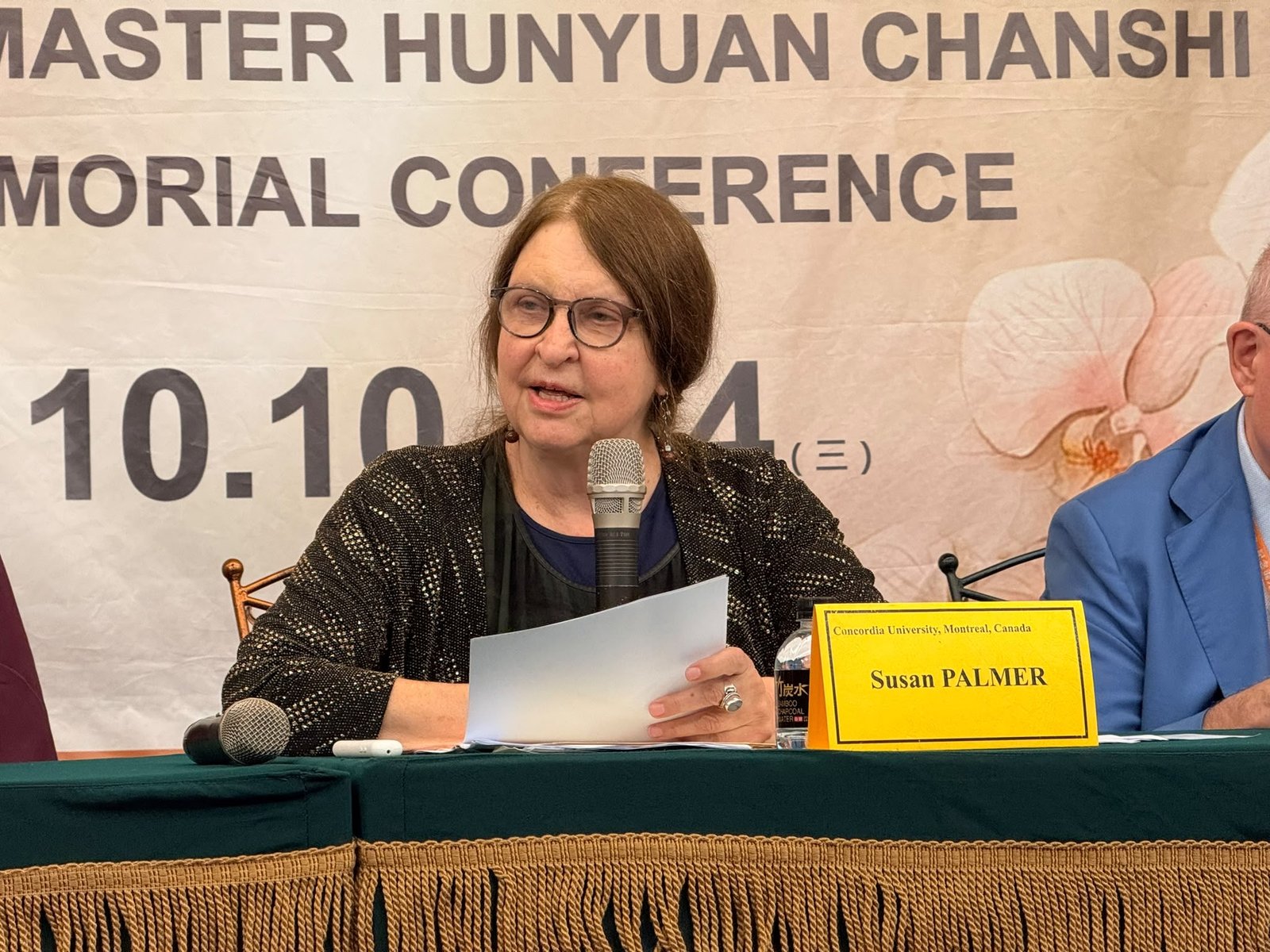
Scofield is no isolated case. Gleig’s book often relies on tainted sources, including the diatribe against scholars of new religious movements by Israeli psychologist Benjamin Beit-Hallahmi, whose factual errors and “bizarre argumentations” several academic reviews have noted, most recently one by Susan Palmer. Gleig intensely dislikes Palmer. Antipathies are a private matter, yet a scholar who quotes Beit-Hallahmi should also examine rebuttals to his work.
As the pages turn, however, the book reveals itself to be more balanced, or at least less unbalanced, than Gleig’s Facebook antics and her odd decision to open it with Be Scofield might have suggested. Gleig distances herself from Steven Hassan’s most paranoid conspiracy theories. She concedes that scholars of new religious movements (NRMs) have a point in regarding the cavalier use of the word “cult” as dangerous for religious liberty, and she rightly recognizes that this is the “consensus position” shared by an overwhelming majority of NRM scholars. She also knows that the claim of some anti-cultists to be supported by “many” scholars is both false and futile.
Gleig is a scholar of Buddhism (and Hinduism) whose knowledge of new religious movements is limited. The most interesting part of her book, and the one where she moves more comfortably, is her discussion of abuse in Buddhist communities. I found this section valuable, yet it leaves a question unanswered. Gleig notes that the word “cult” and the paradigm of “cultic studies” (i.e., the paradigm adopted by the tiny minority of scholars who support the anti-cult position) had a therapeutic effect on the victims of abuse she interviewed. The question is whether this language, which has the negative effect of supporting and empowering discrimination and violations of religious liberty, is necessary.
I have no experience of survivors of abuse in Buddhist groups. I have, however, sat on panels and commissions that investigated the sexual abuse of minors by Catholic priests, three of them set up by Catholic institutions and one by a secular body, the Council of Europe. Alongside horrible stories of abuse and cover-up, these commissions heard of valuable experiences that accompanied victims on a path to healing and recovery. In the Catholic context, these experiences did so without the notion of “cult” and the “cultic studies” paradigm altogether, and in some cases they worked. References to “cults” and their accompanying vocabulary may perhaps help in some cases. They are hardly indispensable, and other roads to helping victims do exist.
Gleig summarizes the consensus among NRM scholars in six propositions that, she believes, define the whole academic field of NRM studies. In her account, the field was born as a reaction to “cultic studies.” This is only partially accurate. Scholars such as J. Gordon Melton had started mapping NRMs well before the “cult wars,” and in countries such as Japan or Italy surveys of NRMs predated the emergence of any anti-cult movement. Proposition 1, that “‘cult’ is a biased, subjective and stigmatizing term,” is indeed shared by NRM scholars, and Gleig recognizes that they have a point. The other five propositions, however, amount to a caricature of the academic consensus.
Gleig’s proposition 2 is that “abuse allegations in NRMs are simply ‘atrocity tales’ and should be discredited.” That NRM scholars hold this position is demonstrably false. Gleig mentions the case of the Children of God, yet the very scholars she criticizes never denied that serious abuses took place there, and they helped the movement reform itself and amend its by-laws and policies, in cooperation with a British judge. Any unbiased reader browsing the World Religions and Spirituality Project, a cooperative online database to which most of the scholars Gleig denounces have contributed, would find that abuse allegations, wherever they exist, are examined and discussed in the relevant profiles. Susan Palmer’s review of Beit-Hallahmi’s book usefully reminds readers that scholars, Palmer herself included, denounced criminal behavior in Osho’s Rajneeshpuram. True, scholars do not “always” accept allegations of abuse. Neither do courts of law. Many allegations are true, and some are false. I know of no scholar who believes that they are all false and “should be discredited.” Each should be examined on a case-by-case basis.
NRM scholars’ proposition 3, according to Gleig, is that all “ex-members, or ‘apostates,’ are manipulative and unreliable.” The first and fundamental fallacy hides in the innocent-looking “or” before “apostates,” which suggests that Gleig regards “ex-members” and “apostates” as synonyms. They are anything but. From David Bromley to George Chryssides, NRM scholars have demonstrated through quantitative research that the two are very different concepts. They call “apostates” the tiny minority of ex-members who decide to devote most of their time to attacking the religious organizations they have left. Many ex-members simply get on with their lives and have no interest in promoting or supporting crusades against their former religions.
As others did before her, Gleig quotes a polemical dismissal of “apostates” by the late Bryan Wilson, a giant of sociology whose contribution to the study of NRMs cannot be reduced to that single, admittedly unfortunate, quote. Most NRM scholars certainly do not dismiss all “apostates” (let alone all “ex-members”) as “unreliable.” “Apostates” are reliable witnesses of their own feelings, which deserve to be taken seriously. As sources of information about the religion they have left, their reliability is a different story. Their accounts should be studied, and J. Gordon Melton, an NRM scholar Gleig criticizes, has assembled the largest collection and bibliography of their reports. Studying them, however, differs from swallowing them whole. They should be compared with the accounts of ex-members who did not become “apostates,” of current members, and of outside observers.
Proposition 4 is that “NRMs are more the victims than the perpetrators of violence.” I do not know which quantitative studies Gleig has in mind. In any case, NRMs fall into very different categories. Africa offers examples of large-scale violence perpetrated by NRMs, such as the Movement for the Restoration of the Ten Commandments of God, a fringe Catholic movement in Uganda, and Good News International Ministries, a fringe Evangelical movement in Kenya. Yet the history of colonialism on that same continent is full of instances of brutal repression of NRMs by colonial powers, with thousands of casualties, from the Kimbanguists in the Belgian Congo to the 1921 Bulhoek massacre of the Israelites sect in the Cape, under British rule in South Africa. In China, as Hong Kong scholar David Palmer reports, the police arrested several million Yiguandao members in the 1950s, and those executed probably numbered in the tens of thousands. More recently, Falun Gong practitioners and members of The Church of Almighty God executed or killed extra-judicially in China also number in the thousands.
Even away from these tragedies, NRMs often find themselves on the receiving end of violence. International bodies, including the United Nations, have denounced the high number of deprogramming incidents in South Korea and Japan—a practice Gleig does not approve of, although she gives voice to some who defend or minimize it. Other NRMs have also been targeted, but there were more than 4,000 Unification Church victims of deprogramming in Japan and more than 2,000 Shincheonji victims in Korea. NRM scholars and court decisions alike have described victims who were badly beaten, humiliated, and sexually molested during deprogramming. In Korea, in 2018, Shincheonji member Gu Ji-in suffocated after being bound and gagged during a deprogramming and was declared brain-dead shortly after being taken to the hospital. Her death sparked international criticism and a massive street demonstration in Seoul, whose participants outnumbered the entire membership of Shincheonji.
Gleig criticizes the coverage by “Bitter Winter” of Christian Gospel Mission (CGM, or Providence), a group whose leader, President Jung Myung-seok, has been sentenced to heavy prison terms for sexual abuse. Our articles never claimed that Jung was innocent; they called attention to the discrimination and violence directed against members of his church who were accused of no crime. After Netflix aired two sensational documentaries on CGM, many members lost their jobs or were bullied at work or in school. In Taiwan, in the wake of lurid TV exposés of Christian Gospel Mission, a college professor, Li Wei-Bang, who is a member of the church, was assaulted by a man who split his head open with a hammer. He barely survived and presented his testimony at the CESNUR 2026 conference in Taiwan.

The point matters, because Gleig presents the “cultic studies” (anti-cult) perspective as “survivor-oriented” and mainline NRM scholarship as ignoring the “survivors.” What about the Taiwanese professor, then, those who suffer discrimination because the media call their religion a “cult,” or the thousands of victims traumatized by deprogrammings that failed yet were violent all the same? Are they second-class survivors?
None of this means that NRMs never perpetrate violence. They do. Invited in 2018 to guest-edit a special issue of the “Journal of Religion and Violence” on “New Religious Movements and Violence,” I proposed a typology and invited scholars to study crimes committed both “by” NRMs and “against” them. Gleig is particularly concerned about sexual abuse, and one of the scholars she attacks for his criticism of the anti-cult movement is the late Anson Shupe. Readers of Shupe’s voluminous production on “bad pastors” and “clergy malfeasance” know that he never denied the presence of sexual abuse in NRMs, and in fact documented it. His argument was that sexual abuse does not distinguish “bad” “cults” from good “religions,” since sexual predators are equally present, and in many cases more present, in mainline religions than in NRMs, in absolute numbers as well as in percentage.
Gleig’s proposition 5 is that “the anti-cult movement is a vehicle of normative Christian or state power and a threat to religious freedom.” This is another gross oversimplification. NRM scholars distinguish between a Christian “counter-cult” movement and a secular “anti-cult” movement (I may have been the first to introduce this distinction, in the early 1990s). Only the former is “a vehicle of normative Christian power.” The secular anti-cult movement is often hostile to Christianity, particularly to its conservative expressions. Nor is there a single anti-cult movement. Different countries have different models, and some of them are radically individualistic, with little interest in promoting normative state or Church power. That “some” anti-cult movements are a threat to religious freedom is certainly true, and institutions such as the bipartisan U.S. Commission on International Religious Freedom have denounced it.
Finally, Gleig’s proposition 6 maintains that NRM scholars believe they “should defend NRMs on both an intellectual and legal level.” This is an old accusation against “cult apologists,” advanced by “cultic studies” scholars such as Stephen Kent, whom Gleig quotes as blaming NRM scholars who sometimes serve as expert witnesses for the defense of NRMs. The implication seems to be that serving as an expert witness is inherently unethical. It isn’t. Professional associations of scholars worldwide have rules that allow their members to serve in this capacity and regulate how they do it. The objection also conveniently forgets that “cultic studies” scholars, Kent included, regularly serve as expert witnesses for anti-cult organizations and causes, and command high honoraria for their services. Some “cultic studies” scholars have even served as expert witnesses for organizations accused of involvement in deprogramming.
Gleig is probably also unaware that NRM scholars have served as witnesses for the prosecution against religious and esoteric movements. In Italy, I am perhaps better known for my work as an expert witness for the prosecution on the possible involvement of esoteric movements in the serial homicides of the so-called “Monster of Florence” than for any other legal case I have been involved in. To this very day, I am occasionally summoned to discuss the case before parliamentary commissions.
Gleig declares herself willing to open a dialogue with NRM scholars, particularly with a new generation eager to take “apostates” more seriously and to engage with concepts such as “spiritual abuse” and “coercive control.” “Timeo Danaos et dona ferentes,” Virgil’s Laocoön warned the Trojans, and these young scholars would be well advised to unwrap Gleig’s gift carefully and check what is inside before wheeling it within their walls. The danger is that the gift horse turns out to be the dead horse of the old anti-cult mythology of brainwashing, revived under new names while its sponsors vehemently deny that anything of the sort is happening.
Coercive control was conceived for the domestic sphere. Extending it to religious movements, where a leader—or, say, the Governing Body of Jehovah’s Witnesses—is believed capable of exerting on thousands or even millions of followers the same violence an abusive husband exerts on his wife, is only possible by returning to the old idea that these “cult” leaders command mysterious techniques of “mind control.” Gleig’s objection that there are thousands of cases of coercive control within families does not prove that the category may be extended to religious organizations. “Spiritual abuse,” as I and others have argued, may be a valid concept that churches can use at a pastoral level to deal with authoritarian or inadequate priests or leaders. Converting it into a legal category and using it in criminal prosecutions is extremely problematic.
All things considered, while some parts of Gleig’s book may serve as a starting point for discussion, she downplays or overlooks three main points. First, any “survivor-oriented” approach should also consider those members of NRMs who are survivors of violence, deprogramming, and discrimination. Second, all NRM scholars are not created equal, and her six propositions build a straw-man caricature. Some of them are shared by “some” NRM scholars only, others by few, and some by none at all (if there are scholars who deny that abuses occur in “some” NRMs, I have never met one).
Third, one major difference between mainline NRM studies and “cultic studies” is methodological. The works of NRM scholars, at least those that survive the severe peer review of the best journals and academic presses, do not limit themselves to a few press clippings or to the accounts of “apostates” (or of happy members). NRM scholars know that each NRM is different and requires hours of study to be understood. What frustrates them in “cultic studies” is that its products are rarely based on such toil, although a few commendable exceptions exist. Gleig herself, who no doubt does her homework in her own field of Buddhist studies, offers an example of this attitude in her book, and even more so when she jumps to conclusions in her heated Facebook debates.
One egregious example is the OneTaste case, on which she again vituperated against NRM scholars on Facebook. Different opinions on OneTaste may, of course, legitimately exist. My point concerns method. Before writing on OneTaste, Argentine scholar María Vardé (whose doctoral dissertation I am co-supervising) and I interviewed a good number of members, ex-members, and others involved in the history of the organization, and read several thousand pages of the founder’s writings, internal manuals, court records, and all the anti-cult and apostate accounts we were able to identify. We were therefore a little upset to see Gleig, like others, attack scholars on OneTaste on the strength of press clippings, a court decision she had obviously not read, and the fact that among the many legal scholars of all political persuasions who criticized the OneTaste decision as a dangerous precedent was Alan Dershowitz (whom I have never met except online, at a web event where we both discussed OneTaste). Gleig commented that Dershowitz had defended Donald Trump “and is an ardent supporter of Israel. NRM scholars on the right side of history again!”
Unfortunately, the example is not isolated. Only by replacing this kind of diatribe and name-calling with proper homework will the dialogue Gleig calls for become possible. Dialogue, after all, begins with reading what the other side has actually written.
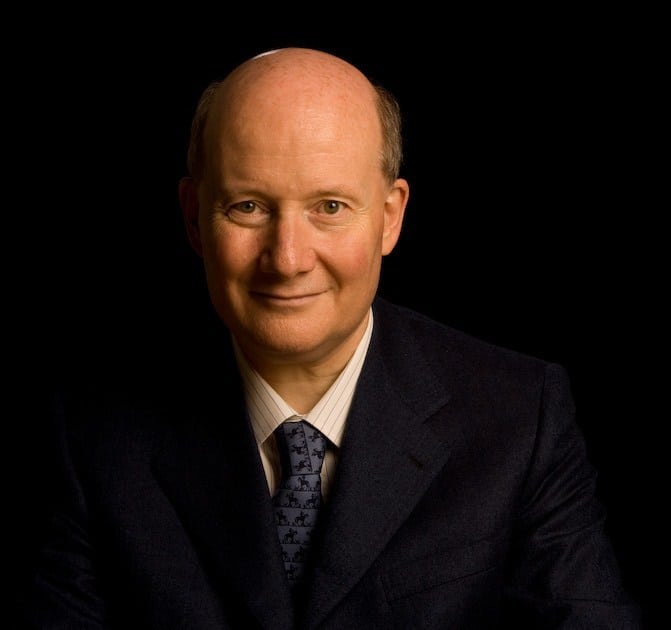
Massimo Introvigne (born June 14, 1955 in Rome) is an Italian sociologist of religions. He is the founder and managing director of the Center for Studies on New Religions (CESNUR), an international network of scholars who study new religious movements. Introvigne is the author of some 70 books and more than 100 articles in the field of sociology of religion. He was the main author of the Enciclopedia delle religioni in Italia (Encyclopedia of Religions in Italy). He is a member of the editorial board for the Interdisciplinary Journal of Research on Religion and of the executive board of University of Pennsylvania Press’ Nova Religio. From January 5 to December 31, 2011, he has served as the “Representative on combating racism, xenophobia and discrimination, with a special focus on discrimination against Christians and members of other religions” of the Organization for Security and Co-operation in Europe (OSCE). From 2012 to 2015 he served as chairperson of the Observatory of Religious Liberty, instituted by the Italian Ministry of Foreign Affairs in order to monitor problems of religious liberty on a worldwide scale.