How an esoteric system blends secrecy, cosmic forces, and tantric practice into a comprehensive path of inner transformation.
by Karolina Maria Kotkowska
Article 6 in a series. Read article 1, article 2, article 3, article 4, and article 5.
Introduction
The materials presenting Konstantin Rudnev’s teachings exhibit numerous characteristics of a new religious movement. They can also be analyzed using the categories developed in the study of Western esotericism. In addition to direct or indirect references to various religious traditions, Rudnev’s teachings include concepts typical of esoteric currents, such as the transmission of knowledge from an enlightened master to disciples, the gradual revelation of teachings, and the existence of other worlds and intermediary beings. They can also be considered from the perspective of countercultural currents, which constitute one of the analytical frameworks used in this kind of study. Secrecy and the selective transmission of knowledge often constitute central categories for understanding the organization, authority, and self-conceptualization of esoteric movements. In this context, the distinction between what is revealed and what remains hidden is not only a structural feature of the movements but also part of their conceptual framework.
These ideas are closely linked to practices aimed at transformation across multiple levels, including thought, emotions, bodily attitudes, and life choices. In movements that draw on Tantric traditions, practices may also include activities related to sexual energy, including its transmission, cultivation, and application. Such approaches often face social misunderstanding because they intersect two sensitive domains: sexuality and religion. However, these practices cannot be examined in isolation from the beliefs that underpin them.
At the same time, Rudnev’s teachings represent a distinctive form of synthesis, in which various elements take on meanings specific to this system. This is evident, for example, in his interpretation of astrology, which differs from approaches found in other contemporary currents. The teachings also include ideas concerning war, Dark Powers, and various forms of external influence on human existence. This article examines selected elements of Rudnev’s teachings and the practices connected with them, focusing on the relationship between esoteric concepts and their practical manifestations.
Initiation into Darshans
The majority of the movement’s teachings are presented through eleven books of Darshans, which range from introductory to advanced topics and are intended for students at progressively higher levels of development. Beyond the form of the teachings, they all share certain elements, such as the opening statement: “Attention! This book bears a special code. The more times you read it, the sooner all your problems will be solved.”
Reading texts on spiritual teachings is presented as transformative and as constituting a form of initiation in itself. The opening statement employs a specific rhetorical strategy: although it takes the form of a warning, it warns “against” something readers would presumably seek to achieve—the solution of their problems. It thus encourages repeated engagement with the texts while presenting them as containing meanings and effects that unfold gradually through continued reading. In this sense, repeated reading itself becomes one of the practices through which engagement with the teachings is cultivated.
At the same time, unlike esoteric texts intentionally constructed as complex symbolic systems accessible only to initiates, Rudnev’s Darshans employ a highly accessible style. Their narrative structure, through which teachings are gradually introduced, facilitates sustained engagement and allows the texts to remain readable for a broad audience.

The hidden knowledge and its causes
The belief that “you are not your mind” is central to Rudnev’s teachings. It is, in fact, not new. The idea of distancing oneself from one’s own thinking, remaining in the “now” in a state of presence rather than in the noise of thoughts, and observing those thoughts is a technique known, among others, in Buddhism. In the West, it periodically gains popularity in self-development literature, with Eckhart Tolle’s “The Power of Now: A Guide to Spiritual Enlightenment” serving as a prominent example. First published in 1997, the book had, by 2025, been translated into 33 languages and sold 16 million copies. The topic of distancing oneself from one’s own mind, along with simple exercises intended to facilitate this process, has undoubtedly achieved international recognition.
In Rudnev’s system, the subject is invited to similar attention, but with a specific nuance. Thinking occupies a central position in the system. More precisely, incorrect thinking and the struggle against it are central. Other methods of practice, such as deep meditation or the specific form of meditation often referred to as “The Dot” (Trataka), also lead to various changes; however, these changes may occur very slowly or not at all.
By contrast, focusing on thinking and its consequences produces immediately observable effects. Fighting incorrect thinking makes people stop acting like slaves. Both the family and the state are presented as forces that impose incorrect thinking and reduce individual choices to socially prescribed patterns of behavior.
According to Rudnev, there are two main reasons this knowledge is not widely accessible. “For… two reasons, this method is, so to speak, unpopular, hidden, or shared only with certain people,” states one of the texts summarizing Rudnev’s ideas, titled “The Main Ideas of the Teaching” in the form of questions and answers. What, then, are these reasons?
The first relates to the environments in which traditional meditative practices developed, such as monasteries and caves, which are not easily accessible. Second, working with incorrect thinking reveals patterns and forms of conditioning imposed by society and the state, whose punitive reaction would be immediate. Thus, the decisive factors are historical and socio-political. The negative role of political pressure is a particularly prominent theme in other writings that present Rudnev’s ideas.
This simple activity is among the most powerful practices in the teachings. The idea of changing incorrect thinking is simple in theory, yet it is widely regarded as socially and politically unacceptable. However, changing one’s way of thinking and moving beyond imposed patterns does not imply active rebellion. Rather, it involves restraint, self-discipline, and refraining from certain actions.
Wars and Dark Powers—A spiritual minority against the system
Rudnev’s “Darshan Tantra” is a peculiar text. It clearly illustrates one of the central themes of the other eleven Darshans, which is unusual in the broader context of Western neo-Tantric texts: war. The principal concern of the Darshan Tantra is the imbalance of power, state policies, and the consequences they produce, particularly the pressure placed on individuals to participate in wars. The word “war” appears thirty-nine times in the text, accompanied by six references to the military.
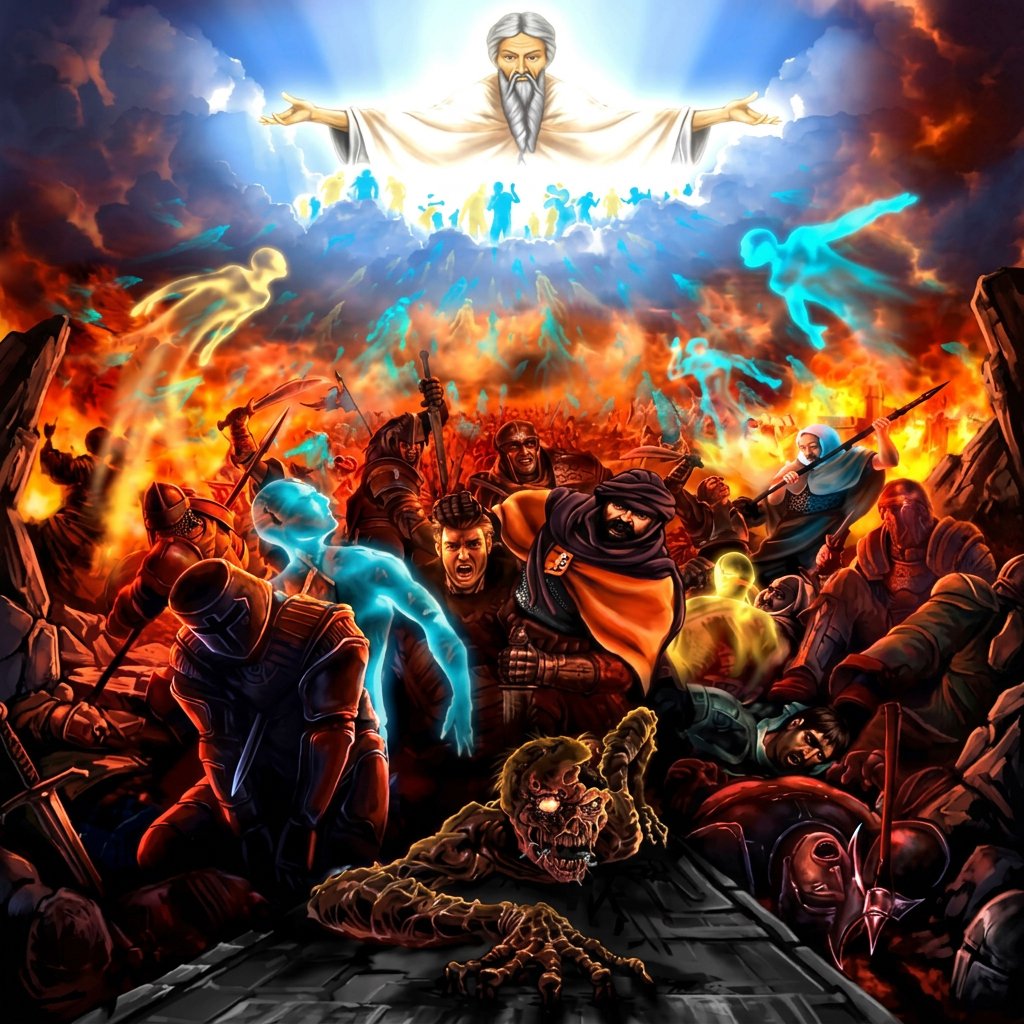
War is not understood as an exceptional event detached from the ordinary functioning of the state. Rather, it represents the culmination of a process in which the social system becomes so thoroughly subjugated that individuals are compelled—or manipulated into voluntarily consenting—to sacrifice their lives, health, and vital energy to political authority during armed conflict. In this sense, war constitutes the highest expression of both individual and collective subjugation. The work with sexual energy can stop wars. This points to the next dimension of practices.
At the same time, as numerous examples throughout the text illustrate, the more totalitarian the regime, the more extensive its encroachments on individual freedom and the rights of various minority groups. Minorities—whether religious, cultural, sexual, or otherwise—embody alternative ways of living that exist outside the dominant system and its prescribed patterns of behavior, which the system cannot tolerate. Being part of a minority can be (but is not necessarily) a step toward spiritual development outside the state’s programs.
Sexual energy and orgasm as castration
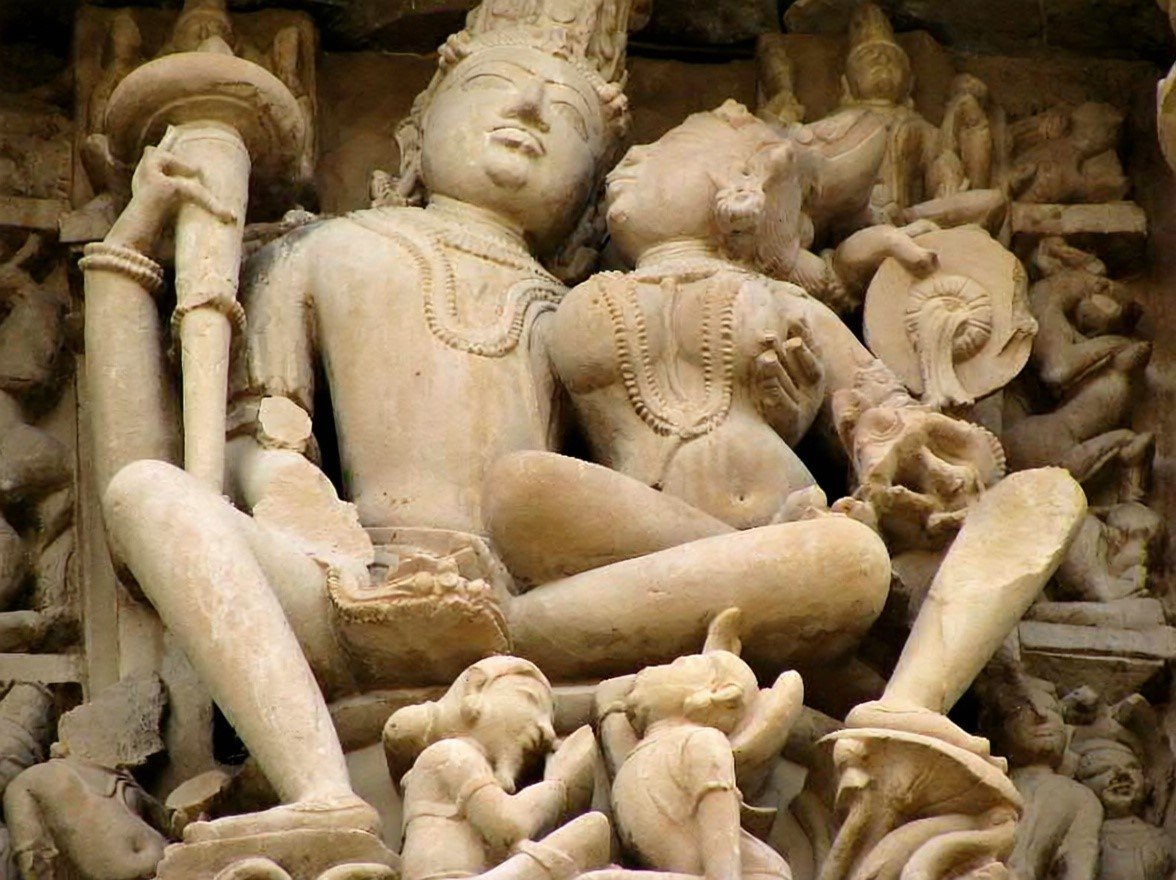
The Tantric lectures in “Darshan Tantra” are described as taking place (symbolically) “in the very ancient Khajuraho Temple.” Before entering, the disciples contemplate the erotic sculptures adorning the temple walls. The Khajuraho Temple is indeed a temple complex in India, famous for its erotic depictions, though these account for only about 10% of the sculptures as a whole; the remaining works depict various other scenes from everyday life. Moreover, the relationship between these erotic representations and Tantra is by no means self-evident, although some scholars have suggested it.
The temple is referenced numerous times throughout the text. It assumes its most prominent role in the opening sections—serving as an indispensable backdrop and introduction to sexual energy and the function of eroticism in primordial religion—and in the final part of the book, where the author focuses on the levels of initiation and describes the dance of the priestess within this temple.
The Sage solemnly declared to his pupils that “During that time, people possessed the Ancient True Knowledge. They understood that sexual energy could be used for spiritual development and union with God.” Thus, at the outset, the central theme of the work emerges: sexual energy as a forgotten means of attaining spiritual development, whose ultimate goal is union with God.
An important distinction must be made between the sexual act itself and sexual energy. In Rudnev’s work, the primary emphasis is on sexual energy rather than on sexual intercourse. Although maithuna (sexual union) is presented as the pinnacle of tantric practice, the focus is not on the sexual act itself. For those who practice with awareness, sex is never truly about sex. Orgasm is regarded as an absolute waste of energy from both a spiritual and a personal perspective, and, on the physical level, as a kind of temporary castration.
Sexual energy is considered the most important—or at least one of the most important— energies available to human beings. Various practices serve as means of raising the level of this energy. Their purpose, however, is not to discharge it outwardly, but rather to redirect it toward internal centers.
Techniques described in “Darshan Tantra”
What is usually considered by opponents to be problematic, immoral, or otherwise controversial in the source materials of Tantric groups is the set of techniques described. Anyone seeking such controversy within “Darshan Tantra” will, however, be rather disappointed. The techniques can be divided into those explicitly described, those merely mentioned, and those absent from the text. We learn that Tantric techniques can be practiced individually, in couples, with “Onomae” (“It is a being from the subtle world – our second half, our opposite-gender counterpart, which exists on the astral level”), in groups, or even independently, on the astral plane—the latter being the most difficult yet a highly effective approach.
While “standard” intercourse may result in a physical child, the redirection of energy can generate other, subtler bodies. It is precisely these subtle bodies that serve as the vehicle toward the ultimate goal; thus, action initiated through them is deemed superior to action originating from the physical body (which, inherently, also engages the other bodies).
The reader is presented with descriptions of five stages of the Tantric ritual: the first is Mansa, a tea ceremony. The second is Mudra, during which students pair off, sit face-to-face, and hold hands to form an energetic circle. The third is Madhyama-natya, a specialized circle dance. The fourth stage, Matya, is designated for advanced practitioners and incorporates both dance and touch. The fifth and final stage is Maithuna, which involves sexual contact. Aside from these examples, which are condensed into a mere four pages of a book spanning over 170 pages, very few techniques are explicitly described.
The text addresses questions regarding how to manage sexual energy upon its arousal. One should welcome this energy and direct it toward other centers. One way to achieve this is through prayer or dance. Indeed, prayer is portrayed as a highly undervalued practice. If an individual’s energy is already concentrated in the lower body and they wish to elevate it, one viable method is to perform squats or other exercises.
Furthermore, the book posits that women possess ninety percent of Svadhisthana—the sexual center that holds sexual energy—whereas men hold only ten percent. The energetic connection (“sans-connection”) established during sexual intercourse persists even if the partners separate or divorce, with the man continuously draining the woman of her energy. Consequently, severing these connections is deemed crucial (a doctrine this group shares with other Tantric movements, such as the Path of YahRa). Although in “Darshan Tantra” the Sage promises to discuss these practices later, the book never reveals which specific techniques may lead to the cessation of these bonds.
Finally, while the redirection of energy and the criticism of orgasm are recurring themes throughout the work, the concept of semen retention—along with specific techniques aimed at achieving it, on which a large Tantric and neo-Tantric literature exists—is never explicitly introduced.
Beyond books
Beyond the written teachings, Rudnev’s students have produced a five-part instructional video series (privately provided to me) devoted to tantric techniques and practices. Unlike in “Darshan Tantra,” however, these practices are presented in the videos within a broader conceptual framework rather than as isolated techniques. The explanations of Tantric methods are intertwined with Rudnev’s broader ideas about human conditioning, social programs, external influences, and the role of state structures.
The presentation of Tantra follows a gradual progression, comparable to the structure found in the written teachings. Sexual practices are introduced only after preliminary stages that include self-development, control over the body, mind, and emotions, cultivation of awareness, and work with sexual energy. The videos present Tantra as a system in which sexual practices constitute just one element of a broader process of transformation rather than an independent activity. The culmination of this progression is the description of Maithuna as an advanced tantric practice that requires prior preparation. Before Maithuna, the teachings emphasize a gradual process of preparation involving meditation, contemplation of the ideal, yogic asanas, pranayama, tantric dance, and practices aimed at developing control over the body, mind, emotions, and sexual energy.
The fourth part offers the most detailed practical description, presenting the “Maithuna Sexual Kata” as a sequence of twelve positions (“bonds”: Hawk Bond, Swan Bond, Rooster Bond, Snake Bond, Angus Bond, Fish Bond, Deer Bond, Horse Bond, Boar Bond, Wolf Bond, Tiger Bond, and Dragon Bond). Each position is described not merely as a bodily arrangement but as a stage of energetic work involving concentration, breath control, movement of energy through the body’s channels, activation of chakras, and the awakening of Kundalini. The practice is presented as requiring conscious control over sexual energy rather than its ordinary release through orgasm. Instead, sexual energy is redirected through the body and transformed into higher states of consciousness. The final stages of the “Kata” are framed as the formation of a shared energetic field between partners, culminating in cosmic union, expanded consciousness, and transcendence of ordinary physical limitations.
The Keeper of the Knowledge and other Masters
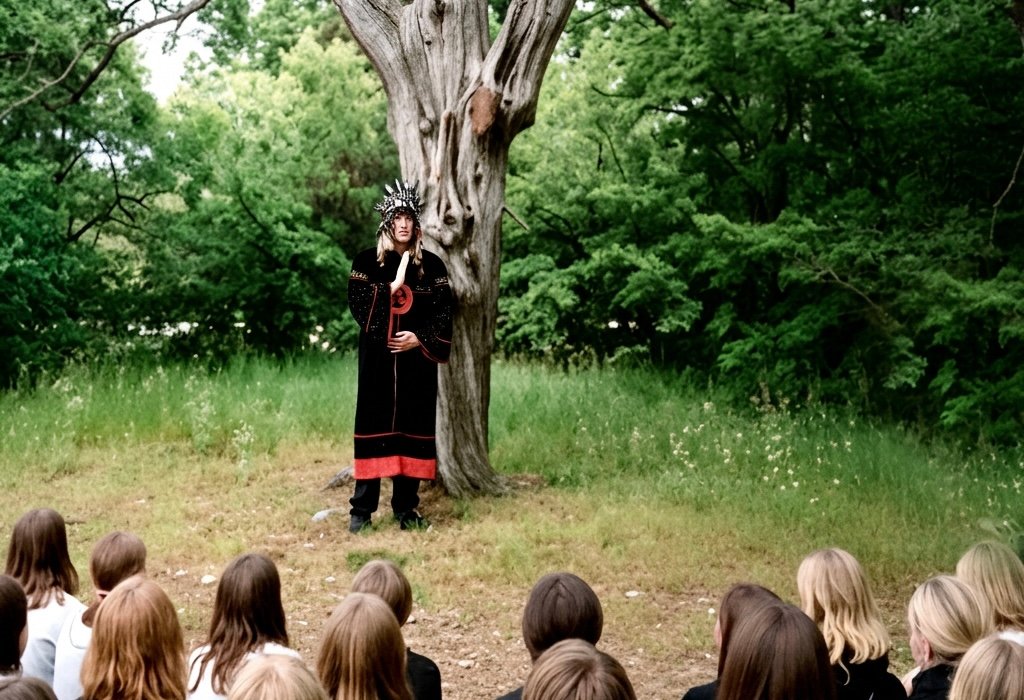
What also connects most of the volumes is their graphic design, which features an image of the Sage on the cover, a reference to Rudnev. Of particular interest is his attire: a black robe with wide sleeves and a high-standing collar, a head covering resembling a klobuk, and the symbol of Nicholas Roerich’s “Banner of Peace” on his chest. Although this symbol is associated with the Roerich Pact (finalized in 1935 as the “Treaty on the Protection of Artistic and Scientific Institutions and Historic Monuments”), it is also embedded in the broader ideas Roerich promoted. It is strongly associated with esotericism, particularly Theosophy.

In addition to other direct references, especially to George Ivanovich Gurdjieff, Roerich holds a distinct place in Rudnev’s framework, not only as an artist but also as a seeker who approached knowledge through effort, discipline, and direct experience. This contrasts with contemporary spiritual information, which is widely available yet often lacks proper understanding and practical application. The author frequently cites other figures, quotes passages from their teachings, and offers his own interpretations of these ideas. He also explicitly names several individuals as Great Masters: Gurdjieff, Osho Rajneesh, and Carlos Castaneda.
The cosmic laws and the influence of planets
Beyond the social conditions and external forms of human conditioning discussed above, the individual is presented as subject to additional influences beyond the family, the state, and social institutions: namely, planetary forces, which, in this system, take on a constraining character. Astrology thus constitutes an important esoteric component of the movement, functioning not as a tool for personality description or prediction but as part of a broader cosmological model that explains the forces shaping human existence.
According to the Darshans, planets are living forces governed by different levels of cosmic laws, and human beings remain under their influence until they develop awareness and can distance themselves from identification with thoughts, emotions, and external conditions. As the Sage explains, “until we achieve awareness, planets will continue to act on us according to our cosmogram, which was formed at birth.”
The hierarchy of influences corresponds to different cosmic levels: ordinary existence is governed by lower laws associated with social roles, false personalities, and repetitive patterns. Further development involves a transition toward stronger influences, including the laws of the planets, the Sun, the Galaxy, and ultimately higher cosmic orders. The author argues that followers of different groups are subject to different laws and levels of influence, suggesting that these factors also condition spiritual practice.
Egregors: between spiritual realms and everyday life
One of the key concepts rooted in esotericism and appearing throughout Rudnev’s teachings is the Egregor, discussed in all Darshan volumes except Volumes 1 and 11 as well as in “Darshan Tantra” and in “Life in the Egregore.”
The Egregor is described as a collective energetic field that forms around a central idea and is sustained by the emotions, beliefs, and actions of those connected to it.
Different religious traditions, social structures, and forms of collective identity are presented as expressions of Egregoric influence.
The teachings distinguish between lower Egregors, which reinforce limiting patterns and restrict development, and higher Egregors, which provide access to knowledge and support spiritual transformation. Because individuals cannot exist outside such influences, spiritual development requires recognizing the Egregors shaping one’s life and consciously relating to them. In this way, categories derived from esoteric discourse are extended into everyday experience, where ordinary relationships, social roles, and personal choices become part of broader spiritual dynamics.

A misunderstanding: “The Way of the Fool”
The scope of the sources is, I believe, already evident. I have discussed only a few esoteric topics within the large corpus of Rudnev’s teachings. Yet, in the opponents’ narrative, there is only one resource that is repeatedly mentioned: “The Way of the Fool” (Путь дурака), published in two volumes. The main problem with this source is that its authorship is misattributed. Rudnev did not write it. This happens frequently in esoteric movements and would not be a problem if the text were not used against Rudnev in court cases. “The Way of the Fool” is wrongly presented as “the main scripture” of “Ashram Shambhala.” Although it circulated among students, together with a myriad of other texts, it never had a special status nor is it a systematic presentation of Rudnev’s teachings.
The first part is a fictionalized narrative about Rudnev’s life, in which he is portrayed as “Kot.” This character becomes interested in spirituality at an early age and receives spiritual instruction, pursuing self-development as he grows up. This is a spiritually inspired narrative about the teacher, written by his student, Polina Petukhova. The second part consists of texts written by other students.
Some of the texts revisit themes that also appear in the Darshans, yet they do so in a significantly different form and tone. In contrast, Rudnev’s writings maintain a highly consistent structure and style throughout more than a thousand pages. The texts in “The Way of the Fool” also lack clear theoretical coherence and fail to present the more nuanced esoteric themes explored elsewhere. The book was never intended as a guide for the students, certainly not for the advanced ones.
Although maliciously exploited by opponents and prosecutors, the misunderstandings about “The Way of the Fool” are interesting in themselves. It can be argued that not only are the writings associated with Konstantin Rudnev saturated with esoteric motifs, but their reception and interpretation also reveal intriguing esoteric dimensions: limited access to source materials, narratives of concealment and prohibition, and instances of misattributed authorship.
Conclusion
The analysis of certain practices taught by Rudnev shows that they cannot be understood as isolated techniques detached from the broader system of ideas in which they are embedded. Meditation, astrology, and tantric practices are presented within a comprehensive framework that includes specific understandings of knowledge, human development, and the forces shaping individual existence. The notion that knowledge is not equally accessible to everyone, the central role of the Teacher, and the distinction between higher and lower forms of influence provide the basis for interpreting these practices as instruments of transformation rather than merely as exercises or rituals.
At the same time, the practical dimension demonstrates how broader elements of Rudnev’s worldview become integrated into both spiritual practices and everyday life. Concepts such as planetary influences, Egregors, Dark Powers, and the distinction between higher and lower forms of knowledge provide interpretive frameworks through which personal development, social relations, and ordinary experiences are understood. In this sense, practices function not only as methods of transformation but also as ways of perceiving and organizing reality in accordance with Rudnev’s cosmology.

Karolina Maria Kotkowska is an Assistant Professor in the Centre for Comparative Studies of Civilizations, Jagiellonian University, Kraków, Poland. She holds PhD in Philosophy and works on her PhD in Sociology. She specializes in New Religious Movements and Western Esotericism in Central and Eastern Europe.