A structural analysis of Rudnev’s syncretic esoteric system and the doctrinal features that generated social, legal, and interpretive controversy.
by Márk Nemes
Article 5 in a series. Read article 1, article 2, article 3, and article 4.
Introduction
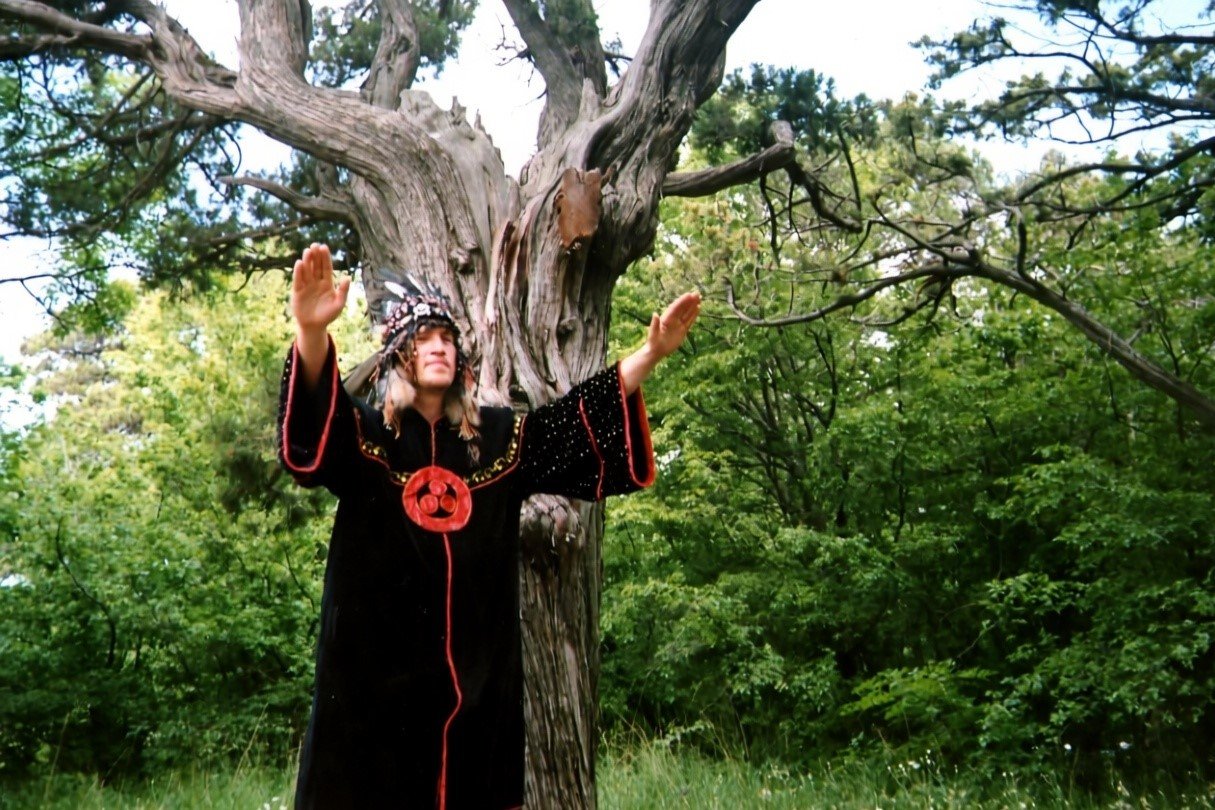
Konstantin Rudnev’s spiritual system can only be properly understood in light of his upbringing and prior exposure to a select plurality of religious and spiritual traditions. Inspired by a diverse collective of faiths, spiritualities, and ways of inner cultivation—such as hatha yoga, asana, Siberian shamanism, various tantric practices, “conspiritual” elements of UFO and extraterrestrial beliefs, as well as “magical” practices such as “astral karate,” taught by Valery Averyanov (a.k.a. Guru Var Avera)—Rudnev articulated his metaphysical system, “Sekoru Dharma.” The movement that gathered around him holds that all religions contain partial truths. Still, only the enlightened can see the “full picture.”
Cosmology and metaphysical framework
It is difficult to deconstruct the spiritual narrative of “Ashram Shambhala,” the name some students gave to Rudnev’s community and school, even though he never incorporated an organization by that name. Among the relevant points of reference are the use of the Gyud/Guida Method (particularly hypnosis), Sampo (Rudnev’s version of Astral Karate), the Field of Love, Tantra and Maithuna (sometimes spelled “Maithkuna”)—contextualized as engagement with the divine sexual energies—and Orphism (artistic means and expressions for creating spiritual resonance).
Rudnev has a unique understanding of death, interpreted as the transformation of consciousness. At the same time, life is seen as a temporary experience (mostly framed by suffering) intended to help the soul gain an early understanding of existence before reincarnation. The ultimate goal is to achieve the ideal form (referred to as the Warrior of Light) of awareness that could resist societal norms, commit to cultivation over several cycles of incarnation, and elevate the innermost godly consciousness to the level of emptiness and objective observance, stripping away the residual elements of prior incarnations.
Rudnev’s cosmology outlines four divinities—not worshipped, but symbolic—each associated with a distinct concept of temporality. Tengri-khan embodies eternity and resides in the high heavens. Ulgen-khan represents the future and foresight. Umai embodies the ever-present. Erlik-khan is the symbolic manifestation of the past and the underworld. Inspired by Siberian shamanism, this cosmology exhibits both a vertical axis and a temporal dimension.
Mirroring this, Rudnev’s metaphysics of the soul consists of a similar fourfold differentiation, with an additional overlapping fifth component. As Introvigne and Vardé have noted, this fivefold unity affirms that “a person is not a single, unified being but a composite of five souls, each responsible for different modes of perception or life force. Aiy connects the person to eternity; Bosy perceives the future; Tes perceives the past; Sur travels between worlds; and Kut energizes the body with life.”
Framed in a similar fourfold distinction, the levels of conscious existence (referred to as the Tiers of Life) are also outlined in Rudnev’s teachings. Spiritual practices are presented as the “keys” to moving up these tiers, corresponding to a person’s intellectual, emotional, and higher centers.
Complementing the fourfold soul concept, Darshan 1 also outlines a nuanced body concept, akin to matryoshka dolls, that inherently links the body and the spiritual essence within it in seven layers. The “Nirvanic Body” separates Atman (the particle of God) from the whole God, therefore creating the illusion of separateness, while in fact God is universal and indivisible. In this regard, Rudnev’s system shares some structural similarities with Hinduism, while its articulation also inspired other neo-Tantric groups.

Atman is wrapped in the Causal Body, which accumulates over millions of lives, forming an individual’s unique experience and individuality. While it provides experience, it also creates limitations, as a person identifies with these accumulated experiences rather than the godly essential consciousness beneath.
The third layer is the Mental Body, which forms during one’s current life and accumulates a person’s thoughts, ideas, and concepts. It is where a false personality, or self-image, is formed under the influence of others. However, its “higher parts” can develop through philosophical thought and questioning one’s identity. This layer is one of the key spheres of the school’s spiritual activities.
The Mental Body is surrounded by the Astral Body, where emotions—both sublime and negative, such as conscience, love, and compassion, as well as resentment and irritation—reside. According to Rudnev’s teachings, cultivating positive emotions strengthens the Astral Body, whereas immersing oneself in negative emotions weakens it.
The following layer is the Vital Body, associated with animalistic emotions, instinctive reactions, and low-level desires such as fear, aggression, greed for food, and lust. It also serves as a reservoir of energy necessary for life. A strong Vital Body, developed through leadership and social activity, provides the energy for assertiveness and growth, fostering a strong Yang (active, dictating) identity.
The three layers previously noted (the Mental, Astral, and Vital Bodies) develop during an incarnation and contribute to the causal body after death. The Etheric Body is the sixth layer, where “biological energy” is stored. It supports biological processes such as energy production, cell division, and other physiological functions. It contains the noted energy channels and acupuncture points and supports the body’s physical functions. A healthy lifestyle helps maintain a strong Etheric Body. The outermost shell is the Physical Body, consisting of bones, muscles, spine, and organs. It is described as limiting the soul and creating “blockages” that prevent the manifestation of subtle abilities. Overcoming the influence of this physical body and its desires is a crucial step in spiritual development.
Rudnev’s esoteric teachings: the Darshans
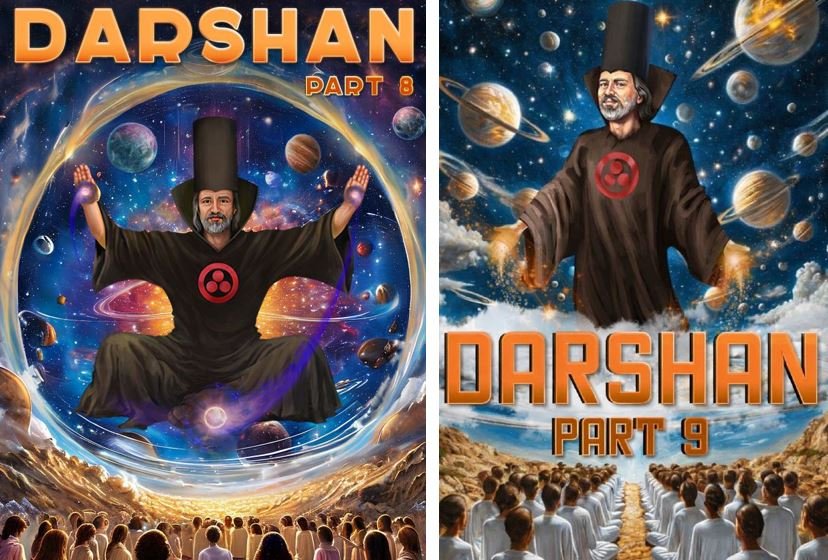
Understanding Rudnev’s teachings requires deeper familiarity with key primary texts, including the 11-volume “Darshans.” These resources are written in a dialogical form (originally in Russian and later translated into English), featuring stories he tells in response to his students’ inquiries, while explaining fundamental holistic principles and guiding his followers in inner development. Some questions are pragmatic, such as proper ways of meditation and preferred forms of collective behavior. Others address more complex philosophical questions about existence, suffering, and the nature of the world.
The full corpus of the Darshans is extensive, totaling over 5,700 pages, not including supplementary materials. For this study, my inquiry focused on four entries in the series: Darshan 1, 2, 10, and a theme-specific supplementary entry, Darshan Tantra. These entries provide rich information on several controversial subjects, including opposing perspectives on controlling social systems and unique understandings of the use and significance of sexual energies.
“Incorrect thinking” and its social implications
A major obstacle to spiritual growth, as noted by Rudnev, is “incorrect thinking,” which must be overcome through gradual immersion in the Teacher’s lessons. Such a state may be instilled by upbringing and reinforced by societal conditioning.
The first step in liberating oneself is to identify and challenge beliefs that cause suffering, such as the belief that being offended itself causes suffering. By replacing incorrect thoughts with correct ones, individuals gain self-control, loosen identification with thoughts, and begin to see themselves as separate from their thinking. This process, described as a “universal exercise,” is twofold: it addresses the “pain” caused by conventional guilt and by a higher sense of guilt before one’s Higher Self. Rudnev notes—referring to himself as the Teacher, Keeper of Knowledge, or Sage—that repentance is the foundation for awakening conscience, which serves as an inner guide or “inner Guru.”
Self-knowledge and the Atman
While many of Rudnev’s teachings present the “Know yourself” method as a primary step, Rudnev’s approach to self-knowledge begins by separating oneself from all thoughts and by understanding “who is not me.” This severance involves recognizing that anything one can observe—the body, emotions, thoughts—is “not me,” but rather external elements or remnants of past incarnations or experiences.
The “I” is identified as a detached observer, one whose self-knowledge involves separating from false personalities and external influences. Considered unchanging, perfect, and part of God, the Atman is within the body.
![The baby “personifies our essence.” Then, “over the course of life, a person is told who he is and who he should be,” and develops “different personalities within the same entity [that] may not know anything about each other” (Darshan 2, p. 176–80).](https://bitterwinter.org/wp-content/uploads/2026/07/Nemes-4.JPG-1.jpg)
Social implications
According to Rudnev, societal morality suppresses natural positive emotions and instills negativity, making it difficult to hear one’s “inner Guru.” Conditioning by parents, teachers, and the media enforces behaviors such as materialism, defined as the “golden calf,” and egoism fed by negative emotions, subjective beliefs (“rose-colored glasses”), or a “blackened” view of life, as well as false personalities, leading to a loss of one’s true self.
Rudnev’s views may be perceived as threatening to existing power structures and societal control because they challenge individuals to free themselves from systemic oppression. In Rudnev’s Novosibirsk trial, such sentiments were recast in legal terms as “extremism,” a reductive misreading of the philosophical messages of spiritual liberation and reconnection with one’s innermost spirit as “anarchism.”
Purpose of life – Guided cultivation with an anchor
According to Rudnev’s teachings, the purpose of life on Earth is a journey of refinement, in which mistakes are opportunities for growth. Amid the challenges, the Teacher’s (Rudnev’s) role is crucial in explaining the meaning of “truths” and in guiding students toward spiritual advancement.
The path to freedom involves recognizing and disentangling oneself from the roles and influences imposed by society, with the help of a Teacher and a global community of like-minded individuals.
Meditation and conscious practices are presented here as means of stopping internal dialogue and achieving a state of silence, allowing one to see reality objectively and eliminate disturbing or “noisemaking” elements.
Sublime states
The observation of objective reality is closely connected to Rudnev’s concept of sublime states, which have several parallels with those described by George Ivanovitch Gurdjieff. These are mostly positive inner experiences of purification and the elevation of consciousness. Through inner journeys, negative emotions can also be transformed into positive, sublime ones.
Internally experienced negative emotions serve as “wake-up bells,” signaling that something requires self-reflection and correction. Without vigilance and an “anchor” in consciousness, this can destroy inner well-being. The process is illustrated in the Darshans as a cart pulled by three horses (symbolizing the instinctive, emotional, and sexual centers) and ridden by a drunken coachman (symbolizing the mind).
Connected to sublime states, Darshans also outline anomalies that produce negative consciousness: these arise from malfunctions in the body’s emotional, intellectual, motor, and sexual centers, as certain centers become dominant over others. Such states can be corrected only through self-observation.
Sexual energy and sacred eroticism
In 2010, during Rudnev’s first arrest, leading Russian anti-cultist Alexander Dvorkin gave an interview to “Pravda.ru” about “Ashram Shambhala,” describing it as “one of the most notorious totalitarian cults” and portraying Rudnev as a sadistic “swindler” and “conman.” He also offered elaborate—yet utterly misunderstood and, in several respects, factually incorrect—summaries of Ashram Shambhala’s spiritual practices, noting that members were emotionally and physically abused, humiliated, and forced to “participate in collective sexual orgies.”
Despite these claims being factually incorrect, the social stigma surrounding Rudnev’s movement persisted, resulting in significant social pressure wherever Rudnev relocated. These accusations are not unique and have frequently targeted spiritual movements whose teachings include sacred eroticism, as outlined by Introvigne.
Rudnev’s understanding of sexual energies is evidently richer than Dvorkin’s report outlines. Sexual tension is regarded as a high-vibration energy, linked to creativity and the manifestation of the sublime emotions noted above. It can be channeled for higher spiritual development, but when misdirected, it leads to negative emotions and destructive outcomes. As Rudnev notes, when misused, it “no longer goes to creation, does not pass into the most exalted state, but goes down, destroys, reduces to the worm.”
Rudnev places sexual energies on a scale, with frigidity at the lowest level, indicating low or absent sexual energy and a life primarily dictated by societal programming. In contrast, excessive sexual energy, if uncontrolled, can push individuals toward undesirable situations such as prostitution or unhealthy fantasies. Relationship roles are also framed by a dichotomous typology of sexual energies, with Yang representing the active, dictating party and Yin symbolizing the receptive, submissive traits. These are not explicitly connected to either femininity or masculinity, which explains how societal roles can lead to both “masculine” women and “feminine” men.
To work effectively with sexual energy, tantric abstinence and total self-control are considered necessary. This involves accumulating a significant amount of (sexual) energy, as working with small amounts is considered ineffective. Abstinence is not only a bodily act here but also an intellectual and spiritual struggle, meaning controlling one’s imagination (i.e., avoiding stray thoughts) to prevent sexual images that can lead to discharges and energy loss during sleep.
Sans-connections
Another key concept in sexual energies is creating “sans-connections” that allow energy and information to flow between partners. “Darshan Tantra” emphasizes choosing suitable partners, as negative connections can drain a person’s energy and well-being rather than enrich them. This is described as “energetic vampirism.” Those who participate while ill or in negative emotional states may transfer negative energy to their partners.
Increasing divorce rates are presented as a positive sign that people are becoming more self-aware and refusing to endure unsuitable relationships—an indicator of “selectivity” and understanding in choosing partners. The proper functioning of the three levels of the Sexual Center (Svadhisthana Chakra)—the mechanical, emotional, and intellectual—shifts “being in love” toward the emotional rather than the physical. At the same time, the above-noted sense of selectivity is a further step, prioritizing energetic compatibility over emotional compatibility.
The holistic-integrative attitude of the teachings is evident when contrasted with those of ISKCON and other neo-Vedic movements, which are criticized for focusing on a single chakra rather than on a holistic self. The syncretic bricolage also becomes visible in the connections and reflections on Qigong and in the parallels drawn between the lower Dantian (one of the three energy centers for the flow of qi) and the lower abdominal positionality of the Svadhisthana Chakra.
Rudnev’s spiritual narrative also describes sexual minorities, contextualized within these frameworks as the results of discrepancies between physical bodies, hormonal systems, and subtle energies. Rudnev critiques and rejects the condemnation of these groups, seeing it as another channel of aggressive societal control. Interestingly, an exclusivist approach to family and marriage is also viewed from a disapproving angle, interpreted as aligned with totalitarian state ideology and designed to make people dependent and controllable, while contrasting it with individuality, which often emerges among youth due to strong sexual energy and the lack of being tied down.
Sexual consciousness
Rudnev challenges the notion that human reproduction is always beneficial to nature, arguing that overpopulation is a contemporary concern that leads to resource depletion and environmental pollution. Rudnev also contends that population growth is encouraged only by state powers that benefit from cheap labor and soldiers. Advocating policies that limit reproduction, Rudnev presents ecological arguments, noting negative effects such as cramped living conditions and increased waste.
Rudnev notes that although some developed countries implement birth restrictions, high birth rates persist in regions marked by strong religious fanaticism and state control, including countries in the Middle East. He also criticizes societal conditioning that pressures women to marry and have children, often leading to relationships that cause suffering for all parties. Female infertility is seen as a “blessing from God” rather than a tragedy. Societal indoctrination is presented as the reason for negative beliefs about infertility, while, in reality, infertility is the ideal setting for exploring higher states of consciousness. By contrast, Rudnev commends the merits of in vitro fertilization (IVF), clarifying that children conceived through this method do have souls, while criticizing mainline religions that oppose such scientific advancements.
Tantra vs. sex
Rudnev distinguishes between instinctive, quick sex aimed at reproduction and conscious, prolonged sexual activity specific to tantric practice. In his view, the latter is not driven by an instinctual fear of predators (i.e., an animalistic instinct for DNA transfer).
The physiological purpose of orgasm in women is interpreted as a signal for male ejaculation, underscoring the importance of women’s energy in the ritual process. According to the Darshans, harnessing this energy and consciously directing it toward creativity and spiritual growth prevents it from being wasted on mere reproduction, which is viewed as an animalistic and instinctual form of interaction.
In conscious tantric acts, the three levels of the Sexual Center interact through lust, pleasure, and energy conservation. At the same time, the Intellectual Center attunes the other centers to the experience of exalted states through prayer, contemplation of icons, listening to divine music, and other exercises. These activities are “organized” by the Intellectual Center so that all the other centers may attune themselves to exalted emotions.
Concluding remarks
In summary, Tantra is defined as “the art of life,” “true knowledge,” and a solution to real-life challenges—a comprehensive approach to harmonious living and spiritual development that spans everything from eating and breathing to yoga and sexual intercourse. Rudnev sharply distinguishes between sex as discussed in tantric contexts and in conventional societal discourse, where religious teachings suppress or misrepresent it.
Contrary to Dvorkin’s narrative, Rudnev asserts that these tantric rituals are not “orgies” but ascetic practices that require fully conscious, affirmative participation and control over energy, aimed at serving divine energy rather than personal desires. In these contexts, true Maithuna is considered not merely a means of satisfaction but also a path to meditation and a means of achieving total control over the mind, body, and emotions, complemented by the elevation of Kundalini energy.
In Rudnev’s spiritual teachings, the ultimate goal of Tantra is not Maithuna itself but “orgasm with the Universe,” or “Shri Mahamudra,” which signifies holistic unity with the entire world and the elevation of practitioners’ conscious existence. During this state, they awaken and reconnect with their inner Atman.

Márk Nemes is a historian and a graduate in the academic study of religions. He received his doctorate in philosophy at the University of Szeged’s PhD program in 2025 and works as a researcher at the Hungarian Academy of Arts’ Research Institute of Art Theory and Methodology. As an awardee of the Hungarian National Eötvös Scholarship, he served as a visiting researcher at CESNUR from 2023 to 2024. For the past 10 years, he has focused on researching new, alternative, and emergent forms of religiosity in Hungary, Iceland, the US and most recently, in Italy. Since 2025, he serves as the Deputy Director of CESNUR