The persecuted spiritual teacher’s latest parables, penned in an Argentine prison, turn to personal memories and conceal hints of esoteric teachings.


The persecuted spiritual teacher’s latest parables, penned in an Argentine prison, turn to personal memories and conceal hints of esoteric teachings.

A human rights lawyer reads CAP-LC’s Warsaw statement in light of fair-trial guarantees, international covenants and the duty to verify evidence sourced from abroad.

CAP‑LC warned that reputational harm exported across borders threatens dissent and freedom of belief.

A scholar of psychology discusses the curious case of an Argentinian “fiscal” controlled by his obsessions.

The Argentine proceedings against Konstantin Rudnev are a paradigmatic case of the abusive use of pre-trial detention to extract confessions.
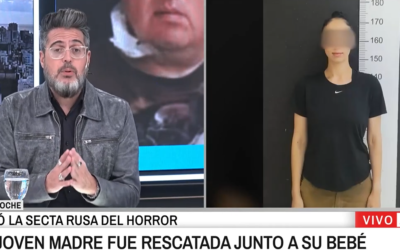
A study of how major outlets reacted when informed that their reporting relied on compromised sources, and why some continue to resist correction.

Una mirada al interior del cálculo judicial donde las reputaciones, los titulares y los futuros imaginados deciden quién permanece tras las rejas.
Inside the courtroom calculus where reputations, headlines, and imagined futures decide who stays behind bars.

La forma en que el fiscal Arrigo manejó el caso Rudnev es un ejemplo clásico de injerencia arbitraria en la autonomía individual, prohibida por el derecho internacional.
Prosecutor Arrigo’s handling of the Rudnev case is a textbook example of arbitrary interference with individual autonomy prohibited by international law.