Interviews with Rudnev’s advanced students reveal how a dispersed network preserved and adapted his teachings after the 2010 raid and exile.
by Susan J. Palmer
Article 7 in a series. Read article 1, article 2, article 3, article 4, article 5, and article 6.
Introduction
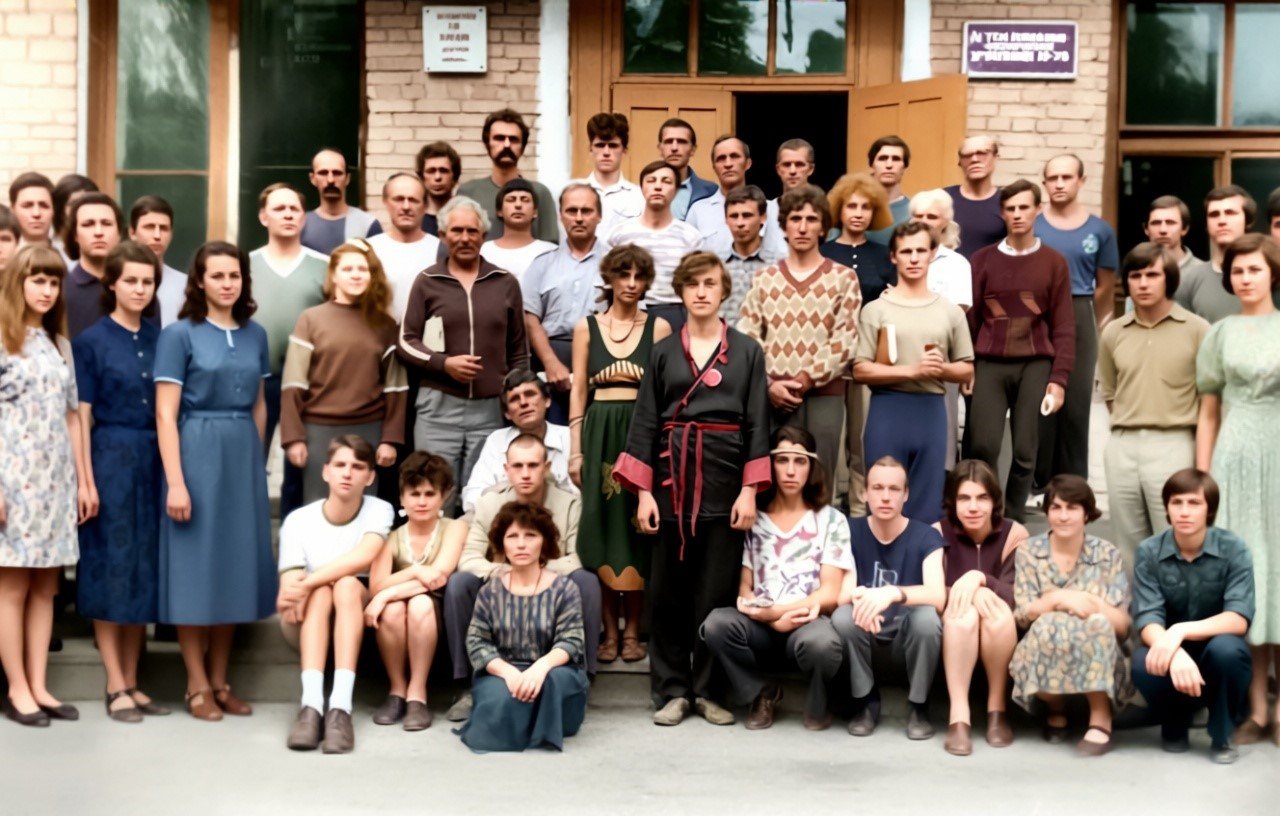
This article examines the experiences and careers of Konstantin Rudnev’s students before and after the 2010 raid on “Ashram Shambala”—the name his students gave to Rudnev’s community in Siberia.
The process of learning about this NRM presents unique challenges for this researcher. First, it is a Russian spiritual movement that developed in the Soviet Union during a period when religious literature, including the Bible, was banned, and religious teachers and groups were regarded with intolerance and suspicion and persecuted. Thus, the political and social background of this movement was quite different from NRMs in the West.
The second challenge for researchers trying to gather information about this NRM is posed by the Russian government’s draconian efforts to suppress and eradicate “Ashram Shambala” in Russia and abroad. Thus, after the 2010 arrest of the leader and the physical assault on the ashram, which since its founding in 1989 had become a thriving spiritual teaching center and communal society in Siberia, Rudnev’s trained instructors (known as “tutors” or “mentors”) fled abroad where they continued to disseminate his teachings, holding workshops or seminars, or infusing Rudnev’s ideas and worldview into their daily interactions with students or customers.
The research method for this chapter has therefore mainly consisted of conducting interviews with four “tutors” (students trained by Rudnev to become itinerant missionaries in Russia in the early 2000s) and the student who became Rudnev’s wife. These interviews were conducted via Zoom in June 2026, with interpreters for those who spoke Russian.
The population of “Ashram Shambala” was fluid. Approximately 15 people were living there right before the raid. There were no smaller “ashrams” in Russian cities or in Europe. The only ashram was Ashram Shambala, located near Novosibirsk. In other cities, there were local yoga and study groups where yoga, meditation, pranayama and Rudnev’s ideas were taught. Students occasionally attended seminars conducted by instructors (the “tutors”) who had trained directly with Konstantin Rudnev, then known as “Shri Dzrihan Avatar Muni.”
According to my contacts, approximately 20,000 people participated in these groups and seminars held in Russia. Before the 2010 police raid, the total number of followers and participants in Europe and worldwide exceeded 100,000.
Rudnev’s students: the interviews
I interviewed five of Konstantin Rudnev’s students over Zoom in June 2026. While a larger sample would have been preferable, these interviews did yield valuable information about the social context, the appeal of the Master’s teachings, his charismatic presence, didactic methods, and the vibrant, thriving community at Ashram Shambala. My five informants were born between 1975 and 1983 in the Soviet Union. They are all in their forties or fifties and are currently living in or traveling between Montenegro, Belgium, Germany, Argentina, Brazil, and other Latin American countries.
They grew up in irreligious households where atheism prevailed, and spirituality was taboo. They described their families as kind, supportive, and stable, with parents who encouraged them to pursue a science-based education at university. One became a psychological counselor. Another studied mechanics and technology, specializing in wood processing. Another became an engineer. They described how, as teenagers, they became aware of alternative worldviews involving spiritual ideas and practices and were fascinated by scientific accounts of the paranormal and psychic phenomena available in the Soviet Union at the time. Perestroika ushered in opportunities to explore the exotic spirituality practices found in shamanism, martial arts, and yoga.
My informants began their separate spiritual quests in their twenties by joining a yoga class that turned out to be more than just hatha yoga. Taught by Rudnev’s trained instructors or “tutors,” these yoga classes included meditation, breathing exercises and lectures on esoteric philosophy. Their instructors recommended intensive seminars in which students were introduced to a range of spiritual ideas and practices, from Hindu Vedanta and Buddhism to Astrology and Shamanism. Eventually, the students would be invited to meet the “Teacher,” Shri Dzrihan Avatar Muni, at the Ashram Shambala near Novosibirsk.

D. was born in 1980 in Brezhnev City (present-day Naberezhnye Chelny) and earned an engineering degree at university. He worked as an engineer until his vocation to spread Rudnev’s teachings became his priority. He enjoyed a happy childhood devoid of religious influences, except for an aunt who visited once a year and told him about auras, chakras, and superpowers. In his teens, he was a hardworking student with very little social life: “I was very shy, no girlfriends. Education makes you shy. I was 18 and realized my plans for the future were very difficult to pursue. I was very young, ambitious, but making slow progress. I was very sad. My mother saw that I was upset and suggested yoga. In those days, very few people did yoga; they saw it as strange. My mother’s friend was a yoga teacher, and when I visited the class, I found that I was weak and needed to practice a lot. Then someone recommended a seminar I attended and really liked.”
At age 18, D. met his first ”mentor” [tutor], a 50-year-old man named Arjuna, who came to town periodically to give seminars. D. attended these for five years. “We would do yoga, massage, chakras, dance, and breathing [pranayama]. I began to feel free and relaxed. Arjuna described the spiritual word and spoke about shamanism, bodily movement, and body work.”
At around age 22, D. met Konstantin Rudnev. “We called him Shri Gyam Avatar Muni. I decided to go to Ashram [Shambala] because I wanted to open up my superpowers.” D. described the training program at the Ashram: “At first, it was like my other seminars, but we had daily practice, we lived together, and worked a lot on body training. I asked him questions about many topics, like Astrology. His answers were not given to me personally, but to everybody in the group. His knowledge was very deep; it transformed my life. I realized I wanted to learn this deep knowledge and use it in my life. I really began to understand the greatness of the teacher. I stayed at the Ashram [Shambala] for six months, then left, and afterward would visit every month or two, for several days. I started to train as a teacher, a Tutor. I worked a little at the University as an Engineer, but then I preferred to develop myself, so I left my job. I lived in different towns and gave seminars. Then I went back to the Ashram to cleanse myself of negative energy. Then I went to different towns as a traveling preacher. In those days, I had no social activities. People gave me charity at the seminars, and it was enough. I didn’t want to go the social way. I had my 22nd birthday with my family, and my 23rd at the Ashram. I served as the assistant to the Teacher for one year. When I traveled outside the Ashram, I was alone, but in the second year, I was given an assistant.”
M. was born in 1971 into a military family that lived in the far north of Russia, where there was no sun for 4 months of the year. He notes, “We had no TV; instead, we had the North Sea and the Aurora Borealis.” M. notes that “growing up in North Russia and Ukraine, I had heard stories about shamans and spirits.” From ages 17 to 20, M. lived near Lake Baikal with a neo-pagan community that studied martial arts. When he was 21, M. returned to the city where he and his fellow students became involved in criminal activities: “In the 1990s, my school friends started making a lot of money, and I ended up in a lawless environment. I was not interested in alcohol or drugs, but I liked the money. Then, after two years, I stopped. I realized something was wrong. My body started to suffer. I began to lose weight. Before then, I would always train my body. The lifestyle stopped being interesting. I realized a part of me was dying.”

M. began to seek out spiritual people again. He was given a book on spiritual healing that featured a photo of Rudnev. He read Rudnev’s books for two years before he received an invitation to meet him in 1997. He visited the ashram for a short time, then returned to Ukraine to complete unfinished business, and in 1998, he joined the Ashram in Siberia: “I had 12 years of pure happiness. I did not marry or have children; my role was to be just a student. I realized I had a talent for explaining something, so I made it my goal to pass along the Knowledge. I was a regular student at first, doing yoga, meditation, and martial arts. The older students had administrative responsibilities. The Teacher prepared me to be a tutor. I started to guide others in his name. For several weeks, I would travel, share my knowledge, and then spend several weeks at the ashram learning. He teaches us that the ashram is inside you, in your heart.”
G. was born in 1975 and grew up in the Soviet Union with its “very strong ban on spirituality, although my grandmother secretly baptized me into her faith.” Her father was a mechanic, and she studied wood processing at the local university. She never married or had children. When she was 14, her mother took her to a newly built church with a kind priest who was “not classic” and who baptized her. She explains, “This was during the open period of Perestroika when cultural leaders and scientists were coming to our country.” When she was 20 and attending university in Bratsk, she was introduced to yoga by the mother of her friend: “I was the youngest in a class of middle-aged people, but I was shocked at how energetic and flexible they were compared to me! I was struggling to remember the mantras as we chanted, but by the end of the class I felt, ‘I’m home!’ I felt such inspiration and support.”
After one year of yoga, G. traveled to Ashram Shambala in 2000. People were living in different “flats” (apartments), but the number fluctuated between 5 and 30 as people came and left to spend time with Shri Dzrihan Avatar Muni.
G. described arriving with “no preconceptions” but soon felt “everything is great!” “People were building spiritual relationships living with each other and having the clear feeling ‘I am here forever’.” As a “sportswoman,” G. enjoyed the demanding physical discipline of the ashram, waking up at 1 a.m. to go swimming, running in summer or winter temperatures. During her 14-year residency, she studied Carlos Castaneda’s books and participated in the Toltec shamanic practice of “conscious dreaming.”
S. was born in 1982. Her father was a “military man.” She studied clinical psychology at an institute in Moscow and began working as a Psychological and Family Consultant there. She participated in a yoga group for five years, led by a couple who were students of Rudnev and trained in his ashram. As she explained, the Hatha Yoga class also offered discussions of “broad topics” and a 10-week healing course. S. claimed she was 70% deaf in one ear when she started yoga, but recovered 100% of her hearing by attending sessions on Tibetan healing methods.
After a short six-month visit to the Ashram Shambala, S. returned to life in Moscow. She began living with a man and sharing his lifestyle, which involved smoking, alcohol, and the use of hard drugs. She soon contracted Hepatitis C. She notes: “You copy and acquire the lifestyle of those you live with. I received Hepatitis C this way. I stopped this toxic relationship. I realized I need to choose my atmosphere. So, I joined the Ashram permanently, from 2002 to 2010.”
After drinking healing herbs for three months, she was cured of Hepatitis C. She had a test to verify this. Her role was to organize the food supply for the Ashram, so she would place orders and supervise meals.
She loved the daily schedule at the ashram: “We awoke at 1 a.m. to go swimming in the lake, then ran back home or jogged on the beach. In our sleep, we were more filled with energy to practice conscious dreaming. In the morning, we did physical exercises to raise our energy. In the evening, we did yoga to calm down and held a communal prayer in Russian. All our readings and mantras were in Russian.”
The celibate lifestyle
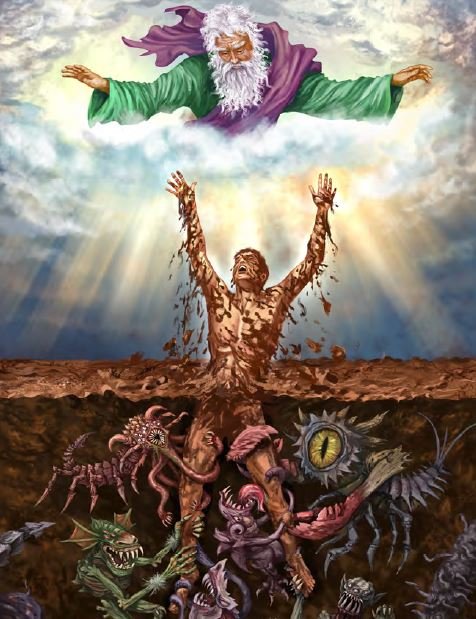
It is interesting to note that none of the four tutors married or had children. Many of the students who came to the ashram brought their families. While the tutors noted, “Teacher never said we should get married; he never told us how it was supposed to be. If people are in love, he says yes, create a family,” it appears that the spartan, precarious lifestyle of an itinerant preacher demanded celibacy and detachment from intimate relationships. D. explained his choice as a “sacrifice to a higher purpose.” He recalls Rudnev’s discussion of “the Tantra topic and ideas about the transformation of sexual energy to live a long life.” He notes, “I used this energy to help people. I fasted and slept very little and transformed my sexual energy so I could help people.”
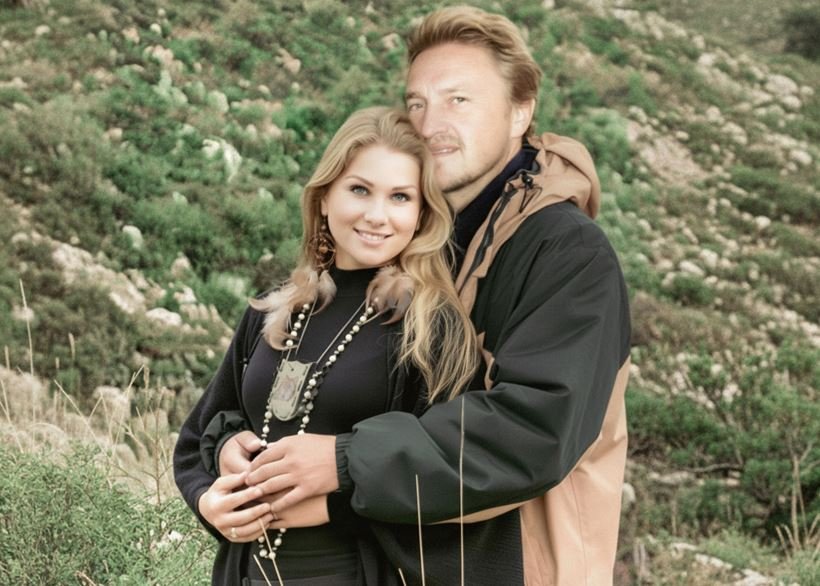
The fifth informant, T., proved to be an exception to this pattern because she became Konstantin Rudnev’s wife.
T. was brought up with a scientific education with no religious background and had no interest in spirituality. She was, however, keenly interested in philosophy and psychology. In 2007, she heard about the Teacher in a seminar she attended. One of Rudnev’s students was speaking, and T. was impressed: “He answered questions that I had never asked before—about love and emotional states. I never thought it was possible to control one’s emotional state before. So much knowledge! I heard about Master Konstantin and his books. I wanted to meet him. So in 2008, I went to the Ashram in Siberia.”
When she arrived, Rudnev was already speaking; she was late for his lecture: “As I entered the room, he had already started with 60 people around him. He was sitting in the middle of a stage. When I came in, I saw that he was shining. He was so magnetic that I just stopped; I didn’t look for a seat. He was so inspiring, talking about psychological development and how you can search inside yourself. I stopped to catch my breath, then I came closer. He looked at me. I could see the Universe in the eyes of a Master! Behind his eyes, all my questions disappeared. I thought, ‘I want to always be in this state, to always be with him!’ I was lost… In Russia, we have this phrase: ‘The most attractive sexual organ in a man is the brain.’”
T. described the daily walks in the forest: “I started to run in the forest with the other students until we were hot and sweaty. Then we would jump into icy water or roll naked in the snow. The teacher said it would strengthen your immune system. I found a place in the village with horses, so I asked him if I could go riding. Every day, I would take a horse and go riding in the forest. I loved it! He would give lectures in the middle of the day with a close group of students. He would walk in the forest for six hours with ten to fifteen students he was training. I received an invitation to walk with him. I try to be near and ask questions. We record what he says. I started to help him. He doesn’t do email, but I do, so I could help answer thousands of questions from people all over the world.”
She spoke of their love relationship: “Once, we were walking, and he was talking to someone else, and I almost fell! He reached out his hand and stopped me. I looked into his eyes, and we grew closer. We held hands as we walked and started talking one-on-one. I was interested in the ideas that he transmitted. He saw that. He gives all of himself. Sometimes we were alone, and we grew closer. In May 2009, we went to Kyiv in Ukraine. He liked to go to the seaside near Ukraine. We were so close at that moment, and he asked me if I wanted to be officially married (even though we were already together forever, not just in this life). So we were married in a government registration building, and later we married again in a shamanic ceremony with a few close students and the four gods of eternity, the past, present, and future.”
T. explained her role in the Ashram: “I became Konstantin’s right-hand woman. He can answer any question, but he doesn’t like technology. He loves nature, but he doesn’t have a phone. I have a phone and am always in contact with people, so I became his communicator to the whole world. He is not fluent in any language but Russian. I speak English, so I answer questions sent to him in English.”
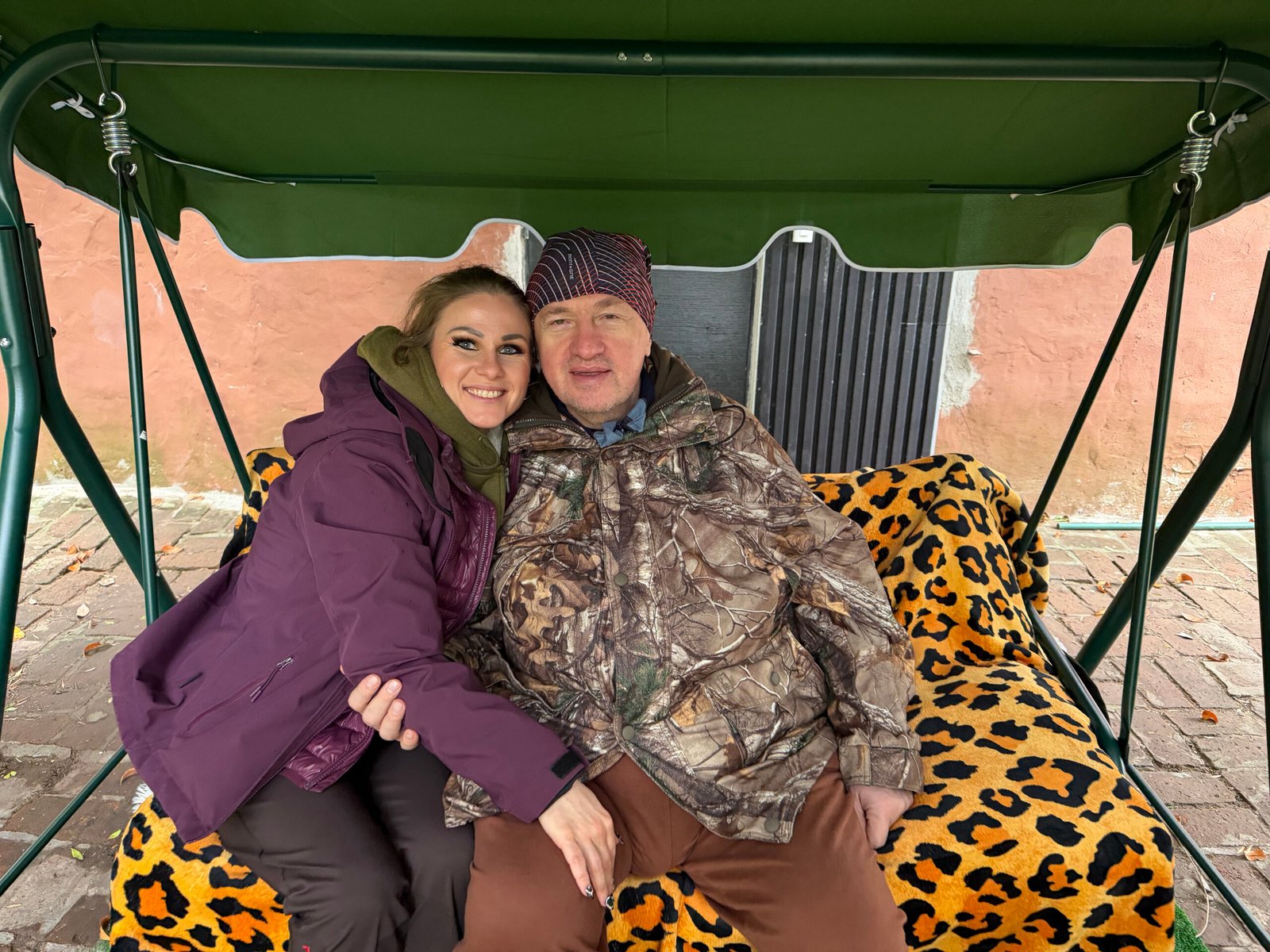
T. was unique among Rudnev’s students. She never became a traveling tutor because she married him legally. She was thereby able to maintain access (albeit strictly limited) to Rudnev during his prison sentences in Russia and Argentina, and to support him during his period of release. She accompanied him to Argentina and stood by him as the Bariloche prosecutors targeted him, and she cared for him during his house arrest.
Answers from Rudnev
I asked T. if I could interview Konstantin Rudnev. She told me he was recovering from surgery and did not speak English. In the end, I sent a list of questions, which T. relayed to him. She facilitated a long, fascinating discussion with her husband based on my questions. By this means, I was able to gain insights into Rudnev’s formation as a philosopher and mystic from childhood into early manhood: who his spiritual teachers were and what books influenced his thought. More importantly, I gained insights into what an extraordinary effort this man had made to seek out hitherto inaccessible sources of occult knowledge that were banned in the Soviet Union, and his remarkable talent in synthesizing radically different and apparently incompatible worldviews in such a way as to present a series of strikingly new ideas and a coherent system of forgotten knowledge to his students.
Rudnev’s interest in Christianity was frustrated because the Bible was banned in Russia. Still, while reading atheistic literature, he discovered a treasure trove of Bible verses, mocked and denounced by atheist authors. He cut them out and compiled them as an incomplete Bible.
As for Shamanism, Rudnev notes: “…fortunately, there were scientific works available…. When the Russian tsars were conquering Siberia, scholars also went there—ethnographers, so to speak… Thanks to these scientists, information about shamanism has been preserved. Of course, it was fragmentary and incomplete, more theoretical, but still some information survived.”
To access the books by George Ivanovich Gurdjieff, Castaneda, Osho Rajneesh, and others, Rudnev relied on “samizdat,” the self-published underground literature available in the Soviet Union in the 1980s. Rudnev explained the process as follows: “Books were retyped on typewriters back then… They used tracing paper—the thinnest paper. A carbon copy system was used up to the 12th copy, at which point the text was barely visible… It was all blurred and hard to see. But it allowed people to produce 12 copies at once, rather than just one book. I read 12th-copy texts with a magnifying glass, trying to make out the letters. Sometimes I had to trace the letters by hand because they were not clearly visible. I had to read with a magnifying glass, and sometimes I had to reconstruct the meaning intuitively… I read these books: Osho, Gurdjieff, Castaneda, and others—through samizdat copies.”
Rudnev’s explorations into trance states accessed through what Elaide called “archaic techniques of ecstasy,” such as dance or chanting, began in childhood. He notes: “Since childhood, I have always had a desire to experience everything directly. I was not very interested in book knowledge. I always wanted to experience, to touch, to feel anything I learned about. And only when I experienced it emotionally, in my whole being, did I feel satisfaction—that yes, now I know what it is.”
As a child, the forest was his home. At age 20, he reports, he traveled to Altai to study with a Siberian shaman named Altai Kam for several years. He experimented with drugs in his childhood to experience their effect and decided they interfered with one’s self-will.
Rudnev recalls how, as a child, he searched for Christian hymns on his grandfather’s old receiver and danced to them. Later, he discovered recordings of the hymns of a Russian Orthodox hermit monk, called “Monk Roman,” whom he considers to be a saint: “In the 1980s, I was trying to understand Christianity, but I had to understand it on my own. That is, I would take religious hymns and begin to dance to them. And I would enter into these religious states—deep religious states of faith, love, and perception of God.”
The charisma of Konstantin Rudnev
The interviews offered vivid descriptions of Rudnev’s extraordinary presence and his excellence as a speaker. My informants offered vivid descriptions of his exotic costumes, his kindness, and his sensitivity towards his audience. M. reported: “In the evening, we would gather. He would sit in an armchair like Osho. The room was dim with candles, which helped to open the third eye. He wore a shaman’s headband. He was quite young and strong and had an extraordinary voice, resonant but very calm. When he spoke, I felt I was breathing in the energy he gave. I could see the teacher’s aura filling the whole room. I felt his aura was infinite kindness and love. He answered all our questions, even when they were naive or the same people kept asking the same ones. He was always ready to help. He was never critical; he supported everybody. When I first saw Teacher, he was wearing a black shamanic outfit embroidered with gold thread. He wore the red symbol on his cloak and a shaman’s headband. I ended up with hundreds of people living together, feeling as if Teacher were giving his love, sent straight from his heart to all of them.”
Several commented on his mysterious quality. S. described him as a “Teacher whose wisdom was so deep it was impossible to identify his age. He was ageless. Now I think he must have been around 30.” They were impressed by Rudnev’s special knowledge of the nature of the spiritual world: “The teacher was in contact on the subtle planes with the Masters of Shambala. He would share with us his Samadhi experiences and his conversation with God on how the Universe was constructed.”
Rudnev’s account (via T.) of his mystical quest since childhood gives us new insights into his appeal and impact in Russia. Here was a man who went to extraordinary lengths to access wisdom that was suppressed and banned in his time. As a child, he prowled the forest, ingested drugs, hunted down and danced to Christian hymns. As a youth, he scoured atheist books for biblical passages, and perused samizdat 12th-copy texts through a magnifying glass. He not only gathered this eclectic mine of information but also synthesized it into a coherent worldview to support his childhood intuition that all religions worship the same God.
The Tutors: their mission today
The tutors each expressed their deep shock at being separated from their Teacher after the 2010 raid, their sense of loss, and their common resolve to continue spreading their Master’s teachings. M. reported: “After 2010, I never saw him again. He was in prison for 11 years. After I left the country, I have been giving seminars in Belgium on his teachings. There are no more ashrams, but as a Tutor I transmit the knowledge. There are so many lies put on the name of the teacher in the media. My mission is to bring this truth to people and tell them about the Perfect Teacher so they can still receive help from him. It hurts because what I loved was taken away. I realized it was impossible to stay in Russia. When you see such beauty, such love destroyed… You can no longer trust. I had friends abroad, so I left right away. When I left Russia, I took my notebooks with me, and I realized it was very dangerous. I go to Europe, to Germany, then to Latin America, where I stay in a few countries, Chile and Brazil. I help people; I teach them, and they give me money —donations—not a lot. I don’t need much. I try to share the love and the knowledge, and to teach as my Teacher taught me. Some people help me. They always appear in magical ways. He taught me to trust the Universe. If you live like that, with trust and joy – people will appear. I am very grateful. But it pains me that such a great person was not understood in Russia. It is very sad!”
S. told a similar story: “After 2010, no one coordinated anything; everyone made their own decisions. It was dangerous; we were at risk. Even now, the investigation continues, and the police are searching for more victims. For his students, this is a very risky period. There are no victims. The victims named in the legal case in Russia were paid or forced. Nobody goes into details because there are no details. Ashram Shambala no longer exists. A few years after the raid, the organization was officially banned.”
D.’s experience was partially different: “When the raid happened in 2010, I was not there. I was far away in Europe or Brazil. I was aware of all the criticism and opposition for around a year. They were all lies. I heard the news of the raid secondhand, from others. I was so busy. I wanted to look online. I overheard discussions. I had to close my social media. I received threats; it was so negative.”
However, all shared a sense of shock and helplessness. As reported by S., “After the raid, I didn’t know what to do. I was shocked. I didn’t see any other way but to keep helping people. I was in Brazil for three years, then I came back to Russia. I saw many students there. Then I traveled to other places, and my life went on as before. I was invited to different seminars. Today, everyone is on their own, helping people. We are in contact with our colleagues and ask for advice on how to handle our clients’ problems. I follow my own path. I left Russia. All the people who wished to continue to convey his ideas moved abroad. I live in Montenegro. I am alone, but I support my family and friends in Russia. I help people through a psychological counseling practice. I don’t speak his name. But I share his knowledge. I wish him a long and happy life as much as is possible. “
Conclusion
The ferocity of the Russian government’s suppression of this spiritual movement is reflected in the “tutors’” operations today, which remain tentative and secretive. Rudnev’s well-trained former students, or “tutors,” continue to communicate what they call the “knowledge” or “wisdom” of their “Teacher,” each in their own way. They may do this through workplace contacts, through psychological counseling with clients, or by organizing seminars and serving as invited speakers. These Russian conveyors of spiritual knowledge are working abroad, in Montenegro, Brazil, Germany, Belgium, and many other countries.
According to my informants, there is no organized, centralized, or coherent “Ashram Shambala” movement today. During Rudnev’s eleven years in a Russian prison, his communications were carefully monitored. He was allowed one brief, closely monitored phone call with his wife every two months. In Montenegro, he was kept under surveillance. After the arrest in Argentina, the situation was similar. Thus, since 2010, Rudnev has neither the will nor the opportunity to direct a “movement.” Some tutors have continued to teach without any supervision from Rudnev.
Today, the tutors fall into three classes. Some plagiarize his ideas to build their own career, giving him no credit. Some appropriate the name “Ashram Shambala” and falsely claim to be his appointed successors. Finally, the tutors featured in this chapter continue to disseminate Rudnev’s teachings. Since the police investigation is still active today, these tutors do not dare mention their spiritual master’s name or refer to his books. Nevertheless, they continue to dedicate their lives to “helping people” by sharing the knowledge and wisdom of their anonymous spiritual master with the public.
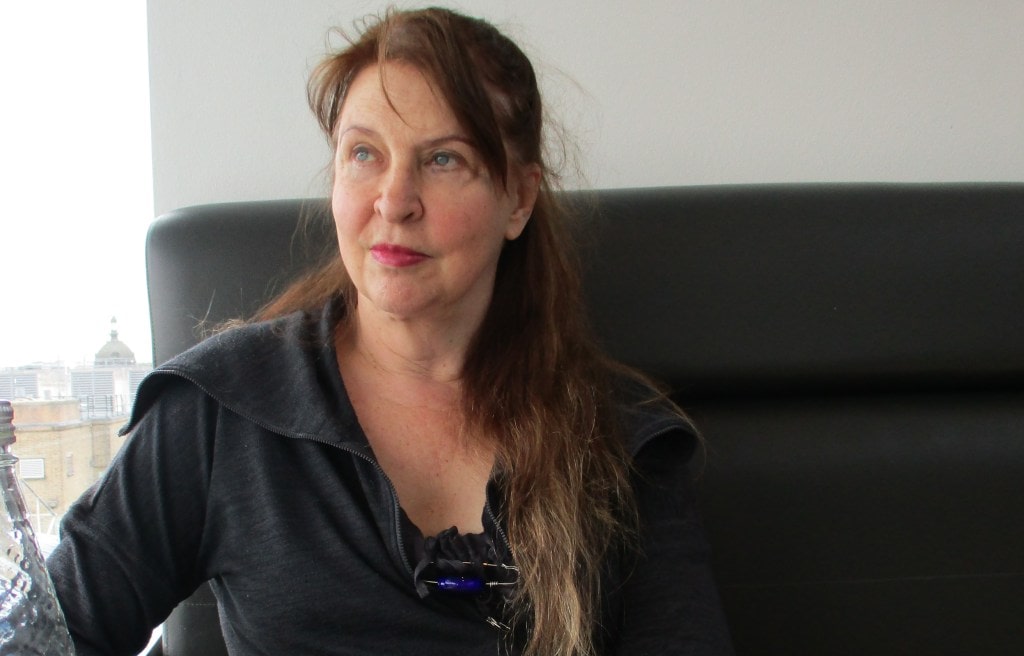
Susan J. Palmer is an Affiliate Professor in the Religions and Cultures Department at Concordia University in Montreal. She has directed the Children on Sectarian Religions and State Control project at McGill University, supported by the Social Sciences and the Humanities Research Council of Canada (SSHRC). She is the author of fourteen books, notably The New Heretics of France (Oxford University Press, 2012).