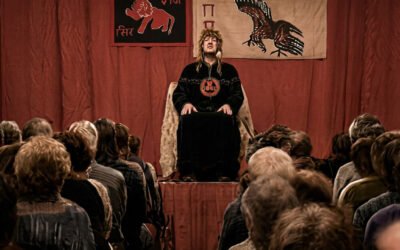
Another instance in which slander against spiritual minorities turns into the misuse of state power.
by Nazir Ahmad
For more than thirty years, I have worked on freedom of religion or belief (FoRB). My professional life began in Pakistan, where questions of religious identity and minority rights are part of daily experience, and where the relationship between citizens and state institutions often determines whether fundamental freedoms survive. My academic training and later work took me from local communities in Punjab to international forums in Geneva, Brussels, and Washington. I have collaborated with civil-society organizations, parliamentary groups, and research centers, producing analyses of discrimination, blasphemy laws, and the vulnerability of spiritual minorities in South Asia. These experiences shaped a comparative method that examines how FoRB violations emerge, circulate, and recur across borders.
I have studied cases in Myanmar, Nigeria, Russia, and Argentina. Despite their differences, they often display the same mechanisms. A spiritual minority is slandered, the slander is amplified by sensationalism, and state institutions act on these constructions rather than on verified evidence. This sequence is familiar to anyone who has worked on FoRB in Pakistan, where accusations can escalate rapidly and destroy lives, and where communities outside the mainstream are often misrepresented. It was through this comparative lens that I first encountered the case of Konstantin Rudnev and of “Ashram Shambhala,” the spiritual school he once led.
The case has attracted the attention of leading scholars, legal experts, and human rights advocates, men and women I deeply respect. They have documented how the accusations against Rudnev originated in Russia, were later exported to Montenegro, and eventually resurfaced in Argentina. I recognized a pattern I had seen elsewhere. Narratives were constructed without nuance, allegations were repeated without verification, and state institutions reacted to imported claims rather than to the facts before them.
The Russian phase relied on outdated notions of “cults” that portrayed spiritual seekers as passive and ignored their agency. Media outlets amplified sensational claims, creating an atmosphere in which impartial analysis became difficult. The same narrative followed Rudnev to Montenegro, where he had sought protection. Reports from Russia were accepted at face value, and local authorities responded to allegations that had never been tested in their own jurisdiction. No criminal proceedings were initiated, yet the public was encouraged to believe that Rudnev posed a danger.
The Argentine phase repeats the pattern. A minor incident was transformed into a narrative of transnational criminality. Documents and testimonies that could not withstand serious scrutiny were circulated. The presumption of innocence was overshadowed by a presumption of guilt, sustained by media constructions rather than by verified facts. As a result, Rudnev’s health, safety, and fundamental rights are now at risk. For a FoRB specialist, this is well-known territory. It begins with slander framed as concern for public safety or morality. It continues with the stigmatization of spiritual minorities and their leaders, who are depicted as dangerous or manipulative. It culminates in the misuse of state authority, in which institutions act on narratives rather than on evidence. I have seen this happen in Pakistan and in other countries where religious and spiritual minorities are misunderstood and misrepresented.
The Rudnev case is now one of the most widely discussed FoRB controversies internationally. It illustrates how fragile the right to freedom of belief becomes when public opinion is mobilized against minority spiritualities. The case has been shaped by misunderstandings, misrepresentations, and procedural irregularities across multiple jurisdictions. Such conditions create an environment in which FoRB violations flourish.
After studying the available documentation, I add my voice to those calling for a fair trial and humane treatment for Konstantin Rudnev. Justice requires that the allegations be examined objectively, without reliance on imported narratives or media distortions. It also requires that spiritual minorities and their leaders be treated with dignity, and that states uphold their obligations under international human rights law. The Rudnev case concerns one man, yet it also concerns the principles that protect all individuals who seek meaning outside the mainstream. Upholding these principles is essential if similar injustices are to be prevented.
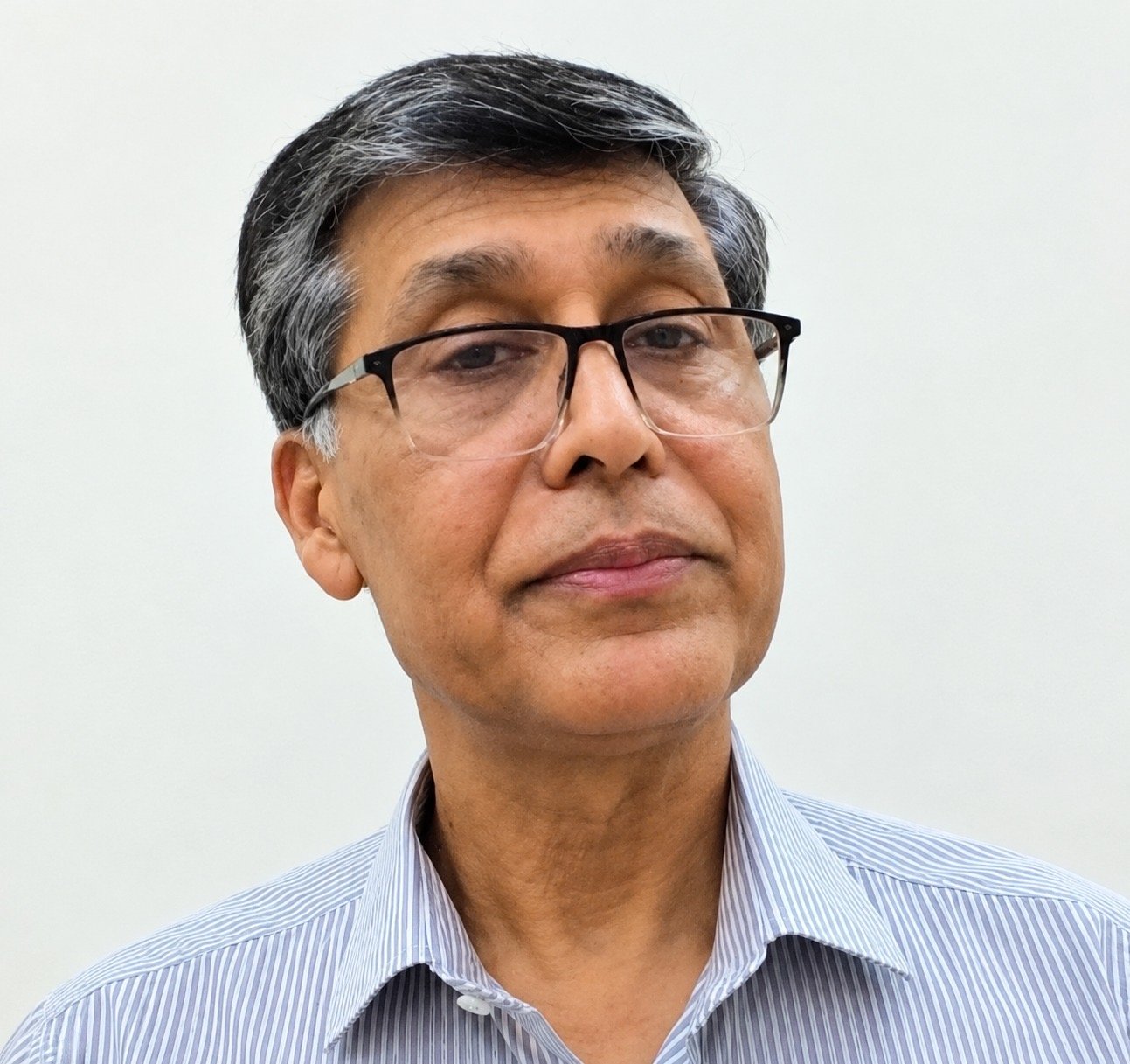
Nazir Ahmad is a human rights defender based in Multan, Pakistan, with more than thirty years of experience in advocacy, documentation, and fact-finding. He has been an active member of the Human Rights Commission of Pakistan (HRCP) since 2008. He was twice elected to its Council and served on it for six years in total. He has led many fact-finding missions on marginalized communities in South Punjab. He organized kiln workers campaigning for better working conditions, and he led a peasant movement in the Cholistan region that won a government agreement to give land to landless families. After a year of training with Peace Tandem, he started peace-building projects between Baloch and Punjabi communities and between India and Pakistan. One of these is an annual Peace Calendar with artwork by children from both countries. He has also worked as a project manager in Tanzania for Jhpiego, an organization affiliated with Johns Hopkins University, and he produces a video series on the history of human rights and the Universal Declaration of Human Rights.