How lawyers and religious competitors have pushed Japan toward measures that target believers even after the organization’s dissolution.
by Patricia Duval
Article 1 of 4.
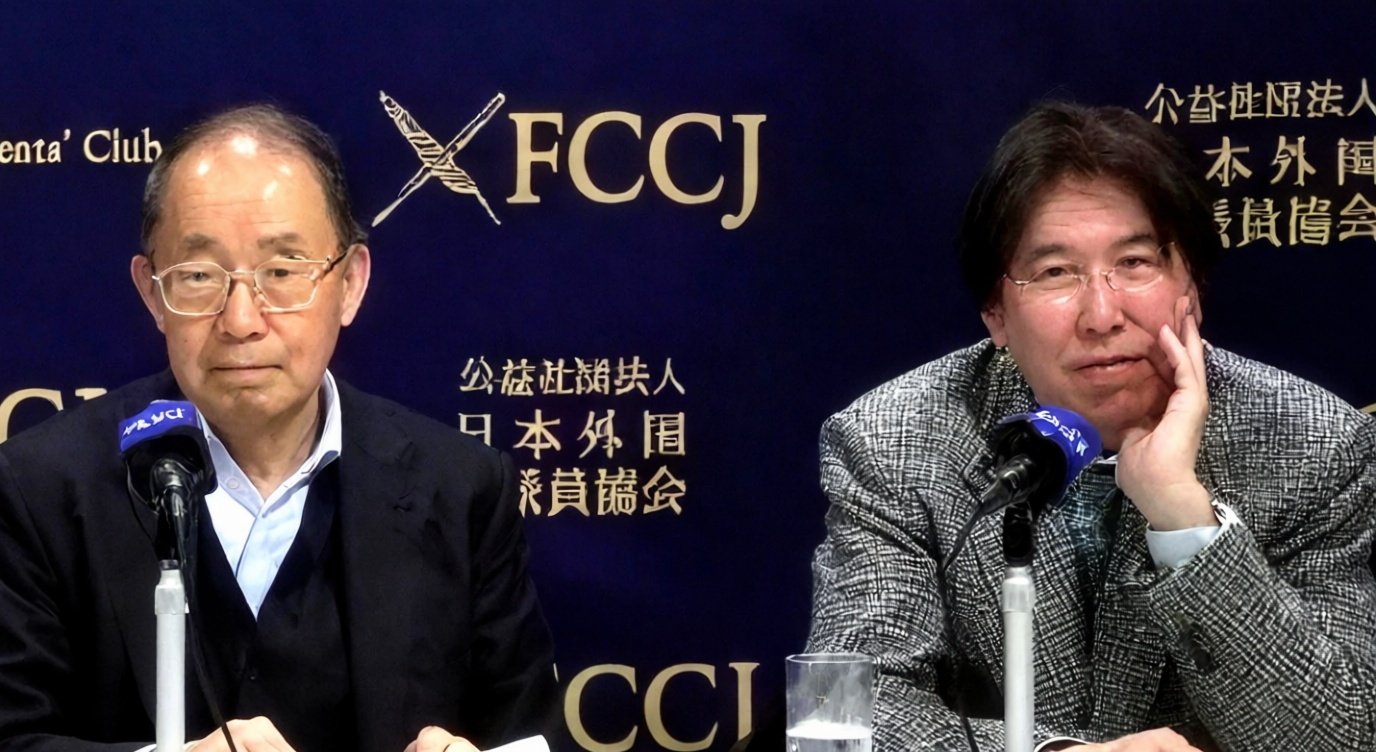
Following the dissolution order issued in March by the Tokyo High Court against the Federation of Families for World Peace and Unification (hereinafter referred to as “the Unification Church” or “the Church”), opponents of the Church issued several statements expressing satisfaction, but also frustration that the dissolution did not lead to a complete ban of the Unification Church in the country. Anti Church activists, led by some lawyers and religious competitors, urged the government to go further to prevent the very practice of the religion in Japan.
According to them, the problem with the Unification Church does not lie so much in deviant practices that could be corrected—as occasionally happens in traditional religions—but rather in the faith itself, which they deem heretical, and in proselytizing, which they view as a form of mind control. Under the influence of such a lobby, several measures have been proposed or already implemented, particularly regarding the continued religious practice of individual believers or groups of believers, as well as the “issue” of minors raised in their parents’ faith, which is considered “child abuse related to religious belief.” This form of witch hunt—or religious purge—in a modern democracy, disguised as a campaign against “cults,” poses a real threat to freedom of conscience and the freedom to practice the religion of one’s choice, as well as to the freedom of peaceful assembly and freedom of expression, all of which are protected by the treaties Japan committed to uphold after the end of World War II.
Anti Heresy Movement
The National Network of Lawyers Against Spiritual Sales (NNLASS)—founded by lawyers close to the Communist Party at a time when Church members were campaigning against the spread of atheistic communism in East Asia—joined forces in 1987 with a group of Protestant pastors who viewed the Unification Church as a rival sect to eliminate the Church from Japan. For the following three decades, these lawyers worked in coordination with pastors involved in the “deprogramming” or forced deconversion of believers through their abduction and confinement by families, and coerced indoctrination by pastors to recant the religion. This longstanding practice was euphemistically referred to as a “family issue” or “protection” by the Japanese authorities, who covered it up until the Human Rights Committee, in 2014, urged them to put a definitive end to it.
NNLASS lawyers, who pledged the elimination of the Church, made a statement right after the release of the High Court decision on March 4. They welcomed the Court’s decision but stated that it was not sufficient. Based on a biased interpretation of the religion—which they view as a form of mental manipulation—and of donations made to the Church—which they see as mere commercial transactions, completely disregarding the faith of the believers who solicit these donations—they claim that even future fundraising by groups of believers would constitute “unfair solicitation of donations,” just as the Church previously did.
And they call for a revision of the law on the prevention of abusive solicitation of donations: “The current Unfair Donation Solicitation Prevention Act still shows several shortcomings from the perspective of preventing or remedying the specific type of victimization seen with the Unification Church. This involves victims having their value judgments altered through illegal proselytizing activities that infringe upon freedom of religious choice, leading them to make donations as instructed. Furthermore, as the Act primarily prevents donation solicitation by corporations, it cannot regulate similar solicitation activities conducted by the Unification Church or its members as voluntary groups after losing their religious corporation status, or by individuals.”
These allegations—that Unification Church members “alter people’s value judgments” through “illegal proselytizing activities that infringe upon freedom of religious choice”—are based on the discredited and unsubstantiated theory of mind control, which courts of law have rejected as nonscientific worldwide.
Based on this flawed theory, the NNLASS recommended amending the law to prohibit the collection of donations by groups of followers or by individual believers who wish to continue practicing the Unification Church’s faith. However, this is a Christian inspired denomination with a body of doctrine developed by its founder and a large community of followers, which therefore meets the criteria for a religious community under international law and, as such, deserves the protection afforded by that law.
The dissolution of the only Unification Church religious entity that brought together all of Japan’s churches, along with the cessation of all related activities, left hundreds of thousands of believers without places of worship or any means to practice their religion in community with others in Japan.
The European Commission for Democracy through Law—better known as the Venice Commission, the Council of Europe’s advisory body composed of top constitutional experts—issued Guidelines on the Legal Personality of Religious or Belief Communities, which provide that “the legal prohibition and sanctioning of unregistered activities is incompatible with international standards.”
In particular, the Commission specifically addressed the dissolution of religious organizations: “The withdrawal of legal personality from a religious or belief organization should not in any way imply that the religious or belief community in question, or its individual members, no longer enjoy the protection of their freedom of religion or belief or other human rights and fundamental freedoms… Doing so would impose a collective sanction on the community as a whole for actions that in fairness should be attributed to specific individuals” (§34).
Even if the Church had committed wrongdoing, only the individuals involved could be punished, and the practice of religion should not be affected. Yet NNLASS lawyers want to go further than dissolution and prevent the religious practice by individuals or groups of faithful, and forbid the raising of necessary donations to fund their activities, in violation of the right to “establish and maintain religious institutions” protected by international human rights instruments, in particular the 1981 Declaration of the National Assembly, Article 6(f): “The right to freedom of thought, conscience, religion or belief includes the freedom to solicit and receive voluntary financial and other contributions from individuals and institutions.”
The lawyers’ stance amounts to advocating the banning of an entire religion from Japan, just as in totalitarian states such as Russia, where the religion of Jehovah’s Witnesses has been banned as extremist and believers are regularly prosecuted for holding group meetings and reading the Bible at home. On March 13, 2026, the United Nations Human Rights Committee condemned the Russian Federation for violating their right to freedom of religion as a result of these arrests and incarcerations. The ruling obliges Russia to provide full reparations to the Witnesses involved and to take measures to prevent similar violations in the future (“Vilitkevich et al. v. Russian Federation,” CCPR/C/145/D/3192/2018).
In contravention of these international human rights standards, NNLASS proposed similar measures to prohibit the practice of the Unification Church faith in Japan. They also expressed their intention to spread similar repression to South Korea, according to statements made to the media. On January 8, 2025, the NNLASS signed an agreement with the The Korean Association of Christian Heresy Counseling Centers to cooperate in their fight against “cults” in Japan and Korea and help “pass laws that regulate cult organizations in South Korea” (cf. article published in “Kirishin,” a Korean Christian newspaper, on January 21, 2025).

The representative of the Japanese lawyers explained that they have a serious problem in Japan: pastors who have been “counseling” believers and lost believers are in their 70s and 80s, and young pastors are not very involved. He stated that “People who offer counseling do not grow up much in Japan. I envy the Korean system, which has consultation offices all over the country. We want to work with the pastors.” It appears that, since Japanese pastors have stopped practicing deprogramming and the “counseling” of reluctant members has declined, Japanese lawyers are seeking to collaborate with Korean pastors who are actively fighting against heresy and who are known to continue engaging in such activities.
Furthermore, to continue the purge that had been carried out for decades in Japan through the deprogramming of believers, the lawyers proposed measures aimed at “de-indoctrinating” their children within the public school system.
The NNLASS issued an Opinion in December 2023, recommending that the authorities adopt measures to re-educate second-generation believers to turn them away from their parents’ faith (Opinion Paper on the “Prevention of Harm and Support for Second-Generation Members of Religious and Similar Groups,” December 14, 2023).
This recommendation was implemented through a plan adopted at a Cabinet meeting on January 19, 2024 (the “Proposed Measures to Enhance and Strengthen Support for Victims of the ‘Former Unification Church,’” hereafter the “Plan”).

Patricia Duval is an attorney and a member of the Paris Bar. She has a Master in Public Law from La Sorbonne University, and specializes in international human rights law. She has defended the rights of minorities of religion or belief in domestic and international fora, and before international institutions such as the European Court of Human Rights, the Council of Europe, the Organization for Security and Co-operation in Europe, the European Union, and the United Nations. She has also published numerous scholarly articles on freedom of religion or belief.