A judge who once attacked the religious organization at an anti-cult seminar is not impartial and should be recused.
by Massimo Introvigne
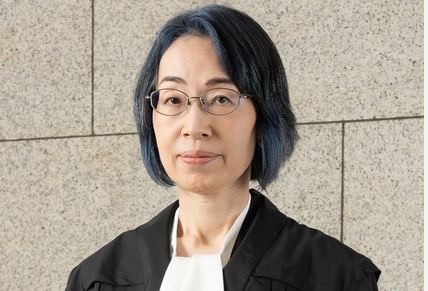
The unfolding situation surrounding Justice Masami Okino of Japan’s Supreme Court has become one of the most curious—and troubling—episodes in the long saga of the government’s campaign against the Unification Church, now known as the Family Federation for World Peace and Unification (FFWPU). On May 21, 2026, the Church’s lawyers filed a formal application for her recusal from the Third Petty Bench, which is handling the special appeal against the Tokyo High Court’s dissolution order. The motion is based on Justice Okino’s own recorded words, delivered at a 2024 Japan Federation of Bar Associations seminar that functioned, in substance, as an anti Unification Church event. At that time, she was a university professor, not yet a Justice.
She argued at the seminar that even legitimate religious activities—specifically, the teaching of doctrine—can place believers in a state in which they are deprived of their free will. She added that while the act of teaching may not be illegal in itself, exploiting such a state to obtain donations is unlawful, and she asserted that this is precisely what the Unification Church does. She went further, claiming that the Church’s practices are “close” to fraudulent multilevel marketing schemes. In one of the most striking lines attributed to her, she stated: “In the case of the Unification Church, the other party [i.e., the Church member soliciting donations] actively drives the person into that situation [where free will is impaired], so culpability is higher.”
These are the words of someone who appears to embrace the long discredited theory of “brainwashing,” a concept rejected by courts in democratic countries and by scholars of religion for decades. Justice Okino’s theory, if applied consistently, would place nearly every religion under suspicion. Many traditions teach doctrines that encourage self sacrifice, generosity, or the belief that spiritual merit can be gained through giving. If teaching such doctrines can be construed as creating a state of diminished free will, then the line between religious persuasion and fraud disappears entirely. Okino’s theory is universal in its implications and dangerous in its application.
The seminar where Justice Okino spoke was not an academic colloquium. The Japan Federation of Bar Associations, an organization notorious for its anti-cult positions, organized it. It featured two core members of the National Network of Lawyers Against Spiritual Sales as keynote speakers, a group known for its adversarial stance toward the Unification Church. One of them, attorney Masaki Goro, has argued that merely possessing faith in the Unification Church constitutes an infringement on religious freedom and has defended abduction and confinement for forced deconversion. The entire event proceeded from the premise that the Church is inherently malicious and that all believers are victims of “mind control.” Okino’s remarks aligned seamlessly with this narrative.
International human rights law leaves no ambiguity about the consequences of such conduct. Article 14(1) of the International Covenant on Civil and Political Rights requires that tribunals be “competent, independent and impartial,” and the Human Rights Committee has repeatedly held that impartiality includes both subjective neutrality and the objective appearance of neutrality. Judges who have expressed views suggesting bias toward a party must be recused to preserve public confidence in the administration of justice.
The problem is not that a legal scholar once expressed an opinion. The problem is that she is now sitting in judgment on the very organization she publicly condemned. Japan’s own Non Contentious Cases Procedures Act, Article 12(1), provides that a judge shall be recused when her participation could “impair the fairness of the trial.” The Unification Church’s lawyers argue that this threshold is clearly met. It is difficult to disagree. When a justice has already suggested that the appellant’s core religious activities are inherently harmful and that its believers are incapable of exercising free will, the appearance of impartiality is obliterated.
The broader context makes the situation even more troubling. Scholars and international observers have already criticized the dissolution case for relying on vague notions of “social appropriateness” and adopting a doctrinally intrusive approach that is inconsistent with global standards on freedom of religion. Now, the Supreme Court’s handling of the appeal risks compounding the problem. Assigning the case to a bench that includes the Justice most publicly associated with anti Unification Church rhetoric raises questions that extend beyond a single lawsuit. It raises questions about the integrity of Japan’s judicial process.
Japan now faces a moment of institutional self reflection. The dissolution of a religious corporation is one of the gravest actions a democratic state can take. It demands a judiciary that is not only fair but visibly fair. Allowing a justice who has publicly endorsed anti Unification Church theories to adjudicate the Church’s final appeal risks transforming a constitutional process into a political one. It also risks sending a message that, in cases involving unpopular religions, the ordinary safeguards of impartial justice no longer apply.
For a country that prides itself on the rule of law, this is a dangerous message indeed.

Massimo Introvigne (born June 14, 1955 in Rome) is an Italian sociologist of religions. He is the founder and managing director of the Center for Studies on New Religions (CESNUR), an international network of scholars who study new religious movements. Introvigne is the author of some 70 books and more than 100 articles in the field of sociology of religion. He was the main author of the Enciclopedia delle religioni in Italia (Encyclopedia of Religions in Italy). He is a member of the editorial board for the Interdisciplinary Journal of Research on Religion and of the executive board of University of Pennsylvania Press’ Nova Religio. From January 5 to December 31, 2011, he has served as the “Representative on combating racism, xenophobia and discrimination, with a special focus on discrimination against Christians and members of other religions” of the Organization for Security and Co-operation in Europe (OSCE). From 2012 to 2015 he served as chairperson of the Observatory of Religious Liberty, instituted by the Italian Ministry of Foreign Affairs in order to monitor problems of religious liberty on a worldwide scale.