Why the dissolution of the Family Federation raises constitutional alarms.
by Tatsuki Nakayama
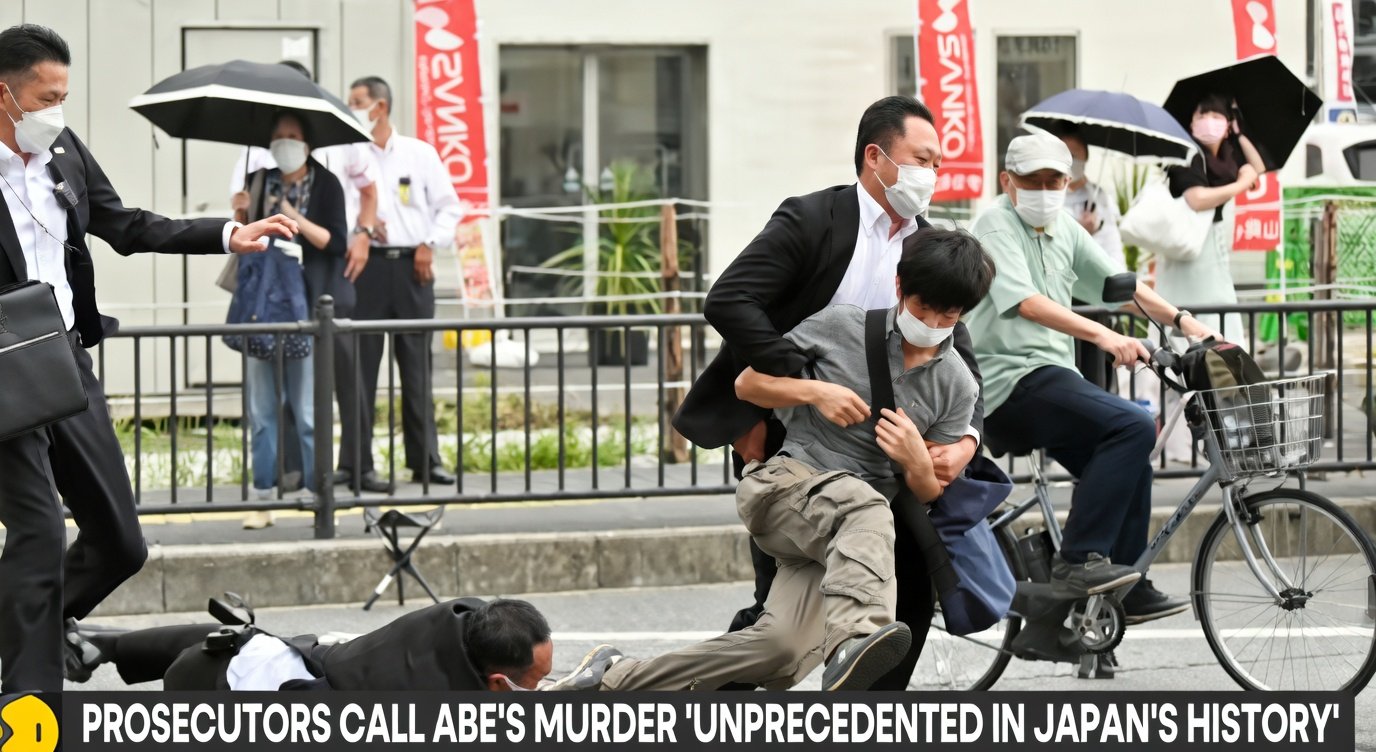
On January 21, 2026, the Nara District Court sentenced Tetsuya Yamagami, the assassin of former Prime Minister Shinzo Abe, to life imprisonment. This outcome was predictable. Under Japanese case law, the murder of a single person does not justify the death penalty, and international trends toward abolition make capital punishment look excessive even in a case involving the assassination of a former Prime Minister during a public speech. At the same time, a fixedterm sentence would have been unacceptably lenient for a politically motivated killing carried out to advance the perpetrator’s personal demands. Life imprisonment, therefore, represented the only appropriate sentence.
The court also avoided indulging the narrative—popular in some media—that the Family Federation’s (formerly known as the Unification Church) proselytizing practices or its political connections somehow mitigated the defendant’s responsibility. It found no impropriety in former Prime Minister Abe’s message of support to the organization. It did not treat the muchdebated relationship between the Family Federation and politics as grounds for leniency. With public sympathy for Yamagami having largely evaporated, and with the High Court’s dissolution order against the Family Federation already in effect, there is little indication that his sentence will be reduced on appeal. Japanese courts show no inclination to treat the religion the terrorist despised as a justification for his act.
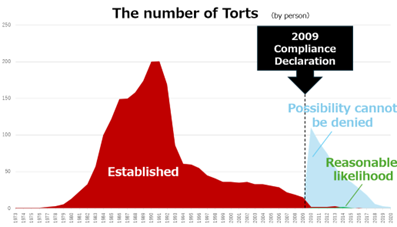
The Tokyo High Court’s March 4, 2026, dissolution order, however, effectively destroyed that religion and fulfilled the terrorist’s wish. The decision by Presiding Judge Motoko Miki raises a series of constitutional problems. The first concerns the principle of evidencebased adjudication. After the Family Federation’s 2009 Compliance Declaration, its tortious conduct decreased by 1/397 in monetary value and by 1/126 in the number of alleged victims, compared to the figures before the Declaration. Yet the Miki Decision relied heavily on post-2009 cases—91.2 percent of them—in which the formation of a tort “could not be ruled out” but could not be definitively established. In 96 percent of these cases, the organization had already refunded donations through prelitigation settlements. Despite acknowledging that tort formation could not be proven, the decision nonetheless asserted that the conduct “should be characterized as tortious” and that the organization “continuously engaged in tortious conduct.” This leap from “not established” to “categorically affirmed” amounts to finding liability without evidence, in violation of Article 32 of the Constitution, which guarantees the right to a fair trial.
The decision also relied on a chain of speculative inferences, such as predicting that the Family Federation would increase donation revenue or engage in improper solicitation based solely on senior officials’ defense of abstract statements by President Hak Ja Han Moon regarding Japan’s wartime responsibility and economic obligations. That officials defend the founder’s words is unremarkable. Yet to conclude from the mere fact that officials defended the founder that they have “neither the will nor the capacity to refuse the founder’s demands” is a leap of logic of the most extreme kind.
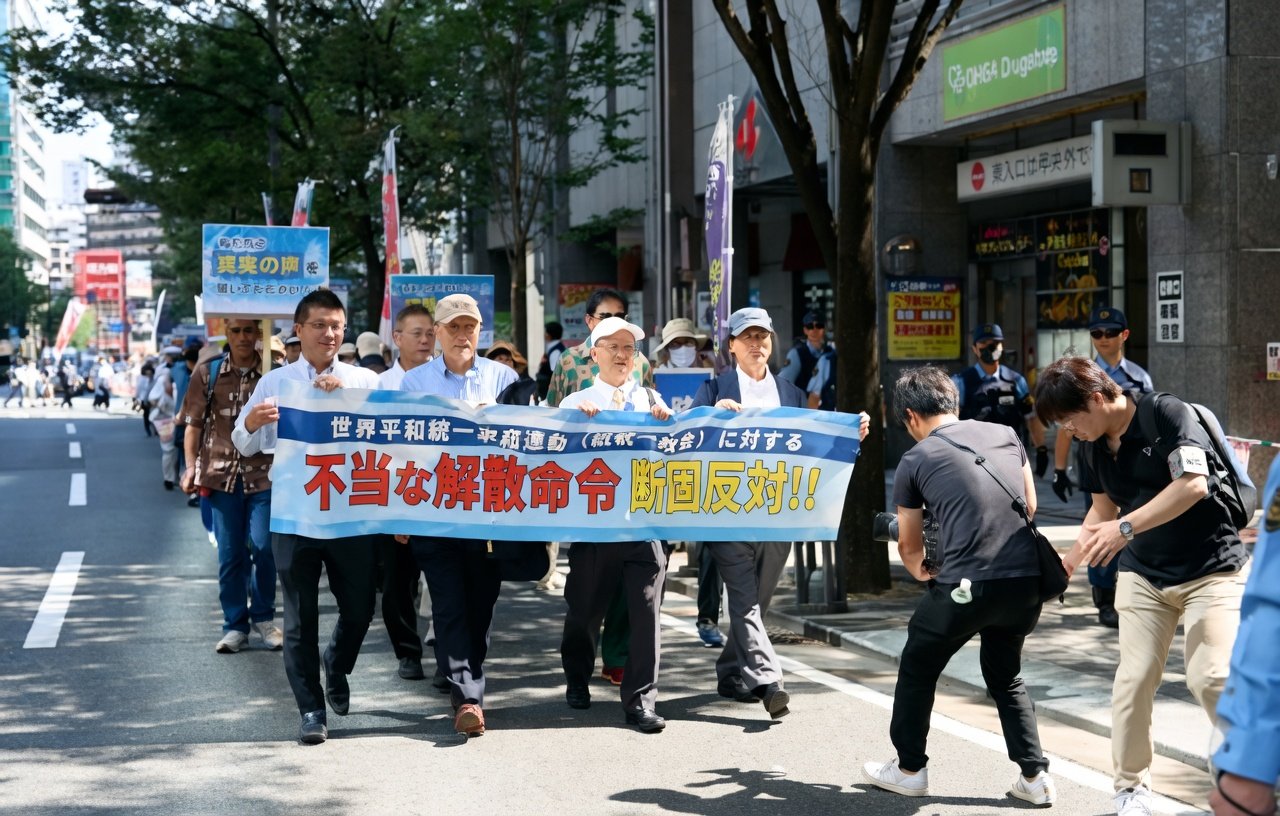
The ruling further displays a serious disregard for the human rights of believers. It claims that dissolution “carries no legal effect whatsoever of prohibiting or restricting the religious activities of believers,” and therefore does not infringe religious freedom. Yet believers currently cannot hold services or funerals in their churches. One cannot claim that academic freedom is intact while demolishing a university campus; likewise, prohibiting the use of all church facilities and assets is plainly an infringement of religious freedom.
Restrictions on religious freedom must also be based on the least restrictive means. Alternative measures exist, including the new law prohibiting improper solicitation of donations. The Miki Decision dismisses this law as ineffective because it attributes the improper solicitation to the Family Federation itself. But dissolution is not the minimum necessary means, especially since an unincorporated association could still solicit improper donations after dissolution.
The proportionality analysis is also flawed. The decision weighs, for the same group of current believers, the risk of future economic harm against the present infringement of their spiritual freedom. This is unprecedented and constitutionally perverse, given that spiritual freedoms hold higher constitutional value than economic ones. Moreover, prioritizing uncertain future harm over present, concrete harm contradicts established precedent requiring a clear and present danger to justify restrictions on freedoms such as assembly. The decision further intrudes on religious doctrine—criticizing theological concepts such as “restoration of all things” and “Eve Nation,” and condemning the purpose of acquiring activity funds for the late Reverend Sun Myung Moon and the current leader, Hak Ja Han Moon, as improper. This violates longstanding Supreme Court precedent prohibiting judicial intrusion into religious matters.
The proceedings themselves were conducted without public access, another constitutional concern. The Miki Decision held that dissolution proceedings need not be public because they are not disputes between parties. Yet in practice, since October 2023, the Ministry of Education, Culture, Sports, Science and Technology (MEXT) and the Family Federation have faced each other in an adversarial structure in the Tokyo District Court and Tokyo High Court, presenting arguments over a period of two and a half years. When the State seeks to deprive a religious organization of legal personality and religious freedom, transparency is essential. Conducting such proceedings behind closed doors violates Articles 82 and 32 of the Constitution.
The decision also expands the meaning of “violation of laws and regulations” to include civil law torts, following the March 3, 2025, non-penal-fine decision against former Chairman Tanaka. This contradicts the plain-language interpretation that limits “laws and regulations” to statutes enacted by the Diet and ordinances issued by administrative agencies. The court adopted this broader interpretation precisely because the Family Federation, having compensated claimants under Civil Code Article 709, had not violated any enacted provision. The Miki Decision abandons the narrow interpretation established in the Aum Shinrikyo case—where “laws and regulations” referred to prohibitory norms in enacted law such as the Penal Code—and does so in a case involving an organization that has committed no criminal offenses in 62 years.
Expanding the concept in a way more restrictive of human rights, without justification, is deeply troubling. Civil Code Article 709 does not clearly define what constitutes conduct in violation of laws or legal norms, raising concerns under the principle of legality and due process (Article 31 of the Constitution), which requires that sanctionable conduct be defined with clarity.
Finally, the decision relies on the vague concept of harm to “public welfare” as a ground for dissolution. The United Nations has repeatedly warned Japan that such vagueness violates international law. On October 1, 2025, UN experts issued a press release stating that the District Court’s decision violated international law. The Miki Decision disregarded these concerns and issued a ruling inconsistent with Article 18(3) of the International Covenant on Civil and Political Rights, which requires that restrictions on religious freedom be clearly defined, and with Article 98(2) of the Constitution, which mandates compliance with international law.
These five constitutional concerns form a troubling pattern. The Family Federation has filed a special appeal with the Supreme Court. To avoid being remembered as a court that bent constitutional principles to fulfill the wishes of a terrorist, the Supreme Court must render a judgment that withstands scrutiny from future generations.

Tatsuki Nakayama graduated from the Faculty of Law at the University of Tokyo in 1998. He was admitted as a lawyer in 2005 and graduated from the National University of Singapore Law School in 2010. After working as an international lawyer at a Singapore law firm, he opened Nakayama & Partners in 2015. After studying as a certified fraud examiner in 2016, at Lee Kuan Yew School of Public Policy, and Singularity University, he became a business ethics expert in 2022. He has held executive positions and other important positions in the Inter-Pacific Bar Association, which includes 1,500 lawyers worldwide. His major works are “Global Governance and Compliance” and “Integrity” (both published by Chuokeizaisha), and his recent books include “English Negotiation Techniques” (Heisei Publishing).