For the first time, the Committee finds violations of both non-discrimination and minority rights provisions in a religious liberty case.
by Massimo Introvigne
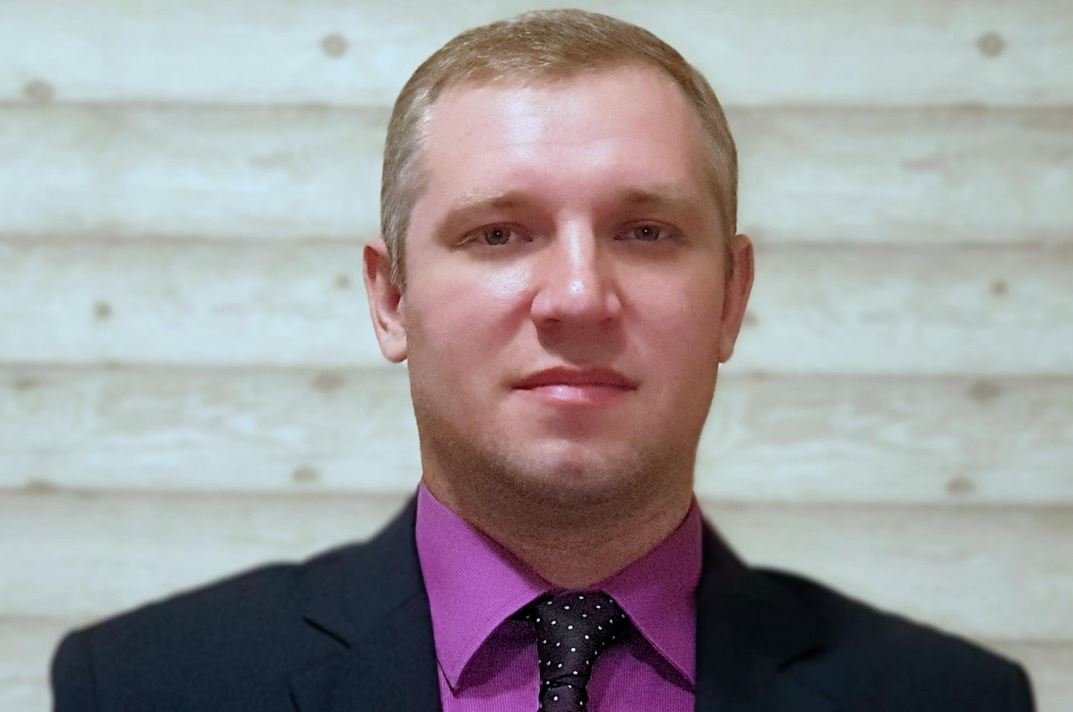
The United Nations Human Rights Committee has delivered one of its most consequential rulings to date on the repression of Jehovah’s Witnesses in the Russian Federation. In “Vilitkevich et al. v. Russian Federation” (CCPR/C/145/D/3192/2018), adopted on 13 March 2026, the Committee found that Russia violated Articles 9(1), 18(1), 26 and 27 of the International Covenant on Civil and Political Rights when it raided homes, seized religious literature, interrogated believers, and subjected one of them—Anatoliy Vilitkevich—to nearly a year of deprivation of liberty for nothing more than peaceful religious activity.
Article 9(1) provides that “Everyone has the right to liberty and security of person. No one shall be subjected to arbitrary arrest or detention. No one shall be deprived of his liberty except on such grounds and in accordance with such procedure as are established by law.” Article 18(1) affirms that “Everyone shall have the right to freedom of thought, conscience and religion. This right shall include freedom to have or to adopt a religion or belief of his choice, and freedom, either individually or in community with others and in public or private, to manifest his religion or belief in worship, observance, practice and teaching.” Article 26 guarantees that “All persons are equal before the law and are entitled without any discrimination to the equal protection of the law. In this respect, the law shall prohibit any discrimination and guarantee to all persons equal and effective protection against discrimination on any ground such as race, colour, sex, language, religion, political or other opinion, national or social origin, property, birth or other status.” And Article 27 protects the rights of religious minorities, stating that “In those States in which ethnic, religious or linguistic minorities exist, persons belonging to such minorities shall not be denied the right, in community with the other members of their group, to enjoy their own culture, to profess and practise their own religion, or to use their own language.”
The case concerned twelve Jehovah’s Witnesses from Ufa whose homes were simultaneously raided on 10 April 2018. Police seized Bibles, personal devices, and family belongings, then transported all twelve to the Investigative Department, where they were held for hours, interrogated, photographed, and fingerprinted. Vilitkevich, a religious minister, was placed in pretrial detention for 73 days and then under house arrest for 252 more—325 days of restraint in total—before being charged under article 282.2 of the Criminal Code for allegedly “organizing the activities of a banned extremist organization.” The Committee noted that the only conduct attributed to the authors was preaching, attending, and conducting peaceful worship.
The Committee’s findings are unusually direct. It held that the 2017 Supreme Court decision banning the administrative structures of Jehovah’s Witnesses “did not prohibit individual or joint peaceful religious activities by the Jehovah’s Witnesses believers,” and that Russia “has not demonstrated sufficient legal basis or reasons to impose restrictions on the authors’ peaceful religious activities.” On this basis, it concluded that Russia violated Article 18(1) of the Covenant.
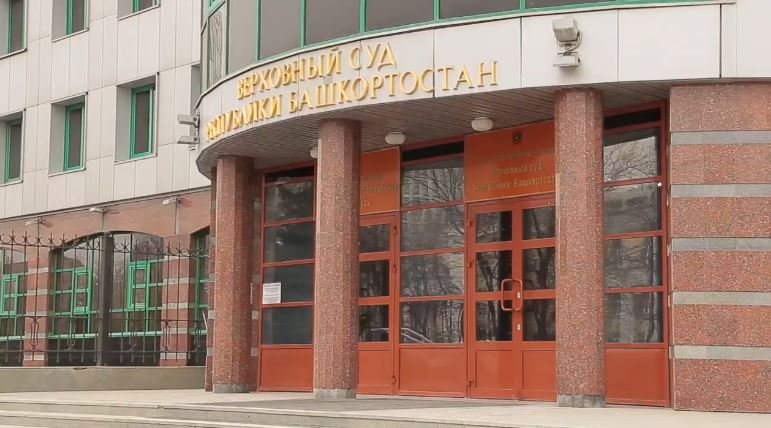
Equally significant is the Committee’s recognition that the prosecution was discriminatory. It found that “the authors’ religious belonging was the sole basis for their prosecution,” and that their treatment was discriminatory on religious grounds in violation of Article 26. This marks a departure from earlier cases in which similar patterns of repression were not analyzed under the non-discrimination provision.
The Committee also found a violation of Article 27, emphasizing that Russia’s “excessive interpretation and application of the 2017 Supreme Court decision resulted in the denial of the authors’ right to profess and practice their own religion in community with the other members of their religious minority group and threatened the continued existence of their religious community.” This is the first time the Committee has applied Article 27 to the criminal prosecution of a religious minority, acknowledging that the repression targets not only individuals but the survival of the minority itself.
On the issue of arbitrary detention, the Committee held that the authors were not free to leave the Investigative Department and were therefore “arrested” within the meaning of Article 9(1). It concluded that their arrest was “unlawful and arbitrary,” and that Vilitkevich’s pretrial detention likewise lacked any legal basis, amounting to a further violation of Article 9(1).
Two individual opinions underscore the importance of the ruling. Committee member Hernán Quezada Cabrera agreed with the findings but criticized the majority for declining to examine Article 17, which prohibits “arbitrary or unlawful interference with… privacy, family, home or correspondence,” given the invasive home raids and seizures. Hélène Tigroudja, in a partially dissenting opinion, welcomed what she called the Committee’s “bold step” in finally recognizing violations of Articles 26 and 27 in a Jehovah’s Witnesses case, but noted that the Committee did not explain why it was departing from its earlier reluctance to address discrimination and minority-rights claims despite “dozens of cases revealing similar patterns.” She agreed that Russia had violated Articles 26 and 27 but would have welcomed a more detailed discussion. Tigroudja also concurred with Quezada Cabrera that the violations of Article 17 should have been examined, but went one step further, arguing that “the claim under Article 17 is not only admissible but should also lead to a conclusion of violation.” Tigroudja insisted that the home searches were disproportionate and should have been recognized as a separate violation “of the right to privacy, obviously based on religious discrimination.”

The ruling obliges Russia to provide full reparations, including compensation for all 12 authors and specific redress for Vilitkevich’s unlawful detention, and to take measures to prevent similar violations in the future. It also requires the State to publish and disseminate the decision.
While Russia has now intensified its repression of Jehovah’s Witnesses and withdrawn from several human rights mechanisms, this decision stands as a strong affirmation that the criminal prosecution of peaceful worship is incompatible with international law. Also, the Committee has now explicitly recognized that Jehovah’s Witnesses constitute a vulnerable religious minority facing systemic persecution, and that targeting them for their faith violates not only freedom of religion but the core principles of equality and minority protection.

Massimo Introvigne (born June 14, 1955 in Rome) is an Italian sociologist of religions. He is the founder and managing director of the Center for Studies on New Religions (CESNUR), an international network of scholars who study new religious movements. Introvigne is the author of some 70 books and more than 100 articles in the field of sociology of religion. He was the main author of the Enciclopedia delle religioni in Italia (Encyclopedia of Religions in Italy). He is a member of the editorial board for the Interdisciplinary Journal of Research on Religion and of the executive board of University of Pennsylvania Press’ Nova Religio. From January 5 to December 31, 2011, he has served as the “Representative on combating racism, xenophobia and discrimination, with a special focus on discrimination against Christians and members of other religions” of the Organization for Security and Co-operation in Europe (OSCE). From 2012 to 2015 he served as chairperson of the Observatory of Religious Liberty, instituted by the Italian Ministry of Foreign Affairs in order to monitor problems of religious liberty on a worldwide scale.