A request submitted to Argentina’s Supreme Court.
by Patricia Duval
Honorable Justices,
I respectfully submit this plea as Amicus Curiae in my capacity of attorney over the case of Konstantin Rudnev before the United Nations, whose pretrial detention under house arrest has been challenged by the Prosecutor’s office in the case entered in the court docket under the above reference.
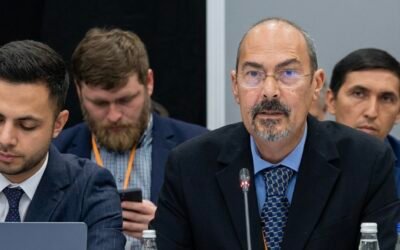
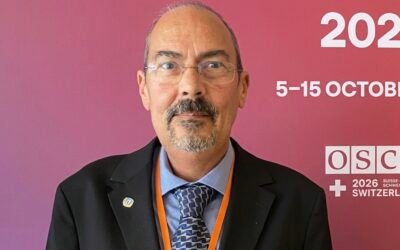
I am an attorney and a member of the Paris Bar, with a Master in Public Law from La Sorbonne University, specializing in international human rights law. I have defended the rights of minorities of religion or belief in domestic and international fora, and before international institutions such as the European Court of Human Rights, the Council of Europe, the Organization for Security and Co-operation in Europe, the European Union, and the United Nations. I have also published numerous scholarly articles on freedom of religion or belief.
The purpose of this submission is to provide a well-founded opinion:
* in defense of the good administration of justice,
* regarding a relevant constitutional and international law issue connected to the litigation.
In this case, I would like to emphasize the need to maintain the current arrangements regarding Mr. Rudev’s house arrest with an electronic monitoring device, as well as to ensure that his fundamental rights are respected, since a return to prison would put his life at risk and could lead to a fatal outcome in this case
In particular, I would like to stress the following points:
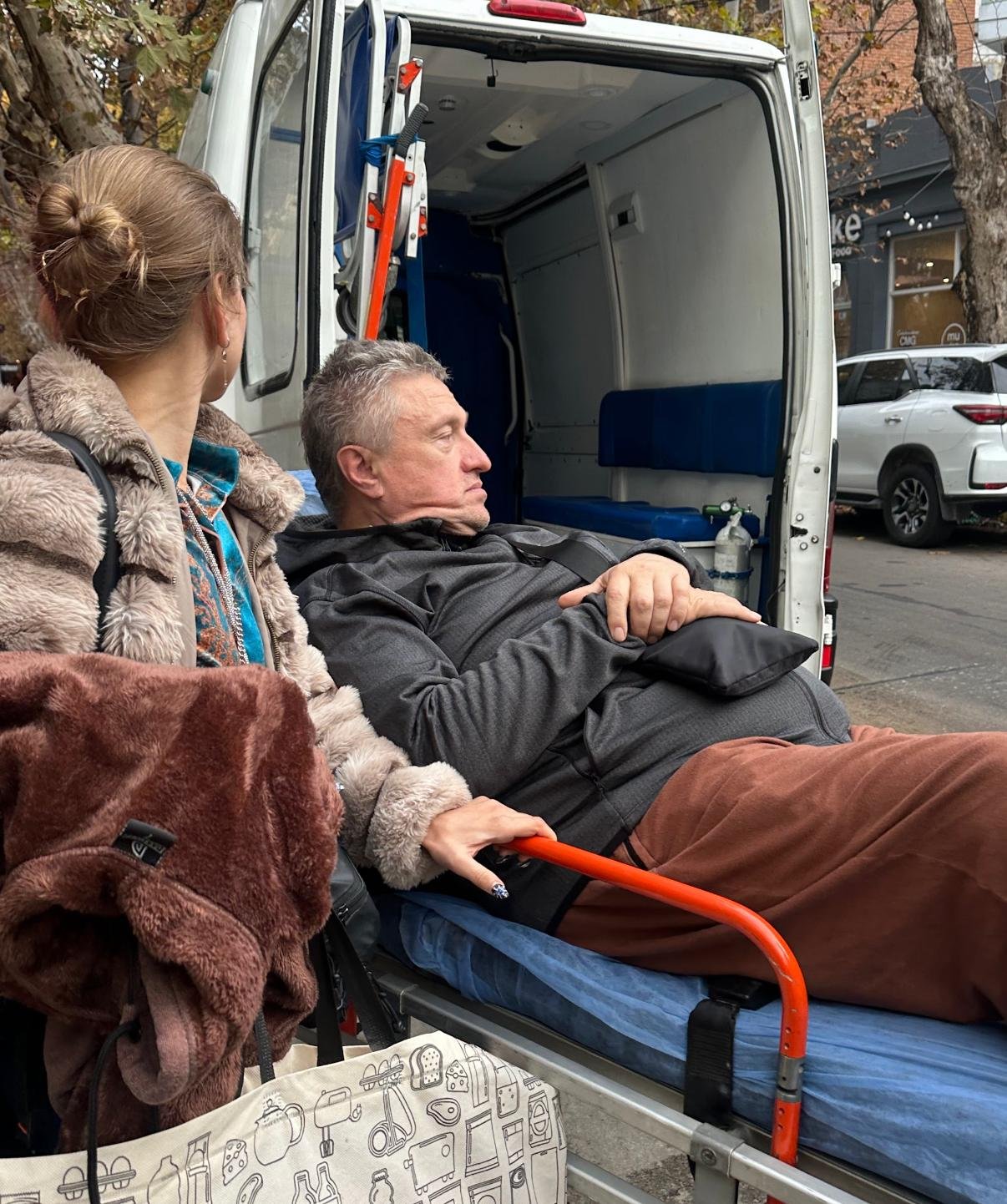
* Mr. Rudnev has just undergone surgery, is currently using a wheelchair, and remains in a highly vulnerable physical condition. He was operated in emergency from a very large inguinal hernia, which he developed during the 14 months he spent in prison and for which he was not allowed to receive any treatment when he was kept in detention.
The postoperative medical certificate issued on 27 May 2026 states that incarceration in a correctional facility is strongly contraindicated due to the risk of compromising recovery and the possibility of a recurrence that could require emergency surgery.
In addition to progressive pulmonary fibrosis, the after-effects of a stroke, a history of cardiovascular disease and uncontrolled hypertension, and displaced cervical vertebrae, he has a serious physical condition and has lost more than 50 kilograms in a few months. His treating physicians in Buenos Aires, Dr. Sarotto and Dr. Duarte, were called to testify in court on January 21, 2026 regarding his current state of health and affirmed the need for him to be hospitalized and undergo specialized medical examinations and treatment.
These examinations and the subsequent treatment are vital to saving Mr. Rudnev’s life, and failing to perform them can only lead to a fatal outcome, per to the doctors’ statements. The prison hospital does not have the necessary facilities to conduct these examinations or provide specialized care. The serious shortcomings observed in the past—including the lack of an interpreter, the lack of medical equipment and essential medications, as well as constant exposure to secondhand smoke due to being confined with 22 other inmates—make it a dangerous and unacceptable option for the medical care and survival of a person suffering from progressive pulmonary fibrosis and at constant risk of a stroke.
* There is no risk of flight whatsoever should Mr. Rudnev remain under house arrest with electronic monitoring. He has fully complied with the conditions of house arrest, has no papers and his present medical condition makes any possibility of escape objectively impossible.
* In addition, numerous procedural and human rights violations were committed from the very beginning of his detention and imprisonment, many of which were documented in a complaint filed with the United Nations, which I attach herewith for information.
His right to a fair trial has been violated in many respects in spite of the protection that Argentina should provide under Article 14 of the International Covenant on Civil and Political Rights (ICCPR) that it has signed and ratified, and which entered into force through Aricle 31 of the Argentinian Constitution:
This Constitution, the laws of the Nation that as a result thereof may be enacted by the Congress, and treaties with foreign powers, are the supreme law of the Nation.
In particular, this right has been infringed by the following:
– arrest and detention without providing a warrant, or information on the charges, and without identification of the arresting authorities,
– oral indictment with no information on the precise charges and evidence it relied on,
– no access to a lawyer in the first weeks of prosecution,
– no access to an interpreter to enable him to understand the accusations against him,
– no access to the criminal file for months, and then very partial access to the file until now,
– no possibility to include witnesses’ testimonies or evidence favorable to the defense,
– recent decision to extend pretrial detention for a period of one year pursuant to Articles 334 and 335 of the Code of criminal procedure, even though no evidence whatsoever has been presented of organized or transnational crime.
All of this has prevented Konstantin Rudnev from preparing and benefiting from an effective defense, as well as from avoiding arbitrary detention, which means that his case falls within the jurisdiction of the United Nations Working Group on Arbitrary Detention, as his rights to a fair trial have been violated.
Mr. Rudnev’s pre-trial detention constitutes a violation of the UN Standard Minimum Rules for Non-custodial Measures (The Tokyo Rules), adopted by the General Assembly on 14 December 1990 – also reproduced at Article 210 of the Argentinian Code of criminal procedure – which provide:
6.1 Pre-trial detention shall be used as a means of last resort in criminal proceedings, with due regard for the investigation of the alleged offence and for the protection of society and the victim.
6.2 Alternatives to pre-trial detention shall be employed at as early a stage as possible. Pre-trial detention shall last no longer than necessary to achieve the objectives stated under rule 5.1 and shall be administered humanely and with respect for the inherent dignity of human beings.
Those rules were also violated through the inhumane treatment of Konstantin Rudnev.
So were the UN Standard Minimum Rules for the Treatment of Prisoners (the Nelson Mandela Rules), adopted by the General Assembly on 17 December 2015.
All these violations have been detailed in the Questionnaire filed with the Request for Urgent Appeal filed at the UN Working Group on 29 January 2026 and which is attached hereto.
I respectfully ask the Honorable Justices of the Criminal Chamber of the Court of Cassation to give this submission their full attention and to take the necessary measures to save Mr. Rudnev’s life, ensure the proper administration of justice, and uphold his right to a fair trial.

Patricia Duval is an attorney and a member of the Paris Bar. She has a Master in Public Law from La Sorbonne University, and specializes in international human rights law. She has defended the rights of minorities of religion or belief in domestic and international fora, and before international institutions such as the European Court of Human Rights, the Council of Europe, the Organization for Security and Co-operation in Europe, the European Union, and the United Nations. She has also published numerous scholarly articles on freedom of religion or belief.