The Russian dissident and spiritual teacher has been hospitalized again for emergency surgery.
by Massimo Introvigne
What is happening in Argentina today is not a judicial process. It is the slow destruction of a human being under the guise of legality. “Bitter Winter” has already documented how the case against Konstantin Rudnev was built on recycled Russian propaganda, misidentifications, and a chain of procedural abuses.
But the latest developments go far beyond legal irregularities. They reveal a level of prosecutorial cruelty that should alarm anyone who still believes in the rule of law.
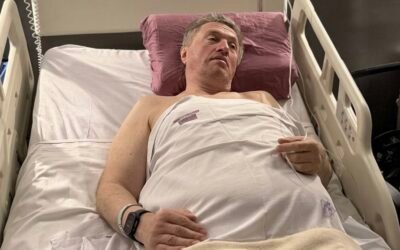
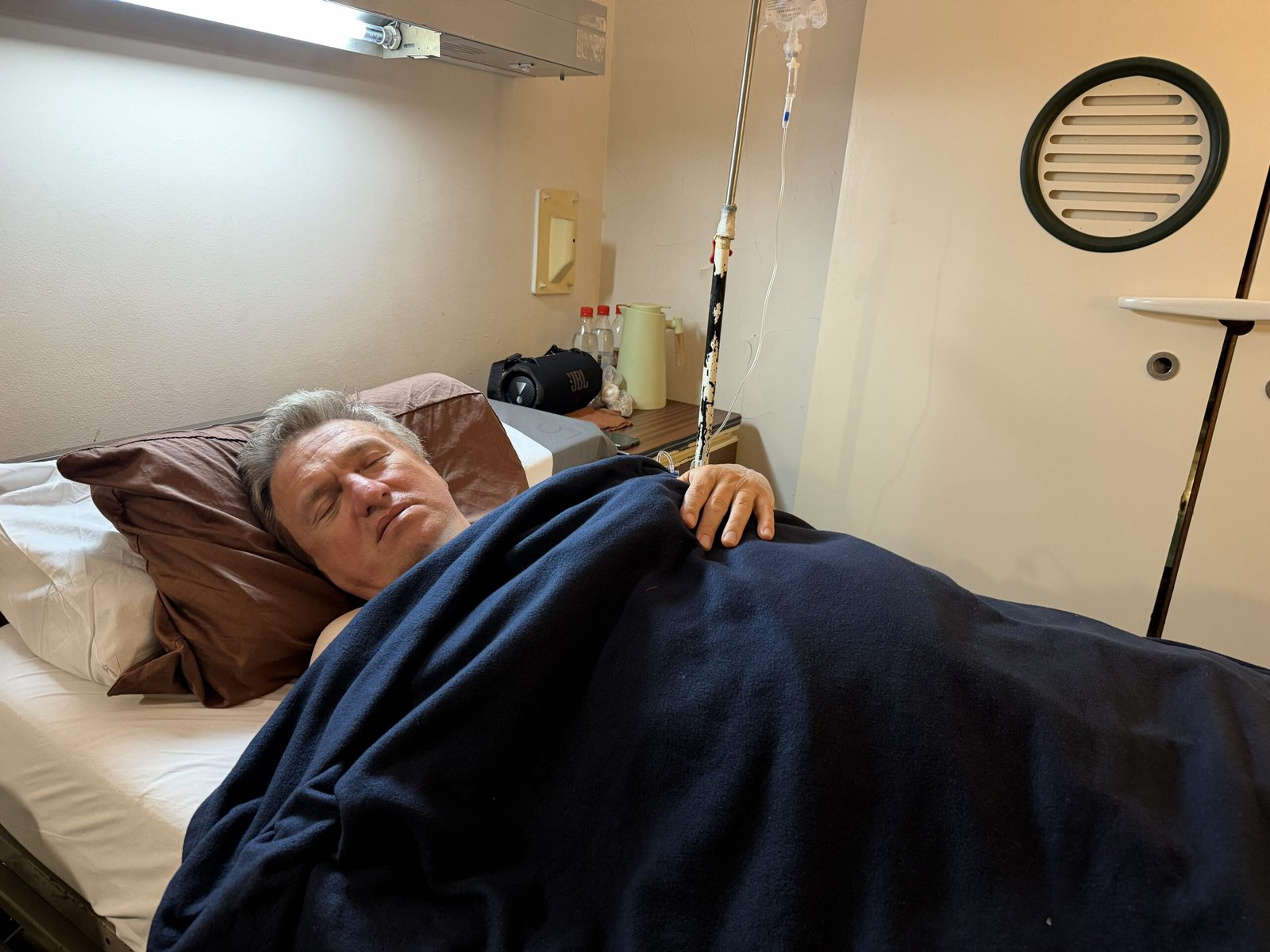
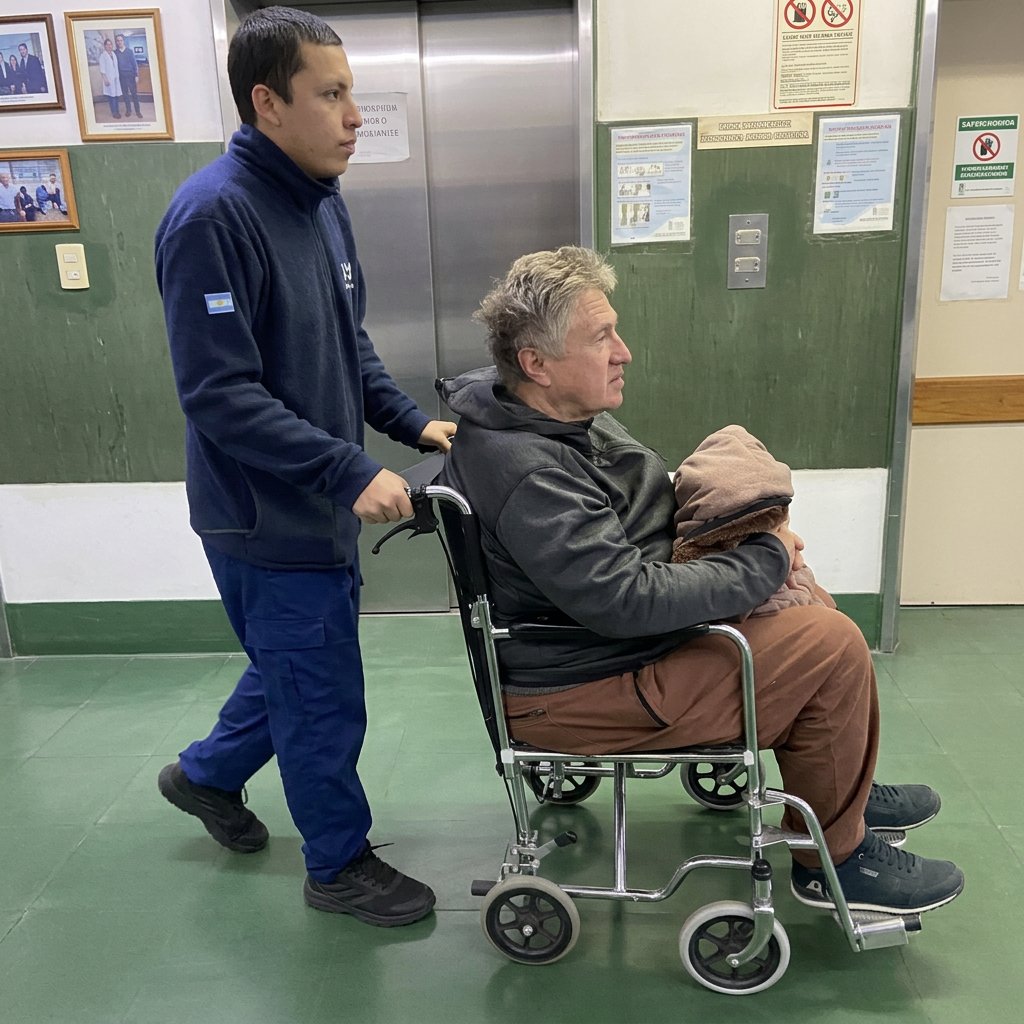
Konstantin Rudnev has been urgently hospitalized at the Naval Hospital for a second emergency surgery. His condition is extremely serious. The attending physician examined him and immediately detected dangerously high blood pressure, fever, and signs of systemic deterioration caused by his time in prison. Complications from his previous surgery have reappeared. The doctor, alarmed by the rapid decline, ordered an emergency intervention without delay. Only afterward were the court and monitoring service informed.
This is not a man who is “healthy,” as the prosecution has repeatedly and falsely claimed. This is a man whose immune system has been shattered. He contracts infections constantly. His blood pressure spikes uncontrollably. His heart is compromised. The protrusion in his cervical spine is progressing so rapidly that the discs have shifted, causing excruciating pain and partial loss of mobility in his hands. He is losing autonomy day by day. He is becoming an invalid — and not because of age or natural illness, but because of what the Argentine prison system has done to him.
Yet in the midst of this medical emergency, the prosecution continues to demand his immediate return to prison. This is not justice. This is persecution.
It is worth recalling how he reached this point. When he was transferred from detention to house arrest, he was not transported by plane—despite his medical condition and even though the Federal Police had arranged an aircraft. Instead, he was thrown into an iron van, handcuffed to a metal bench, unable to use a bathroom for more than 24 hours, exposed to freezing air, and forced to endure a journey that would have been unbearable even for a healthy man. For someone with a large hernia, spinal damage, and chronic illness, it was torture. That journey alone worsened his condition dramatically.
As soon as he reached house arrest, he underwent surgery. Now, only weeks later, complications have reappeared, and he has again been rushed to the hospital for another operation. One surgery follows another. His body is collapsing under the accumulated weight of neglect, cold, pain, and bureaucratic indifference. And still the prosecution insists: send him back to prison.
The Cassation Chamber has revoked his house arrest, and prosecutors are pushing for immediate execution of the decision. They are accelerating the process with a zeal that would be admirable if it were directed at genuine criminals rather than at a man against whom no serious evidence of crime exists and who is barely able to stand, barely able to move his hands, barely able to survive.
They ignore the fact that during the two months he was under house arrest, he never attempted to escape. They ignore the basic principle that a person in critical condition should not be placed in an environment that will kill him. What they do not ignore is their own hostility.
This is not the behavior of prosecutors seeking truth. This is the behavior of prosecutors seeking a body—preferably broken, preferably silent, preferably unable to defend itself.
Argentina must ask itself a simple question: what kind of justice system demands that a man fresh out of surgery, with fever, heart problems, spinal deterioration, and a collapsing immune system, be dragged back into a prison that has already nearly destroyed him?
The answer is not flattering.
The prosecution’s insistence on returning Rudnev to prison is not grounded in law. It is grounded in prejudice, in pressure, and in a refusal to admit that the case against him has been compromised from the beginning. It is easier to break a man than to admit a mistake. It is easier to silence him than to confront the fact that the accusations were built on rumors, mistranslations, and imported Russian narratives.
But the world is watching. And Argentina must decide whether it wishes to be remembered as a country that allowed a man to die in prison because prosecutors preferred ideology over evidence, cruelty over humanity, and vengeance over justice.
Konstantin Rudnev is not asking for a privilege. He is asking for survival.
The prosecution, astonishingly, seems unwilling to grant even that.
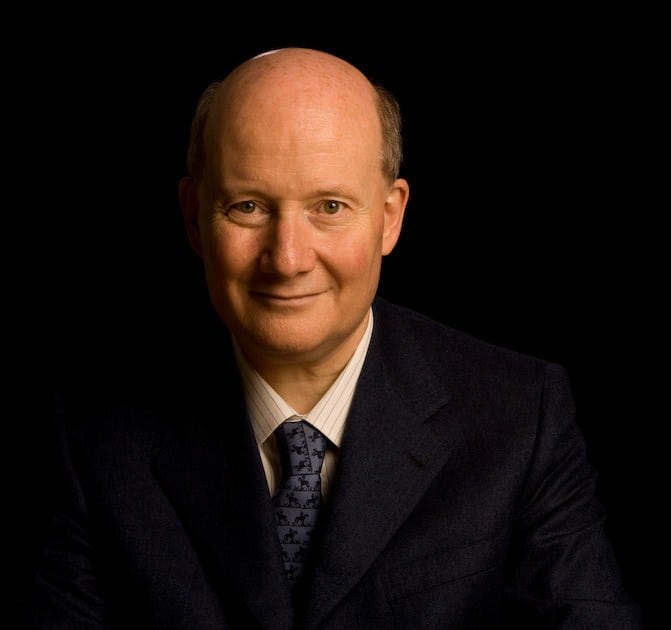
Massimo Introvigne (born June 14, 1955 in Rome) is an Italian sociologist of religions. He is the founder and managing director of the Center for Studies on New Religions (CESNUR), an international network of scholars who study new religious movements. Introvigne is the author of some 70 books and more than 100 articles in the field of sociology of religion. He was the main author of the Enciclopedia delle religioni in Italia (Encyclopedia of Religions in Italy). He is a member of the editorial board for the Interdisciplinary Journal of Research on Religion and of the executive board of University of Pennsylvania Press’ Nova Religio. From January 5 to December 31, 2011, he has served as the “Representative on combating racism, xenophobia and discrimination, with a special focus on discrimination against Christians and members of other religions” of the Organization for Security and Co-operation in Europe (OSCE). From 2012 to 2015 he served as chairperson of the Observatory of Religious Liberty, instituted by the Italian Ministry of Foreign Affairs in order to monitor problems of religious liberty on a worldwide scale.