Campaigns targeting “cults” for their leaders’ real or alleged wrongdoings cause massive unnecessary and innocent suffering.
by María Vardé
Article 4 of 4. Read article 1, article 2, and article 3.
The first article in this series examined how media narratives produce a totalizing image of religious minorities whose leaders or prominent members are accused of crimes. The second showed how those images may enter court proceedings, prosecutorial arguments, and state regulatory or dissolution proceedings. The third considered how the intensity of stigma depends on each group’s position within a hierarchy of religious legitimacy. In this final article, the same process appears in its most immediate form: in the lives of ordinary people.
Some of these consequences have been documented in previous analyses. In the case of La Luz del Mundo, it has been reported that after the arrest of its Apostle, non-accused members were dismissed from jobs, while children and young people suffered bullying and physical assaults. After the assassination of Shinzo Abe and the hostile campaigns against the Unification Church in Japan, ordinary members also experienced social ostracism and domestic violence.
Christian Gospel Mission, also known as Providence, offers another example of how sensationalized media can affect ordinary members’ lives. In Taiwan, after Netflix’s “In the Name of God: A Holy Betrayal,” believers who had not been accused of any crime were portrayed as either people without agency or accomplices of a “cult.” The aftermath included online persecution, leaked personal data, and the loss of university positions by young academics because of their religious affiliation. Women were especially targeted through misogynistic attacks, mockery of their appearance, online defamation, and the exposure of private photographs accompanied by obscene descriptions or false accusations that they offered sexual favors to gain status within the church. Children also faced bullying at school, and the aggression eventually became physical when two members were beaten in Taiwan, one seriously injured after being hit on the head with a hammer.
The following material comes from interviews with people connected to religious groups whose leaders had been convicted or accused of sexual offenses. The purpose is not to assess those criminal cases, but to understand how actors connected to stigmatized religious minorities experience the effects of guilt by association. Octav Fercheluc and Sara Pozos were interviewed in order to understand firsthand how actors connected to stigmatized religious minorities experience the effects of guilt by association. We also interviewed Konstantin Rudnev and his wife, Tamara Saburova, who responded in writing, since Rudnev was in pretrial detention in Argentina at the time. In their case, the interview was intended to reconstruct how the name “Ashram Shambhala” became an expansive label that has affected not only Rudnev himself, but also people actually or allegedly associated with him.
Octav Fercheluc, director of Ananda, a Uruguayan yoga school based on the system created by MISA founder Gregorian Bivolaru, shows how accusations against a foreign religious leader can be transferred to someone who shares a spiritual lineage. In 2015, Álvaro Farías Díaz, a psychologist associated with Catholic anti-cult movements, appeared in Uruguayan media claiming that Fercheluc belonged to “a cult,” was “very dangerous,” had falsely claimed a PhD in Mathematics, and could not offer so many free classes without a hidden interest. He also alleged that Bivolaru had sent him “to kidnap people and take them to Romania to make porn films.”
The effects were immediate. Ananda’s contracts with educational and state institutions to offer free yoga and meditation classes were suspended, almost all students stopped attending, and what remained, in Fercheluc’s words, was “an aura of suspicion,” even after it became clear that Bivolaru had no direct role in Ananda and that no one had been kidnapped. The accusation received extensive coverage across radio, print, and television outlets. “It was an explosion,” he recalled.
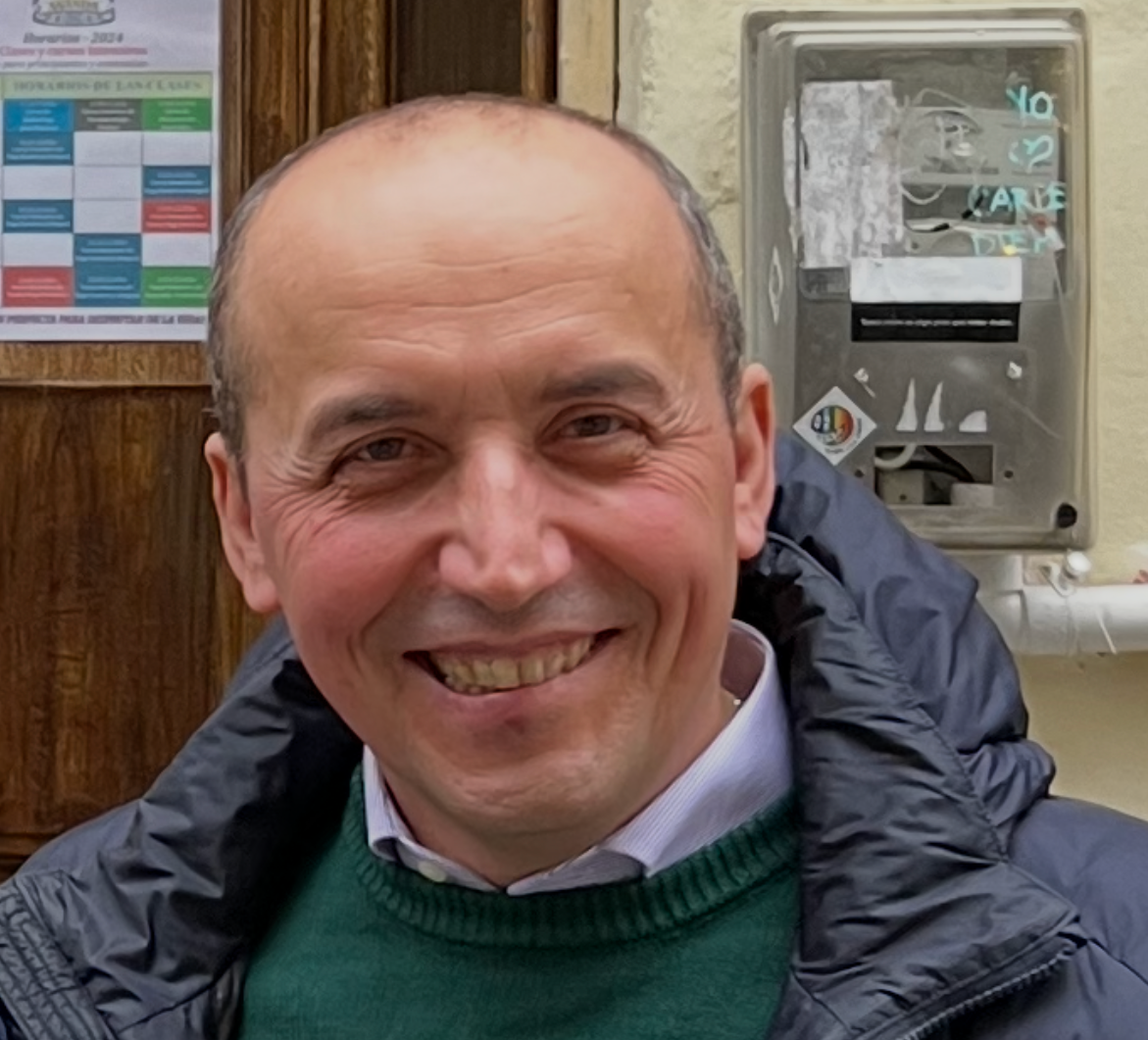
Fercheluc was granted a right of reply, but the canceled projects and departing students did not return. In 2018, an anonymous complaint again linked him to Bivolaru, prompting a criminal investigation, raids, his transfer to an Interpol office, and psychological evaluations of his students to detect supposed “mind control.” The evaluations found the students mentally healthy. It was confirmed that Ananda was fully Uruguayan, had no links to Bivolaru, and that no one had been transported for pornography or sexual abuse. After more than a year and a half, prosecutors found no grounds for charges and dismissed the case.
Yet the scars remained. Fercheluc described professional isolation within the Uruguayan yoga community. Other schools stopped collaborating with him, and when a national association of yoga teachers was formed, he was excluded for “ethical reasons,” even though his academy is one of Uruguay’s largest. “We had to endure and suffer many consequences because I had trained as an instructor at the Yoga School based on the teachings of Bivolaru,” he said. “I was even called ‘the Romanian’; people no longer called me by my name.”
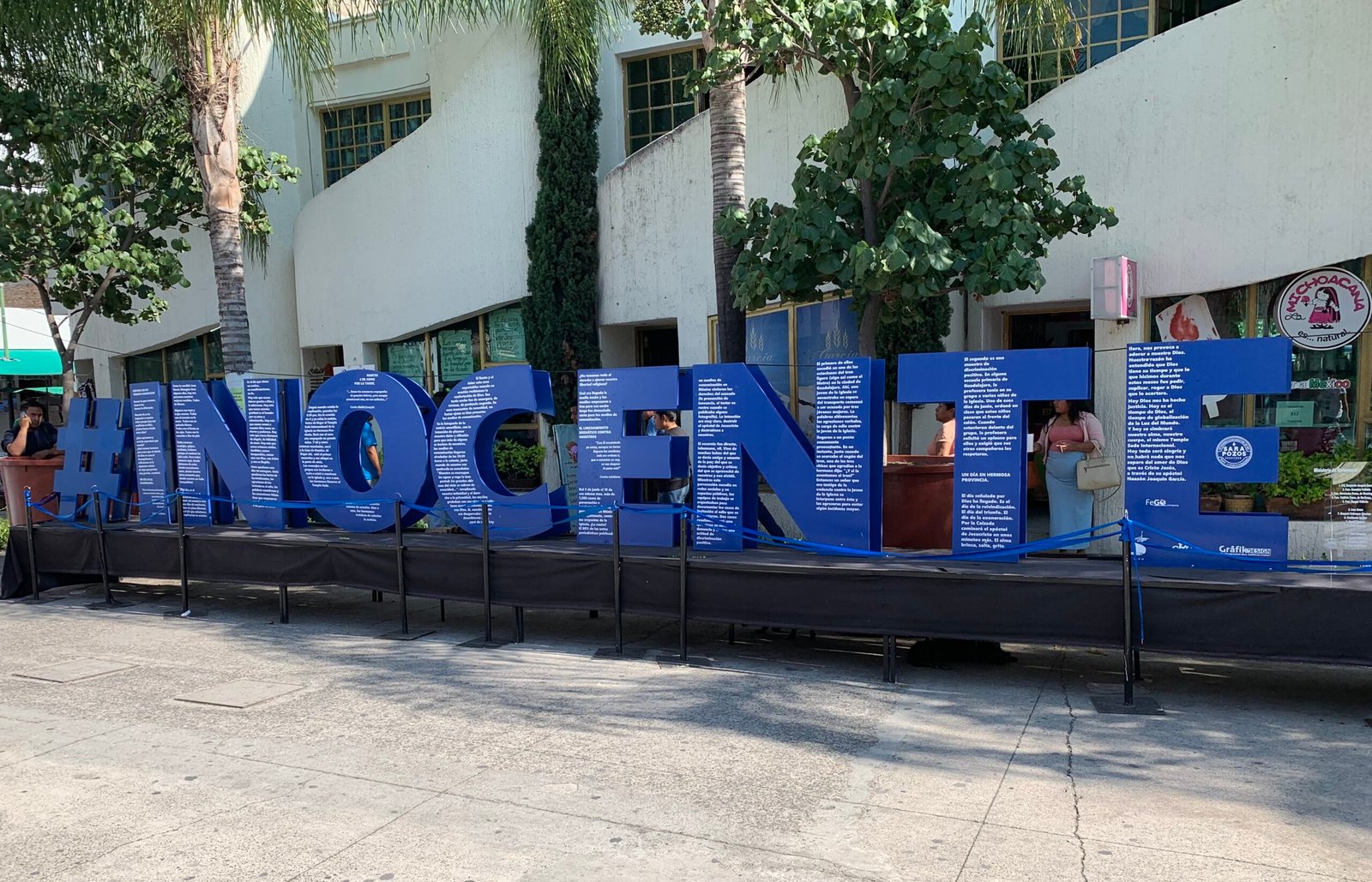
Sara Pozos, a scholar, businesswoman, and member of La Luz del Mundo (LLDM), described a different but related experience. She recalled that in 1997, when allegations against the father of the current Apostle became public, a university professor told the class that the leader of LLDM “had raped people,” without questioning what she had seen in the media. When she learned that Sara belonged to the church, she added, “Surely something like that happened to you, too,” assuming that Sara herself must have been a victim.
For Pozos, social media and digital platforms have made this dynamic “exponentially devastating.” She said that “some of the brothers and sisters in the church have suffered job dismissals; harassment in the street; children have suffered a great deal of aggression in schools; women suffer violence.” Members face constant cyberbullying, and women often suffer the stigma more intensely because their clothing makes them more identifiable. She also mentioned women who were denied access to buses, or forced off them, after being recognized as LLDM members. Men, too, have been dismissed from jobs for openly belonging to the church.
Pozos added that discrimination has also reached access to public employment. When LLDM members recently participated in competitive examinations for judicial positions in Mexico, the media outlet Milenio argued over several weeks that such positions should not be held by church members who maintain their leader’s innocence. One presenter, she recalled, demanded that candidates publicly deny their relationship with the Apostle to be considered suitable. Later, when a church member was selected as an employee of Mexico’s Supreme Court of Justice, “they identified him on the payroll and the campaign against him began again,” questioning why he was there and claiming he had no right to be there “because he was from La Luz del Mundo.”
She also recalled the detention in Michoacán of 38 people later identified as LLDM members, who were undergoing professional defense training with utility weapons. The news circulated the same night new charges against Apostle Naasón Joaquín García were read in New York, and some media presented it as a cell linked to organized crime. Although the investigation found no incriminating evidence, the public effect had already taken place.

The interviews with Konstantin Rudnev and Tamara Saburova place the same mechanism in another setting. They described how Ashram Shambhala had become an expansive label long before the Argentine case and Rudnev’s conviction in Russia, which independent observers widely believe was based on fabricated charges, while the school was still operating. Among the stories of members from that period, they recalled Marina, whose adult children reported her missing and transferred her apartment into their own names, fearing she would sell it and give the money to the “cult.” Alexandra, from Belarus, was fired from a position she had held for more than ten years after a colleague discovered she attended the school. Dmitry, a department head in an advertising firm, was removed after his wife came to his workplace and declared that he was a “cultist” under Konstantin’s influence. Natalia, then about nineteen, was sent by her parents to a psychiatric clinic for involuntary treatment after saying she had attended the school’s seminars. Tatiana, from Tomsk, was not even an active participant in the school, but was expelled from her home with her child because her husband found one of Rudnev’s books in her room.
Rudnev and Saburova also described relatives locking adults at home, taking documents and money because they believed them to be under “brainwashing,” police reports against alleged participants, surveillance at workplaces and homes, and violations of privacy through the opening and dissemination of personal correspondence. They added that even today, media in Russia, Kazakhstan, and elsewhere publicly identify as members of the “cult” people who deny ever having belonged to it, causing job loss, rejection by friends, and restrictions on freedom of movement. Saburova said such episodes were common while the school operated in Russia, and that many women suffered harassment after attending a seminar.
The same expansive logic reappeared in Argentina. When Rudnev was arrested there in 2025, several other people—mostly Russian women—were also detained and charged within a framework that treated them as members of his alleged “cult,” although some said they did not even know him, and all denied being part of a group led by him. As discussed in the first article of this series, the case was framed from the outset through Russian and Montenegrin media narratives: prosecutors cited Montenegrin headlines, largely copied from Russian sources, to present it as an “international criminal organization.” One year later, at the April 2026 hearing, prosecutors requested an extension of both the investigation and Rudnev’s pretrial detention, acknowledging that key evidence had still not been analyzed. Yet they continued to rely on the same criminal-organization frame and opposed his transfer to house arrest, despite nearly a year of requests and serious health problems.
Across these accounts, suspicion no longer needs direct contact with concrete facts. This is why guilt by association should be understood as a specific form of stigma. It labels a group, associates that label with negative stereotypes, separates “us” from “them,” and produces loss of status and discrimination. Its power lies in the fact that it often does not appear as persecution. It is presented as protection, institutional prudence, or concern for victims. Yet when those languages allow the accusation against one person to be projected onto entire communities, they create new victims among people who have not been accused of any crime.

Maria Vardé graduated in Anthropological Sciences at the University of Buenos Aires and is currently a researcher at the Instituto de Ciencias Antropológicas, Facultad de Filosofía y Letras, Universidad de Buenos Aires (Institute of Anthropological Sciences, Faculty of Philosophy and Humanities, University of Buenos Aires). She has written and lectured on archeology, spirituality, and freedom of religion or belief.