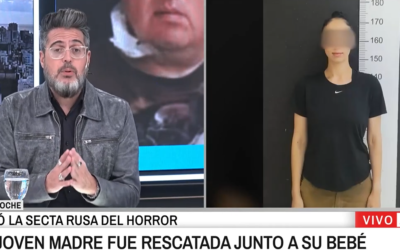
A scholar of psychology discusses the curious case of an Argentinian “fiscal” controlled by his obsessions.
by Raffaella Di Marzio
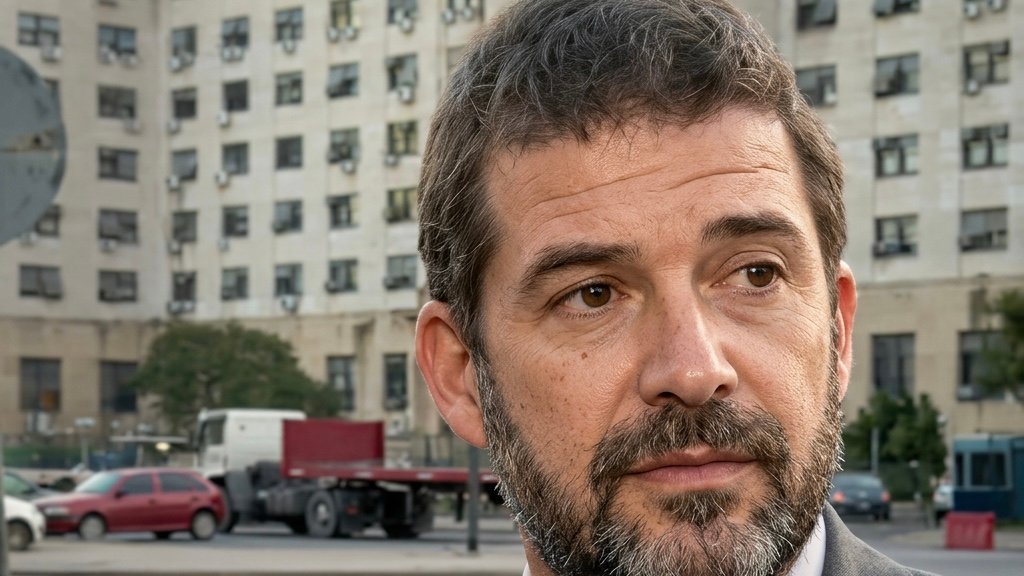
In recent months, “Bitter Winter” has continued to follow the case of Konstantin Rudnev and other defendants detained in Argentina, all of whom fall under the authority of Prosecutor Fernando Arrigo. In light of what the magazine has reported, and of the gravity of the situation in which these individuals find themselves, I believe it is important to return to the reflections contained in a previous article of mine, to reaffirm and further develop them in view of the worsening violations of human rights and the abuses that Prosecutor Arrigo is inflicting on people who are physically and psychologically vulnerable.
As a scholar of psychology, I examine these events not from a legal standpoint but from the perspective of behavioral analysis, institutional dynamics, and the psychology of power.
The defendants involved—Konstantin Rudnev, Facundo Jones Huala, and the police officers in the Franco Casco case—have become targets. Regardless of their differing procedural positions, they have been portrayed by the media as dangerous figures, almost as monsters. In the early phase of stigmatization, media narratives and judicial rhetoric create a climate of suspicion, circulating accusations of unproven crimes and paving the way for searches, arrests, and prolonged preventive detention. This pattern appears consistently in the cases overseen by Prosecutor Arrigo.
To understand the psychological implications of this pattern, the facts of each episode must be stated clearly.
When Konstantin Rudnev was transferred from Rawson prison to house arrest, his lawyer arranged transport by plane. The prosecutor forbade it. Rudnev then requested an ambulance. That too was refused. He was transported in winter, handcuffed, in a cold metal van with almost no suspension and no heating, forced to remain seated for nearly a day. He could not lie down or change position. He relieved himself into a bottle. He already suffered from a large hernia, disc protrusions, and spinal problems. The cold and the violent jolting caused further disc displacement, nerve compression, and neurological complications. Upon arrival he went directly into surgery, moved in a wheelchair, and within days was hospitalized. After examination, forensic medical specialists indicated that he should be registered as disabled. The trigger for this deterioration was precisely the transfer—carried out against the lawyer’s objections. There was no investigative necessity for land transport. He was not being moved to another prison but to house arrest, and he was seriously ill. The prosecutor chose the harshest method available, one that predictably inflicted suffering and aggravated his condition. The same prosecutor now insists that this already disabled man be returned to prison, in circumstances where he may not survive.
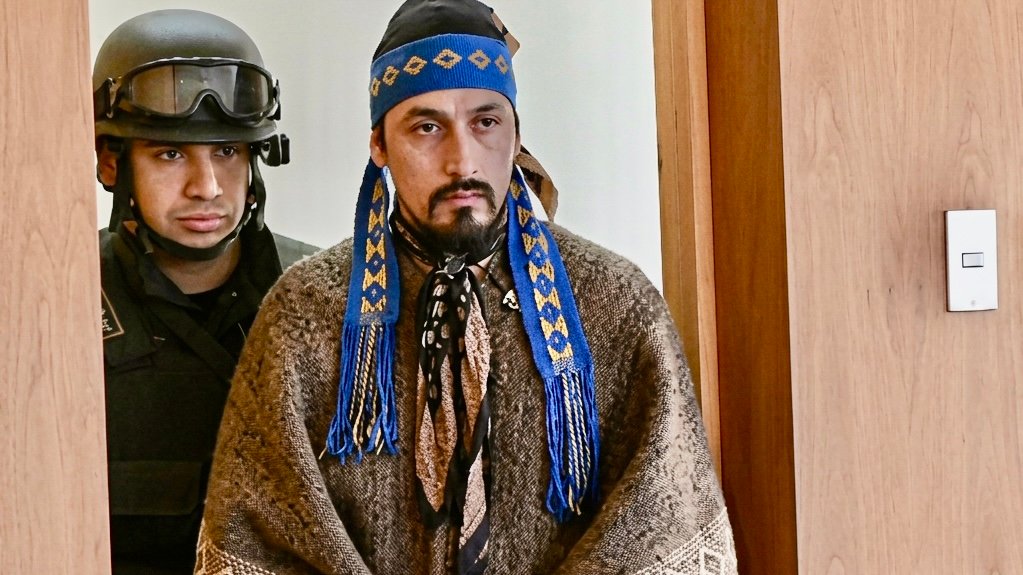
A similar pattern appeared in the case of an Indigenous man, Facundo Jones Huala. He undertook a hunger strike for sixty days solely to be transferred to a pre‑trial facility closer to his relatives. For the investigation, the location of the pre‑trial detention center was irrelevant. Yet the prosecutor opposed the transfer and obstructed it by every possible means. The man was hospitalized twice. Severe consequences of prolonged starvation set in, including internal bleeding and irreversible physiological changes. He was on the verge of death. What saved him was not prosecutorial prudence but judicial intervention: the judges stopped listening to the prosecutor’s endless objections and ordered the transfer, understanding that otherwise the man would die. Again, there was no investigative rationale for refusing a basic measure that could preserve a life.
The Casco case reveals the same dynamic. Nineteen people spent six years in pre‑trial detention. The prosecution possessed video showing the alleged victim leaving the police station alive and unharmed. This footage was concealed. It was not presented immediately, even though it eliminated the grounds for continued detention. Six years is not the duration of an investigation; it is the destruction of families and children growing up without their fathers. Even after the existence of the footage was known, the defendants remained in custody and were pressured to confess to acts they insisted they had not committed. When the recordings were finally recovered, the court acquitted all nineteen defendants. Not one was found guilty of murder. Arrigo did not accept this. At the cassation level—where, according to available information, he enjoys support that itself warrants separate inquiry—he obtained the reversal of the acquittal. The case was sent back for a new round. The judges, recognizing that something was gravely amiss, released the men under an obligation not to leave rather than returning them to prison. Meanwhile, the prosecutor requests life imprisonment. For wives and children, this means the risk of never seeing their husbands and fathers again.
From these three episodes, I derive conclusion, which is independent from the guilt or innocence of the defendants. This is not an investigative style and not a judicial method. It is a repeated choice in favor of suffering: the transfer of a sick man in conditions that caused disability; the refusal to move a dying man despite two hospitalizations; six years of pre‑trial detention and the concealment of an exculpatory video.
From a psychological standpoint, the pattern is disturbing. A public official repeatedly inflicts disproportionate harm on vulnerable individuals, disregards medical evaluations, and resists elementary humanitarian measures. This behavior reflects not legal reasoning but psychological dynamics. The interaction of personality traits, institutional power, and the perception of oneself as exempt from limits—moral or legal—creates a dangerous configuration. The absence of empathy, what psychology terms emotional coldness, and the escalation of senseless mistreatment suggest a loss of connection with reality and an inflated sense of omnipotence. The victims, unable to determine their own fate, remain powerless before these abuses.
The prosecutor appears obsessed with the exercise of his authority, beyond logic and reason. The sense of omnipotence that arises from wielding the power of accusation, when carried to extremes, can cause irreparable harm to those under his control unless he is stopped and constrained by law.
Such use of power requires removal from office, and the actions themselves must be examined as abuse. Separately, the question must be raised why in Argentina a prosecutor can, on the basis of his own version of events, set in motion years of imprisonment without any verification that his version corresponds to evidence already in hand.
Intervention by higher authorities is no longer postponable. He must be subjected to evaluation of his physical and mental condition and at least suspended from office. His victims have the right to be treated as human beings and judged by authorities capable of acting with balance and justice.

Raffaella Di Marzio has been involved for over thirty years in researching, studying, and lecturing about minority religions and new religious movements, both in Italy and internationally. She holds a Ph.D. in psychology, is the author of four books and numerous essays and articles, and a lecturer in three Master’s Degree programs at the Adventist University of Florence, the University of Salerno, and the University of Bari. Di Marzio is also the director of the Center for the Study of Freedom of Religion, Belief, and Conscience (LIREC), which works to promote and defend the right to freedom of religion or belief and engages in a constant, critical dialogue with Italian and international institutions.