Two Argentine proceedings reveal a pattern of obsessive institutional cruelty that endangers vulnerable defendants and undermines justice.
by Raffaella Di Marzio
For many years, I have monitored and reported on human rights violations in various parts of the world from the perspective of the psychology of religion. My principal concern has always been the discrimination and persecution directed at religious or spiritual minorities, whose leaders often become the preferred targets of anti-cult activists, sensationalist media, and judicial authorities. The accusations directed at these groups and their representatives are, in the overwhelming majority of cases, unsupported by evidence. They are constructed narratives rooted in prejudice and in the discomfort that unconventional philosophical, religious, or spiritual orientations provoke within dominant cultural frameworks.
Labeling peaceful associations as “cults” and depicting their leaders as extremists or even terrorists produces consequences that are anything but symbolic. These labels, grounded in stereotypes rather than facts, expose individuals and communities to long-lasting harm. In countries where isolation and punitive detention are used as instruments of control, such stigmatization can aggravate the suffering of people already living in fragile conditions. The psychological and physical toll is profound, especially when the justice system itself becomes a vehicle for violence rather than a safeguard against it.
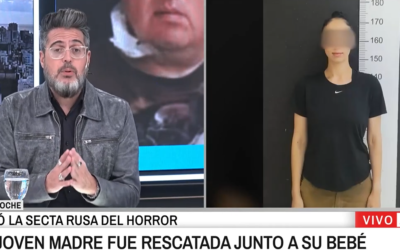
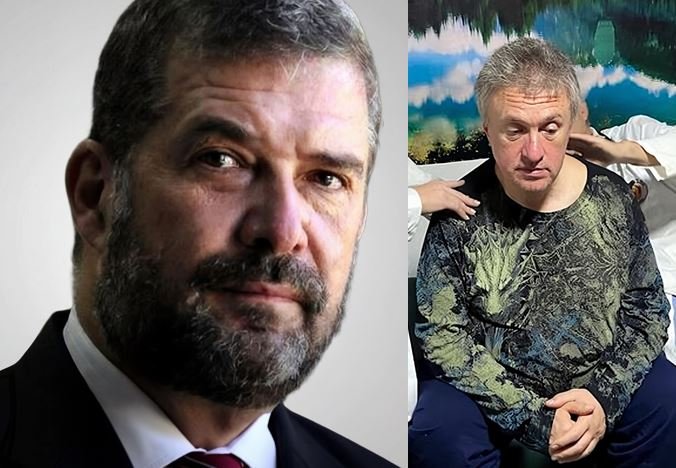
A recent example, widely documented by “Bitter Winter,” is the case of Konstantin Rudnev, the Russian spiritual teacher accused in Argentina of reorganizing his so-called “cult” there. Gravely ill, confined to a wheelchair, and escorted as if he were a dangerous criminal, he has endured a deterioration of his health that reflects the hostility of a prosecutor who, through decisions, omissions, and a persistent adversarial posture, has pursued him for more than a year without presenting corroborating evidence. The situation worsened when the Court of Cassation, at the request of the same prosecutor, Fernando Arrigo, revoked his house arrest and ordered his return to prison.
This decision came after fourteen months during which defense attorneys documented procedural inconsistencies, reported medical recommendations essential to preserving Rudnev’s health, and denounced forms of obstruction that contributed to his collapse. The ruling disregarded the condition of a recently operated patient in a state of extreme vulnerability. It appears as an act of judicial harassment incompatible with the responsibilities of one of Argentina’s highest institutions. By endorsing the prosecutor’s approach, the Court of Cassation has reinforced a pattern of cruelty directed at a sick and defenseless individual.
Psychology offers a framework for understanding certain behaviors displayed by individuals who wield power over vulnerable subjects. Research describes a profile characterized by pathological personality traits and a tendency toward moral disengagement, a state in which individuals perceive themselves as exempt from ethical limits. When such people encounter their victims, they display an absence of empathy, even when the victims are ill. They derive satisfaction from exercising control unconstrained by respect for the humanity of the other. In extreme cases, this dynamic approaches genuine sadism. The weakness of the victim amplifies the aggressor’s sense of omnipotence because the authority they hold allows them to determine the victim’s fate. The victim is powerless in the face of such abuse.
The situation in which Rudnev finds himself reflects several of these dynamics. Prosecutor Arrigo, who handles his case, may appear to an outside psychological observer as determined to inflict suffering as a means to obtain a conviction and perhaps a confession, discounting the physical and psychological pain of another human being. Psychology describes this attitude as emotional coldness or emotional disconnection. Those who exercise power in this manner conceive the world as divided between predators and prey. From a position of authority, such as that of a public prosecutor, they behave as if their role were to subjugate the person before them, perceived as an enemy of society, rather than to apply the law based on reliable evidence and credible testimony.
Rudnev is not treated as a defendant with rights guaranteed by the judicial system. He is treated as a means through which the prosecutor can reaffirm the state’s intolerance of “cults,” the importance of his position, and the magnitude of the power it confers. This awareness strengthens the prosecutor’s self-esteem and sense of omnipotence.
I am not accusing Prosecutor Arrigo of acting out of personal animosity against the defendant. I am sure he is genuinely persuaded that he is serving justice and protecting Argentinian society. The problem is that, for a psychologist, this does not exclude a syndrome of omnipotence verging on abuse. Indeed, it may be a typical element of it.
In this asymmetrical relationship, Rudnev becomes dehumanized. He is perceived as less human and inferior, aided by the vague, unproven accusation that he leads a “cult.” This charge carries enormous stigma in the public imagination. Within such an accusatory environment, even the most unreasonable decisions can be justified, especially when public opinion has been shaped by media narratives that present the accused as inherently guilty. The psychological and physical violence inflicted on Rudnev may thus be analyzed as institutionalized violence, carried out by institutions that should instead uphold justice, punish the guilty, and protect the innocent. This institutional violence is rationalized and used as a tool to subjugate a person in difficulty and to erase their identity and deepest convictions.
The Rudnev case is not an isolated episode. A similar pattern emerges in Arrigo’s prosecution of the Mapuche leader Facundo Jones Huala, a case that has also raised serious human rights concerns. Jones Huala, a prominent figure in the Indigenous Rights movement, has been subjected to prolonged detention marked, according to his attorneys, by procedural irregularities, delays, and decisions that appear disconnected from the evidentiary record. Prosecutor Arrigo has pursued a strategy that mirrors the approach seen in the Rudnev case. In the proceedings against Jones Huala, accusations have been advanced without timely formalization, pretrial detention has been extended on vague claims of complexity, and the defense’s appeals have been met with resistance bordering on obstruction. The prolonged custody renewed again and again without the filing of formal charges, the persistent refusal to move Jones Huala to a facility adequate for his condition, and the absence of proper medical care during the period in which he resorted to a hunger strike tell a story familiar to those who have followed the Rudnev case. The pattern suggests a prosecutorial posture driven by an adversarial impulse directed at individuals perceived as socially or ideologically inconvenient.
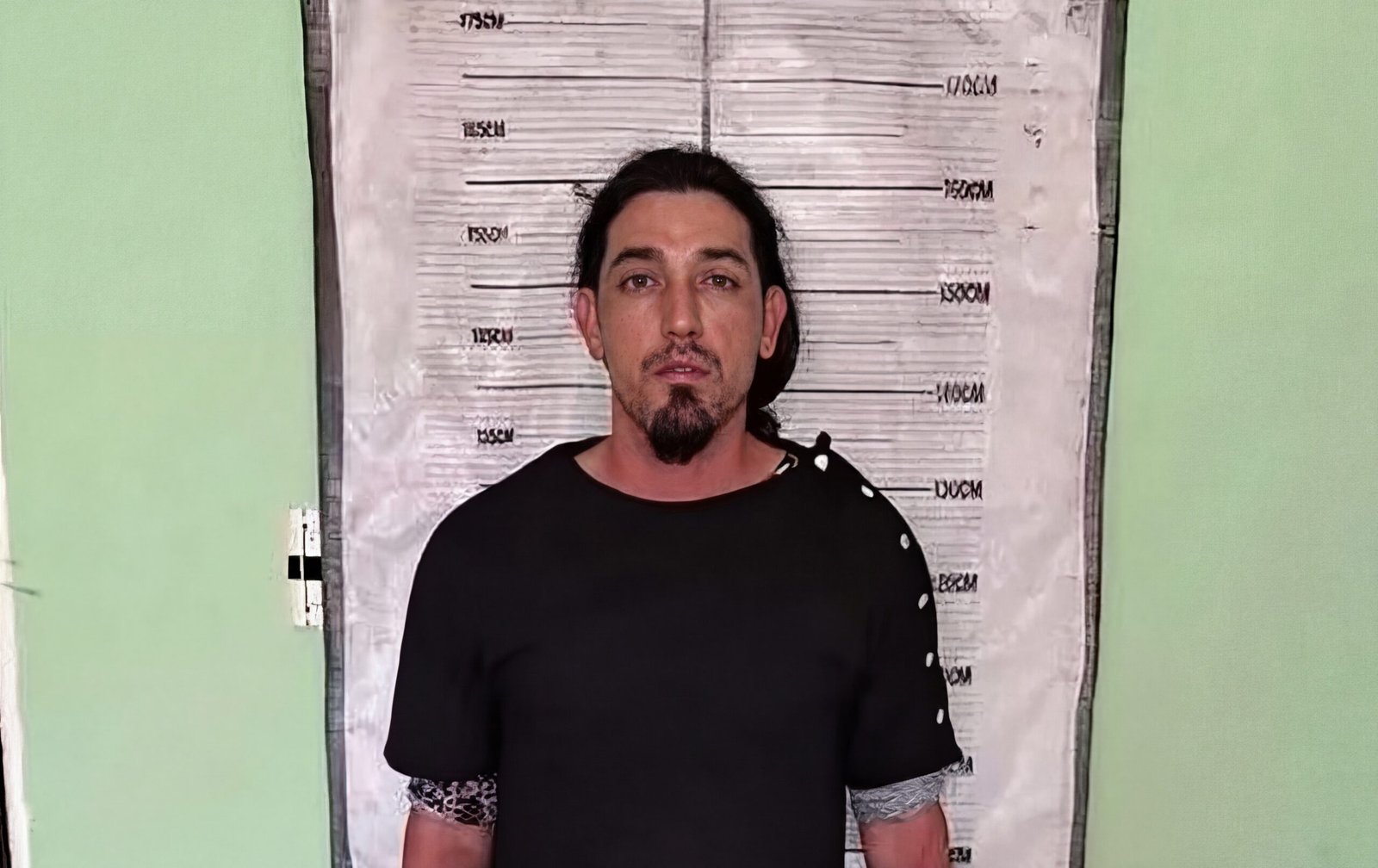
The parallels between the two cases are difficult to ignore. In both, the prosecutorial approach has contributed to the deterioration of the defendant’s health and well-being. In both, decisions appear to have been taken without adequate regard for medical evidence or procedural fairness. In both, the defendants have been portrayed through stigmatizing narratives that facilitate public hostility. The Jones Huala case demonstrates that the issues raised by the Rudnev prosecution are not confined to a single defendant or a single community. They reflect a broader pattern of overreach that threatens the integrity of the justice system and the rights of those who fall outside dominant cultural or political frameworks.
The Rudnev case has already been reported on by major international organizations committed to protecting universal human rights. An international group of scholars and human rights activists is monitoring the case and the broader context in Argentina. A group of legal and human rights scholars and professionals in Argentina is conducting a domestic investigation. They pay particular attention to cases of arbitrariness, abuse of power, and unjustified cruelty toward defendants, who, in fact, become the real victims. It is precisely this constant domestic and international attention and public oversight that serve as an important deterrent against further arbitrariness.
The psychological element emerging from the prosecutor’s attitude cannot be ignored. The hope is that these denunciations will lead to the appropriate outcome: the restoration of the rights and dignity of a person who has committed no crime as a human being.

Raffaella Di Marzio has been involved for over thirty years in researching, studying, and lecturing about minority religions and new religious movements, both in Italy and internationally. She holds a Ph.D. in psychology, is the author of four books and numerous essays and articles, and a lecturer in three Master’s Degree programs at the Adventist University of Florence, the University of Salerno, and the University of Bari. Di Marzio is also the director of the Center for the Study of Freedom of Religion, Belief, and Conscience (LIREC), which works to promote and defend the right to freedom of religion or belief and engages in a constant, critical dialogue with Italian and international institutions.