Inside the courtroom calculus where reputations, headlines, and imagined futures decide who stays behind bars.
by Ezequiel Kostenwein
[Note: Although not usual in “Bitter Winter,” parenthetical references, essential to the argument, are included].
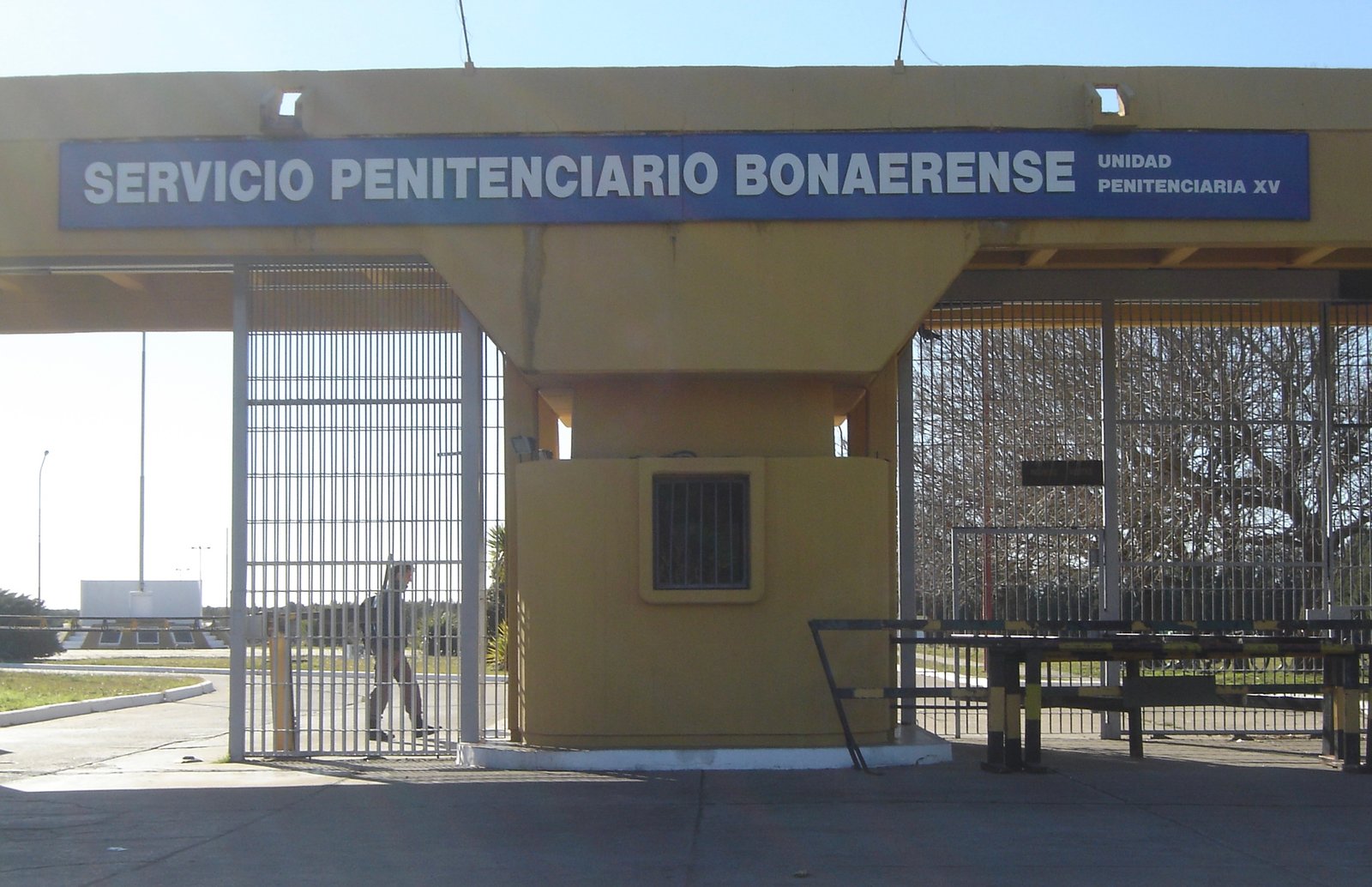
Introduction
Pretrial detention (PTD) is, on the one hand, a relatively straightforward legal measure to define and, on the other, a complex judicial practice to analyze. In legal terms, it entails depriving a person who retains the status of innocence of liberty during the proceedings and should be used only to avert procedural risks, chiefly flight or interference with the investigation. However, many reports produced in Latin America have pointed to a persistent gap between that formulation and the measure’s actual use. To varying degrees, these studies identify weaknesses in alternatives to incarceration, the influence of extrajudicial actors, asymmetries between prosecutors and defense attorneys, and a judicial culture inclined toward using PTD (CEJA 2009; DPLF 2013; INECIP 2012).
In previous work, I distinguished three common approaches to this problem. Criminal-law doctrine, which focuses on what should limit precautionary coercion; nongovernmental organizations that have helped make its consequences visible and turn its excessive use into a public problem; and various social-science approaches that explain it as an effect of broader processes—actuarial, economic, or related to criminal policy—that extend beyond the courts (Kostenwein 2017, 2023).
Without disregarding those contributions, I have argued that PTD cannot be understood solely in terms of what it represses or the external forces that supposedly determine it. In recent work, I have called the perspective that characterizes it chiefly by its negative effects or as an instrument of processes located elsewhere the “repressive hypothesis.” The problem with these explanations is not that the harms they identify are irrelevant, but that they may obscure the concrete relationships that make pretrial incarceration possible. I therefore propose defining PTD also by what it produces: the justifications, criticisms, agreements, and ties it articulates among judicial and extrajudicial actors (Kostenwein 2017, 2023).
This perspective helps avoid two reductions. The first treats PTD as a problem confined to the judicial sphere. The second turns it into a simple political maneuver, making prosecutors, defense attorneys, and judges passive actors (Kostenwein 2015b). Most of the empirical material I revisit comes from research conducted in the province of Buenos Aires, especially interviews with those judicial actors. I do not intend to extend these findings mechanically to all Argentine jurisdictions. I am interested in reconstructing certain mechanisms that appear with particular intensity around pretrial incarceration: the centrality of the expected sentence, the routinization of certain arguments, the professional exposure of those who decide in favor of release, and the relationships among criminal justice, the media, and the political field, especially when a case acquires public resonance.
Governing through the future
In practice, PTD relates to the power to predict the future behavior of people facing criminal proceedings. Judicial actors must forecast whether someone will attempt to flee or interfere with the investigation. By definition, this entails anticipating events that have not yet occurred. In research conducted in the judicial districts of La Plata, Quilmes, and Mar del Plata, I observed that these predictions are not usually based on probabilistic studies or empirical data on such flight or interference, but rather on provisions of the Code of Criminal Procedure and on local forms of learning about how procedural risks should be interpreted (Kostenwein 2019b).
Indicators include prior records, ties to the community, social situation, certain assessments of dangerousness, and, with particular frequency, the expected sentence (ES). The latter does not operate simply as one element among others. In case files, hearings, and interviews, it repeatedly appears as a reason for requesting or granting PTD when the eventual sentence would entail actual imprisonment. In my work, I suggest that the ES thus becomes an element around which actors stabilize the precautionary measure and make it routine (Kostenwein 2019b).
This shift is significant because the seriousness of the charge may end up serving as the basis for the prediction. In actual practice, I found arguments that infer a risk of flight from the sentence that might be imposed for the offense under investigation. Some judicial actors explicitly question this reasoning and point out that the seriousness of the act, the harm caused, or the future sentence are criteria for a conviction, not for a precautionary decision. Others consider the ES useful for anticipating possible evasion of the proceedings. These different positions do not, however, eliminate the criterion’s routine nature.
We can therefore speak of a substantive tendency: PTD approaches an anticipation of future punishment when the prospect of an effective custodial sentence is used to justify incarceration before that sentence exists (Kostenwein 2019b). One prosecutor interviewed went so far as to describe PTD as an advance on the future sentence; another acknowledged that the ES was a “tricky” argument, although necessary for everyday work. These testimonies do not describe a universal rule, but they show how precautionary logic can consolidate through reasoning that relegates specific verification of procedural risks to the background.

Pretrial detention as practice: routine, career, and “judicial danger”
PTD does not circulate solely by force of legal rules. To understand how it is requested, challenged, granted, or denied, we must attend to the dispositions and competencies of those who work in criminal justice. In the province of Buenos Aires, I found that legal principles coexist with professional expectations, hierarchies, and learning forms linked to judicial careers. In that context, imposing PTD may become an institutionally available and expected response (Kostenwein 2015c).
The testimonies collected include expressions such as “not making waves” or “keeping a low profile.” The actors themselves link them to the advisability of avoiding exposure that could hinder professional advancement, especially in controversial or resonant cases. In my work, I have noted that these precepts may, in specific circumstances, contribute to imposing pretrial incarceration rather than denying it (Kostenwein 2015c). This is not a matter of reducing judicial decisions to calculations associated with judicial careers, but of incorporating into the analysis the institutional conditions within which those decisions acquire meaning.
This dimension becomes more visible when a release decision prompts public criticism. The judicial actors interviewed mentioned cases of judges subjected to intense criticism and removal proceedings following decisions regarded as lenient. Their accounts contain the idea of a “disciplining effect” that is difficult to measure but persistent in the perceptions of those who work within the judiciary (Kostenwein 2015a, 2015b). One of the prosecutors interviewed summarized the problem as “judicial danger”. Alongside the procedural danger that should justify PTD, there is the danger that the person who orders a release may lose their job if a serious event subsequently occurs and causes public commotion.
This is not to claim that judges incarcerate out of fear, but rather to note that, according to the judicial actors themselves, different decisions carry different consequences. Some describe a judiciary in which avoiding professional risks may conflict with independent judgment. Others point out that discourses about the “revolving door”—a metaphor that dramatizes the problem of pretrial release by presenting the justice system as a circuit in which detainees “enter through one door and leave through the other”—make them feel that they should assume a function of repressing crime that exceeds the precautionary role assigned to them (Kostenwein 2015a, 2015b). Thus, rather than imagining a justice system that is either completely autonomous or completely subordinated, it is necessary to observe how these pressures are produced, how they are interpreted, and what responses they enable.
Reports on Argentina add other components: asymmetries between prosecutors and defense attorneys, limited use of alternative measures, harassment of judges favorable to release, unclear criteria in appointments and promotions, and weak reasoning in some prosecutorial requests (CIPPEC 2011; DPLF 2013; INECIP 2012). They also point out that pretrial incarceration can become a form of “blackmail” to induce acceptance of abbreviated proceedings, allowing earlier recovery of liberty at the cost, in some cases, of confessing to offenses not committed (INECIP 2012). These diagnoses belong to the organizations cited. I revisit them to show that PTD is embedded in concrete relationships among actors with unequal capacities and positions, beyond the harm it causes.
Media, politics, and pretrial detention
The media emerged spontaneously in many interviews with prosecutors, defense attorneys, and guarantee judges. Based on 46 interviews, I distinguished three grammars concerning their influence: hegemonic press, judicial voluntarism, and cunning (Kostenwein 2015b, 2019c). The first presents the media as capable of setting limits and exerting decisive pressure; the second acknowledges that pressure but maintains that it can be resisted; the third warns that blaming the press can also operate as a justification through which judicial actors displace their own problems and obligations outward.
This plurality prevents us from claiming that the media uniformly determine judicial decisions. But it also does not allow us to treat them as an external element without effects. In my studies, they appear as a factor that can publicize and condemn rulings, produce images of criminal justice, and amplify political discourses about insecurity and punishment. The question is to reconstruct how the media enter the administration of justice and what consequences they produce in each situation (Kostenwein 2015b).
In the province of Buenos Aires, the relationship between media and politics acquired particular importance around the metaphor of the “revolving door.” Various political leaders publicly used that expression to hold the courts responsible for insecurity and to call for restrictions on pretrial release. During that period, electoral proposals and reforms circulated that explicitly aimed to limit liberty during criminal proceedings. The judicial actors interviewed interpreted these interventions as producing a disciplining effect on those deciding liberty. In my work, I also noted that political representatives exert public pressure largely through the media, so the relationship cannot be conceived as two independent actors (Kostenwein 2015a, 2015b).
This dynamic makes it possible to speak of a repoliticization of criminal justice in which PTD occupies a privileged place. Following Garland, I characterize some of these responses as a style of acting out: high-profile measures aimed at displaying an ability to act and obtaining immediate rewards in the face of problems whose complexity would require longer-term strategies. In that context, for the judicial actors interviewed, PTD appears as a preferred tool for provincial political authorities to gain quick advantages rather than lasting solutions (Kostenwein 2015b).
The result is not merely greater public debate about pretrial incarceration.
Extrajudicial actors enter the administration of justice with different capacities: the media publicize—and at times condemn—decisions; political representatives accuse judicial actors and seek to limit their discretion. To some extent, these interventions transform a problem of justice into a problem of security or, more precisely, consolidate the justice system itself as a source of insecurity (Kostenwein 2015b).
Nor is it always appropriate to describe the relationship between justice and politics as confrontational. In analyzing media portrayals, I found situations in which political representatives do not attack judicial actors but make use of them, while certain judicial actors accept political impulses that may favor their advancement within the institution. In this model, criminal justice and the political field appear “tensely joined together” (Kostenwein 2019c). This observation complicates explanations that present judges solely as victims of external pressures: the relationships may include conflict, resistance, alliances, promotions, and benefits.
For this reason, criticism of media determinism does not imply a defense of the judiciary’s effective autonomy. It means taking mediations seriously. The press may be regarded as hegemonic by some judicial actors, as resistible by others, or as an evasive form of “cunning” by a third group of judicial actors. At the same time, the political field may challenge judges or articulate with them. What matters is to reconstruct how PTD circulates within this web and what relationships it produces when the judiciary’s own conduct becomes a public problem.

Resonant cases, victims, and judicial devils
Not every criminal case attains public resonance. In previous work, I analyzed how a complaint must succeed in having what it alleges regarded as true and, in addition, sufficiently important to transcend the individual conflict. Following Boltanski, I speak of processes of desingularization through which a specific victim may be associated with other possible victims and a particular event may be projected as a threat to a broader social sector (Boltanski 2000; Kostenwein 2016, 2019a).
The media participate in that process by circulating allegations, calling on specialists, linking episodes, and attributing responsibility. In my analysis of the Piombo–Sal Llargués case—the public controversy triggered in 2015 by a ruling of the Buenos Aires Province Court of Cassation that reduced a sentence from six to three years in a case involving the sexual abuse of a six-year-old boy—I found a significant presence of imprecise legal references in the news reports examined (Kostenwein 2016). I did not assume a deliberate intent to misrepresent. I showed that, once the scandal is triggered, rulings matter not only for what they say but also for what they prompt other actors to say (Kostenwein 2016).
In this context, I cautiously proposed the notion of “judicial devils.” These are judicial actors who, because of decisions their detractors regard as lenient, are presented as threats to society. A central element of this construction is the accusation of insensitivity toward specific victims, along with the possibility of projecting that harm onto society as a whole (Kostenwein 2019a). Decisions favorable to release may thus acquire a meaning that exceeds the technical discussion of procedural risks and become part of controversies concerning victims, the threat they represent, and the role the justice system should play.
The category should not be used mechanically. “Judicial devils” are not weak or passive actors: they belong to an institution with resources, recognition, and capacity for resistance. Nor does every intense public reaction constitute a moral panic. I have proposed a weak use of the concept precisely because the events that generate these controversies may be serious and because I lack sufficient information to claim in general terms that the reactions are disproportionate (Kostenwein 2019a). More modestly, the concept helps examine how certain judicial actors come to be presented as a risk to social cohesion based on decisions that their opponents interpret as lenient and detached from victims’ needs.
The selectivity with which these episodes acquire visibility is also part of the problem. We know little about the reality underlying the label of “judicial devils,” since we lack sufficient empirical data, because the press and political authorities emphasize only those proceedings in which judicial actors granted release and the person released subsequently committed a serious offense (Kostenwein 2019a).
Conclusion
The recurrent use of pretrial detention cannot be explained solely as a violation of legal rules or as the automatic result of political or media pressure. In the Buenos Aires practice studied, it appears as a measure stabilized by forms of reasoning, routines, and relationships. The expected sentence may acquire a prominent place to the point of bringing the precautionary measure close to an anticipation of punishment; judicial actors describe professional expectations linked to “not making waves” or “keeping a low profile”; and some of them speak of a “judicial danger” when a decision favorable to release may subsequently become grounds for professional criticism.
The media and the political field intervene in this process without producing uniform effects. The press may publicize and condemn rulings and amplify discourses that present the justice system as lenient. Political authorities have used similar situations to challenge pretrial release, promote restrictions, and turn PTD into a visible response to insecurity. For some judicial actors, these interventions produce disciplining effects. In other scenarios, politics and justice appear articulated rather than opposed. These different modalities do not render extrajudicial pressure irrelevant: they require reconstructing how it combines with the judiciary’s internal dynamics.
Research on resonant cases shows, in turn, how a particular victim and event may be desingularized and projected onto a broader universe of potential victims. In these controversies, certain judicial decisions may be interpreted as signs of leniency or insensitivity, and judges themselves may become objects of public criticism. It is not appropriate to conclude that every resonant case leads to greater use of PTD. It is, however, necessary to incorporate these relationships into the analysis of the conditions under which decisions are made concerning the liberty of accused persons.
For this reason, I have proposed defining PTD not only by its oppressive aspect but also by what it produces. For pretrial incarceration to exist as it does, judicial actors must do something with it: request it, object to it, grant it, deny it, and use it to validate demands, objections, and rulings. Following these associations makes it possible to understand how a legally exceptional measure can become consolidated as a habitual practice and, in certain scenarios, be offered as an available response, suggested, and endorsed within the judicial institution itself.
References
Boltanski, Luc. 2000. “El amor y la justicia como competencias”. Buenos Aires: Amorrortu.
Centro de Estudios de Justicia de las Américas (CEJA). 2009. “Prisión preventiva y reforma procesal en América Latina”. Vol. 1. Santiago de Chile: CEJA.
Centro de Implementación de Políticas Públicas para la Equidad y el Crecimiento (CIPPEC). 2011. “¿Qué criterios están en juego a la hora de aplicar la prisión preventiva en la provincia de Buenos Aires?” Documento de Trabajo 74. Buenos Aires: CIPPEC.
Due Process of Law Foundation (DPLF). 2013. “Independencia judicial insuficiente, prisión preventiva deformada: los casos de Argentina, Colombia, Ecuador y Perú”. Washington, DC: DPLF.
Garland, David. 2005. “La cultura del control: crimen y orden social en la sociedad contemporánea”. Barcelona: Gedisa.
Instituto de Estudios Comparados en Ciencias Penales y Sociales (INECIP). 2012. “El estado de la prisión preventiva en la Argentina”. Buenos Aires: Servicop.
Kostenwein, Ezequiel. 2015a. “La prisión preventiva en los márgenes judiciales. Justicia penal, medios de comunicación y autoridades políticas.” “Sortuz: Oñati Journal of Emergent Socio-Legal Studies” 7 (1): 12–28.
Kostenwein, Ezequiel. 2015b. “Prisión preventiva: entre los medios de comunicación y las autoridades políticas.” “Revista Direito e Práxis” 6 (11): 54–79.
Kostenwein, Ezequiel. 2015c. “Prisión preventiva en la provincia de Buenos Aires.” “Nova Criminis” 9: 149–180.
Kostenwein, Ezequiel. 2016. “Casos resonantes y justicia penal en la prensa. Actores y retóricas frente a un hecho escandaloso.” “Nova Criminis” 8 (12): 233–262.
Kostenwein, Ezequiel. 2017. “La prisión preventiva en plural.” “Revista Direito e Práxis” 8 (2).
Kostenwein, Ezequiel. 2019a. “Pánicos morales y demonios judiciales. Prensa, opinión pública y justicia penal.” “Estudios Socio-Jurídicos” 21 (2): 15–50.
Kostenwein, Ezequiel. 2019b. “Relaciones entre la prisión preventiva y la pena en expectativa. El sentido de las predicciones y las precisiones.” “Derecho & Sociedad” 52: 219–228.
Kostenwein, Ezequiel. 2019c. “Lo que se cree, lo que se escribe: dos preguntas cruciales para la sociología de la justicia penal.” “Derecho Penal y Criminología” 9 (5): 246–260.
Kostenwein, Ezequiel. 2023. “¿Un talismán para la justicia penal?: enfoques e interpretaciones sobre el uso de la prisión preventiva.” “Revista Escuela Judicial” 4: 284–307.

Ezequiel Kostenwein is an Argentine lawyer, with a Ph.D. in Social Sciences and an M.A. in Criminology. He is a researcher at Argentina’s National Scientific and Technical Research Council (CONICET) and coordinates the Sociology of Criminal Justice Area at the Institute of Legal Culture of the National University of La Plata. He teaches at undergraduate and graduate levels at several Argentine universities and directs research on criminal justice and judicial culture. His recent books include “Cómo se construye un judicial” (2024) and “Objetar la prisión” (2025).