How old ideological habits survive in new forms and shape the way some Russian skeptics reconstruct the Rudnev case
by Rosita Šorytė
I grew up in Soviet-occupied Lithuania, in a world where religion and the supernatural were not only dismissed but mocked. The school curriculum presented the miraculous as a relic of primitive thinking, something to be laughed at rather than examined. Teachers repeated that science had demonstrated the non-existence of subtle or supernatural realities, and that any belief in them was a sign of backwardness. They did not persuade the population, but they expected everyone to conform. This created a psychologically distorted world: as a small girl, I lived in a family where religion was part of our life, but in the public space this should be denied. The veneration of communism and Lenin replaced religion as a new, mandatory form of belief.
Later in life, I discovered that several Soviet leaders privately consulted psychics, astrologers, and healers. The contradiction was striking. Official doctrine insisted the supernatural was impossible, yet those who enforced it often behaved otherwise. The Soviet system demanded public conformity to a narrow definition of science, while its own elites quietly sought answers in places the ideology forbade.
This early experience shaped my sensitivity to how science can be used as a political instrument. It also prepared me to recognize the same pattern when I encountered the international skeptical movement. Maybe the movement emerged with noble intentions. Sometimes, it exposed fraudulent seers and debunked staged miracles. Yet from these successes, some skeptics drew a sweeping conclusion. They declared that all mystical, spiritual, or paranormal phenomena were fraudulent. They insisted that science had proved this. They treated this insistence as scientific truth, though it rested on belief rather than evidence. The movement became a mirror image of the dogmatism it claimed to oppose. It replaced religious faith with a secular faith in the impossibility of the supernatural.
This dogmatic turn contributed to the decline of organized skepticism in the West. The movement had charismatic figures, including the late James Randi, who attracted large audiences. Yet surveys in Randi’s own country show that most Americans ignore the skeptics and believe supernatural phenomena exist. The public did not follow the skeptics into their ideological corner. The movement’s influence waned because its conclusions were not supported by the complexity of human experience, nor by the evolution of scientific research.
The twenty-first century brought a shift that surprised many. Scientists began exploring questions earlier generations dismissed. Research on consciousness, anomalous experiences, subtle energies, and the effects of prayer entered mainstream academic discussion. Jeff Kripal’s work at Rice University, in collaboration with physicists, neuroscientists, and psychologists, is just one example of opening new paths for dialogue between science and spirituality. These scholars do not argue that every claim of extraordinary experience is genuine. They refuse to exclude the possibility. They approach the subject with curiosity rather than contempt. Their work demonstrates that science itself had moved beyond narrow positivism. The old skeptical dogma no longer reflects the state of scientific inquiry, although some positivist scientists still exist and resist.
While skepticism declined in the West, it found fertile ground in Russia. A generation disillusioned with Soviet ideology embraced a new form of scientism that resembled the old one. They rejected the Soviet political system yet retained its outdated conception of science. Television programs dedicated to debunking paranormal claims became popular. Their tone echoed similar shows that had appeared decades earlier in North America and Europe—and long since disappeared. The Russian skeptical movement adopted the posture of scientific authority, although its methods often relied on theatrical demonstrations rather than on research. It became a cultural phenomenon rather than a scientific one.
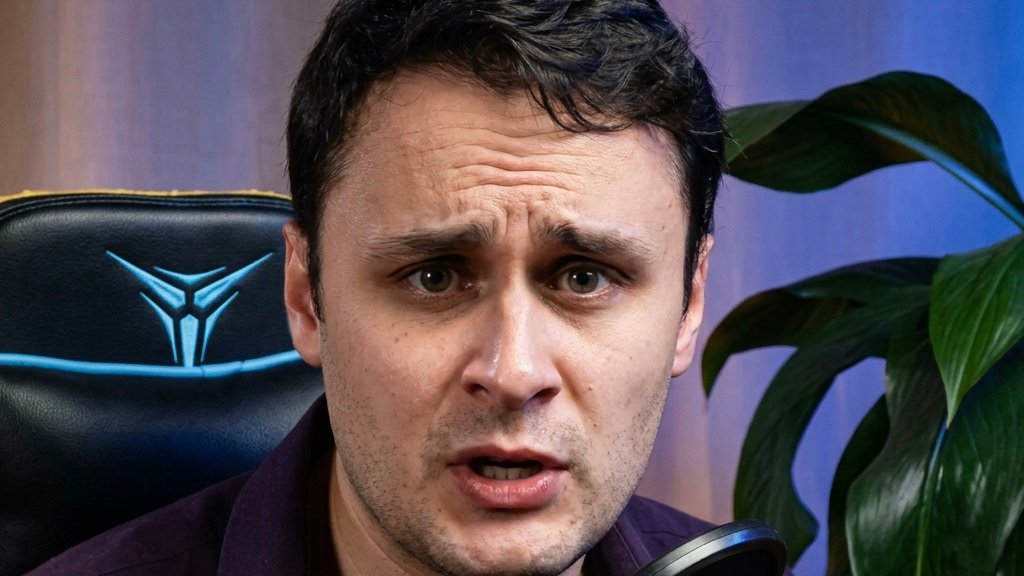
In this environment, Mikhail Lidin emerged. He is not an isolated commentator. He is part of a structured skeptical milieu and collaborates with organizations such as “Scientists Against Myths” (Учёные против мифов), a prominent Russian science-popularization forum. Lidin is also publicly associated with the Houdini Prize, an award created to celebrate the exposure of alleged paranormal frauds. These affiliations place him squarely within the institutional skeptical movement. His videos combine jokes, performance, and simplified explanations. He reconstructs tricks, exposes illusions, and presents himself as a defender of rationality. He belongs to a community that values debunking as entertainment.
A narrow definition of truth shapes his worldview. For him, truth is measurable. Experience is unreliable unless it can be reproduced under controlled conditions. Symbolic meaning, spiritual practice, and metaphysical inquiry fall outside his view.
He treats them as forms of deception. This approach is not scientific. It is a form of positivism that serious scientists abandoned decades ago.
Lidin’s method collapses religion, spirituality, and esotericism into a single category. He does not distinguish between symbolic rituals, cultural traditions, inner experiences, and manipulative practices. Everything becomes a claim to be tested. What cannot be tested becomes fraud. This reductionism closes his eyes to the complexity of human experience. It also ignores how charismatic authority functions in many cultures. Charisma is not inherently manipulative. It appears in religion, art, politics, and social movements. It cannot be reduced to tricks or illusions. Lidin’s worldview pathologizes entire categories of human leadership. It treats them as symptoms of irrationality rather than as expressions of human creativity.
One of Lidin’s targets is Konstantin Rudnev and the teachings he imparted in Russia within a spiritual school known as Ashram Shambhala until he was arrested in 2010. Lidin produced several videos on this subject, including one five years ago and another in 2026. Both videos present a dramatic narrative, yet the drama is not accidental. It is constructed through a sequence of lurid accusations, theatrical reconstructions, and emotionally charged anecdotes that create an atmosphere of horror rather than an environment for inquiry.
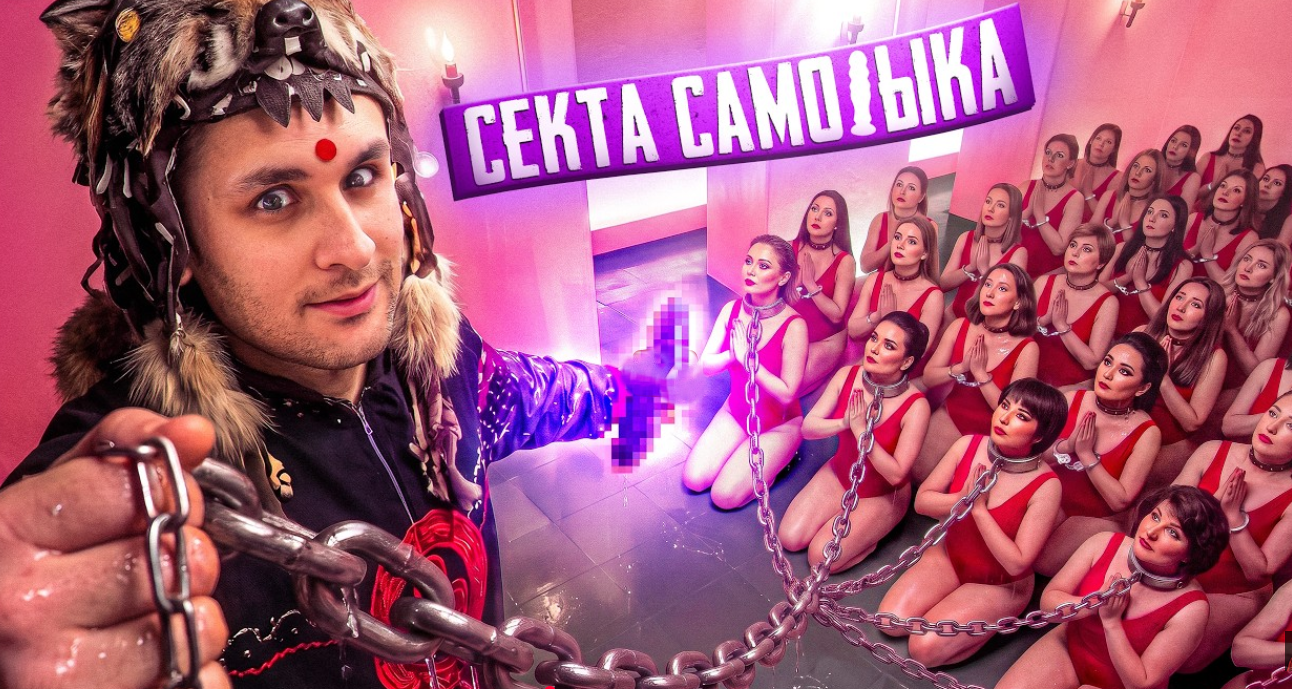
In the earlier video, Lidin opens with a catalog of sensational claims. He describes Ashram Shambhala as “Russia’s craziest cult,” a phrase repeated throughout the video as a refrain. He portrays Rudnev as a grotesque figure who presided over rituals in cramped Soviet apartments, surrounded by followers performing strange dances. He shows clips of amateur recordings from the 1990s and interprets them as evidence of systematic abuse. He repeats stories of starvation, beatings, and sexual rituals. He describes alleged “initiation rites” in which young women were forced into degrading acts. He recounts claims that followers were deprived of sleep, forced to perform physical exercises at night, and punished for questioning the teacher. He presents these elements as proof of a totalitarian structure, although he does not examine the claims’ sources or verify their authenticity.
The video also includes accusations of animal cruelty, based on a fragment of a recording in which a cat appears. Lidin interprets this as evidence of sadistic practices, although the context of the recording is unclear and the provenance of the footage is dubious. He repeats stories of sexual abuse, although these claims rely on testimonies used in Rudnev’s trial in Russia that changed over time and were contested in court. He describes alleged “astral karate” sessions in which followers believed Rudnev could strike them through invisible forces. He presents these beliefs as signs of manipulation, yet he does not consider the symbolic or performative dimensions of esoteric practice.
The 2026 video expands on this narrative. It incorporates new elements drawn from media reports and from the criminal case. Lidin describes disappearances of young women who allegedly left their families to join the Ashram. He mentions cases from Samara, Perm Krai, and Brazil. He mentions a woman who allegedly sold her house and vanished after attending a seminar. He describes another who left her children and took out loans before disappearing. He presents these cases as evidence of a global exploitation network. However, he does not examine whether these disappearances are documented or whether they are connected to Rudnev (who was in jail in Argentina, where some of the incidents occurred).
The video also includes claims that followers were driven into psychiatric disorders. Lidin cites cases of schizotypal personality disorder and paranoid schizophrenia. He presents these diagnoses as consequences of Rudnev’s teachings. Still, he does not consider alternative explanations or the possibility that the ideological climate surrounding the case influenced them (assuming they are authentic). He repeats stories of followers abandoning their families, refusing to care for sick relatives, and withdrawing from society. He presents these stories as proof of psychological control, although he does not examine whether they are verified or whether they reflect individual circumstances rather than systemic patterns.
The 2026 video also describes Rudnev’s female followers as devious priestesses who maintained control during his imprisonment. He describes their alleged manipulation of followers, their involvement in financial matters, and their participation in dangerous rituals. He does not consider, however, that while detained in Siberia, Rudnev had very limited opportunities to communicate with the world outside the prison. He certainly could not have managed a “movement” or been responsible for his former students’ activities.
Lidin admits: “True, perhaps the case against him was partly fabricated. During a search, a packet of heroin was found on him. But my sources are unaware of Rudnev himself ever using anything of the sort.” Lidin is surely aware that Russian police routinely plant either drugs or pornography in the homes of those who criticize the regime or do not praise it enough. However, after this honest statement, he continues to use, less honestly, material from the same fabricated Russian court case.
Even less honestly, once he realized the court documents would produce a narrative both implausible and dull, Lidin supplemented them with sensational media accounts and his own fantasies, turning a collection of disputed claims into a full-scale defamation designed to shock viewers.
The videos present a narrative in which every detail confirms the conclusion. They do not allow for ambiguity, complexity, or the possibility that the narrative itself is a product of moral panic. They create a closed world that invites the viewer to accept the story without question.
The videos also rely on old attacks by Russian media. These attacks follow a familiar script. They describe Rudnev as a monster, present sensational stories without verification, and repeat stereotypes and platitudes about “cults” and “mind control.” They rely on apostate ex-members, some of whom may be sincere, while others may be invented or influenced by external pressures. They include innuendo and rumors without evidence, such as alleged disappearances that cannot be traced to Rudnev.
The language often degenerates from vitriolic criticism to plain insult. “Cults” are there to “steal your money, your youth, and your health.” Rudnev is “a coward sadist and a pathetic charlatan.” And so on.
The allegations and conclusions presented in Lidin’s videos about Rudnev are not supported by evidence. They are not facts. They are unverified claims drawn from biased judicial materials, sensational media reports, and narratives produced within the Russian anti-cult ideology. Lidin presents them as proven truths, yet they remain unsubstantiated accusations assembled into a horror story designed to shock viewers.
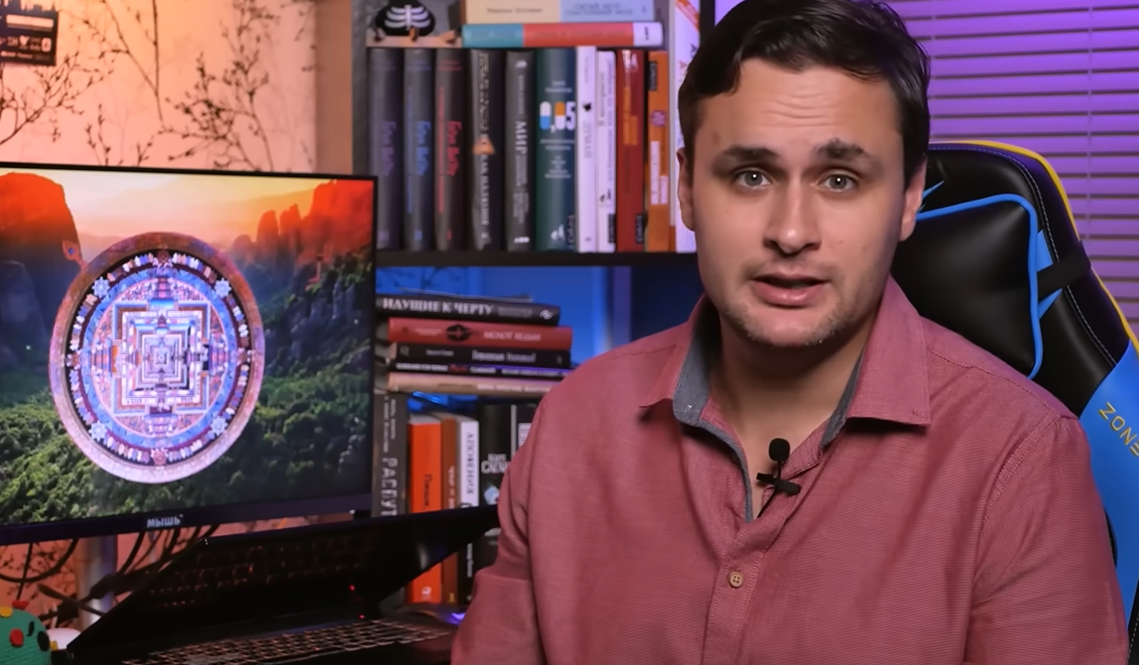
This construction serves a commercial purpose. Lidin is a professional blogger whose work depends on audience size, views, and engagement. The more frightening and lurid the narrative, the more attention it attracts and the more advertising revenue it generates. The demand for sensational content creates a market for stories that amplify fear and exaggeration. Rudnev’s case becomes raw material for a spectacle that rewards the creator with visibility and profit. This commercial incentive explains why the videos emphasize the most shocking elements, repeat unverified rumors, and present conjectures as fact. It also explains why the narrative is shaped not by evidence but by the logic of entertainment, where fear sells, and accuracy does not.
Mikhail Lidin’s videos also reflect the persistence of Soviet scientism in contemporary Russia and the limitations of a skeptical movement that has not kept pace with scientific research. Lidin’s old-fashioned positivist worldview shapes his interpretation. He sees fraud where others see symbolism, manipulation where others see charisma, deception where others see spiritual exploration, a “cult” where others see a spiritual movement. His videos reflect the same dogmatic attitude that I encountered in Soviet schools. Everything that falls outside a somewhat primitive idea of science is treated as irrational, dangerous, and manipulative. They confirm the dangers of treating ideology as truth and the need for a more nuanced approach to spiritual diversity.
Truth requires more than performance, spectacle, or entertaining videos. It requires the courage to question the narratives that others accept without hesitation, the willingness to look beyond the surface, and the recognition that human experience is richer than any dogma, whether religious or secular.
The more interesting question, however, is why Lidin felt the need to devote an almost four-hour video to the Rudnev case in 2026, five years after the first one. One answer is in the video itself. He implies he is hoping to influence Rudnev’s prosecution in Argentina. He claims that converting Rudnev’s detention into house arrest was a form of excessive “leniency,” despite his acknowledged medical problems. Happily, Lidin tells us, “the Argentine investigation into the human trafficking case is in full swing, and prosecutors did not agree to such leniency. In June, Argentina’s Court of Cassation overturned the house-arrest decision. By law, Rudnev must return to federal prison.”
There may be another answer, though. Lidin is not a “classical” Russian anti-cultist such as Alexander Dvorkin or Alexander Novopashin, who work for the Russian Orthodox Church and run campaigns against Rudnev as a competitor to their church, though he borrows from them the term “totalitarian cults.” Lidin is a professional skeptic and approaches Rudnev as such.
At this point, it is obvious that there is a transnational campaign started in Russia to destroy Konstantin Rudnev by feeding false information to Argentinian prosecutors and inciting them to ignore even the basic principles of humanity by sending back to jail a man with dramatic health problems. Those who started this campaign, with a viciousness whose motivations I do not totally understand, are probably aware that they cannot rely only on militant Orthodox heresy hunters such as Dvorkin or Novopashin. Their extreme positions are easily ridiculed outside of Russia. So, they diversify their campaign. Those who would not believe Dvorkin or Novopashin, who speak in the name of the Orthodox Church, would perhaps believe Lidin, who speaks in the name of “science.” However, the lies about Rudnev are the same.
Lidin’s 2026 video on Rudnev is heavily promoted and has more than one million views. It shapes public opinion, creates prejudice, and reinforces stereotypes. It contributes to the persecution of Rudnev and his followers—indeed, the author admits it is produced with that aim in mind. It becomes part of a chain of misinformation that influences journalists, activists, and officials who do not examine the underlying evidence. It creates an environment in which minority spiritual movements are treated as threats. Ultimately, Lidin’s videos strengthen those who use the label of “cult” to suppress dissent, both in Russia and Argentina.
Kostantin Rudnev’s story is complex. It deserves careful study, independent investigation, and scholarly attention. It does not deserve to be reduced to a spectacle shaped by ideological bias.
In the end, the question is not whether one agrees with Rudnev’s teachings. It is whether one agrees with the methods used to judge him, accepts narratives built on compromised sources, and allows skepticism to become dogma. An even more fundamental question is whether one recognizes the importance of protecting minority spiritual movements from prejudice and dissidents from transnational Russian campaigns aimed at silencing and destroying them even after they have left Russia.
These questions matter for the integrity of inquiry, for protecting human rights, for the future of religious and political freedom, and for the dignity of those who seek meaning outside conventional paths.
I learned this lesson in Soviet classrooms. I carry it with me when I examine the narratives that shape public opinion today. It reminds me that freedom of belief is fragile and must be defended against subtle defamation campaigns and all forms of prejudice, including those that claim the authority of science.

Rosita Šorytė was born on September 2, 1965 in Lithuania. In 1988, she graduated from the University of Vilnius in French Language and Literature. In 1994, she got her diploma in international relations from the Institut International d’Administration Publique in Paris.
In 1992, Rosita Šorytė joined the Ministry of Foreign Affairs of Lithuania. She has been posted to the Permanent Mission of Lithuania to UNESCO (Paris, 1994-1996), to the Permanent Mission of Lithuania to the Council of Europe (Strasbourg, 1996-1998), and was Minister Counselor at the Permanent Mission of Lithuania to the United Nations in 2014-2017, where she had already worked in 2003-2006. In 2011, she worked as the representative of the Lithuanian Chairmanship of the OSCE (Organization for Security and Cooperation in Europe) at the Office for Democratic Institutions and Human Rights (Warsaw). In 2013, she chaired the European Union Working Group on Humanitarian Aid on behalf of the Lithuanian pro tempore presidency of the European Union. As a diplomat, she specialized in disarmament, humanitarian aid and peacekeeping issues, with a special interest in the Middle East and religious persecution and discrimination in the area. She also served in elections observation missions in Bosnia and Herzegovina, Georgia, Belarus, Burundi, and Senegal.
Her personal interests, outside of international relations and humanitarian aid, include spirituality, world religions, and art. She takes a special interest in refugees escaping their countries due to religious persecution and is co-founder and President of ORLIR, the International Observatory of Religious Liberty of Refugees. She is the author, inter alia, of “Religious Persecution, Refugees, and Right of Asylum,” The Journal of CESNUR, 2(1), 2018, 78–99.
Languages (fluent): Lithuanian, English, French, Russian.