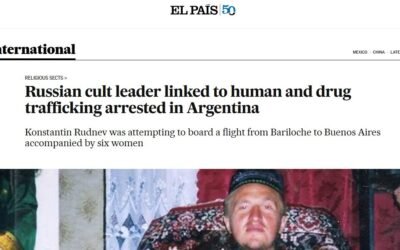
The case against Russian dissident and spiritual leader Konstantin Rudnev is based on misunderstandings, false information coming from Russia, and outright lies.
by Massimo Introvigne

Konstantin Rudnev’s case in Argentina mirrors two contradictions. One concerns the prejudices that emerge as soon as a defendant is described as the leader of a so‑called “cult.” The other concerns systemic problems in Argentina’s criminal law that go beyond the Rudnev case.
These two contradictions converged in a narrative that shaped the Rudnev case and created an image of the defendant that does not match the documented facts. The first five falsehoods (1 to 5) illustrate how this narrative was assembled and how it circulated through media, prosecutorial documents, and institutional exchanges between countries. The second set of falsehoods (6 to 10) concerns the case in Argentina.
The falsehoods were believed and shaped a case because of the exceptional stubbornness of a local prosecutor, Fernando Arrigo. It also reveals a crisis in Argentina’s criminal justice system.
Falsehood Number 1: Konstantin Rudnev Is a “Cult Leader”
The first falsehood is the most fundamental. It claims that Konstantin Rudnev leads a “cult.” This label is used as if it were a neutral sociological category. However, scholars of new religious movements have long explained that serious academic literature does not recognize a distinction between good religions and bad “cults.” The word “cult” is simply a derogatory term used to slander certain movements. People apply it selectively and inconsistently, depending on cultural, political, and historical circumstances rather than objective criteria.
All the features that are allegedly typical of “cults” are also found in mainline religions. Devotion to a charismatic teacher, intensive study of spiritual texts, experiments in communal living, and unconventional rituals appear in traditions that are centuries old and widely respected. What is part of the majority religion in one country is easily dismissed as “cult” in another. The same practices that are admired in one cultural context are feared in another. This is why scholars insist that the distinction between legitimate and illegitimate religions and spirituality is spurious. It is not that there are recognized characteristics of a “cult” and the school founded by Rudnev does not fit them. It is that the category of “cult” itself is a rhetorical weapon rather than an analytical tool.
Once the word “cult” is used, the defendant is placed in a framework that presumes manipulation, secrecy, and abuse. This framework is not based on evidence. It is based on prejudice. It creates an atmosphere where any accusation seems plausible, and any defense seems suspect. It also encourages authorities to rely on stereotypes rather than on documented facts. The Rudnev case shows how powerful this label can be and how quickly it distorts the perception of a spiritual movement.
Falsehood Number 2: “Konstantin Rudnev Uses Brainwashing”
The second falsehood is the claim that Rudnev uses “brainwashing” to lure and control his “victims.” This accusation is common in cases involving minority spiritual movements, although the concept of “brainwashing” has been discredited for decades. Under any other name, including “coercive persuasion” or “mind control,” it is pseudoscience. It has no more credibility than flat-Earth theories. Courts in most democratic countries have rejected it, and scholars have shown it lacks an empirical foundation.
The idea of “brainwashing” was created during the Cold War and used to explain why prisoners of the Chinese or Soviet Communists made statements that their captors wanted. These statements existed, but they derived from torture and blackmail rather than from mysterious mind control techniques. Later, it was applied to new religious movements, although no evidence showed these groups used techniques capable of overriding free will. Anti-cult activists and a small number of psychologists promoted the theory, but critics pointed to obvious methodological flaws. Academic associations issued statements explaining that “brainwashing” is not a valid scientific concept. Courts in the United States and the European Court of Human Rights rejected it.
Despite this, some Argentinian agencies and prosecutors fell for this discredited pseudoscience. They accepted the idea that Rudnev used “brainwashing” to attract and maintain followers without asking for evidence. They relied on outdated literature and claims rejected in other jurisdictions. They interpreted normal spiritual practices as coercive techniques. Meditation became manipulation. Rituals became psychological control. They treated the mere existence of a spiritual teacher as proof of undue influence.
The problem, again, is not that “brainwashing” exists and Rudnev does not practice it. The problem is that “brainwashing” as commonly described by anti‑cultists does not exist. It survives as a myth because it is convenient. It allows authorities to explain why adults make choices that appear unconventional, prosecutors to claim that consent is irrelevant, and media to present spiritual movements as dangerous. In the Rudnev case, this myth was used to justify accusations that lacked factual basis.

Falsehood Number 3: “Rudnev’s Teachings Are Inherently Abusive”
The third falsehood concerns Rudnev’s teachings. They are described as inherently abusive, although they belong to a broader esoteric current that is a legitimate part of spiritual pluralism. This current includes teachings on energy, consciousness, and liberation. It also includes practices related to Tantric sexuality. These practices may look strange to those unfamiliar with Tantra, but they are absolutely normal to scholars of this tradition.
Tantric sexuality is part of a centuries‑old spiritual system. It is based on the idea that sexual energy can be used for transformation and enlightenment. It is present in Hindu and Buddhist traditions and in modern esoteric movements. It is not inherently abusive or manipulative. It is simply unfamiliar to those who have never encountered it. In the Rudnev case, this unfamiliarity was used to create suspicion. Practices that are documented in academic literature and studied by dozens of scholars were described as dangerous. Teachings that are part of a recognized spiritual lineage were treated as evidence of wrongdoing.
Rudnev’s teachings fit within a broader esoteric framework. They are not isolated inventions. They belong to a tradition that values personal transformation and spiritual discipline. The accusation that these teachings are abusive is based on misunderstanding and on cultural prejudice. It ignores the fact that spiritual diversity is a normal feature of modern societies and that adults have the right to explore unconventional forms of spirituality.
Falsehood Number 4: “The Russian Court Case Proves That Rudnev Is a Criminal”
The fourth falsehood is the claim that his Russian conviction proves that Rudnev is an “evil cult leader” and a criminal. This argument treats Russia as a “normal” country where courts are independent, and dissidents are treated fairly. Obviously, this is not the case. Putin’s Russia has a long record of using courts to suppress political opponents and religious minorities. False witnesses hit dissidents. Drugs are found when their homes are raided. Trials are conducted with predetermined outcomes.
Rudnev was sentenced in Russia for operating a “cult,” for sexual abuse of a woman whose testimony was contradictory, and for being in possession of drugs. The drugs were likely planted during the raid. Rudnev tested negative on drug tests, which means he was not using them personally. There was no paraphernalia typical of those preparing drugs for sale. These accusations are similar to those used against political dissidents and members of peaceful religious groups Russia labels as “extremist,” such as the Jehovah’s Witnesses. They are part of a pattern. They are not reliable indicators of guilt.
Nobody should take decisions against political and spiritual dissidents by Russian courts seriously. The Argentinian authorities accepted the Russian sentence without considering the political context. They treated it as evidence rather than as a warning sign. This helped create a narrative that portrayed Rudnev as “dangerous” before his behavior in Argentina was ever examined.
Falsehood Number 5: “Rudnev Escaped Montenegro Because He Was Wanted by the Police”
The fifth falsehood concerns Rudnev’s stay in Montenegro after he had served his jail term in Russia. It was claimed that he escaped the country and went to Argentina because the police wanted him. This is false. The media harassed him because of information spread by Russia, but he was not incriminated, and he was not wanted.
The information received by Argentinian authorities from Montenegro stated that Rudnev had been summoned by the police of Bar to “give a statement” and to “collect information” in a case of possible “illicit trade.” This is the content of a communication from Interpol’s National Central Bureau for Montenegro in Podgorica to the Argentinian authorities dated April 16, 2025. The accusations of illicit trade focused on another guest staying at the same hotel as Rudnev during a political conference. Being called to give a statement does not mean being accused of any crime. It is a routine procedure.
If Rudnev had been under prosecution or accused of crimes in Montenegro, Interpol would have said so. They did not. They reported that they had asked him to provide information. This became a narrative of escape. Media in Argentina repeated the claim. Prosecutors accepted it. The idea that Rudnev fled Montenegro became part of the case, although it was unsupported by facts.
Falsehood Number 6: “Rudnev Reconstructed His Cult in Argentina”
The second half of the Rudnev case’s mythology concerns events in Argentina. These events were interpreted through the same prejudicial lens that had already distorted understanding of his spiritual background, the Russian proceedings, and his passage in Montenegro. The result was a chain of assumptions that created an image of a dangerous figure operating a clandestine network, although the documented facts point in a very different direction. Falsehoods six to ten show how Prosecutor Fernando Arrigo and his team assembled this narrative and how it contributed to decisions that affected Rudnev’s liberty and health.
The sixth falsehood claims that Rudnev reconstructed his “cult” in Argentina. This accusation appears frequently in media reports and prosecutorial documents, although it lacks factual basis. It also ignores a preliminary point. Argentina does not prohibit foreign or Argentinian citizens from establishing spiritual schools. Freedom of religion or belief includes the right to create communities, to teach, and to gather with others who share similar interests. Some prosecutors, anti‑cult activists, or media commentators may dislike certain spiritual movements, but personal preferences do not define the limits of constitutional rights.
In Rudnev’s case, however, no evidence shows that he reorganized a spiritual school in Argentina. Some of the persons arrested and accused of being part of the “cult” insist that they did not even know him. Some did know either him or his wife from Russia, and some came to Argentina because of this connection. It is normal for Russians who share similar interests in Russia to discuss spiritual matters when meeting in Argentina. These conversations do not constitute an organization. They do not constitute a school. They do not constitute a “cult.” We are speaking of a handful of people who met socially or informally. There has never been an “organization.”
Prosecutor Arrigo and his team interpreted ordinary social interactions as evidence of a structured group. They treated conversations as signs of a conspiracy. They turned a small group of acquaintances into a network, adding unrelated people to lend credibility to their theory. This interpretation created an image of a reconstructed “cult,” although nothing of the sort existed.
Falsehood Number 7: “Rudnev Trafficked a Young Russian Woman to Argentina for Purposes of Sexual and Cultic Abuse”
The seventh falsehood concerns the accusation that Rudnev trafficked a young Russian woman called Elena Makarova to Argentina to make her part of his “cult” and abuse her sexually. This accusation collapses when confronted with the woman’s own statements. She denies it herself. After months of unsuccessful attempts to explain what really happened to Argentinian prosecutors, in August 2026 she decided to write an article for “Bitter Winter” titled “The Victim Speaks Out.” She explains that she had never met Rudnev. She explains that she was not trafficked. She explains that she was not abused. Her account contradicts the narrative authorities constructed.
Like thousands of Russian women who hope their children will acquire Argentinian citizenship, she came to Bariloche to give birth. When asked (abusively, as Argentinian law does not require it) to name the father, she did not want to mention the abusive man from whom she had escaped. Pressured to document who the father was, she used a photocopy of Rudnev’s passport, which the friend who had traveled to Russia with her had found in the house where they were staying, owned by a woman who was a friend of Rudnev’s wife and was assisting the Rudnevs in their immigration practices in Argentina. Rudnev was not the father of Makarova’s child, as the DNA test demonstrated. Makarova had never even spoken with Rudnev.
The prosecution relied on alleged phone messages from a woman who supposedly instructed Makarova to lie. Makarova discusses the issue in her article. Her words are worth quoting: “Either there is a problem with Russian translations—which would not be the first in my case—or I cannot explain how those messages landed on my phone. I live in a country where planting incriminating messages on phones is, unfortunately, a known police or intelligence strategy. I cannot rule out that something similar happened.”
The trafficking narrative was built on conjecture. Hospital staff misinterpreted Makarova’s situation. Police officers relied on assumptions. Prosecutors accepted a version of events without a factual basis. They ignored the woman’s own statements. The result was an accusation that portrayed Rudnev as a trafficker, although the alleged victim firmly denies it. Makarova claims she is a victim not of Rudnev but of Prosecutor Arrigo and his team, who subjected her to unbelievable pressure trying to persuade her that she should accuse Rudnev.
Falsehood Number 8: “When They Were Arrested, Followers of Rudnev Were Found in Possession of Drugs”
The eighth falsehood concerns the accusation that followers of Rudnev were found in possession of drugs. First, this accusation presumes that the arrested women were “followers of Rudnev,” although this relationship has not been proved. It also presumes that the seized substances were drugs, although forensic examination demonstrated the opposite.
The substances seized from the accused women were examined. They were not drugs. They did not contain illegal components. They did not match any prohibited substance. Pills supposed to include cocaine or ecstasy were common pharmaceutical products. Mushrooms supposed to be hallucinogenic were dried mushrooms commonly used for cooking. This should have ended the accusation. Instead, the prosecution continued to rely on the theory of drug trafficking.
If there are other seizures that the prosecution relies on to insist on drug charges, the defense does not know them. The accusations appear to be based on assumptions rather than on evidence.
Falsehood Number 9: “Rudnev’s Situation Requires a Long Preventive Detention”
The ninth falsehood concerns preventive detention. Preventive detention is an exceptional measure. International law is explicit about this. It should be used only when there is a concrete risk of violence, flight, or interference with evidence. It should be limited in duration. Special circumstances should justify it.
In Rudnev’s case, there is no risk of violence. There is no evidence. There is no indication that he would try to escape, and in fact he insists on a speedy trial where he can demonstrate his innocence. Preventive detention for such a long period violates international law. It also reflects systemic problems in Argentina’s criminal system, where defendants can be detained for long periods to obtain confessions.
The idea that Rudnev’s situation requires long preventive detention is part of the narrative constructed around him. It is based on the assumption that he is dangerous, leads a “cult,” and “trafficked” a “victim.” These assumptions are all false. Preventive detention is used to compensate for weak evidence.
Falsehood Number 10: “Rudnev’s Health Is Compatible With Detention in Jail”
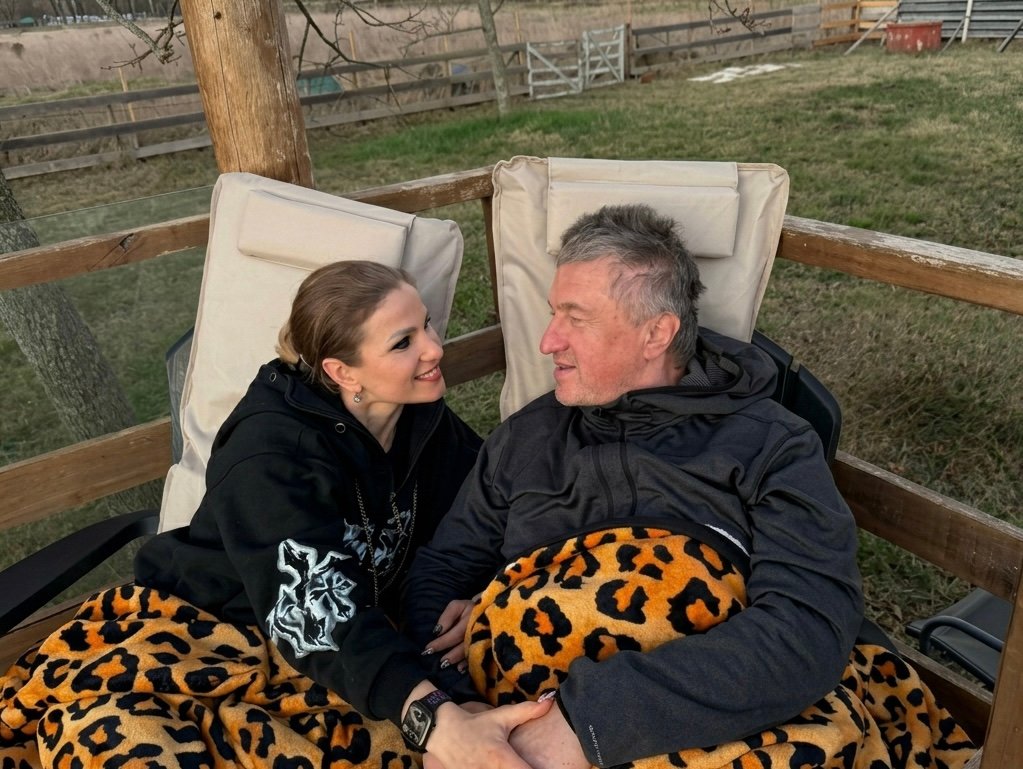
The tenth falsehood concerns Rudnev’s health. It claims his health is compatible with detention in jail. This is contradicted by medical reports and by documented observations. When in jail, his health deteriorated. He lost significant weight. He suffered from conditions that required specialized care. He was subjected to inappropriate medical treatment. His situation created a risk to his health, requiring repeated surgery, and even to his life.
Detention in jail is not compatible with Rudnev’s health. Conversely, house arrest accommodates any needs the prosecution may claim to have. It allows monitoring while also providing access to adequate medical care. It allows the continuation of the investigation without endangering his life. The insistence on jail detention ignores medical evidence. It also ignores humanitarian considerations.
Conclusion
Ten falsehoods were used to justify decisions that affected Rudnev’s liberty and health. They reveal a bias against him and reliance on information coming from tainted sources in Russia.
The ten falsehoods that shaped the Rudnev case illustrate how a narrative can be constructed through prejudice, misunderstanding, and unreliable information. In turn, these narratives influence decisions that have serious consequences.
The Rudnev case demands scrutiny, adherence to international standards, and respect for freedom of religion or belief. It demands recognition that falsehoods should not determine the fate of a defendant. Critics charge Prosecutor Arrigo with abuses that should be investigated. They also suggest he is unfit to continue prosecuting the case.
At the same time, the Rudnev case is not isolated, nor is it an anomaly in the Argentinian system. Scholars of new religious movements have demonstrated a consistent pattern of abusive behavior by Argentinian prosecutors persuaded that some groups are “cults” to be eradicated. Legal scholars have criticized prosecutors’ excessive power and the abuse of preventive detention. The Rudnev case, thus, should be an opportunity for Argentina to confront structural problems that create a serious human rights crisis.

Massimo Introvigne (born June 14, 1955 in Rome) is an Italian sociologist of religions. He is the founder and managing director of the Center for Studies on New Religions (CESNUR), an international network of scholars who study new religious movements. Introvigne is the author of some 70 books and more than 100 articles in the field of sociology of religion. He was the main author of the Enciclopedia delle religioni in Italia (Encyclopedia of Religions in Italy). He is a member of the editorial board for the Interdisciplinary Journal of Research on Religion and of the executive board of University of Pennsylvania Press’ Nova Religio. From January 5 to December 31, 2011, he has served as the “Representative on combating racism, xenophobia and discrimination, with a special focus on discrimination against Christians and members of other religions” of the Organization for Security and Co-operation in Europe (OSCE). From 2012 to 2015 he served as chairperson of the Observatory of Religious Liberty, instituted by the Italian Ministry of Foreign Affairs in order to monitor problems of religious liberty on a worldwide scale.