A prosecutor’s obstinacy threatens the health and safety of a defendant recovering from surgery.
by Alessandro Amicarelli
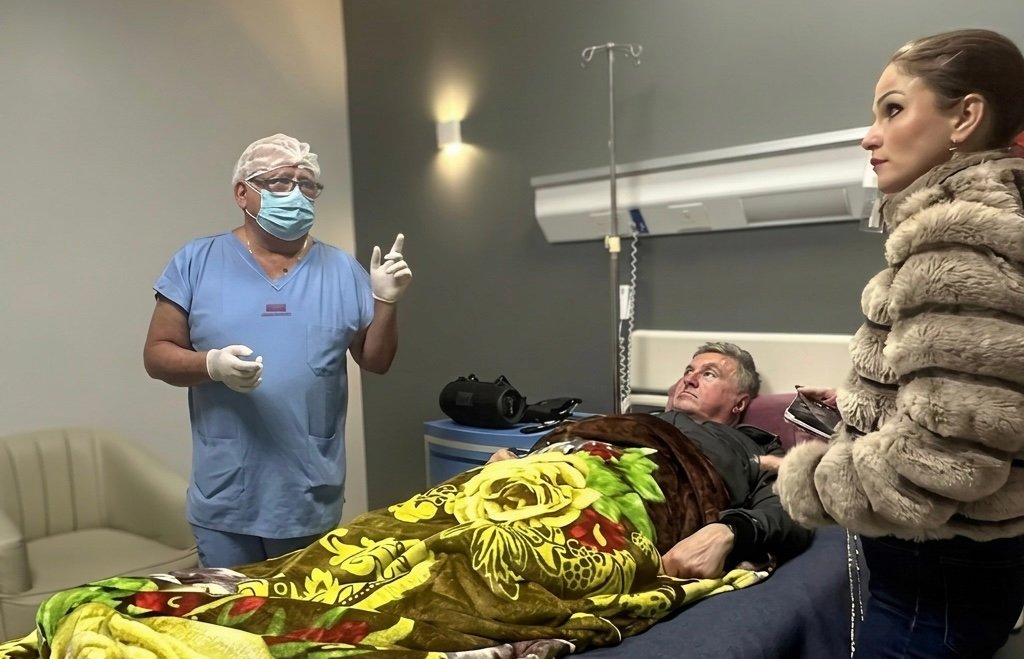
Konstantin Rudnev is in a condition that demands attention from any authority entrusted with protecting fundamental rights. After surgery and hospitalization, he is confined to strict bed rest. His doctors insist on continuous care. His wife, Tamara, remains beside him at every hour to assist him in tasks he cannot perform alone. In this situation, the possibility of returning him to prison carries consequences that no responsible institution should ignore. His health is fragile, and the risk to his life is real.
Despite this, the Federal Chamber of Criminal Cassation has accepted a complaint filed by the prosecution against the decision that replaced pre‑trial detention with house arrest. The prosecution had no legal avenue to file such a complaint. The Cassation Court had no jurisdiction to receive it. The new Federal Code of Criminal Procedure (CPPF) establishes this with precision. Articles 53, 54, and 350 define the limits of cassation review. Decisions issued by judges with review functions during the preliminary investigation stage, including those concerning coercive measures, fall outside the competence of the Cassation Court. The code was drafted to prevent endless litigation over preventive measures and to preserve the presumption of innocence. It is a structural safeguard.
Nonetheless, the Cassation Court accepted the complaint, opened proceedings, and created a procedural path that the code does not contemplate. Judges who participated in drafting the CPPF are now disregarding the limits they themselves wrote. This is a departure from the law that exposes a defendant in a delicate medical condition to a measure that may endanger his life. It weakens the guarantees that the CPPF was designed to protect.
The appeal recently filed by Rudnev’s lawyer describes this situation in detail. It explains that the Cassation Court declared admissible a complaint that the law does not recognize. It demonstrates that the Cassation Court’s intervention contradicts the CPPF, the Supreme Court’s jurisprudence, and the principles governing coercive measures. It shows that the ruling lacks proper motivation and disregards constitutional and conventional guarantees, including the right to an effective remedy.
International law reinforces these concerns. Article 14.2 of the International Covenant on Civil and Political Rights establishes safeguards for a fair and impartial trial that have been violated in this case. Article 14.5 guarantees the right to have a conviction and sentence reviewed by a higher tribunal. These principles are part of the broader protection of due process. They require accessible and effective remedies and judicial decisions that respect procedural limits. Argentina has incorporated the ICCPR into its constitutional framework. Its courts must apply it.

The Rudnev case reveals an additional institutional problem. It is not even the Minister of Justice who dictates which laws must be observed. Prosecutor Fernando Arrigo has taken on a role that exceeds the functions of his office. He indicates to the judges how the Criminal Code may be interpreted and how it may be disregarded. This dynamic undermines the separation of powers. It places prosecutorial strategy above the text of the law and creates a climate in which procedural guarantees risk becoming optional.
Argentina’s judicial system now faces a responsibility that cannot be postponed. It must restore coherence to the system. It must reaffirm that the limits of its jurisdiction bind the Cassation Court and must ensure that coercive measures are not manipulated through appeals that the law does not authorize. It must prevent the return to prison of a defendant whose health cannot withstand such a measure.
Konstantin Rudnev’s situation is a test of Argentina’s commitment to legality and human rights. The CPPF was drafted to protect those commitments. The ICCPR reinforces them. This commitment should be reaffirmed without delay.

Alessandro Amicarelli is a solicitor of the Senior Courts of England and Wales, and a barrister of Italy, specializing in International and Human Rights Law and Immigration and Refugee Law. He has lectured extensively on human rights, and taught courses inter alia at Carlo Bo University in Urbino, Italy, and Soochow University in Taipei, Taiwan (ROC). He is the current chairman and spokesperson of the European Federation for Freedom of Belief (FOB).