A public agitator turns online polemics into real-world intimidation against a vulnerable minority.
by Massimo Introvigne
In a previous article, I examined how Be Scofield, a self-appointed “cult hunter” who claims to receive messages from aliens and spirits guiding her crusades against “cults,” promoted a narrative about the Ahmadi Religion of Peace and Light (AROPL) through selective sources, sensational claims, and a method that relied on former members and online fragments rather than direct engagement. The role of Be Scofield as architect of the storyline has shaped much of the public hostility surrounding AROPL and may even have influenced the April police raid in Crewe, England. A further development now requires attention. The campaign also has an enforcer, someone who amplifies the narrative and pushes it into a more aggressive register.
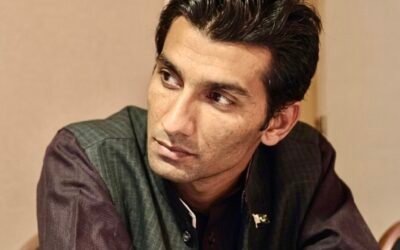
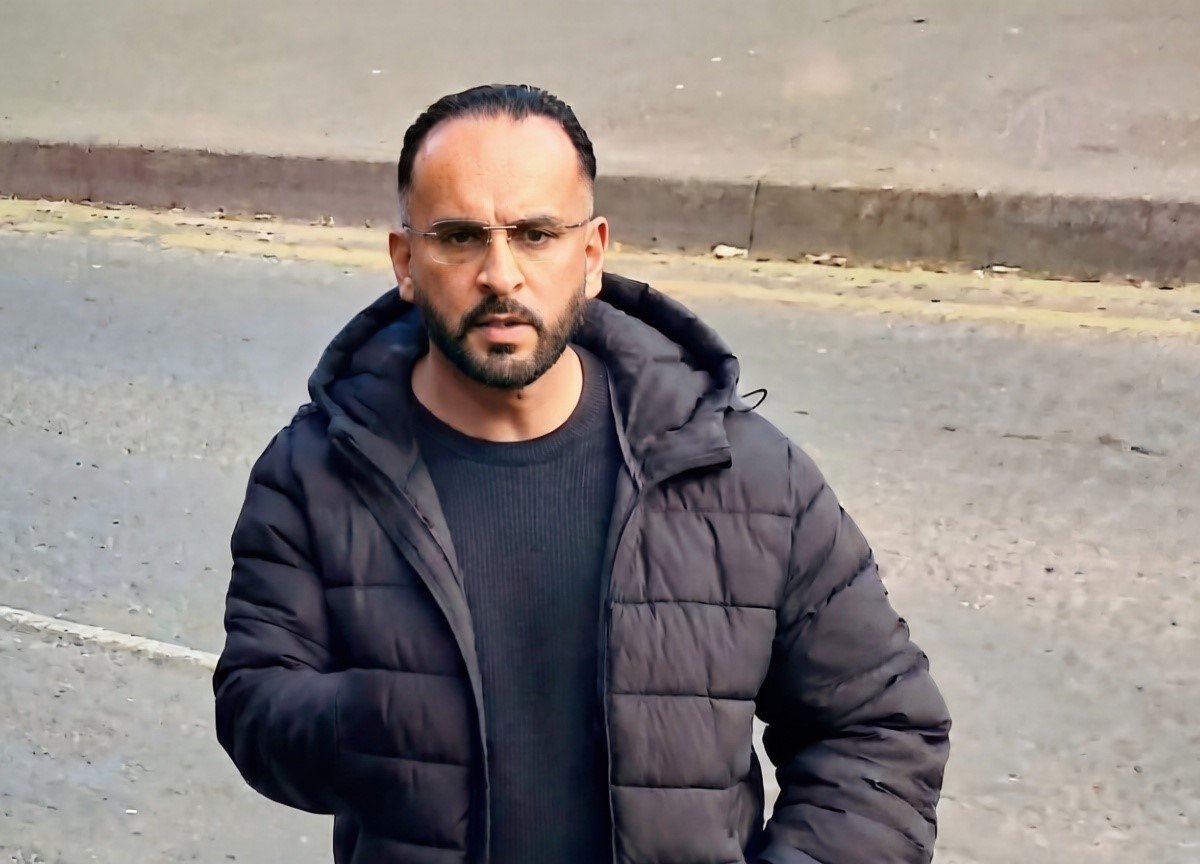
Syed Ali Akhbari presents himself as a defender of Twelver Shia orthodoxy and a guardian of clerical prestige. His online persona is built on confrontational livestreams, denunciations, and a style of polemics that thrives on escalation. He is associated with the Bayat Al-Ghadeer media platform, where he delivers commentary that blends doctrinal rigidity with personal attacks. His conflict with AROPL emerged when the movement publicly questioned jurisprudential rulings attributed to senior clerics, including those concerning the protection of children, the dignity of women, and the treatment of LGBTQ individuals. Once these criticisms appeared, his rhetoric intensified.
In a TikTok livestream on 25 December 2024, Akhbari spoke of groups arriving at AROPL centers with swords and chains and suggested that believers could be found at home if they were not at their places of worship. The reference to weapons, organized groups, and the tracking of individuals to their residences creates an atmosphere of fear for a community already exposed to public hostility. The suggestion that personal details are easy to obtain contributes to a sense of vulnerability among members.
His comments about the movement’s leader, Abdullah Hashem, follow the same pattern. In the same livestream, he declared that the leader would be “the one who’s going to get grabbed first.” This goes beyond theological debate. It is a personal targeting of a named religious figure, delivered to an audience encouraged to view the community as dangerous. International standards on freedom of religion emphasize that leaders of minority communities are entitled to protection from intimidation, regardless of doctrinal disagreement.
The rhetoric extends to sexualized insults and degrading language. In one livestream, he directed obscene accusations at a member of the faith, using humiliating terms. He also expressed his mockery of LGBTQ inclusion within AROPL. He renamed the movement’s sacred text “The Goal of the Wise” as “The Goal of Shaytan” (the Arabic word for Satan) while displaying imagery associated with Pride. This is symbolic vilification that targets both LGBTQ individuals and the religious community that refuses to exclude them.
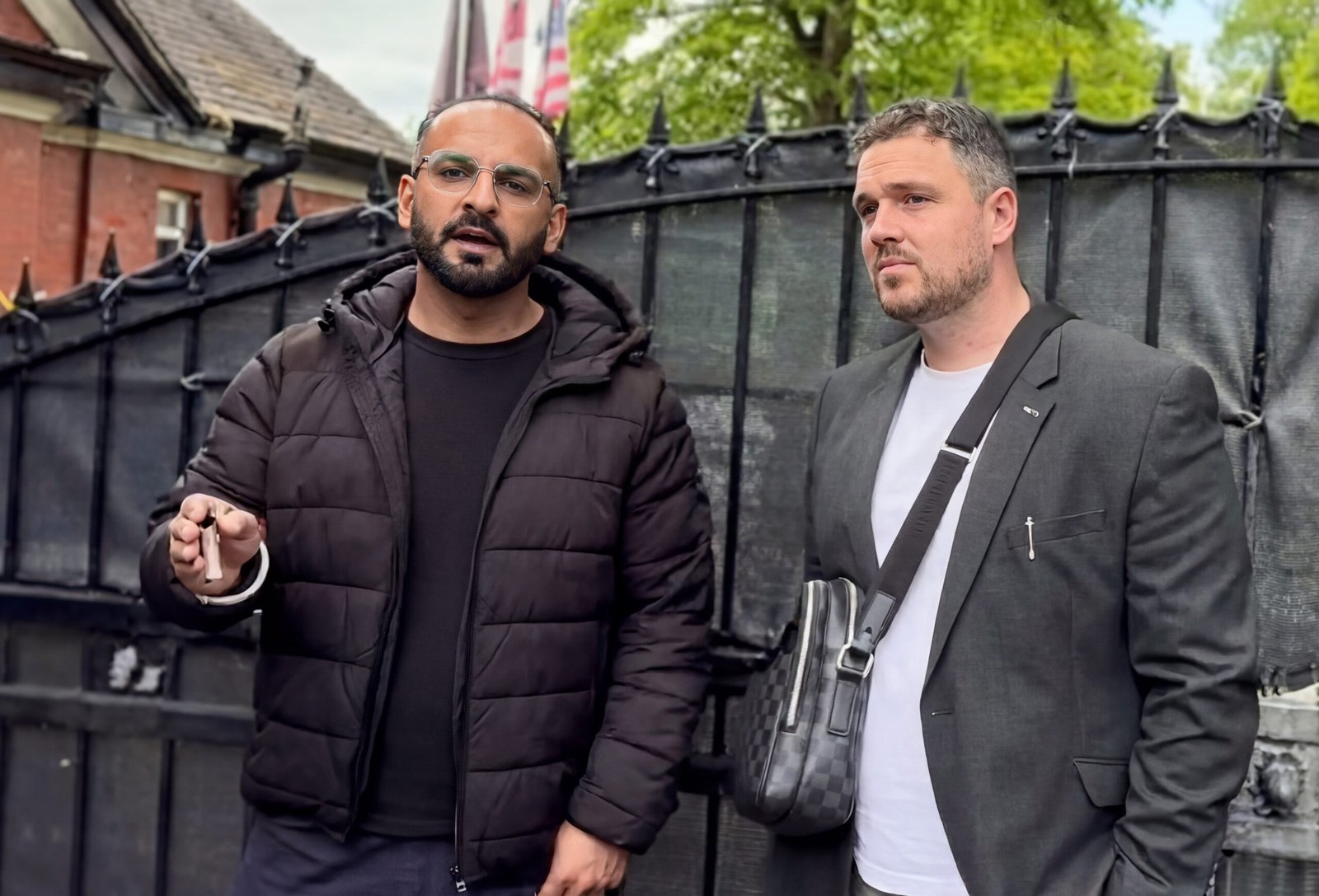
Akhbari’s activities have also moved beyond the digital sphere. On 10 May 2026, he appeared in person outside Webb House, AROPL’s headquarters in Crewe, and livestreamed from the premises. He described the community as extreme, dangerous, and a threat to society. He used the “cult” label as a weapon of hatred and violence. He portrayed the believers as a mob and claimed that security personnel were present to prevent members from escaping. These allegations are familiar tropes in anti-cult discourse. They are presented without evidence and serve to reinforce a narrative that portrays the community as inherently abusive. When such claims are delivered from the doorstep of a minority religion, the potential for escalation increases.
The personal dimension of his interventions is equally troubling. On 18 May 2026, he addressed a female community member, A. F., and stated that he knew where her family lived. He referred to her elderly parents and siblings and declared that their properties were known to him. This type of statement creates fear and anxiety. The protection of religious freedom includes the ability to practice one’s faith without fear that critics will pursue one’s relatives.
On May 25, Akhbari went one step further. He hosted on his TikTok footage of disabled children of the AROPL community, one of them half-naked, the other during a seizure. These are criminal actions that cannot be tolerated.
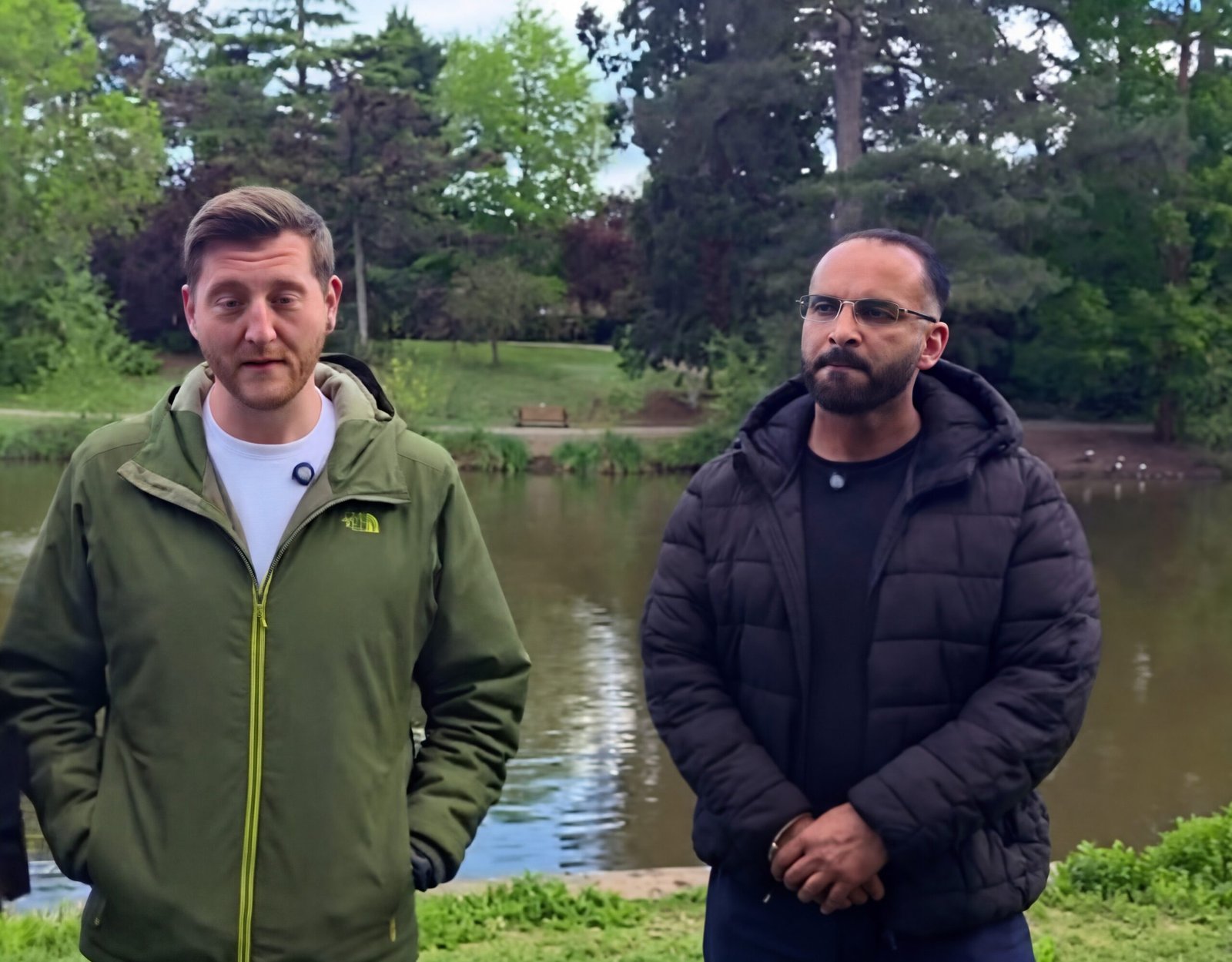
Akhbari’s role in the broader campaign becomes even more significant when viewed alongside his own admissions. In a recorded statement dated 12 May 2026, he acknowledged working with individuals who sought to expose AROPL, including Be Scofield and Samuel Graham Astley. In turn, Astley claimed to have infiltrated Webb House after being approached by Scofield and production companies interested in a documentary. Akhbari’s admission that he coordinated with both of them reveals a network of actors whose activities extend beyond theological and journalistic controversy. The collaboration suggests a deliberate effort to monitor, discredit, and undermine the community through coordinated online and offline actions.
The online environment surrounding this campaign includes accounts dedicated to mocking and defaming the community. Several TikTok profiles amplify Akhbari’s rhetoric and repeat his accusations. They publish content that portrays AROPL as dangerous, deceptive, or abusive. When multiple channels echo the same narrative, the effect is cumulative. A minority religion becomes surrounded by a digital echo chamber that encourages hostility and normalizes suspicion.
The rhetoric documented in this case shows how easily hostility can be mobilized when a minority religion questions established authority. The references to weapons, the personal targeting of members, the sexualized insults, the portrayal of the community as a threat, the physical presence at their headquarters, the posting of images of disabled children, and the coordination with individuals engaged in sensationalist hate campaigns collectively form a pattern that deserves scrutiny. Religious freedom includes the right to criticize doctrines. It does not include the right to intimidate believers or to encourage violence against them.
The protection of religious minorities depends on maintaining this distinction. The saga of AROPL continues to reveal how narratives are constructed, how hostility is mobilized, and how fragile the space for minority religions can become when public discourse abandons restraint.
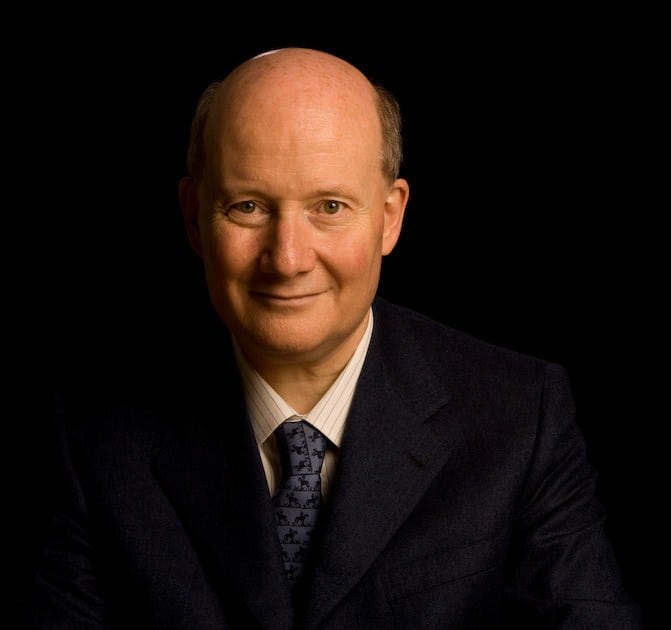
Massimo Introvigne (born June 14, 1955 in Rome) is an Italian sociologist of religions. He is the founder and managing director of the Center for Studies on New Religions (CESNUR), an international network of scholars who study new religious movements. Introvigne is the author of some 70 books and more than 100 articles in the field of sociology of religion. He was the main author of the Enciclopedia delle religioni in Italia (Encyclopedia of Religions in Italy). He is a member of the editorial board for the Interdisciplinary Journal of Research on Religion and of the executive board of University of Pennsylvania Press’ Nova Religio. From January 5 to December 31, 2011, he has served as the “Representative on combating racism, xenophobia and discrimination, with a special focus on discrimination against Christians and members of other religions” of the Organization for Security and Co-operation in Europe (OSCE). From 2012 to 2015 he served as chairperson of the Observatory of Religious Liberty, instituted by the Italian Ministry of Foreign Affairs in order to monitor problems of religious liberty on a worldwide scale.