How a bizarre American anti‑cult activist, who receives messages from aliens and spirits, inserted herself into the British campaign against AROPL.
by Massimo Introvigne
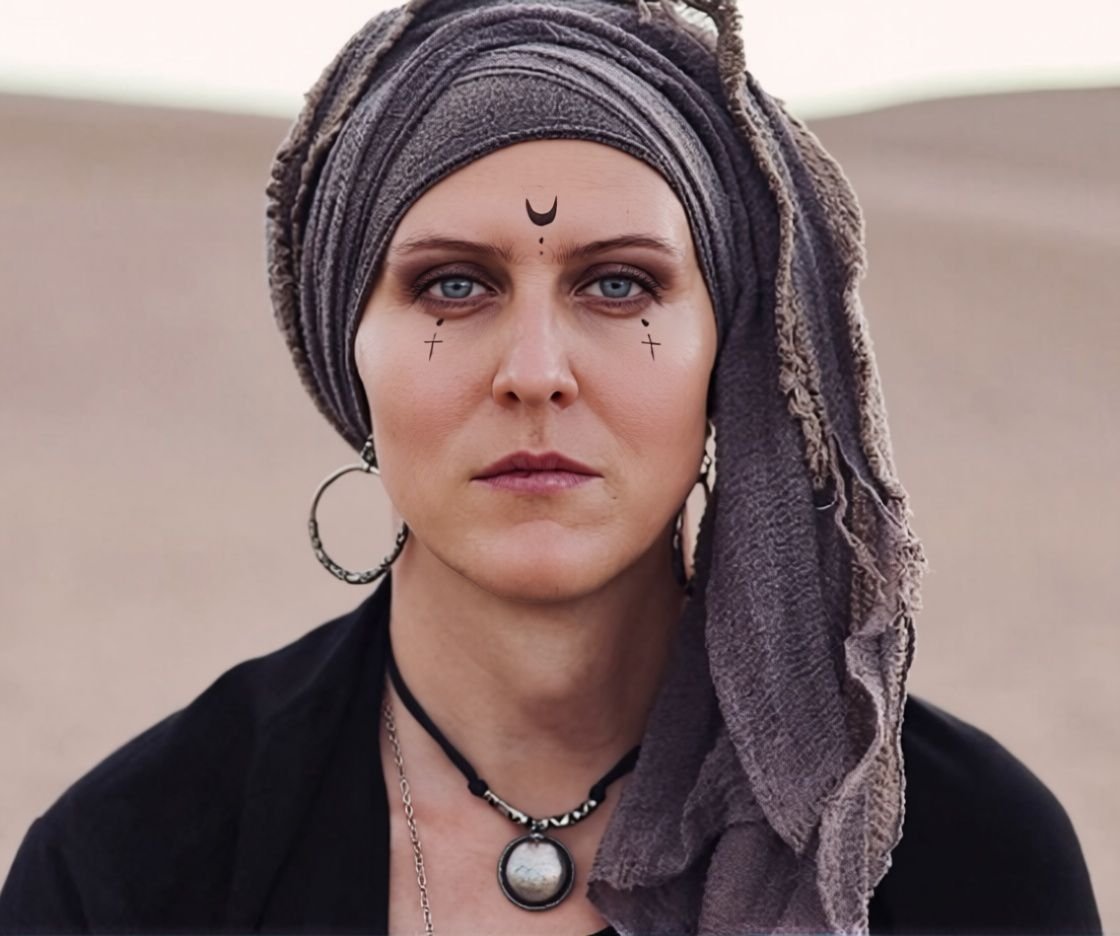
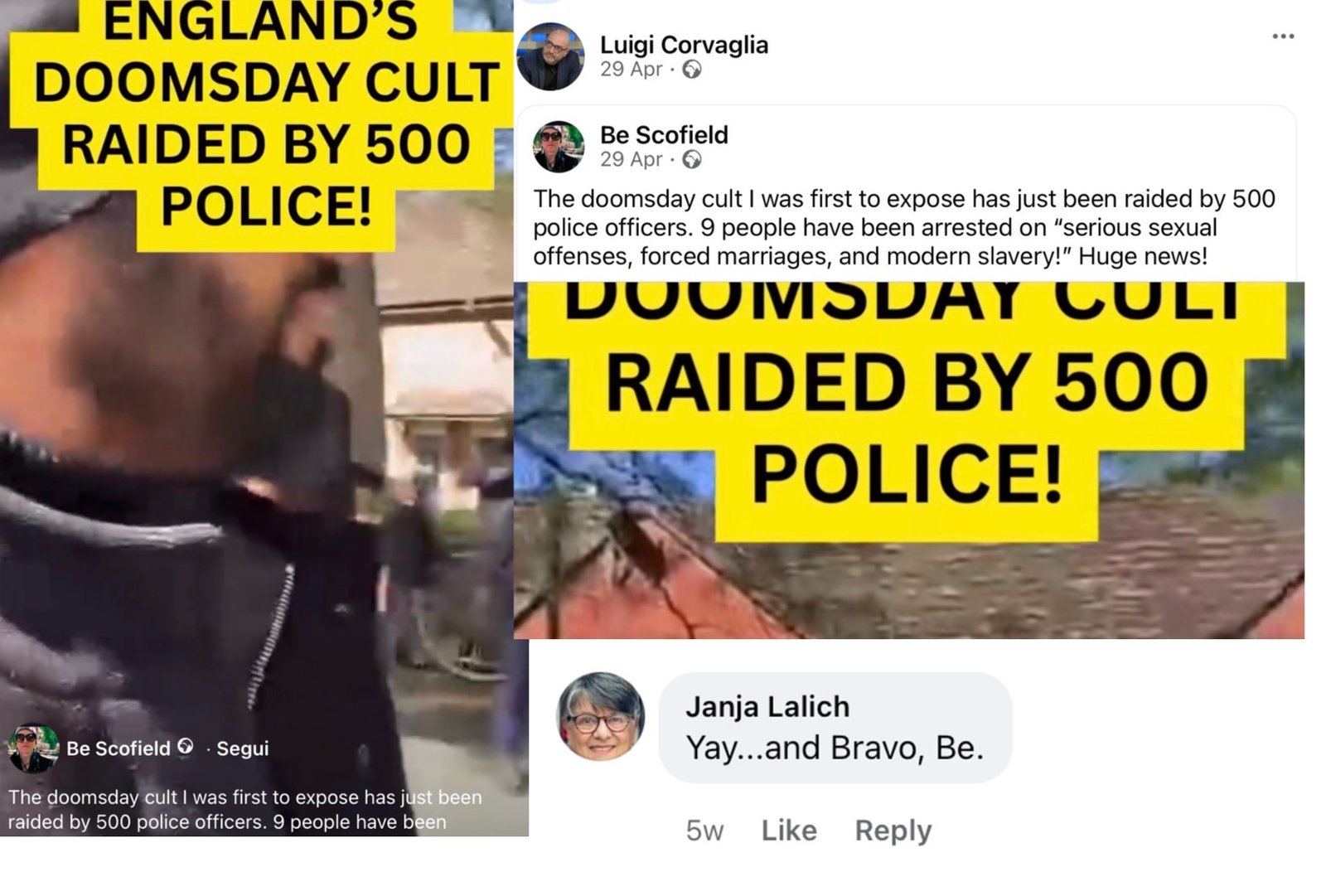
When British police raided the Ahmadi Religion of Peace and Light (AROPL) headquarters in April 2026, an American anti‑cult activist named Be Scofield claimed credit on social media, posting and sharing a video in which she celebrated being “the first to expose” the “doomsday cult” and hinted that she had supplied information to the authorities. AI‑generated posters circulated by opponents of the AROPL in Crewe repeated and summarized her articles. Several activists well‑known in the international anti‑cult movement hailed the raid and congratulated Scofield. Janja Lalich, a prominent American anti‑cultist, responded to an April 29 Facebook post by Scofield with the words “Yay… and Bravo, Be.” Luigi Corvaglia, an Italian psychologist and board member of FECRIS, also shared Scofield’s self‑congratulatory video. Other FECRIS representatives followed the same pattern.
On May 29, Scofield published a lengthy Substack article in which she advanced a paradoxical claim that she had targeted AROPL to harass the undersigned, whom she regards as a personal enemy, even though at the time she began attacking the movement I had written very little about it and did not even know who Scofield was. More interesting than this personal mythology was her suggestion—implied if not openly stated—that she had triggered the British media campaign against AROPL and even influenced the police operation. Her sense of importance is considerable, and her assertions should be approached with caution. Yet it is true that several media narratives resembled earlier Scofield material with suspicious precision. In particular, Maeve McClenaghan of “The Guardian” appears to have developed a symbiotic relationship with Scofield, and at times it becomes difficult to distinguish McClenaghan’s own work from what she simply adopts from Scofield without critical examination. Understanding Scofield’s role requires understanding who she is.
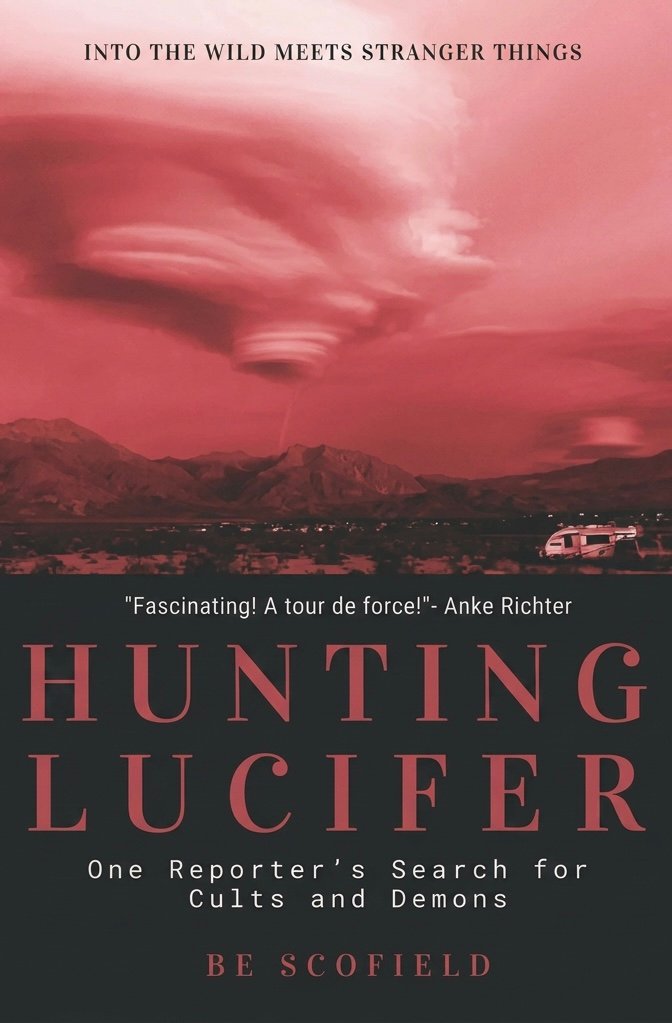
In her May 29 article, Scofield expressed displeasure that Rosita Šorytė had mentioned in this magazine her psychotic episodes and paranormal experiences, as if this were an act of disrespect. Yet the source of Šorytė’s information was Scofield herself, in her book “Hunting Lucifer.” These details are absent from Scofield’s online presence, perhaps because she believed that material unavailable on the Internet would remain unread. Unfortunately for Scofield, Šorytė purchased the printed book and examined it carefully. I am summarizing Šorytė’s conclusions in the following paragraphs.
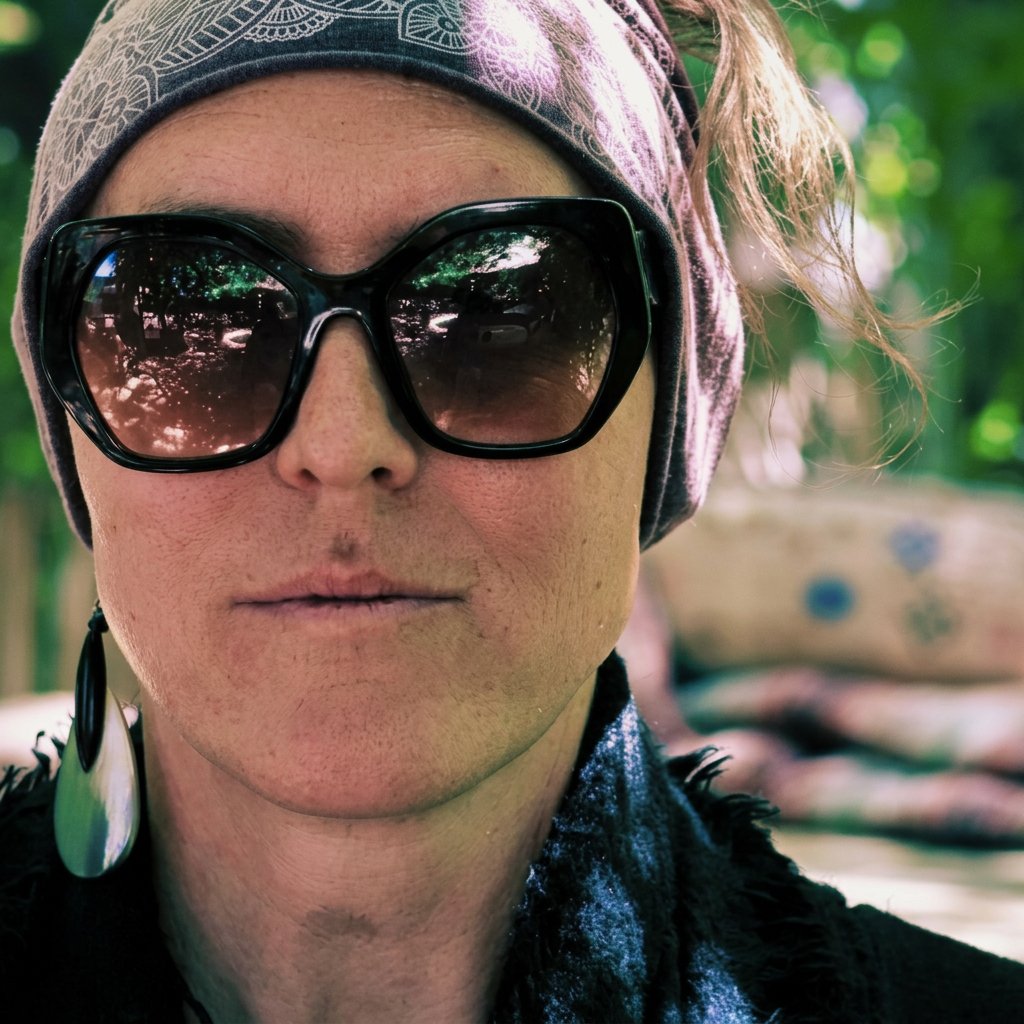
Scofield describes herself as a 45‑year‑old American transgender individual and a self‑proclaimed “cult hunter.” She recounts that her mission began in 2017 in Asheville, North Carolina, during a moment of despair, poverty, trauma, and what she called a “soul death.” She struggled with dysphoria and medical barriers that prevented her from continuing estrogen therapy. While contemplating whether she should “not be here anymore,” she reports that a mysterious woman appeared and urged her “to leave before you’ve completed your soul’s purpose” (“Hunting Lucifer,” 3; the following quotes indicate page numbers of this book). She later concluded that the woman might have been an angel or a benevolent extraterrestrial.
Scofield explains that her investigations rely on five sources of revelation. Astrology guides her movements. Higher‑dimensional messages arrive through psychics and angelic figures who appear and vanish. Tarot cards provide further insight. The Akashic Records, accessed through a psychic intermediary, offer knowledge of past, present, and future. Extraterrestrials aboard a “mothership” also monitor her and supply information (320, 474). She expresses surprise that law enforcement does not accept these mystical experiences as evidence. At the same time, police and journalists sometimes appear unaware of the unusual origins of her claims.
Šorytė emphasizes that individuals who experience psychotic episodes deserve compassion. The difficulty arises when such experiences are presented as qualifications for identifying “brainwashing” or diagnosing spiritual movements. A heart condition does not make one a cardiologist. The mental stability of a witness would become an issue in any courtroom, yet this does not seem to concern the authorities and media who rely on Scofield as an expert.
Scofield recounts that when her mystical sources direct her to a location, she discovers a spiritual community there. She then senses a cosmic battle between light and darkness and concludes that a “Luciferian” group is active in the area. Her mission is to eliminate it. Her Reiki practice, which she describes as “level two certified,” is accompanied by manifestations of dark presences (347). Most spiritual teachers would interpret this as a sign that something is amiss. Scofield, however, interprets it as confirmation of her calling.
Her activities are supported by mysterious benefactors. After her first article against spiritual teacher Bentinho Massaro, she says she received an email offering a fixed income of several thousand dollars per month to support her anti‑cult work (70). The arrangement lasted only a few months, but she later received similar assistance. She never identifies these donors.
Her 2019 attack on another spiritual teacher, Aaravindha Himadra, illustrates her methods. She accused him of involvement in the death of Carla Shaffer, a Bahá’í woman with psychiatric issues whose death had been ruled accidental or possibly suicidal. A detective agency later revealed that Scofield had falsified statements from interviewees. One witness, David Lutz, filed an affidavit stating that he had told Scofield that Carla was “not” a member of any group led by Aaravindha and that she had mental health issues, yet Scofield’s article suggested the opposite. Scofield dismissed police findings, medical reports, and family testimony, relying instead on her own sense of demonic presences and another possible angelic visitation (140).
Scofield’s writings display megalomaniac tendencies. She describes AROPL as “the largest doomsday cult in the world” only she was brave enough to fight. She claims to have reduced the Tantric group Agama Yoga to “a pile of ashes” (121) even though the movement remains active. She asserts that her articles nearly destroyed Love Has Won and inspired several television shows, although she was neither quoted nor credited. She takes pride in the violence that followed her reporting, including smashed windows, rocks thrown at homes, and bonfires used to “smoke out” members of Love Has Won (367). She recounts that one of Massaro’s followers committed suicide “just eight days after I published,” a detail she reports with unsettling detachment (64). After the 2026 raid, her articles may have played a similar role in encouraging the thugs who attacked AROPL’s Crewe headquarters.
Scofield’s “success” stems from her choice of small spiritual movements that had not yet been studied by scholars, leaving no alternative narratives to counter her claims. She acknowledges that she avoided Scientology to escape legal consequences (200).
Scofield believes she is part of “something much bigger” (436). She argues that “cults” create “dark portals” through which demons enter the world, and she sees herself as uniquely capable of closing these portals (318). She claims to be healing an ancient conflict between extraterrestrial groups and insists that she has a “direct line” to aliens who guide her in dismantling spiritual movements (474–475).
We cannot know whether Scofield’s bold claims that she was considered a reliable source in the British investigation are true. If they were, the implications would be deeply troubling. It would mean that persons in authority accepted guidance from someone who openly describes her psychotic episodes and receives information about “cults” from spirits, angels, and extraterrestrials. Such a situation would raise questions far more serious than anything she has ever alleged against the groups she targets. It would also demand scrutiny from those responsible for safeguarding the integrity of investigations and the safety of vulnerable communities.
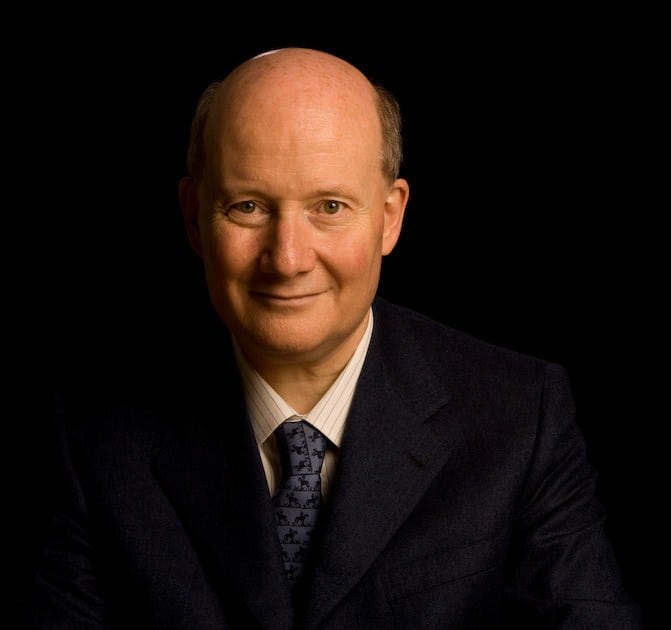
Massimo Introvigne (born June 14, 1955 in Rome) is an Italian sociologist of religions. He is the founder and managing director of the Center for Studies on New Religions (CESNUR), an international network of scholars who study new religious movements. Introvigne is the author of some 70 books and more than 100 articles in the field of sociology of religion. He was the main author of the Enciclopedia delle religioni in Italia (Encyclopedia of Religions in Italy). He is a member of the editorial board for the Interdisciplinary Journal of Research on Religion and of the executive board of University of Pennsylvania Press’ Nova Religio. From January 5 to December 31, 2011, he has served as the “Representative on combating racism, xenophobia and discrimination, with a special focus on discrimination against Christians and members of other religions” of the Organization for Security and Co-operation in Europe (OSCE). From 2012 to 2015 he served as chairperson of the Observatory of Religious Liberty, instituted by the Italian Ministry of Foreign Affairs in order to monitor problems of religious liberty on a worldwide scale.