When media spread intolerance, and authorities promote discrimination, violence is a logical consequence.
by Massimo Introvigne*
*A paper presented at the OSCE (Organization for Security and Co-Operation in Europe) – ODIHR (Office for Democratic Institutions and Human Rights) Regional Workshop on “Responding to Anti-Christian Hate Crimes and Addressing the Security Needs of Christian Communities,” Rome, May 26, 2026.
Some of you may remember that in 2011, I served as the OSCE Representative for combating racism, xenophobia, and intolerance and discrimination against Christians and members of other religions. That year, on September 12 in Rome, we organized a conference titled “Hate Incidents and Crimes Against Christians,” where I introduced what later became known as the “Rome Model.” It describes a three-stage progression from intolerance to discrimination and then to violence. Several scholars have referenced it in the years since.
The first stage is intolerance, which is a cultural issue. A group is ridiculed through media manipulation using stereotypes or portrayed as a “cult,” harmful, evil, an obstacle to happiness and social harmony. The second stage is discrimination, which involves legal and administrative actions. If a group is consistently depicted as a threat to society, legal and administrative measures against it start to seem “reasonable” or even “necessary.” The third stage is violence. If discrimination does not silence a group seen as dangerous, private individuals who feel justified by the atmosphere and the governments themselves may decide to take more drastic actions, such as imprisoning or beating people, or applying other extreme measures.
This cycle, moving from intolerance to discrimination and from discrimination to persecution, can apply to various groups. In 2020, the U.S. Commission on International Religious Freedom identified the Jehovah’s Witnesses as the most persecuted religious organization in the world in proportion to their membership size. They serve as the proverbial canaries in the coal mine, a warning sign for religious freedom—or lack thereof.
In Western Europe, some might think Jehovah’s Witnesses face “only” intolerance. An active anti-cult movement frequently describes them as a dangerous “cult”. It highlights the narratives of “apostates,” who are a minority of ex-members who become vocal critics of the groups they left. Most ex-members do not become apostates; they move on with their lives and do not campaign against their former faith. However, it is the apostates who gain attention by reaching out to the media and politicians.
There have also been attempts at discrimination, especially in some Scandinavian countries, where Jehovah’s Witnesses have faced threats of losing their tax-exempt status or state funding, which most other religions receive. This is tied to their conservative views of morality and their treatment of disfellowshipped ex-members. Courts have generally resisted these attempts and upheld the Witnesses’ religious freedom.
The third stage described in the Rome Model, with systematic imprisonment and private violence, is not what we observe in Western Europe. Such conditions are more typical in countries like Russia or Eritrea. The situation in Western Europe should not be equated with those contexts.
However, deep-rooted intolerance and persistent attempts at discrimination “can” lead to violence. According to data carefully gathered by Jehovah’s Witnesses themselves, incidents of hate and hate crimes have occurred against them in several Western European countries. For today’s discussion, I will focus on 2025 and the countries with detailed incident reports, in alphabetical order.
In Austria, five incidents were documented in 2025. Most involved vandalism of Kingdom Halls, including insulting graffiti and damage to entrance doors. Two cases were more serious: in Preinsfeld, a man pointed what appeared to be a firearm at two Witnesses during doortodoor ministry—later identified as an air rifle—and was convicted of aggravated coercion. In DeutschKaltenbrunn, a wooden crossbeam was placed near a Witness family home with hate slogans such as “Death & Hatred to the Jehovah’s Witnesses.”
In Belgium, three incidents were reported, all linked to public witnessing in Brussels and Antwerp. In one case, a man under the influence of alcohol slapped a Witness at the literature cart. He said he hit the man because he disagreed with the message of Jehovah’s Witnesses. The police arrested him and categorized the incident as a hate crime. In another case, a homeless person violently knocked over a literature cart, causing a sign to fall on the foot of a female Witness, resulting in pain and medical leave.
In Denmark, the situation is more extensive, with 25 reported incidents. These include multiple physical assaults on door-to-door preachers and literature carts—publishers pushed, threatened, or nearly pushed down stairs—and a series of threats. There was also vandalism against Kingdom Halls, with repeated destruction of mailboxes and insulting graffiti.
Finland recorded 24 incidents. In addition to threats and one physical assault in Helsinki, there has been ongoing vandalism targeting Kingdom Halls and the cars of worshippers. The Police Board of Finland deemed the pattern serious enough to notify the National Bureau of Investigation and local police stations “to closely monitor these hate-motivated incidents.”
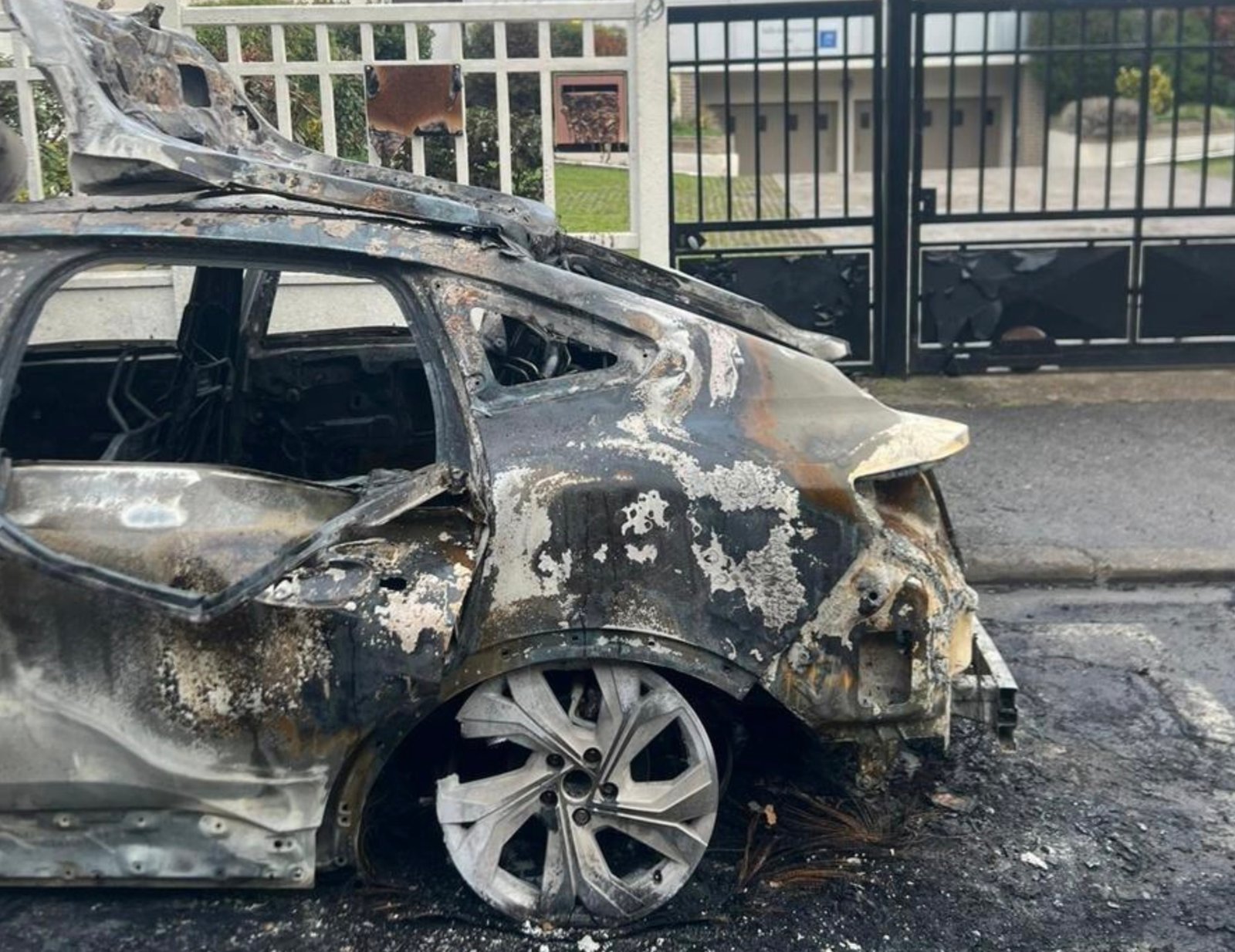
In France, 101 cases were documented in 2025, making it the country with the highest number of incidents in Western Europe. These include repeated death threats by telephone against Kingdom Halls and even the national headquarters, vandalism of places of worship with graffiti or forced entry, and numerous assaults and threats during public witnessing. In SavignysurOrge, a man violently attacked two evangelizing Witnesses, grabbing one by the collar and declaring that he could “kill [him] with a box cutter,” a case that resulted in a criminal conviction with the religious motive recognized. In SaintJeanTrolimon, a 73yearold female Witness lost consciousness after being shoved to the ground while preaching and was hospitalized. In Cergy Pontoise, a vehicle was set on fire in a private Kingdom Hall parking area. It is difficult not to connect the high number of incidents to media campaigns and the reports of the government agencies against the “cultic deviances,” MIVILUDES, consistently denouncing the Jehovah’s Witnesses as a “cult.”
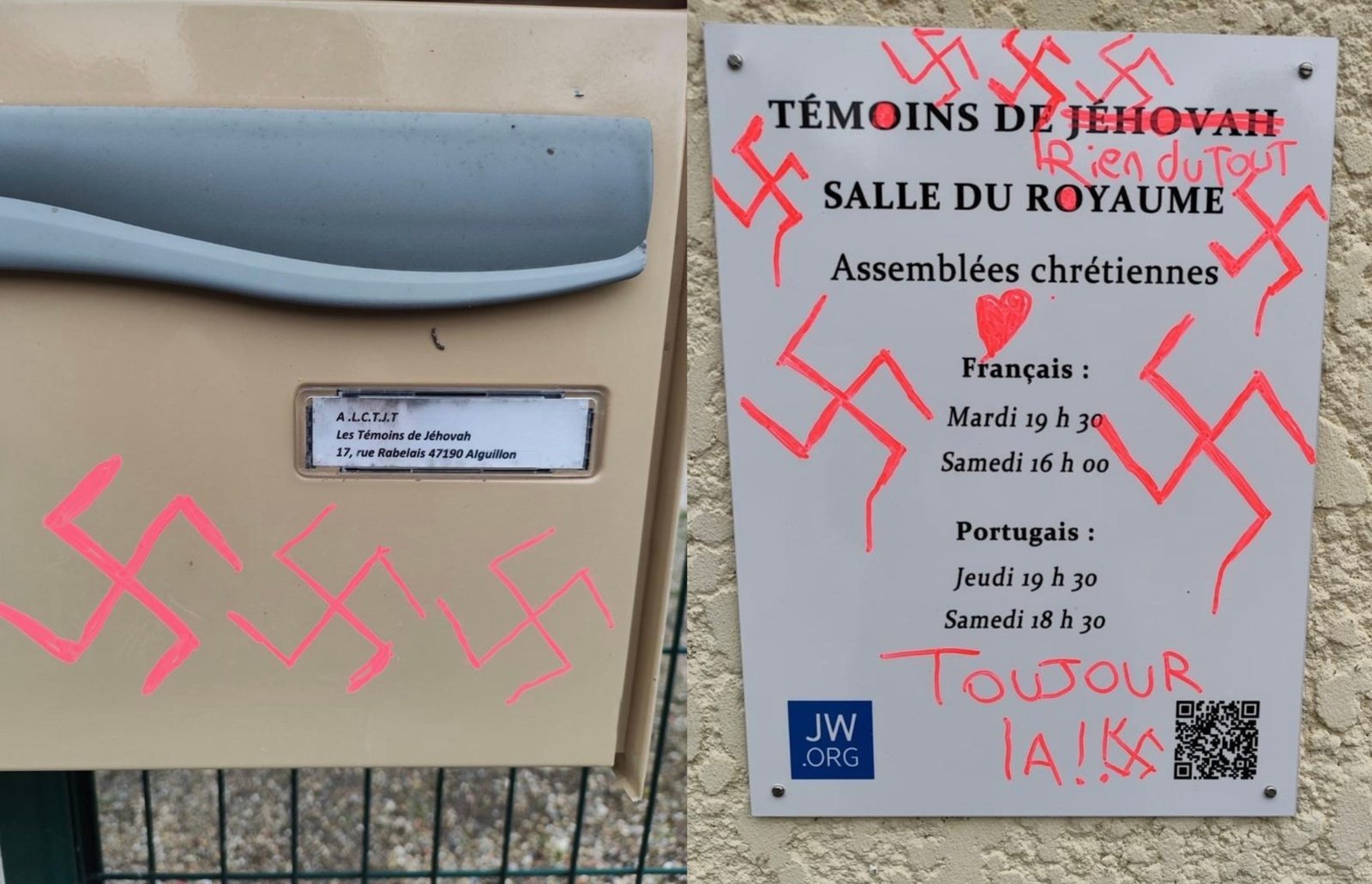
In Germany, 33 incidents were reported. Many involve threats with weapons or realistic replicas during public witnessing or door-to-door ministry. In Düsseldorf, a man attacked a 75-year-old female Witness engaged in street evangelization so violently that she suffered a grade-one brain concussion. In Minden, a resident threatened two female JWs with a 30 cm-long kitchen knife and held one of them as if he were about to stab her. There have also been multiple acts of vandalism against Kingdom Halls, including swastikas and satanic symbols, and a series of homemade explosive devices placed in front of a Kingdom Hall in Bad Reichenhall, injuring a police officer during inspection.
Greece reported three incidents of vandalism against Kingdom Halls, involving stones thrown at places of worship and broken windows.
In Iceland, there was one serious incident: a break-in at a remote translation office of Jehovah’s Witnesses, where the perpetrator broke in, stole computer equipment, and created significant disorder. The police ascertained that his motivation was bias against religion.
In Italy, four incidents were reported. They included acts of vandalism, such as bottles and other waste being thrown onto the property of a Kingdom Hall in Sardinia, where similar incidents had occurred two years earlier. There was also graffiti with “666” on a Kingdom Hall wall and a firecracker bomb thrown shortly before the meeting time at a hall in Rome, prompting a temporary pause in in-person meetings and a shift to online worship.
Latvia had six incidents, all in Riga, and all attacks on literature stands in the streets.
In the Netherlands, four incidents were reported, including a serious case in Zaandam. A female Witness was held against her will with a knife at her neck and physically assaulted in a stairway. There were also threats involving explosives and physical assault inside a Kingdom Hall in Rotterdam.
Norway recorded 11 incidents, which included threats with an axe at a Kingdom Hall in Arendal and several instances of door-to-door preachers being chased or threatened with weapons. There were also repeated acts of vandalism against Kingdom Halls.
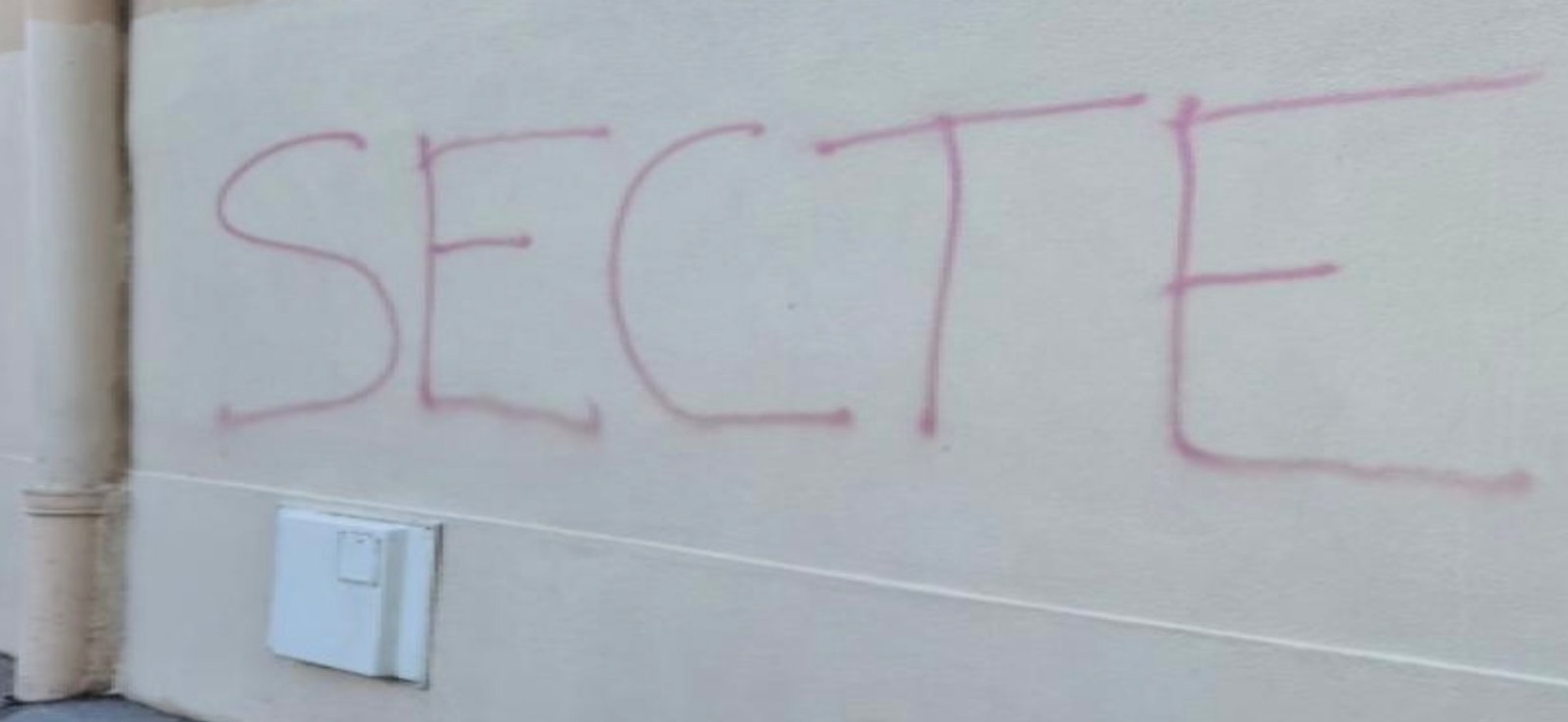
In Spain, ten incidents were reported, some involving explicit death threats. In Tui, while two Witnesses were preaching, a neighbor threatened to take out a knife and slit their throats, and later chased them with a large knife, shouting, “I’ll cut your throats and the throats of any other Witnesses who show up on this street.” In Santander and other cities, Witnesses were insulted as “murderers” who “should all be dead, executed,” and faced physical assaults, with phones broken and displays damaged. Graffiti on Kingdom Halls included phrases like “secta pederasta” (“pedophile cult”).
Sweden reported 19 incidents, which featured threats to “shoot Jehovah’s Witnesses” left on voicemail. There was a conviction for unlawful threats following such a call and multiple physical assaults and threats during door-to-door preaching, including one case where a perpetrator chased publishers with hedge shears. Kingdom Halls faced repeated vandalism and received sexually offensive messages. In one case, sexual harassment through postcards led to prosecution.
Switzerland recorded two serious incidents. In Kirchberg, a man sprayed accelerants on the façade and apparently tried to set the Kingdom Hall on fire. He was convicted of arson. In Richterswil, three Witnesses engaged in public witnessing were threatened by a man who said he would “cut off their heads” and set fire to their cars. One of the victims has been receiving psychological treatment since the incident.
In the United Kingdom, 16 incidents have been documented. They included physical assaults during public witnessing, with publishers being kicked, pushed, or attacked with a key chain. There were also threats to plant bombs in Kingdom Halls and “kill every one of the elders.” In Minehead, graffiti such as “JW KILL,” “KKK,” and swastikas appeared on a garage door. Also in Minehead, in a separate incident, a bag containing dog feces and a note reading “Next time I see bookstalls, I kill” was pushed through the Kingdom Hall letterbox. Local congregations adjusted their public witnessing and moved some meetings online for safety.
This overview does not provide evidence of systematic persecution. However, there is a clear pattern of hate incidents—threats, assaults, vandalism, arson attempts—targeted at a specific religious minority across Western Europe, usually while they are engaged in peaceful religious activities.These incidents do not happen in isolation. They occur in societies where Jehovah’s Witnesses are often labeled as a “cult,” where their beliefs and practices are mocked, and where some media and activists present them as a threat to children, democracy, or public health. Courts have sometimes tolerated harsh, even dehumanizing, remarks against them in the name of free speech.
Freedom of expression is indeed vital in democratic societies. But the Rome Model reminds us that normalizing intolerance is not harmless. It can lead to discrimination and, in some cases, violence. When a group is consistently portrayed as dangerous or subhuman, it becomes easier for certain individuals to justify kicking an older woman in the street, threatening to slit throats, or trying to set a Kingdom Hall on fire.
Jehovah’s Witnesses, as a “thermometer” of religious freedom, are signaling something about the climate in Western Europe. It is not yet a crisis, but there are concerning signs. If we take the Rome Model seriously, we won’t wait for discrimination or persecution to become entrenched. We will tackle intolerance now —culturally, legally, and practically—so that the spiral does not descend further.

Massimo Introvigne (born June 14, 1955 in Rome) is an Italian sociologist of religions. He is the founder and managing director of the Center for Studies on New Religions (CESNUR), an international network of scholars who study new religious movements. Introvigne is the author of some 70 books and more than 100 articles in the field of sociology of religion. He was the main author of the Enciclopedia delle religioni in Italia (Encyclopedia of Religions in Italy). He is a member of the editorial board for the Interdisciplinary Journal of Research on Religion and of the executive board of University of Pennsylvania Press’ Nova Religio. From January 5 to December 31, 2011, he has served as the “Representative on combating racism, xenophobia and discrimination, with a special focus on discrimination against Christians and members of other religions” of the Organization for Security and Co-operation in Europe (OSCE). From 2012 to 2015 he served as chairperson of the Observatory of Religious Liberty, instituted by the Italian Ministry of Foreign Affairs in order to monitor problems of religious liberty on a worldwide scale.