A Henan court has punished six peaceful Celestials and seized over one million yuan of their communal savings, completing a crackdown launched in July 2025.
by Massimo Introvigne
On November 3, 2026, Guide Xuefeng, the founder of the spiritual movement Lifechanyuan, released a short and sober note announcing that the case of the believers arrested by the police of Linzhou, Henan province, had “reached its conclusion.” Behind these restrained words lies the end of a judicial ordeal that lasted sixteen months, and the beginning of years in jail for some of the gentlest people I have met in my long career as a scholar of religion.
According to Criminal Judgment No. (2026) Yu 0581 Xing Chu 172, the Linzhou Municipal People’s Court delivered its verdict on October 23, 2026. Presiding Judge Hou Peiyao sat with Judge Wang Rongyue and People’s Assessor Wei Pengshuai. Six Celestials, as Lifechanyuan members call themselves, were found guilty of “using superstition to undermine the implementation of the law,” one of the crimes listed in Article 300 of the Chinese Criminal Law, the provision routinely used against groups labeled as “xie jiao.”
Hengde Celestial and Shengong Celestial each received two years and eight months in prison and a fine of RMB 25,000. Shenxian Celestial and Zhishi Celestial were each sentenced to two years and six months and fined RMB 20,000. Zhehui Celestial received two years, suspended for three years, and a RMB 20,000 fine. Ci’en Celestial was given one year and six months, suspended for two years, and fined RMB 15,000. The official text corrects the fragmentary reports that circulated in June 2026, which I discussed in “Bitter Winter” while the judgment was still unavailable. Four of the six will actually go to prison. The fines alone add up to RMB 125,000.
The court went further. It declared “illegal” and confiscated RMB 447,188 in cash and 580 Thai baht seized by the Linzhou Public Security Bureau, together with RMB 659,997 in frozen funds, all to be remitted to the State Treasury. In total, RMB 1,107,185 belonging to Lifechanyuan has been taken by the state. Two mobile phones and a hard drive seized from Zhishi Celestial and Zhehui Celestial were also confiscated. The few Thai banknotes are a small detail that says much. Presumably they were left over from a trip to visit fellow believers in Thailand, and the Chinese authorities found them worth listing in a criminal judgment.
Readers who have never heard of Lifechanyuan, also known as the Life Zen Temple, deserve some background. Its founder, Zhang Zifan, was born in 1957 in Gansu province. A Communist Party member from the age of eighteen, he taught English and worked as an interpreter before moving to Zimbabwe in 1995 to run a small business. A car accident in 1996 started a spiritual quest that took him through years of Bible study with the Jehovah’s Witnesses and then into Buddhism and Taoism. He emerged as Xuefeng, a messenger of the Greatest Creator for a new era, and founded Lifechanyuan in Zimbabwe in 2005.
His teachings blend Taoist, Buddhist, and Christian elements with ideals borrowed from a spiritualized version of the Communist tradition, and are summarized in a text called the “800 Values for New Era Humanity.” Wherever they can, members live in communal settlements called Second Homes. They share property and work, farm the land, reject violence and consumerism, and renounce marriage and exclusive romantic bonds. They do not even describe themselves as a religion. In their own words, they are an “international family.”
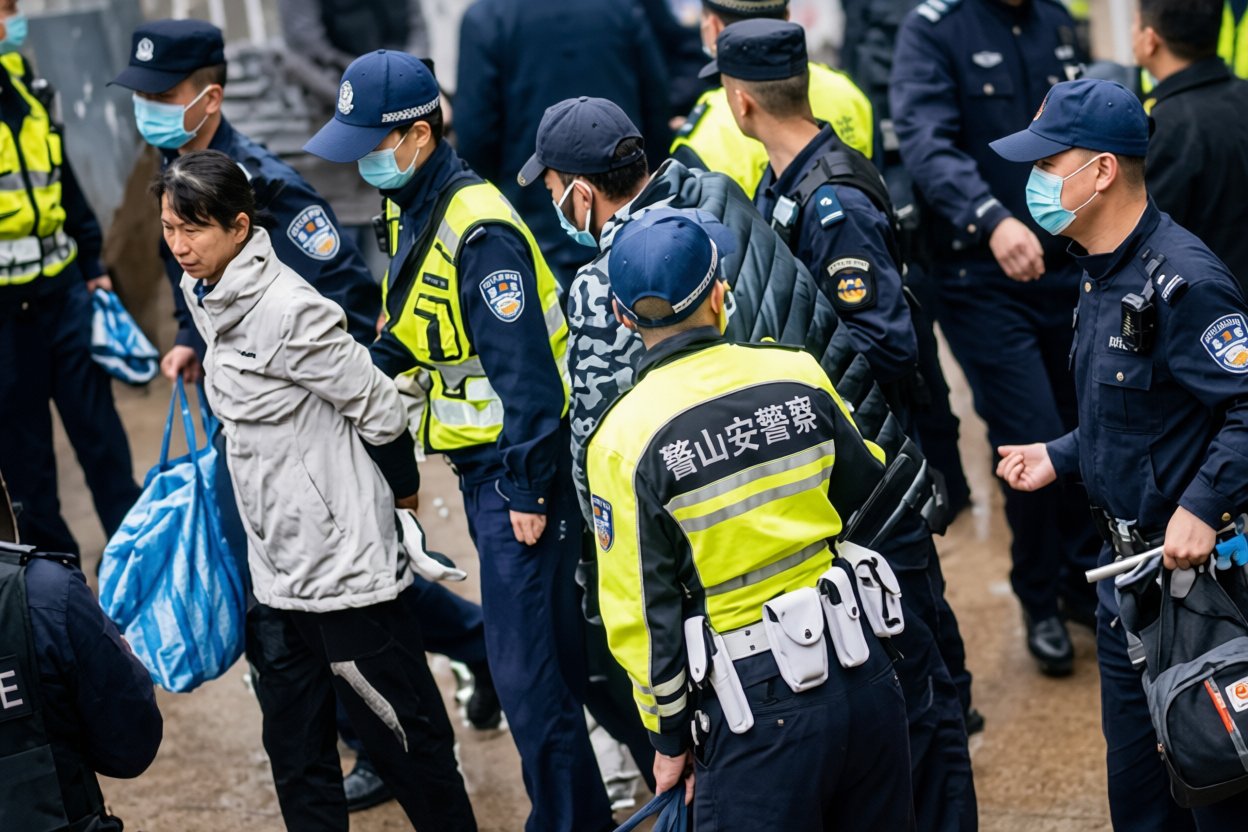
The first Second Home in China opened in 2009 near Kunming, Yunnan, and many of its pioneers came from Linzhou—the same city where Celestials have now been tried. Tolerance ended after Xi Jinping came to power. From 2014 onward, one community after another was raided and dissolved, in Yunnan, in the Gobi Desert of Xinjiang, and finally in Guizhou. At 1 a.m. on April 28, 2021, police and anti-xie jiao agents stormed two settlements in Tongzi and Anlong counties, Guizhou, where about one hundred people lived. Some were tied with ropes and loaded onto buses, and all were subjected to “transformation through education.” Lifechanyuan was officially branded a “xie jiao,” a label meaning “organization spreading heterodox teachings” and often translated as “cult.” Xuefeng lives today in Canada, where the movement is registered as a nonprofit organization.
In early July 2025, a new operation coordinated by the Ministry of Public Security targeted Celestials in several provinces. In Linzhou alone, more than eighty members were arrested on July 1. Witnesses described searches, interrogations, pressure to surrender passwords, and forced written statements renouncing their faith. The judgment of October 23 is the final act of that operation.
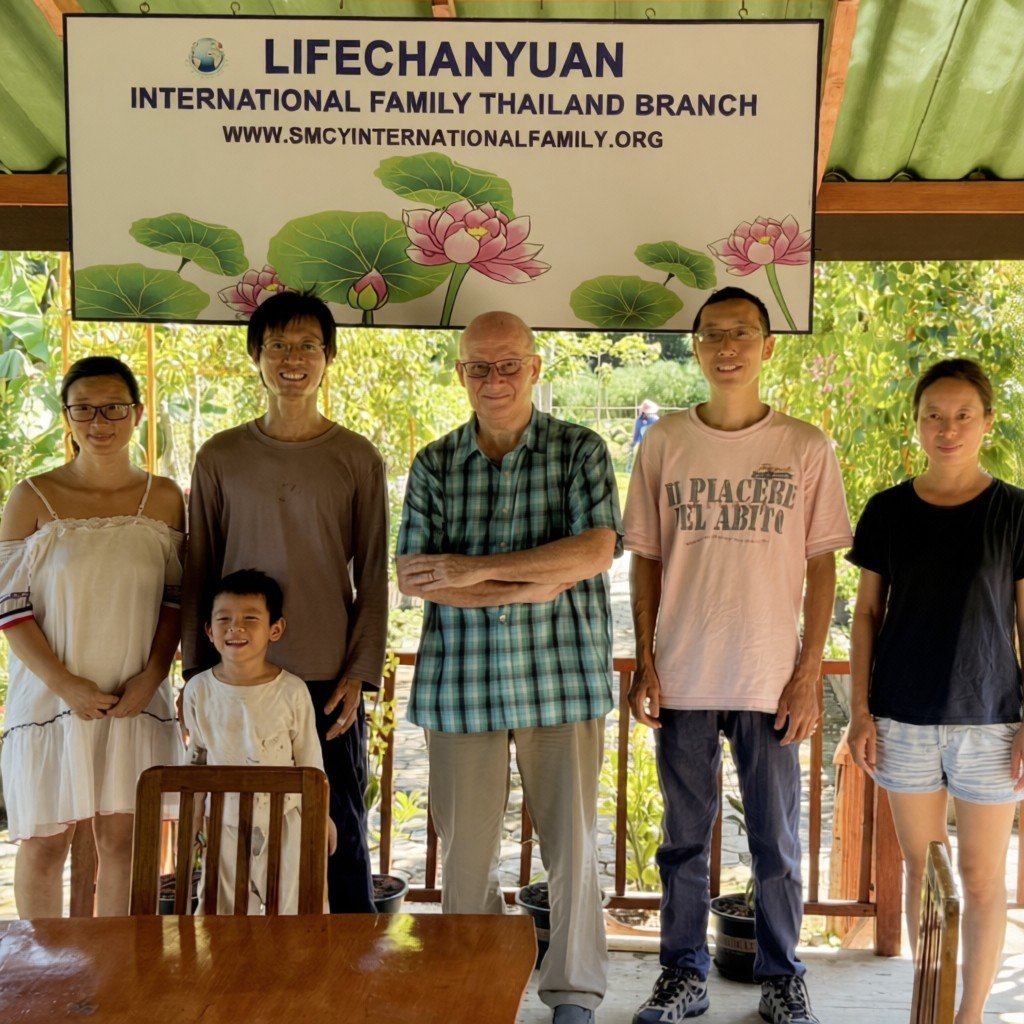
Two months after the 2025 arrests, I became the first scholar to visit a Second Home abroad, in a remote area of Thailand near the border with Myanmar. I spent several days there, sharing meals, mooncakes, dumplings, work, and silence with Celestials who had escaped China. They told me how they had obtained passports far from their hometowns, how one of them slipped out through Macau after being stopped at Shanghai Airport, how police kept calling them even abroad. A woman who had spent years in jail as a Falun Gong practitioner, beaten by guards who mocked her as “the Buddha,” told me she had finally found peace. I saw people who worked hard, laughed easily, and treated each other, and their animals, with a tenderness I rarely encounter. Their safety in Thailand was never assured. Threatened with deportation, the Celestials I met have now moved to South Korea. I think of them often, and I think of their friends in Linzhou who will spend the coming years behind bars.
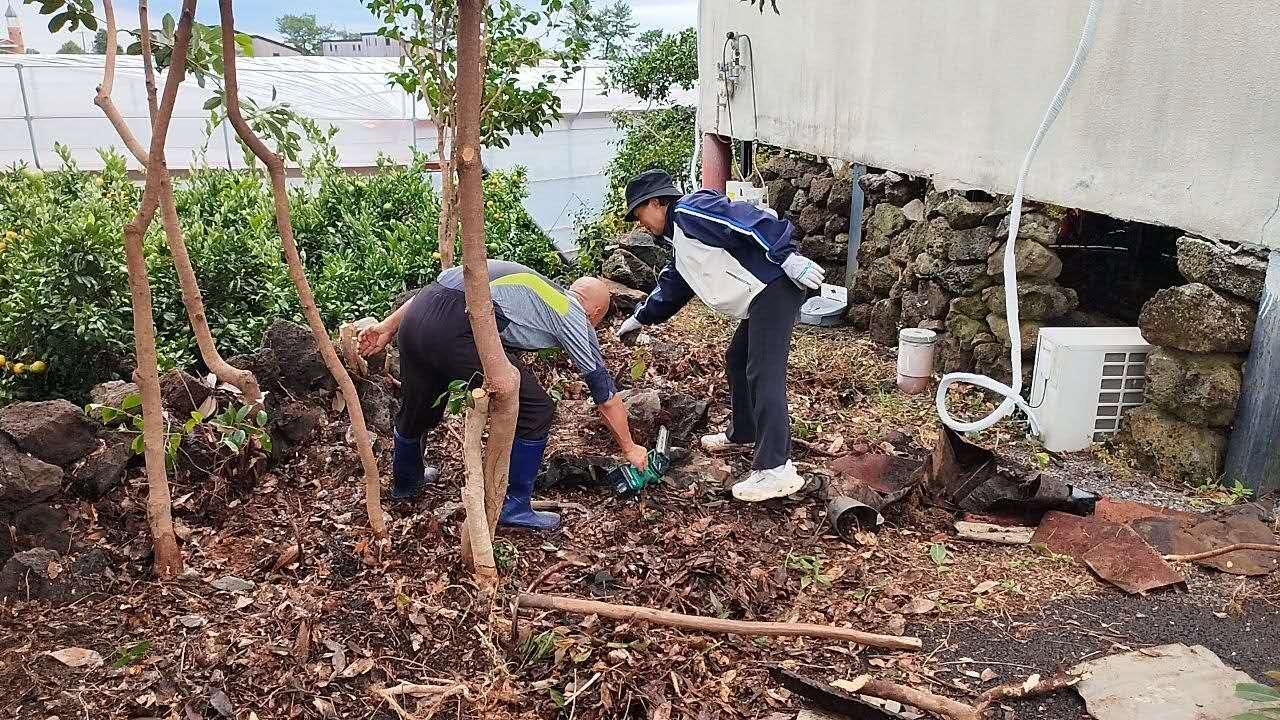
What crime did the six commit? Lifechanyuan has never been accused of violence. It organizes no protests, publishes no political manifestos, and has no quarrel with Chinese culture. It does not attack the Chinese state, and even the egalitarian ideals the Communist Party claims as its own find an echo in the movement’s communal life. Its founder was a Party member for years. Its members grow vegetables, raise chickens, sing, and study the writings of their Guide. The judgment speaks of a “law” undermined by “superstition,” yet the only law at stake appears to be the ban on Lifechanyuan itself. The reasoning of Article 300 is circular. Once a group is declared a “xie jiao,” believing, meeting, and sharing become crimes, and no further harm needs to be proved.
The confiscation adds insult to imprisonment. The money seized consisted of resources Celestials had pooled to sustain their simple communal life. Calling it “illegal proceeds” presupposes a crime that generated it, and the only offense on record is faith. Seizing the phones and the hard drive reveals the regime’s other obsession, namely, the circulation of texts and ideas it cannot control.
During the investigation, Chinese authorities also accused Lifechanyuan of “bewitching” its members, a version of the “brainwashing” theory. There is a bitter irony here. The notion of brainwashing was invented during the Cold War by American intelligence propaganda to describe alleged methods used by Chinese Communists. Long rejected by mainstream scholars as pseudo-science, it now resurfaces in Chinese courtrooms to justify the punishment of believers who were forced to sign statements renouncing their faith.
The Linzhou case is small by the standards of Chinese repression. Six sentences, one million yuan, a few phones. Yet it tells the whole story of how the regime deals with spiritual minorities. A peaceful community that asked for nothing except the freedom to live according to its conscience has been dispersed, its members jailed, and its savings taken. Governments and international organizations should speak out, and countries hosting Lifechanyuan refugees should grant them the protection they need instead of sending them back to a country where believing has become a crime. I owe at least this to the Celestials who welcomed me in Thailand with open hearts, and to their brothers and sisters in Linzhou, whose only fault was to hope for a gentler way of living together.
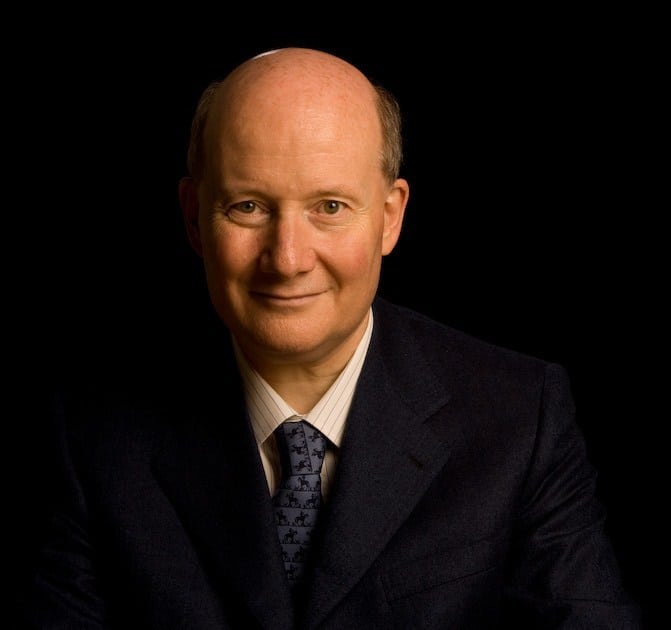
Massimo Introvigne (born June 14, 1955 in Rome) is an Italian sociologist of religions. He is the founder and managing director of the Center for Studies on New Religions (CESNUR), an international network of scholars who study new religious movements. Introvigne is the author of some 70 books and more than 100 articles in the field of sociology of religion. He was the main author of the Enciclopedia delle religioni in Italia (Encyclopedia of Religions in Italy). He is a member of the editorial board for the Interdisciplinary Journal of Research on Religion and of the executive board of University of Pennsylvania Press’ Nova Religio. From January 5 to December 31, 2011, he has served as the “Representative on combating racism, xenophobia and discrimination, with a special focus on discrimination against Christians and members of other religions” of the Organization for Security and Co-operation in Europe (OSCE). From 2012 to 2015 he served as chairperson of the Observatory of Religious Liberty, instituted by the Italian Ministry of Foreign Affairs in order to monitor problems of religious liberty on a worldwide scale.