A staged car crash in Taiwan shows how far Beijing goes to punish laughter and how fragile the ruler’s public image has become.
by Gladys Kwok
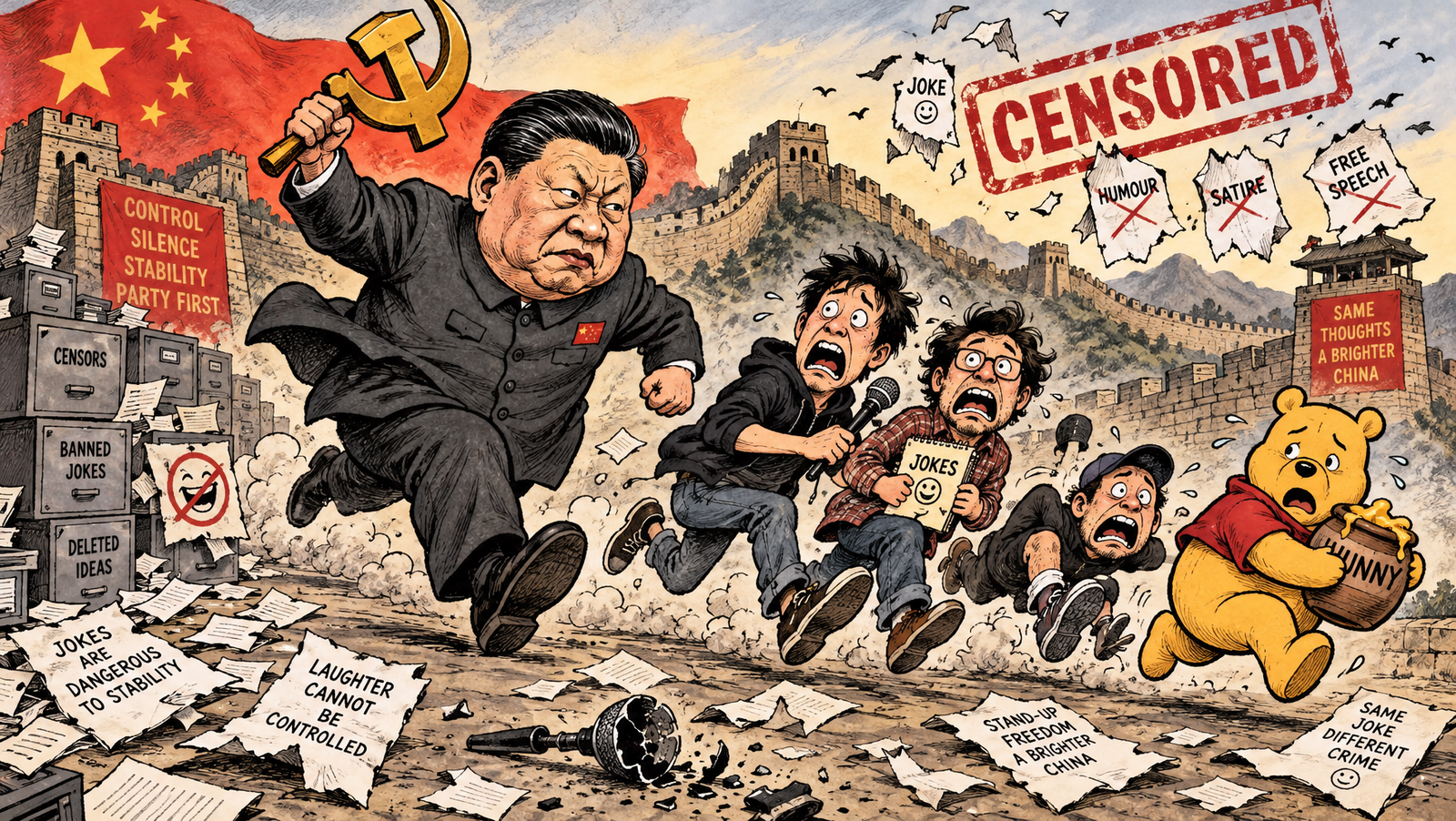
The history of authoritarianism offers many grim chapters, yet few are as unintentionally comic as the long saga of Xi Jinping’s war on humor. The ruler of the world’s most populous country has spent years trying to convince citizens that he is a figure of solemn dignity. The effort has produced a paradox: the more he insists on being respected, the more he becomes a magnet for jokes. His reaction to the famous comparison with Winnie the Pooh was a turning point. A cartoon bear with a pot of honey became a national security threat, and censors rushed to erase the creature from Chinese cyberspace. The episode revealed that the leader’s sense of humor had vanished so completely that even a children’s character was treated as a political insult.
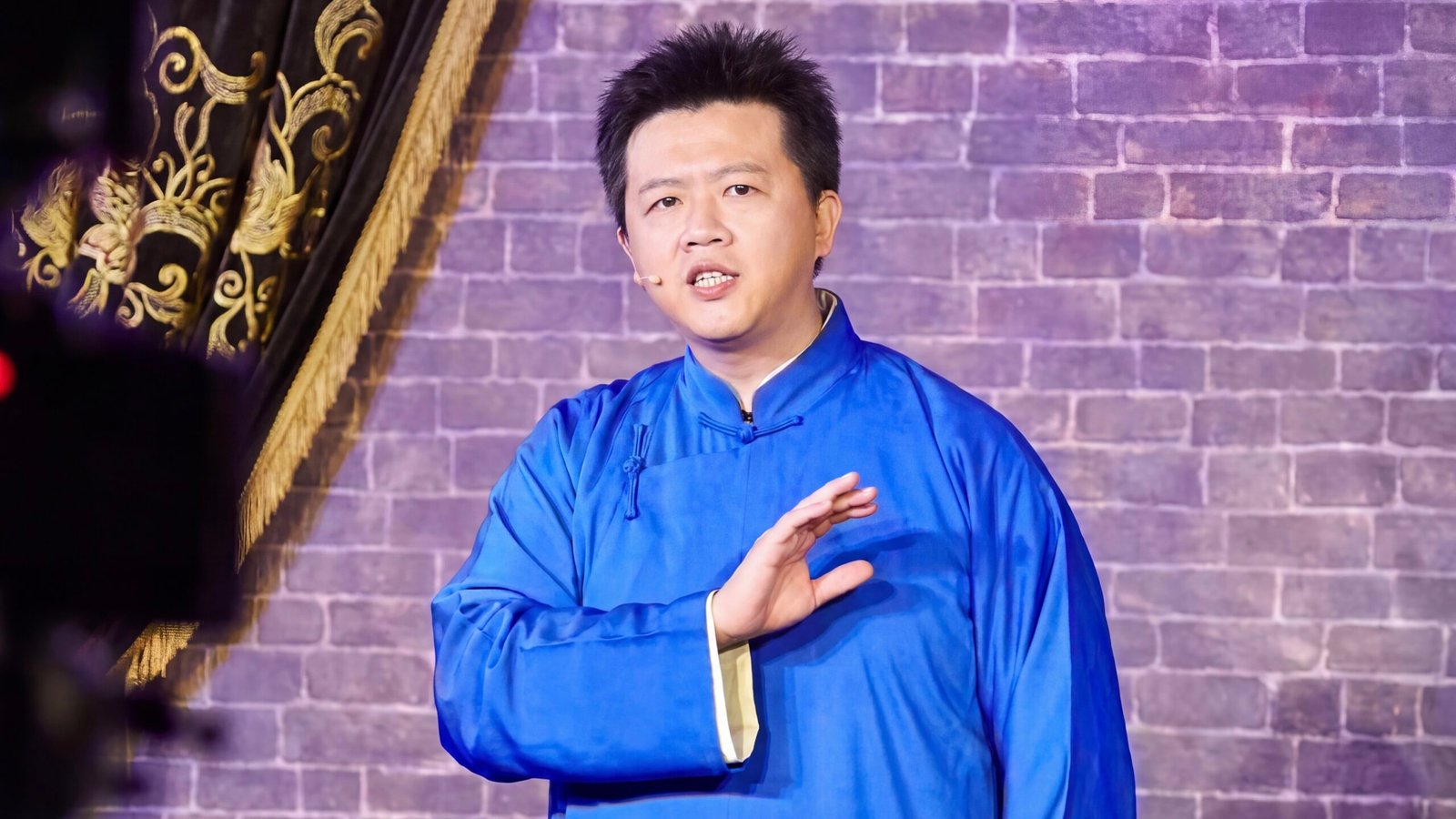
The recent case of Taiwanese comedian Huang Yi‑hao adds a new chapter to this chronicle of humorless severity. Prosecutors in Taiwan have charged five men with staging a car crash to hit Huang, who had dared to mock Xi in his performances. The alleged mastermind, identified only as K, reportedly offered substantial sums to track Huang’s movements and arrange a collision that would keep him off the stage, perhaps permanently. The plan was crude, the execution clumsy, and the result a pelvic contusion that forced the comedian to cancel a show. The incident was serious, yet it also revealed a strange truth: a regime that claims to be powerful enough to reshape global politics still trembles at the thought of a joke told in a Taipei club.
Huang himself responded with the resilience typical of performers who live by turning misfortune into material. He recalled earlier harassment, including an episode in which the facade of a comedy venue was splashed with foul substances. He also noted that online trolls, the so‑called little pinks, had pursued him with the zeal of volunteers eager to defend the leader’s honor. The comedian’s reaction was simple. He asked how he could turn the experience into a new routine. His instinct to laugh in the face of danger stands in sharp contrast to the solemnity of those who tried to silence him.
The case fits a broader pattern of transnational repression. Taiwanese commentators, Hong Kong activists, and even relatives of political figures abroad have been targeted in recent months. The car crash directed at Huang is the most violent episode in this series. It shows how Beijing’s defenders attempt to export the logic of intimidation beyond China’s borders. The irony is that these operations, intended to protect the leader’s prestige, end up reinforcing the global perception that he cannot tolerate even mild satire.
The Pooh affair demonstrated that the ruler’s image is guarded with a seriousness that borders on the theatrical. The attack on Huang confirms that the same spirit now extends abroad. A government that fears a cartoon bear and a stand‑up routine reveals more about its insecurities than its strength. Huang wrote that the experience helped him understand how those living under the Party’s rule feel. His remark captures the story’s essence. Freedom is fragile, and humor is one of its most delicate expressions. The attempt to crush a joke only proves how valuable that freedom remains.

Uses a pseudonym for security reasons.