“Confidential information” leaked to an Argentine daily repeats claims that official documents, scholars, and the alleged victim herself have already refuted.
by Massimo Introvigne

Faced with dozens of critical articles by scholars, legal experts, and human rights activists from different countries and continents, Prosecutor Fernando Arrigo and his team in Bariloche have finally tried to strike back. Their weapon of choice was leaking “confidential information” to a journalist, which resulted in an article published by the Argentine daily “La Nación” on November 2, 2026, titled (in English translation) “The Tug-of-War Over Konstantin Rudnev’s Health Hinders the Case for Alleged Human Trafficking.”
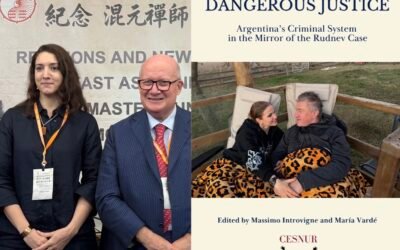
It is not my purpose to blame the journalist. Prosecutors feeding selected material to the press is a practice found all around the world, although some journalists resist manipulation better than others. The problem lies with the information itself. What the prosecutors supplied is so inaccurate, and so easily contradicted by documents already in the public domain, that it deserves a point-by-point answer. Much of this answer can be found in “Dangerous Justice: Argentina’s Criminal System in the Mirror of the Rudnev Case,” a book just published by CESNUR and available for free download, where scholars, lawyers, and human rights experts from several countries have examined the case in detail.
The article states that Rudnev “is wanted by the justice of Eastern Europe.” The prosecution’s own file proves that this is false. The information Argentine authorities received from Montenegro, where Rudnev lived before moving to Argentina, came from Interpol’s National Central Bureau in Podgorica, in a communication dated April 16, 2025. It said that Rudnev had been summoned by the police of Bar to “give a statement” and to “collect information” in a case of possible “illicit trade.” The suspicion of illicit trade concerned another guest staying at the same hotel as Rudnev during a political conference. Being asked to give a statement is a routine procedure and does not mean being accused of any crime. If Montenegro had prosecuted Rudnev, Interpol would have said so. Alessandro Amicarelli reconstructed these events in “The Journal of CESNUR,” showing how a request for information became a story of escape and, now, an international manhunt that exists only in the prosecutors’ fake news.
Second, the article recycles the transnational slander about Rudnev’s school, sometimes called “Ashram Shambhala,” that originated in Russia. Readers learn again that Rudnev called himself an “alien from Sirius” and was convicted in Novosibirsk of sexual abuse and drug offenses, as if a verdict by a Russian court in a case involving a spiritual minority were a reliable source. Russian courts routinely convict dissidents and members of religious groups the regime dislikes, often on the basis of drugs planted during raids. Ironically, thanks to the sensational proceedings in Argentina, Rudnev’s school has become one of the most studied modern esoteric movements in the world. Scholars of esotericism and human rights experts have devoted a large body of articles to it, and a book on Rudnev’s esoteric ideas will be published soon. Their research has shown, among other things, that Rudnev’s criticism of the Russian political system was a crucial reason for his persecution in his home country. Prosecutors could have consulted this literature. Instead, they keep copying and pasting from Russian sources.
Third, the prosecutors continue to feed the media stories about drugs. The article claims that cocaine was found in Rudnev’s luggage at the airport. As far as Rudnev’s defense knows, the only materials examined as possible illicit drugs in the Argentine case turned out to be sleeping pills and dried mushrooms of the kind used for cooking. The narcotics charge collapsed when these substances were analyzed, a development documented in “Dangerous Justice.” If the prosecution possesses different evidence, it has not shared it with the defense, which is hardly compatible with the rules of a fair trial.
Fourth, the story of Elena Makarova, the only person the prosecution identifies as a victim, is told once again in a way she explicitly rejects. The article presents her as “the sum of all vulnerabilities,” a young woman recruited in extreme poverty and held in servitude and isolation in Bariloche. New Grand Guignol details have now been added, including the claim that before Elena there was another young woman whom Rudnev allegedly trafficked, of whom nothing is said or known. The real Elena Makarova is quite different from the character prosecutors created. She has been interviewed at length by the Argentine scholar María Vardé; she runs a YouTube channel where she tells her story and criticizes the Argentine prosecutors; and she is in touch with “Bitter Winter,” where she published her own account in August 2026. She comes across as an articulate, intelligent young woman. She denies having been captured or trafficked and denies having lived in miserable conditions, at least until Argentine police and prosecutors started harassing her and her child. She dismisses the prosecutors’ version of her life as pure fiction. No reason has ever been given for why she should not be heard, except the usual rigmarole about “brainwashing,” which Rudnev is supposedly able to continue from his detention in Argentina over a woman who has been living in Russia for months.
The central thesis of the “La Nación” article is that Rudnev needed Makarova to name him as the father of her child, so that he could obtain an Argentine ID and the right to remain in the country. This thesis is contradicted by the facts. Makarova had never met Rudnev. A friend who had traveled with her produced a photocopy of his passport at the hospital under pressure from staff who insisted on documents about the father, although Argentine law does not require a mother to name one. As soon as Makarova was freed from that illegal pressure and able to speak for herself, she denied that Rudnev was the father. DNA tests later confirmed what she said.
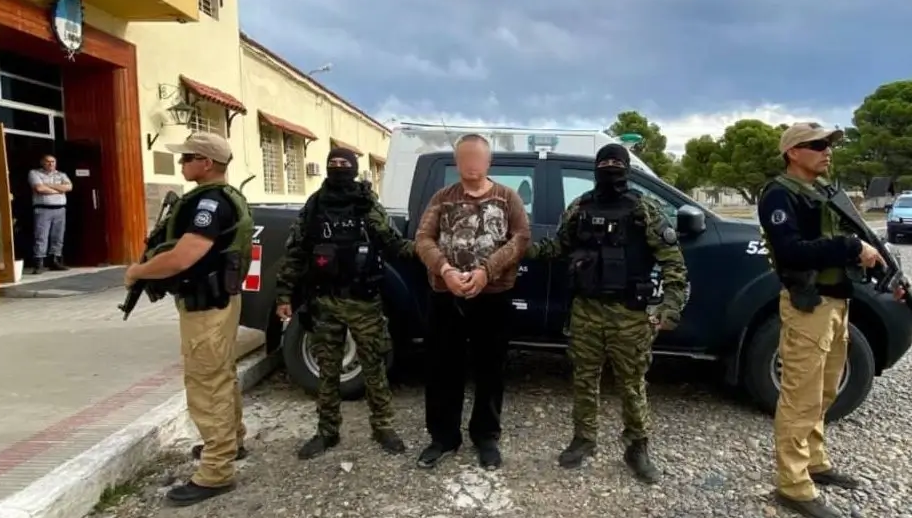
The article also contains other sensational particulars, from hidden cameras and a comparison with the Epstein case to an encrypted hard drive, attributed to anonymous sources and never tested in any courtroom. The prosecution continues to maintain and publicly promote its original theory despite the numerous facts that have emerged over a year and a half of investigation which contradict it.
There is more. What seems particularly absurd is that Rudnev’s ill health is effectively held against him and portrayed as an obstacle to the investigation. How does his illness prevent prosecutors from establishing the facts of an alleged crime?
According to the article itself, the forensic doctors of Argentina’s Supreme Court concluded that Rudnev, who lost 53 kilograms in custody and suffers from progressive pulmonary fibrosis, cannot be held in an ordinary prison ward. Yet his repeated surgeries are presented as a delaying tactic, as if a seriously ill man had chosen to be sick just to annoy the prosecutors. Meanwhile, as documented in “Dangerous Justice,” the investigation itself has hardly advanced since March 2025.
The article relies on an unnamed “detective” involved in the investigation. It does not say who this person is, what his official role is, or what evidence supports his statements, yet it presents his words as reliable information. Anonymous voices from inside the prosecution, speaking to the press while the defense struggles to obtain access to the file, are not what one expects from a justice system that respects the presumption of innocence.
Several NGOs have filed separate complaints asking the competent authorities to examine Prosecutor Arrigo’s conduct and either remove him from the Rudnev case or, perhaps, from his office, since complaints against him also involve other cases. Serious doubts have been raised about Arrigo’s mental competence by Italian scholar Raffaella Di Marzio (and some minor members of the international anti-cult network have been mobilized to rush to his defense).
The decision by Arrigo’s office to feed inaccurate and defamatory information to a national newspaper adds a new argument to the pending complaints. A prosecutor who has no serious arguments in court but tries to win in the media shows, better than any critic could, why he should no longer be in charge of this case.
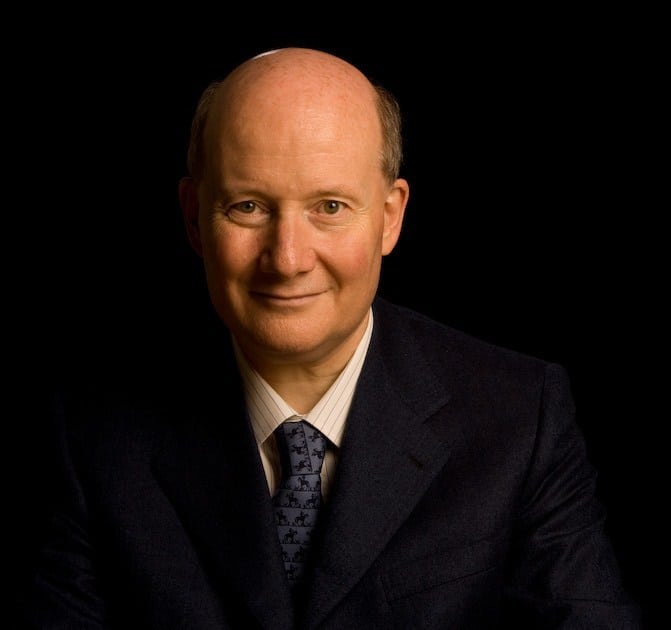
Massimo Introvigne (born June 14, 1955 in Rome) is an Italian sociologist of religions. He is the founder and managing director of the Center for Studies on New Religions (CESNUR), an international network of scholars who study new religious movements. Introvigne is the author of some 70 books and more than 100 articles in the field of sociology of religion. He was the main author of the Enciclopedia delle religioni in Italia (Encyclopedia of Religions in Italy). He is a member of the editorial board for the Interdisciplinary Journal of Research on Religion and of the executive board of University of Pennsylvania Press’ Nova Religio. From January 5 to December 31, 2011, he has served as the “Representative on combating racism, xenophobia and discrimination, with a special focus on discrimination against Christians and members of other religions” of the Organization for Security and Co-operation in Europe (OSCE). From 2012 to 2015 he served as chairperson of the Observatory of Religious Liberty, instituted by the Italian Ministry of Foreign Affairs in order to monitor problems of religious liberty on a worldwide scale.