Scandinavian media and politicians targeted a minority’s internal discipline, but judges in Oslo and Stockholm demanded evidence and found none.
by Massimo Introvigne*
*A paper presented at the conference “Religion and State Relations in Lithuania and Europe: The Problem of Recognition of Religious Organizations,” Parliament of the Republic of Lithuania, Vilnius, October 27, 2026.
The Scandinavian context
Scandinavia is often presented to the rest of Europe as a model: prosperous, egalitarian, tolerant, and respectful of human rights. Sociologists of religion also know it as one of the most secularized regions of the world. In his 2008 book “Society without God,” American sociologist Phil Zuckerman described Denmark and Sweden as societies where religion has largely retreated from public life without producing the moral collapse some predicted. The old Lutheran national churches survive, and many citizens still belong to them, but for most this belonging is cultural and occasional. Church and state were formally separated in Sweden in 2000 and, through a gradual process completed in 2017, in Norway.
This secularization has produced a paradox. A society that has become largely indifferent to religion has also become, in some respects, less tolerant of those minorities who take religion seriously. Over the last two decades, a set of values centered on gender equality, sexual freedom, and LGBT rights has come to be regarded in Scandinavia as part of national identity itself. These values are taught in schools, promoted by state agencies, and defended by virtually all political parties. Those who dissent on religious grounds are increasingly seen as standing outside the national consensus.
Conservative religious communities, Christian and non-Christian alike, have experienced this shift directly. In Sweden, the Pentecostal pastor Åke Green was sentenced in 2004 to one month in prison for a sermon criticizing homosexuality, and was acquitted only in 2005 by the Supreme Court, which explicitly took into account the case law of the European Court of Human Rights. In Norway, a law banning so-called “conversion therapy” was adopted in 2023. Forcible practices of “conversion therapy” are banned in many countries. However, the Norwegian law’s specific wording raised concerns among religious bodies about the boundaries between prohibited practices and ordinary pastoral counseling or prayer. In Sweden, proposals to stop establishing new confessional schools have attracted support from parties on both the left and the right.
Media have played a significant role in this process. Public broadcasters and major newspapers in both Norway and Sweden have devoted documentaries and long investigative features to conservative religious groups, usually built around the testimonies of disgruntled former members. Some of these programs raised legitimate questions. Many, however, adopted the vocabulary of the international anti-cult movement, wrongly regarding the minority of “apostates” who became militant critics of the religions they had left as representative of all ex-members, and presenting religious discipline as manipulation and conservative moral teachings as a form of abuse. Politicians responded to the resulting public outcry with promises to act.
One concept deserves special mention, because it will reappear in both the cases I will discuss. Norwegian government action plans developed the notion of “negative social control” originally to address honor-related violence, forced marriages, and pressure exercised on young women in some immigrant communities. In recent years, this concept has migrated. It has been applied to religious minorities whose members are encouraged to follow strict moral rules and who face social consequences if they leave. A category created to address serious crimes has thus been stretched to cover the ordinary internal discipline of religious communities.
Jehovah’s Witnesses have found themselves at the center of this storm. They have been present in Norway and Sweden for more than a century, and number some 12,000 members in Norway and over 22,000 in Sweden. They hold conservative views on sexuality and marriage. Most importantly, they practice what they call “removal” or “disfellowshipping”: members who commit serious sins without repenting, or who officially dissociate themselves from the community, are excluded, and the remaining members are counseled to limit social contact with them. Critics call this practice “shunning.” The Witnesses base it on their reading of the Bible, particularly 1 Corinthians 5:11 and 5:13, where Paul tells the believers not even to eat with certain persons and to expel the wicked from among them. Those who become inactive without announcing it are not subject to these measures.
In both Norway and Sweden, the state attempted to use the system of public subsidies to religious communities as a tool to pressure the Witnesses to change this practice. Both attempts ended, at least so far, in the courtroom, with results that I believe deserve to be known beyond Scandinavia, including here in Vilnius. I will start with Norway, where the case has reached its conclusion, and then move to Sweden, where the state is now appealing a first-instance decision.
Norway: a case closed by the Supreme Court
The Norwegian story started in 2021 with a letter. Rolf Johan Furuli, a former Jehovah’s Witness and a scholar of Semitic languages who had left the community, wrote to the Ministry of Children and Family Affairs. He argued that the practice of shunning violated the right of members to leave their religion, because the fear of losing family and friends would compel them to remain. He added that the same practice affected minors, whom he described as baptized too young to understand the consequences of their choice.
The complaint fell on fertile ground. The Norwegian Constitution, in Section 16, provides that all religious and philosophical communities must be supported on an equal footing, and Jehovah’s Witnesses had received state subsidies without issue for some thirty years. After Furuli’s letter, the government and the State Administrator of Oslo and Viken denied the subsidies. The community also lost its registration as a religious organization under the Religious Communities Act of 2020. This status carries important practical consequences, including the authority to celebrate legally valid marriages.
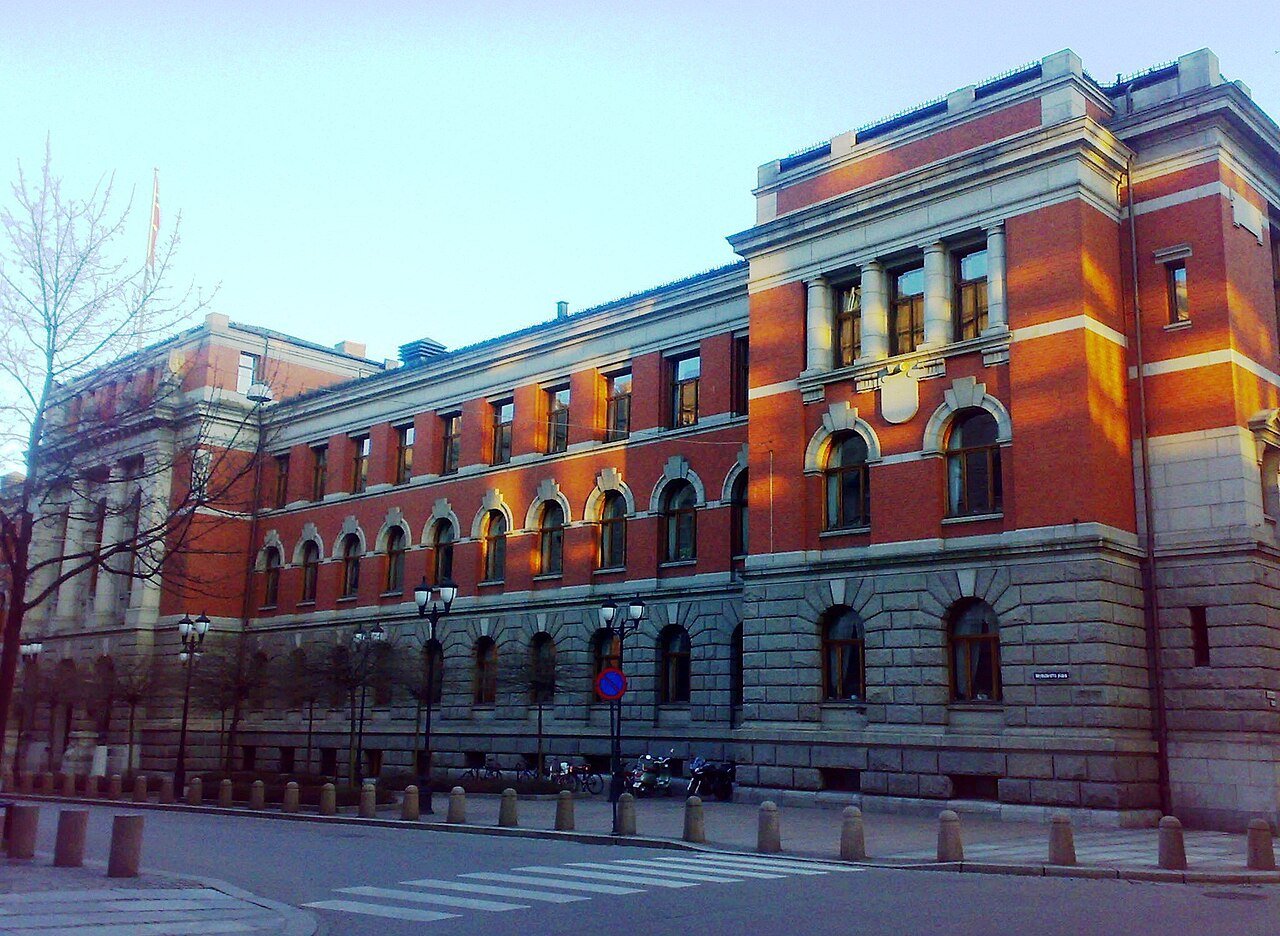
The Witnesses went to court. On March 24, 2024, the Oslo District Court (single-judge panel) confirmed the authorities’ measures. One year later, on March 14, 2025, the Court of Appeal (three-judge panel) unanimously reversed that decision, finding the state’s decisions unlawful and unfounded. The state did not accept defeat and appealed to the Supreme Court.
On April 29, 2026, the Supreme Court of Norway ruled in favor of Jehovah’s Witnesses and declared invalid all the administrative measures that had deprived them of registration and subsidies. Justice Therese Steen wrote the main opinion. Its reasoning draws on both Norwegian law and the European Convention on Human Rights, and it directly addresses the central question: does shunning prevent adults from exercising their right to leave, and does it violate children’s rights?
The state had argued that shunning amounts to coercion, psychological violence, and negative social control. The Court found that the evidence did not support these accusations. In its words, “the State has not demonstrated that Jehovah’s Witnesses’ practice of shunning former members constitutes improper pressure that violates members’, including children’s, right to free withdrawal” (paragraph 143). The judges observed that the authorities had relied on selected excerpts from the Witnesses’ religious literature rather than concrete proof of harm. The Court added that the social consequences of leaving a small, close-knit community are hardly unique to the Witnesses and are common wherever family and friends share the same affiliation (paragraph 133).
The Court then established a principle of general significance. There is no right “not” to be shunned. Norwegian and international law, the judges wrote, “does not protect a right to maintain relationships between close adult family members” (paragraph 119). Recognizing such a right would violate two other rights: the right of religious communities to organize themselves according to their theology, and the right of the remaining members to choose with whom they associate. The Court explained that, under Articles 8 and 9 of the European Convention, the remaining members are entitled to arrange their private lives according to their religious convictions. An indirect requirement imposed by the state to maintain contact with former members, under the threat of deregistration and loss of subsidies, would put pressure on each believer to act against their understanding of the Bible (paragraph 115).
The judges did not deny that the Witnesses exercise some “social control” over their members. They noted, however, that social control is not necessarily negative or unlawful, and that all religious rules of conduct entail a certain degree of it (paragraph 89). They also observed that cohabiting family members remain a family. Contact continues within the household, even with a disfellowshipped relative, and relationships with excluded family members living elsewhere remain possible for necessary family matters (paragraph 126).
On minors, the state’s case rested on two claims. The first was that children are baptized too young to understand their commitment. The Court examined the Witnesses’ practice in detail. It noted that they do not baptize infants, that baptized minors are normally between 15 and 18 years old, and that baptism is preceded by a period of study and by a conversation with the elders, usually in the presence of the parents, to verify that the candidate is mature enough to make an independent decision (paragraph 36). It concluded that there was “no indication that minors’ decision to be baptized is not based on informed and independent choices” (paragraph 93).
The second claim was that disfellowshipped minors suffer “psychological violence.” The Court found this picture exaggerated. It noted that excluding minors is rare and does not break family bonds. The minor normally continues to live with the parents, ordinary family life goes on, and the Witnesses’ own teachings instruct parents to continue caring for the child, including emotionally, although the family’s shared religious life is no longer available to them (paragraph 97). Since the Witnesses do not run their own schools, an excluded minor also keeps the network of friends and classmates outside the congregation (paragraph 100).
There were dissenting opinions, whose authors would have upheld certain administrative measures on evidentiary grounds. Yet even the dissenters did not accept the state’s thesis that shunning amounts to psychological violence or negative social control against children.
The judgment also recalled that Jehovah’s Witnesses have won the large majority of the more than 70 cases they brought before the European Court of Human Rights. I will not discuss this case law, which other papers at this conference examine in detail. I will only note that the Norwegian Supreme Court treated it as a body of law binding on Norway and concluded that the threshold for denying subsidies to a religious community must remain high. With this decision, the Norwegian case is closed. The Witnesses have recovered their registration and their right to equal treatment under the Constitution.
Sweden: a first-instance victory under appeal
The Swedish story has a longer background. For many years, Jehovah’s Witnesses applied for the state grants that Sweden distributes to a large number of religious communities, and for many years they were refused. After a long series of administrative and judicial proceedings, they finally obtained access to the grants in 2019.
Not everyone welcomed this result. In 2024, the Swedish Parliament adopted a new Act on State Grants to Faith Communities, the Act 2024:487, which introduced stricter “democracy conditions” for receiving public support. The political climate in which the law was drafted left little room for doubt about its target. Leading officials stated openly that the law needed to be changed to correct the fact that the Witnesses had been found eligible. On October 24, 2025, the Swedish Authority for Support to Faith Communities, known by its Swedish acronym SST, applied the new law and denied the Witnesses access to state grants.
The SST gave two reasons. First, it argued that the Witnesses discriminate because they deny membership to those who do not live according to their moral teachings, including persons openly living in same-sex relationships. Second, it argued that they exert “improper pressure” on members by limiting social contact with former members. It is worth noting that, during the procedure, the Witnesses were asked detailed questions about their doctrine, while other communities holding comparable teachings on sexuality and marriage, including the Catholic Church, continued to receive support without being subjected to similar scrutiny.
The Witnesses appealed to the Administrative Court in Stockholm. On May 7, 2026, in case no. 23674-25, the Court overturned the SST’s decision and declared that “the Jehovah’s Witnesses are entitled to a state grant” under the 2024 Act.
The starting point of the Court’s reasoning is the principle of state neutrality. Relying on the European Court of Human Rights, the Swedish judges recalled that freedom of religion under Article 9 of the European Convention “entails that the State has a duty to remain neutral and impartial with respect to religious beliefs,” and that this duty “means that the State is prevented from assessing the legitimacy of such beliefs and the ways in which they are expressed or manifested.” Citing both Strasbourg and the Swedish Supreme Administrative Court, they added that “no closer examination or valuation of the community’s religious doctrine should be made.”
From this principle, the Court derived a distinction that is, in my opinion, the most important contribution of the decision. Public authorities may examine activities of a faith community directed toward the public when deciding on subsidies. Phenomena that occur within the internal activities of the community, on the other hand, are protected by freedom of religion. Membership requirements, moral standards, and internal discipline fall within this sphere.
On the first accusation, discrimination, the Court admitted that the Witnesses set membership conditions “that may appear discriminatory.” It observed, however, that such conditions are common among several faith communities that receive state grants. A religious community is founded on shared beliefs and values, which its members freely accept, and it would make little sense to require it to admit as members those who reject them. The decisive question, for the Court, was whether the Witnesses discriminate in their dealings with the public and with those who do not seek membership. The SST had produced no evidence that they did. The Witnesses stated that a person’s choice of partner does not prevent participation in meetings or Bible study, and the authority did not dispute this.
On the second accusation, improper pressure through shunning, the Court placed the burden of proof on the authority, which had to make its allegations probable before imposing burdensome measures. The evidence consisted of excerpts from the Witnesses’ website and a submission by two individuals. The Court found the website material inconclusive. It described the submission as relying on second-hand sources, containing legal arguments and partly outdated information about proceedings in other countries, and concluded that it had “very limited evidentiary value.” Among the outdated information was a reference to the Norwegian case, which, as we have seen, the Witnesses eventually won. Another source was a book by a Swedish journalist active in the anti-cult milieu. The Court also recalled the principle, established by the European Court of Human Rights in cases involving the Witnesses, that second-hand information and so-called expert opinions are insufficient to justify burdensome decisions against religious communities.
As in Norway, the Swedish judges looked at how the practice actually works. They noted that cohabiting disfellowshipped relatives are not shunned, that family life and the relationship between spouses continue, that excluded minors continue to be cared for, that disfellowshipped persons may attend congregation meetings, and that they may be reinstated. By a majority of three judges to one, the Court concluded that the authority’s evidence could not support the conclusion that the Witnesses exert improper pressure through threats of harmful consequences.
The Court also issued a warning to the authority. Interpreting the democracy conditions as broadly as the SST had done would have consequences so far-reaching that the main purpose of the Act itself, strengthening the ability of faith communities to carry out active and long-term religious activities and ensuring equal opportunities for all to practice their religion in Sweden, could no longer be achieved. In other words, a law meant to support religious communities could not be turned into an instrument to exclude the unpopular ones.
The Swedish story, however, is not over. The SST (now MUCF) has appealed the decision, and the case is now pending before the Administrative Court of Appeal. The appellate court will reexamine the arguments, and the outcome may still take time.
Conclusion
Let me draw some conclusions from these two stories.
The first concerns the social context. In both Norway and Sweden, the offensive against Jehovah’s Witnesses originated in a climate where conservative religion is increasingly seen as incompatible with national values. Politicians took up complaints by former members, amplified by the media, and turned them into administrative action. In Sweden, a law was amended with the declared purpose of excluding one specific community. In both countries, concepts such as “negative social control,” “psychological violence,” and “improper pressure” were used to present internal religious discipline as a social danger. This trend is unlikely to disappear soon, and it is by no means limited to Scandinavia.
The second conclusion concerns the courts. Notwithstanding this social context, the Norwegian Supreme Court and the Stockholm Administrative Court reached remarkably similar results through remarkably similar reasoning. Both demanded evidence and refused to accept selected quotations from religious literature, second-hand accounts, or the opinions of self-styled experts as a substitute. Both examined how disfellowshipping actually works, finding that the authorities’ dramatic picture did not match reality, and recognized that religious communities may set their own membership rules and moral standards, while remaining members may decide with whom they associate. Finally, both grounded their decisions in Article 9 of the European Convention on Human Rights and in the case law of the Strasbourg Court.
The Swedish case is still open, and caution is in order. Yet, so far, Scandinavian domestic case law appears to be aligned with the principles affirmed by the European Court of Human Rights in its many decisions concerning Jehovah’s Witnesses, which other papers presented at the same conference discuss.
The last conclusion has direct political relevance. Religious freedom is easy to defend when it protects popular groups. Its real test comes with minorities whose beliefs and practices the majority finds strange, old-fashioned, or even offensive. Jehovah’s Witnesses are such a minority in many European countries. The Norwegian and Swedish courts reminded their governments that a democratic state may not use its laws and its subsidies to reward the religions it likes and punish those it dislikes, and that it may intervene in the internal life of a religious community only when concrete and demonstrable harm is proved. Legislators and governments everywhere, including in Lithuania, may usefully keep these lessons in mind.

Massimo Introvigne (born June 14, 1955 in Rome) is an Italian sociologist of religions. He is the founder and managing director of the Center for Studies on New Religions (CESNUR), an international network of scholars who study new religious movements. Introvigne is the author of some 70 books and more than 100 articles in the field of sociology of religion. He was the main author of the Enciclopedia delle religioni in Italia (Encyclopedia of Religions in Italy). He is a member of the editorial board for the Interdisciplinary Journal of Research on Religion and of the executive board of University of Pennsylvania Press’ Nova Religio. From January 5 to December 31, 2011, he has served as the “Representative on combating racism, xenophobia and discrimination, with a special focus on discrimination against Christians and members of other religions” of the Organization for Security and Co-operation in Europe (OSCE). From 2012 to 2015 he served as chairperson of the Observatory of Religious Liberty, instituted by the Italian Ministry of Foreign Affairs in order to monitor problems of religious liberty on a worldwide scale.