A novel by the Russian dissident and spiritual teacher turns a heterogeneous esoteric theme into a story of awakening, in which characters learn to perceive the forces that shape them.
by Massimo Introvigne and María Vardé*
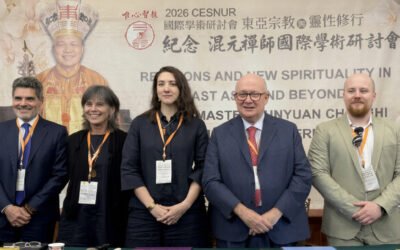
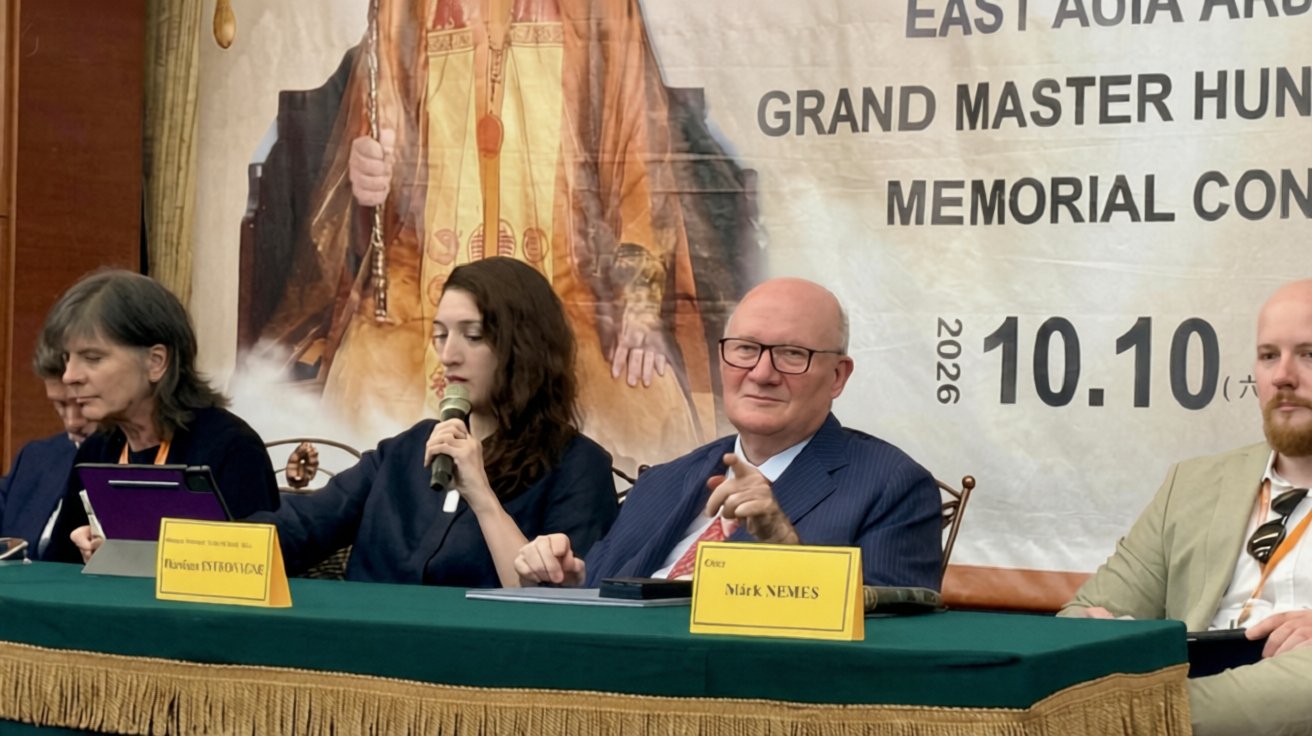
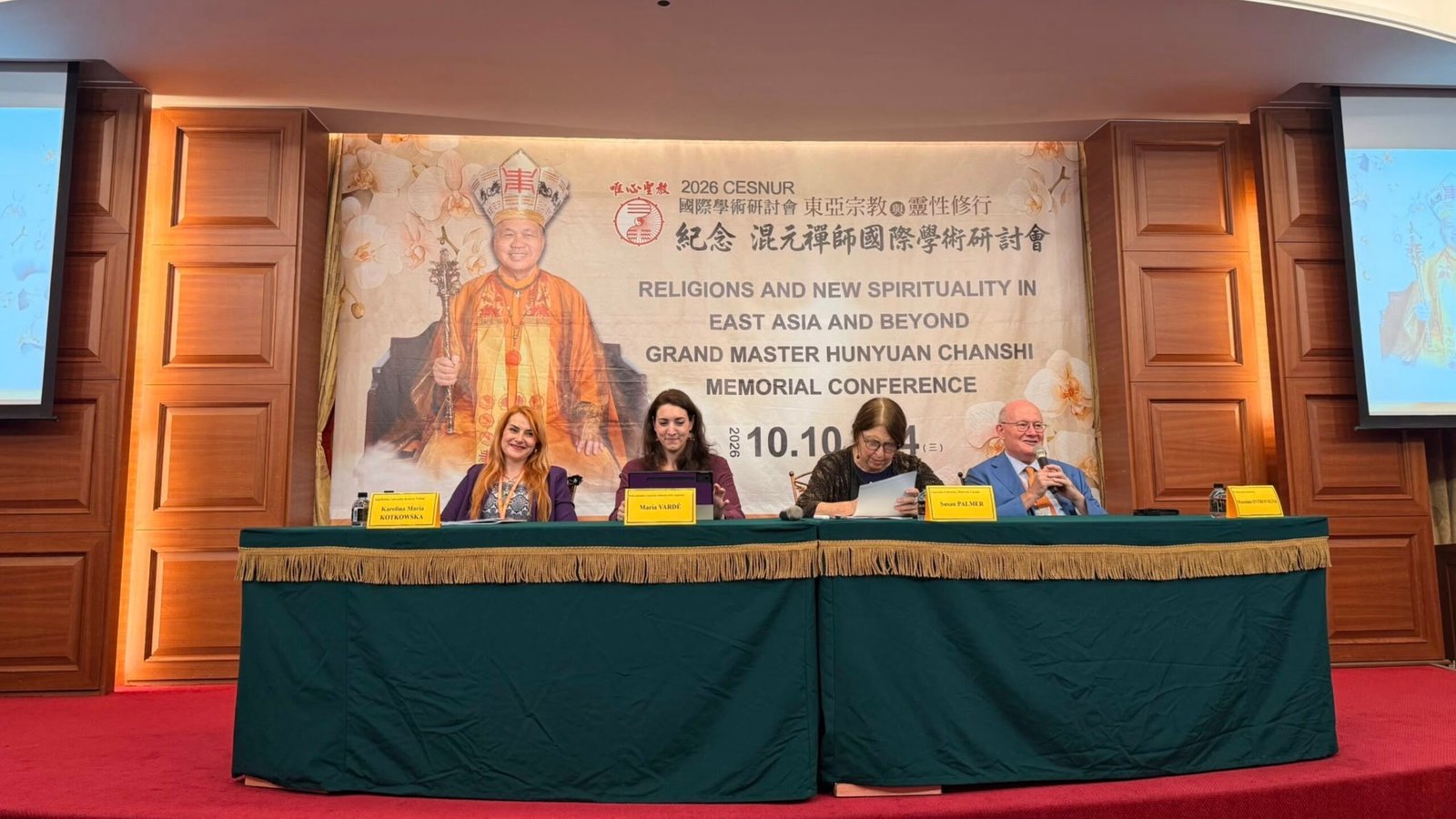
*A paper presented by María Vardé in the session “‘Ashram Shambhala’: A Panel on the Case of Konstantin Rudnev,” CESNUR 2026 conference, Taichung, Taiwan, October 11, 2026.
Recent studies have enabled a more precise discussion of Konstantin Rudnev’s teachings. Massimo Introvigne, one of the authors of this article, reconstructed a system centered on “incorrect thinking,” acquired personality, self-observation, and cultivating attention. Márk Nemes described a broader religious bricolage oriented toward self-improvement and elevating consciousness. Karolina Maria Kotkowska showed how bodily practice, sexuality, social conditioning, planetary influence, and esoteric relations of power are integrated within the Darshan corpus.
Rudnev’s book “The Dawn of Inliranga” is especially revealing when read against this background, because it places these ideas in a sequence of encounters through which characters repeatedly discover that what they experience as their own thoughts, desires, emotions, and identities may be shaped by forces whose operation remains largely unnoticed.
The narrative form is therefore analytically significant. The main character, Arthur, encounters the weakness of his attention before he acquires a language for mechanical existence. Social roles become perceptible through performance before the book offers a more explicit account of the observing self. Memory first appears as an ordinary failure and eventually becomes a condition for preserving spiritual transformation. Concepts that cannot be reconstructed separately from Rudnev’s wider corpus are thus made mutually intelligible through a temporal pedagogy of experience, interruption, and recollection. The argument developed here is that “Inliranga” organizes its diverse materials around an anthropology of influence in which spiritual work consists in rendering those influences perceptible without allowing them to exhaust the meaning of personhood.
Rudnev’s system emerged within a broader late-Soviet and early post-Soviet environment in which relatively fluid networks of spiritual seekers moved across practices and vocabularies that formal institutions would ordinarily separate. Meditation, yoga, healing, psychotechnical experimentation, paranormal research, and the exploration of altered states could converge around projects of self-transformation and latent human potential. These circles were often connected with the educated urban and technical intelligentsia and, as scholars such as Birgit Menzel, Alexander Panchenko, and Boris Falikov have shown, retained important continuities across the collapse of the Soviet system. This context helps explain the availability of Rudnev’s heterogeneous vocabulary without reducing his system to a reflection of its environment. “Inliranga” is distinctive precisely in the architecture it gives to these materials through a theory of personhood, influence, and transformation.
The story begins with Arthur and his friend Ruslan, who introduces him to the Tantric school of Lyria, a disciple of the Indian priests of Khajuraho. For Lyria, Tantra is an “art of living,” and reducing it to “exotic sex” misses its point; love and sexuality are dimensions of spiritual energy. Sexuality, movement, relationships, and perception become opportunities to observe how attention and energy are used.
Lyria explains that the Khajuraho statues show that “in the past sex was treated like a prayer; sexual partners worshiped each other and truly embodied the images of Gods and Goddesses.” Later, however, these teachings were suppressed and persecuted, although relics of them remain in India.
Arthur learns that relationships can be shaped by an ideal partner perceived in the subtle world, called Onome. At Lyria’s lecture, Arthur meets and falls in love with Alice. Their connection grows through practices that cultivate sensitivity, emotional openness, and spiritual aspiration, and Arthur feels that his inner life awakens as he discovers new layers of affection and perception.

A journey into nature turns this principle into an exercise. A mysterious sighting in the sky, identified as a UFO, adds wonder to the experience. Alice tells Arthur that she had been “abducted by aliens when she was a child,” an experience that left her with the ability to see auras.
Guided by Lyria, the group tries to sustain awareness through movement and silence, discovering how quickly attention disperses. Arthur realizes that he remembers remarkably little of his life because he is constantly “asleep,” while the “Stop” exercise abruptly interrupts activity and exposes the automatic quality of ordinary behavior. The episode establishes a relation that the book will elaborate much later: weak attention produces mechanical action and impoverished memory alike. Experience that passes without presence scarcely becomes available to the person who lived it.
Erotic practice develops the same problem in embodied form. Arthur’s first attempt at “maithuna” (orgasm without ejaculation) fails because he cannot control his movements; the lesson he receives is that Tantric practice requires repeated discipline rather than immediate mastery. Kotkowska’s analysis of Darshan Tantra helps place this episode within a broader conception in which erotic energy exceeds the sexual act and may be dissipated or deliberately redirected. “Inliranga” therefore uses sexuality as an early test of whether impulse will proceed automatically or become available to conscious intervention. The later episodes involving media influence, social programming, and imposed suggestion enlarge the same question from bodily habit to the social production of thought.
The events surrounding the accident involving Arthur and Alice intensify this logic. Experiments with fly agaric mushrooms open a reflection on media influence. Arthur perceives television and the Internet as mechanisms that drain vitality and shape thought, and his public warnings provoke censorship and pressure from authorities. This confrontation introduces the theme of social resistance to alternative views. On their way in a cab to a rap concert, Arthur and Alice have a terrible accident. Arthur recovers, but he is taken to a psychiatric hospital where he is made into a “real zombie” by doctors and agents who want to stop his campaign promoting dissident views. Alice is left with paralyzed legs. She is visited by Lyria, who tells her that her injury comes from the Devil rather than from karma, although the Devil only works with the permission of God. “God allows suffering so that we may reflect on life, learn to see things correctly, and become wiser. Because if there were no Evil, we would always stay in a careless, meaningless state, not even thinking about the meaning of life, not striving to change ourselves and develop,” Lyria explains.
Ruslan brings Arthur to Naya, who uses Gyud, a hypnotic method presented in “Inliranga” as a means of working on suggestion, memory, and habitual responses, to remove specific suggestions and restore memories and dispositions altered during hospitalization. The episode dramatizes in extreme form a process that Kotkowska identifies throughout Rudnev’s teaching: evaluations and reactions acquired through family, education, institutions, and culture may become incorporated into personality as though they were self-generated. The use of Gyud follows from this conception of the person as permeable to suggestion: the same susceptibility through which conditioning becomes embedded can, under deliberate guidance, be turned toward its modification.
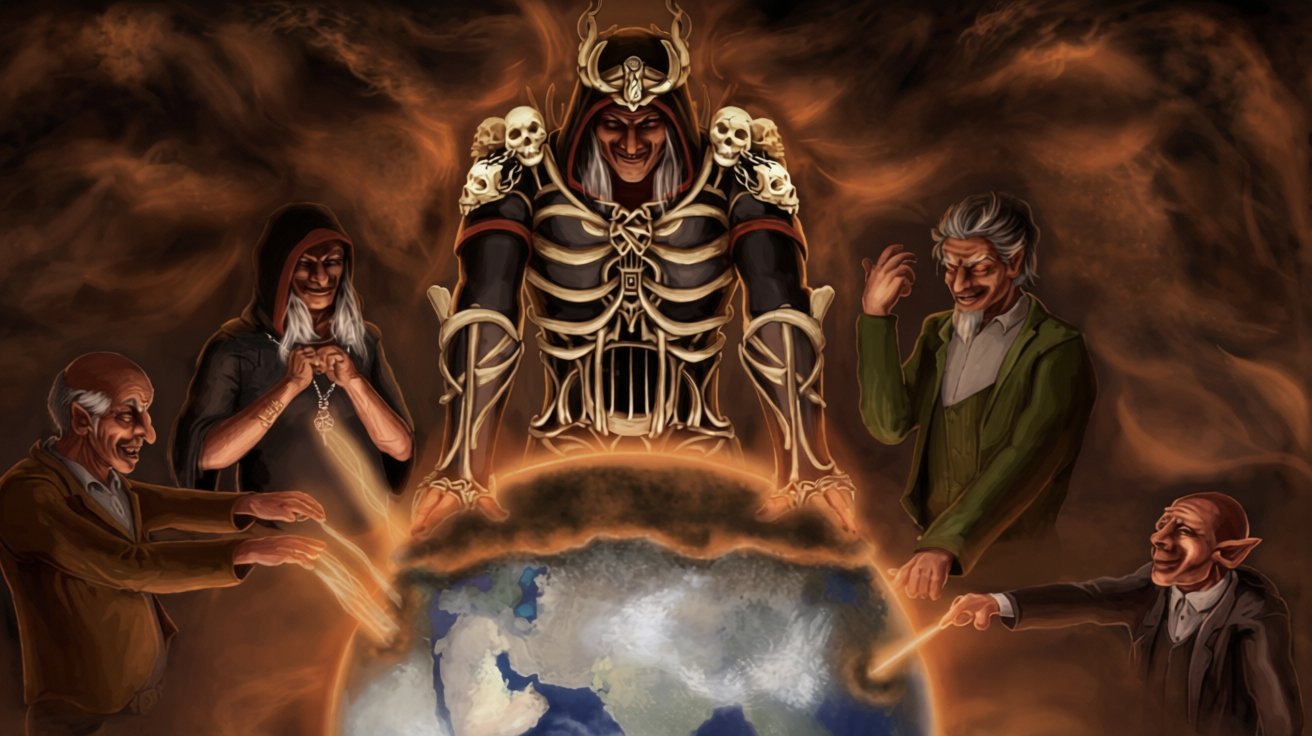
The book then shifts from social to cosmological influence. While Alice waits for them in her wheelchair, Arthur and Ruslan travel to remote caves, where Prajna speaks of hidden powers, subtle rulers, and ancient techniques such as Pratyahara and Kundalini activation. Prajna gives Arthur and Ruslan a short course on a “conspiritual” view of history. “The Earth is ruled by a small group of black magicians—they are also called the Devil’s servants. And they operate through the secret services. And different presidents and ministers are just pawns in their hands. Today they act through mass media, and earlier they acted through religions. As people fanatically believed in the ministers of cults, they put their priests in charge, and they perverted the essence of religions, turning them into formal rituals, saying that one should just go to church on Sundays, put candles, read prayers in the evenings, and it is enough for spiritual development. They removed from religion the most important things that allow the development of the human soul. This perversion led to the emergence of jihad, crusades, inquisition, destruction of dissenters. But still there are people who keep the True Knowledge. I see that you are Light souls and it is possible for you to reach the True Understanding,” she tells them.
The details are fictional, but their pedagogical function continues the earlier chapters: detachment remains the condition for navigating appearances without becoming absorbed by them. Later, Arthur meditates on body, mind, emotions, habits, and personality as objects that can be observed, and these dimensions appear as a mechanical construction shaped by external influences. The capacity that observes them, in contrast, is identified as the True Self.
Nemes’s account of Atman provides the metaphysical horizon for this scene. In the Darshans, Atman is described as a perfect and immutable divine component of the person within a multilayered spiritual model. Rather than treating the True Self and Atman as interchangeable terms, “Inliranga” lets their relation emerge through the narrative’s movement. The True Self first appears experientially as the witnessing position disclosed when acquired contents become objects of observation. At the same time, Atman supplies the most explicit metaphysical account of why that witness can be treated as more fundamental than the personality it observes. The passage from self-observation to a divine core therefore turns a psychological exercise of disidentification into a soteriological claim about what the person most deeply is.
At this point the comparison with George Ivanovich Gurdjieff (1866–1949) becomes especially revealing. “Inliranga” names Gurdjieff explicitly and elsewhere invokes the three forces and the Law of Octaves. Its treatment of sleep, mechanical behavior, self-observation, and the “Stop” exercise closely parallels practices associated with the Fourth Way, as described by Joseph Azize and Steven J. Sutcliffe. Rudnev knew Gurdjieff’s work and acknowledged affinities while maintaining that his own system developed independently. The comparison is therefore strongest at the level of spiritual technique. Its limits appear in the account of the self.
As Carole Cusack has emphasized, Gurdjieff’s “real I” is bound to a process of integration and to the development of higher being-bodies. In Rudnev’s system, Atman is already divine and immutable, although obscured by acquired identifications. “Inliranga” thus brings together a recognizable repertoire of interruption, attention, and self-observation while relocating it within a soteriology in which the witnessing self opens onto an already-present divine principle. Gurdjieff clarifies an important strand of Rudnev’s method, whose significance changes within the larger Rudnevian synthesis.
Collective life becomes more prominent once the narrative has established the possibility of distinguishing acquired personality from the observing self. Guided by Prajna, Arthur and Ruslan experience expanded consciousness, clairvoyance, and encounters with Prajna’s spiritual master, Bhagavan, learning that detachment is essential for navigating these realms. Arthur sees the black magicians busy creating new viruses. He also sees Alice, and Bhagavan radiating pure love. Prajna gives detailed instructions for healing Alice.
Back home, they organize a collective prayer to support Alice’s healing. The group creates a shared field of intention, and Alice experiences moments of improvement. Her recovery progresses, and she eventually walks again, affirming that the body is a temporary vessel that does not define the soul. Arthur feels exaltation as he realizes that many people live unaware of their deeper nature, and Lyria helps him integrate this awakening.

The sequence surrounding Arthur and Alice’s spiritual wedding and the rituals that follow shifts the question of influence from self-formation to the conditions under which shared practice can direct or protect spiritual energy. Their union is presented as a continuation of Tantric work, where sexuality becomes a channel for devotion, responsibility, and shared purpose. A woman named Mira takes them to a Place of Power, an ancient dolmen-like megalith, where they perform the wedding ritual.
The sacralization of dolmens and other Places of Power became a recognizable feature of post-Soviet New Age and esoteric spirituality, in which, as Julia Senina and Andrei Tiukhtiaev have documented, archaeological remains and natural landscapes could be invested with transformative efficacy or associated with ancestral knowledge. “Inliranga,” however, gives these motifs a specific role within its own system: the dolmen provides the spatial conditions in which ordinary identity can be deliberately suspended and rendered visible. Rudnev thereby joins a recognizable post-Soviet sacralization of landscape to the book’s central concern with disidentification, giving the Place of Power a precise function within the sequence of spiritual training.
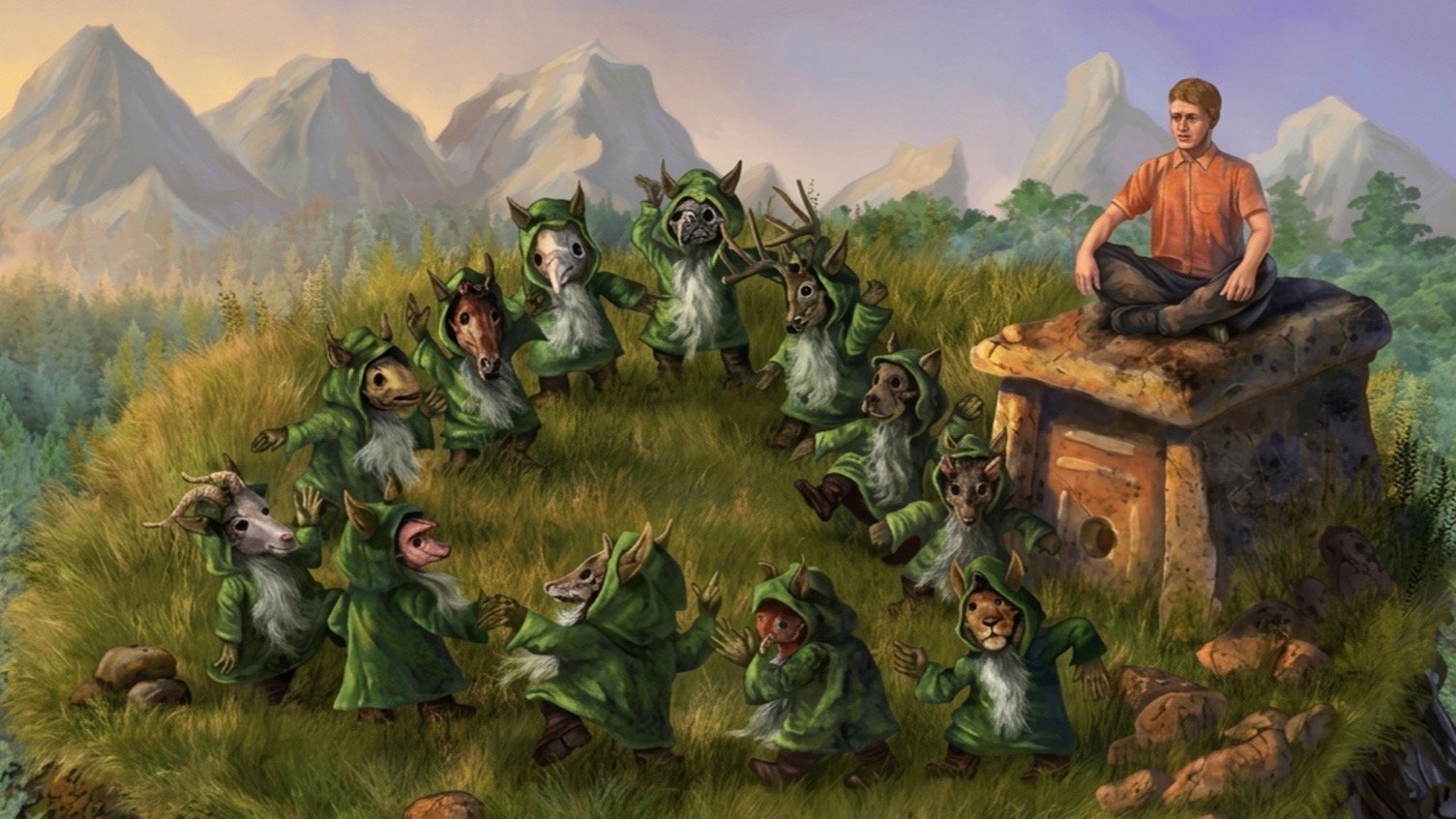
At the same location, Ruslan undergoes a symbolic death ritual. After reciting a prayer whose origins are in ancient Atlantis, he has a vision of mysterious dwarves, who introduce themselves as the priests of the dolmen. They teach him to shed social identities and confront the layers of the self through intense observation, as if from the outside, and inner work (again reminiscent of Gurdjieff). The scene thus recasts the discovery of the True Self in explicitly social terms: relations become internalized as roles and reactions that may be mistaken for identity.

Seasonal rituals follow, aimed at releasing negative habits and inviting the conception of a great soul. The group learns that cosmic timing and collective intention influence spiritual goals. This is the reason they celebrate “Ivan Kupala” night, the Slavic name of the summer feast of Saint John, on June 22, close to the solstice, rather than on July 7, the date observed in Russia according to the Julian calendar of the Orthodox Church. A tutor explains that popular teachings about desire fulfillment are incomplete, and that strong emotions, repeated rituals, divine connection, and astrological cycles are essential for manifestation. They discuss the popular New Age film “The Secret,” based on the 2006 book of the same title by Rhonda Byrne, and conclude it presents only “one slice” of truth; their school’s method and rituals are much more effective.
A practical episode emerges when the friends plan to market a secret remedy they received from Prajna, which would cure cancer, AIDS, and all diseases. They encounter challenges related to business, suppression, and marketing, discovering that integrity is necessary for any project involving healing or spiritual knowledge. An initiate called Diana warns them that what they learned in college is not enough for such a venture. She adds that “what may seem particularly strange to you, it is necessary to take into account astrology, favorable and unfavorable moments for the case.”
Naya teaches the Gyud method as a broader tool for self-programming, relaxation, and psychic development. It becomes a resource for parenting, psychological balance, and personal growth.
She also offers further advice about religion. “In any religion there are all these things about correct suggestion, psychology, revealing abilities, harmonious relationships in the family… But it is a pity that modern priests do not know it—they learn six dead languages, conduct services in a language not understandable to modern people and are far from what they do. Hence the spiritlessness of modern society, and the abundance of so-called ‘sects’ that these priests fight against. But how can sects not arise? After all, they carry the knowledge that should be carried by the ministers of the cult. And people are hungry for True Knowledge. And instead of the priests themselves learning esotericism, they act by political methods: simply seeking to ban everything, vilify and intimidate the people,” Naya says. The English translation renders the Russian “секта” as “sect,” although “cult” would be a more accurate translation.
Arthur later speaks at a rap festival, criticizing outdated education systems. His message resonates with the audience, although security removes him, and authorities begin planning a campaign to discredit dissenters and spiritual communities. Some within the secret services want to put Arthur in jail for a long time. Others conclude it would be “premature”: “First we need to discredit him in the eyes of the public, to fabricate dirt against him and against those with whom he is associated”—an allusion to how the persecution of Rudnev in Russia unfolded.
Lyria gathers those who have children or plan to have children. She encourages creating a collective Field of Love to protect children from harmful influences. The community experiences healing through this shared practice, even as media attacks intensify. They are called a “sex cult” led by a “crazy debauchee” guru—a reference to the media attacks that prepared Rudnev’s arrest in Russia and continue to this day. Testimonies from participants, however, resist negative propaganda and affirm that the Field of Love brings positive change and strengthens their resolve.
Lyria thus continues exploring themes of love, passion, and emotional authenticity, guiding students toward relationships free from ego and social conditioning. Sexual energy is described as a force that can elevate or confuse, depending on the clarity of intention and the maturity of the practitioner. Prajna promises that, if not immediately, at least in maturity, a man and a woman who deeply loved each other will meet again in their next reincarnation. She also warns against jealousy and, in one of the passages critics will use to attack Rudnev’s views as subversive of traditional family values, seems to promote an open vision of the couple. “Love is not subject to social patterns, which can change over time and be different from one nation to another. For example, in the East, polygamy is the order of the day, and a man can love several of his women equally. A man can be very temperamental and prone to casual liaisons, but that doesn’t mean he can’t love. Often, seriously, he treats only one woman, and with others just spends time, and you should not make him scandals, remake him to please the templates of society. You can just accept his nature, if he suits you in every way and shows the stability of his love for you. Rarely, but sometimes such things happen in women. Therefore, it is necessary to remember that true love is not connected with sex, that it is the prerogative of the emotional center. And scandals, quarrels, desires that everything should be according to the pattern, only destroy love,” she says.
The language of energy allows the book to connect practices that otherwise belong to different domains. Sexuality, prayer, astrological timing, sacred geography, healing, and collective intention are treated as variations on how force is accumulated, dispersed, redirected, or intensified. Kotkowska’s discussion of planetary influences and Egregors shows that comparable assumptions about supra-individual forces recur elsewhere in Rudnev’s corpus. Within the novel, the Field of Love provides their most explicit collective formulation: participants deliberately cultivate a shared field intended to protect children and produce healing, while hostile media representations present their experiments as debauchery. The contrast places collective life in an ambivalent position. Groups may impose identities and circulate stigmatizing representations, but they may also be imagined as environments that sustain attention, emotional transformation, and benevolent influence.
This ambivalence also structures the treatment of love. The book’s discussions of jealousy, reincarnation, polygamy, and casual sexual relations subordinate inherited social forms to the quality of the emotional and spiritual bond; “true love” belongs to the emotional center and is not reducible to sexual exclusivity. Relational authenticity is judged through the state of consciousness in which a relation is lived, just as spiritual authenticity elsewhere depends on whether a belief or role has become an automatic identification.
A shamaness named Atynsa introduces ancient rites involving communication with ancestors, explaining how psychic energies and ritual offerings support spiritual assistance. She brings ancestors and the dead into the same economy of influence. Prajna and Naya teach methods for recognizing and releasing societal patterns through self-observation, humor, and theatrical exercises inspired by the “Sampo” system.
Nemes describes Sampo as Rudnev’s version of astral karate, and Rudnev experimented with the techniques of Valery Averianov, the late-Soviet teacher associated with that current. Stanislav Panin’s study of Averianov’s astral karate is useful here as historical context: it documents a psychospiritual discipline that combined martial practice with yoga, subtle-body models, Egregors, and psychic capacities. “Inliranga” gives Sampo a distinctive practical emphasis. Naya asks participants to exaggerate the roles they have identified with. A man called Andreich performs the authority and self-importance of a director until she interrupts him with “Stop,” while Alice magnifies the fear and stiffness she experiences before authority. Laughter exposes these gestures as acquired performances and makes them available to observation.
Sampo’s importance in “Inliranga” lies in the dramaturgy of de-identification. Deliberately performing a role creates distance between the person and the behavior through which that person is ordinarily recognized. Humor intensifies this distance by making the naturalized gesture strange. At the same time, the group functions as a distributed apparatus of attention, reminding participants when they have again become absorbed in a pattern. Collective life thus acquires a double capacity: it produces many of the identities from which the practitioner seeks freedom, yet it can also furnish the social conditions under which those identities become observable.
These practices help reclaim individuality and reduce the influence of imposed roles. Ivanich, the grandfather of Ruslan’s girlfriend Angela, participates in shamanic rejuvenation rituals connected to sexual energy and cosmic forces, and discussions arise about adolescence, maturity, and the need to channel energy constructively. Ivanich believes he is a successful man, but he realizes he is unhappy because something is missing from his life, and he wonders what he has really spent his life for.
Nemes identifies Siberian shamanic elements within Rudnev’s cosmology. Rudnev also read Carlos Castaneda. His use of these motifs belongs to a post-Soviet field in which shamanic practices were being reformulated across indigenous revitalization, urban spiritual experimentation, and transnational neo-shamanic exchange. Olle Sundström cautions against treating “Siberian shamanism” as a single continuous tradition and documents exchange between Siberian revivals and Western neo-shamanism. Natalia Zhukovskaia shows how experiential forms entered urban intellectual and professional settings, while Yana Ivashchenko and Andrei Ivanov trace later combinations with parapsychology, business consulting, and the arts. Against this background, Atynsa’s movement from ancestral communication to healing and assistance belongs to a wider circulation of shamanic idioms. Within “Inliranga,” however, the book’s account of influence extends beyond the living. Ancestors become agents in an energetic field whose effects can enter practical action alongside social relations, collective formations, and other subtle forces.
Prajna critiques modern culture for promoting negativity and contrasts it with ancient traditions that cultivated sublime emotions and spirituality. A prayer is introduced, calling for awakening and service to God. Naya explains how conformity erodes individuality and encourages laughter and role-playing to restore the true self. Andreich asks why he was happy as a child but is not now that he is old and rich. Naya tells him this happens because of the pressure from the “template of a sick society.”

Arthur asks whether alternative spiritual movements are a way to escape the template. Naya answers that “there are such movements, which the proponents of the system have now labeled as sects [cults] and are actively fighting against them. Of course, not every spiritual movement teaches real vision. Most of them have long forgotten about it and teach their own tradition, that is, a slightly different pattern, not very different from the generally accepted one.”
Significantly, she does not exempt alternative spiritual movements from criticism: a community stigmatized as a “cult” may preserve forms of knowledge, but it may equally become another pattern when its tradition is transmitted mechanically. The distinction is epistemological rather than institutional. For Rudnev, heterodoxy has no intrinsic liberating value unless it changes the quality of seeing.
The friends later travel to Atlantis through the Gyud technique. Arthur communicates with his great-grandmother through hypnotic vision, discovers the creative power of imagination, and learns about a hidden treasure intended to support community projects.
The difficult chapter concerning Veronica applies the same principles to trauma. Lyria assists Veronica, a friend of Alice who was raped by her uncle when she was ten, in healing from trauma through visualization of an ideal inner partner and forgiveness, helping her rebuild trust and intimacy.
Lyria’s comment to Veronica is an example of a passage that critics may easily misunderstand and use against Rudnev: “This problem of rape is exaggerated in society… it is given an unhealthy meaning, and thus creates phobias and complexes in girls like you. In fact, rape is no more than ordinary violence, when, say, a person is beaten. And even in principle it is not such a terrible action in comparison with when a person is beaten—he can be crippled, left ugly for life. But no one makes it a psychological problem if someone is beaten badly… But when the issue is sex, people do more harm than the rapist with their hypertrophied attitudes.”
Read in context, the passage shows that Lyria is far from condoning rape: she states that Veronica’s uncle, willingly or unwillingly, acted as a tool of the “evil forces and demons.” Her point is that the evil forces succeeded twice: first, in making the uncle commit an evil act, and second, in keeping Veronica a prisoner for years of her hatred, which extended from the guilty uncle to all men, including those who never wronged her. Only prayer and forgiveness can solve her problem. The chapter is analytically important because it carries the broader logic of liberation from past influence into a domain where its ethical implications become especially visible.
Lyria also advises Arthur, Ruslan, Andreich, and a female student called Oksana on complex life and relationship choices, describing the need to harmonize different aspects of the self and select roles that support happiness. She explains that life unfolds through seasons, each requiring renewed effort to maintain growth.
Diana takes the students on a bus tour to Kazakhstan. She discusses wish fulfillment, explaining that spiritual energy and altruistic intentions, supported by group practice and divine connection, are necessary for true manifestation. She warns that intoxicants and selfish desires lead away from genuine happiness.
Diana wants to lead students to a lake with a cave where a saint lived in Noah’s times. But Kazakhstan’s president, who is rumored to derive his power from his special relationship with the saint, is there, and police have closed the road. Then the president flies away, and the students are allowed to enter the cave, where Arthur and Alice experience a special call to transform their lives and devote themselves to promoting happiness on Earth.
Back at the school, another tutor appears, Shakti Mudra, explaining that Naya has gone to the Himalayas to seek ancient Places of Power, and she will replace her. Shakti Mudra guides students in Gyud sessions to recover forgotten spiritual experiences, strengthening mindfulness and motivation for further development.
Near the end of the book, Lyria presents a pentagram composed of consciousness, will, attention, memory, and mind. Consciousness occupies the apex as the person who observes internal and external processes; will should govern attention; memory depends on the quality of attention; and mind must be distinguished from associative fantasy. The schema makes explicit what the narrative has been teaching by other means. Observation depends on attention, attention can be trained, and memory records experience in proportion to the presence with which it was lived.
The final Gyud episodes return to this relation from the opposite direction. Ivanich asks Shakti Mudra for help in recovering the money he buried in the forest after learning that corrupt police officers were about to raid his country house, where he kept a significant amount of cash. Now that the police problem has been resolved, he cannot remember where he buried the money. Shakti Mudra guides Ivanich to identify the location through a Gyud session. Still, she also teaches him a lesson about the fragility of memory and the dangers of trusting material wealth.
Ivanich finally describes his realization in these words: “How much I had lost by chasing prestige and worldly values, how my life had become a meaningless routine, and a deep repentance was born in me for judging and not accepting spiritual people who wanted to help me. A vision emerged in me that only the spiritual path has meaning, and everything else is just a way to live in meaningless suffering.”
The chapters on Ivanich and Andreich extend the book’s main argument across biography. Conventional success is presented as compatible with a profound sense of having failed to live. At the same time, Naya’s “template of a sick society” names the process through which inherited expectations can organize an entire life without ever becoming objects of reflection.
Gyud first recovers practical memory and then restores spiritual experiences whose factual content remained while their affective intensity faded. Ruslan relives a mountain experience in which he perceived God in everything, Alice returns to a Place of Power, and others revisit states that had ceased to influence their lives. Memory now acquires a function beyond storage, as the capacity through which a transformative state can retain efficacy after the event itself has passed.
The ending completes a movement inaugurated in the first pages. Arthur initially discovers that weak attention leaves his past strangely empty; Andreich finally understands that an entire life may be filled with events and achievements while losing the states through which those experiences could acquire spiritual meaning. Memory becomes the temporal dimension of awakening, protecting transformation from its recurrent dissolution into habit.
This gives particular significance to the notice at the beginning of “Inliranga” stating that repeated reading will accelerate the solution of the reader’s problems. Kotkowska identifies an analogous injunction in the Darshans, where rereading participates in the transformative function attributed to the texts. “Inliranga” therefore implicates its own narrative form in the spiritual economy it describes. The book repeatedly stages a teaching, allows it to be forgotten or displaced, and returns to it under altered circumstances; the reader, like the characters, encounters the same conceptual problem from a changed position.
French philosopher and historian of philosophy Pierre Hadot (1922–2010) offers a useful methodological analogy in his account of ancient philosophical writing. For Hadot, the composition of a philosophical work could itself serve a formative purpose: the exposition is organized to guide its addressee through an itinerary of spiritual progress, so that doctrinal communication participates in the cultivation of a way of life.
A different line of inquiry, developed in contemporary empirical literary studies by Olivia Fialho, adds an important qualification. Her research on literary reception shows that narrative engagement can alter perceptions of self and others through affective involvement, identification, and iterative reinterpretation, but that such effects depend on the mode of engagement and cannot be inferred from textual form alone. Applied to “Inliranga,” these perspectives clarify the book’s ambition without presuming its success: repetition, identification, affect, and recollection are deliberately arranged as possible instruments of spiritual formation.
The variety of “The Dawn of Inliranga” can easily make the work appear more miscellaneous than it is. Its Tantra, hypnosis, collective fields, sacred landscapes, shamanic figures, astral techniques, social criticism, and devotional language are drawn from different religious and esoteric repertoires. Still, the narrative repeatedly subjects them to a common question: how does a person distinguish her deeper self from the forces that act over consciousness, emotion, body, and social identity? Attention and self-observation create the distance in which this question becomes possible; the True Self gives that distance an ontological direction; energy describes the efficacy through which relations and practices act upon the person; and memory determines whether moments of awakening can survive their immediate occurrence.
The late- and post-Soviet environment helps make this synthesis historically comprehensible, but it does not provide a full explanation. “Inliranga” deserves attention because it reorganizes available materials through a particular system and, equally importantly, because it renders that system narrative. Teachings acquire meaning by recurring in altered situations: attention reappears as memory, social conditioning as role-play, collective influence as both stigmatization and spiritual support, and the observing witness as a divine dimension of personhood. Narrative sequence thus serves as one of the means through which the system imagines transformation itself, well beyond being a convenient vehicle for doctrine.
The book’s final concern is consequently the durability of awakening, more than the achievement of a single extraordinary state. Awakening remains vulnerable to habit, roles can once again become identities, and experiences once felt as revelatory can survive only as abstract recollections. “Inliranga” answers this fragility through practices of interruption, observation, repetition, and remembrance, while inviting the reader to participate in the same movement through rereading. Its most distinctive contribution to Rudnev’s corpus lies in this conjunction of anthropology and pedagogy: a heterogeneous esoteric vocabulary is made to serve a sustained inquiry into how consciousness may become aware of the influences that shape it, loosen their hold, and preserve another relation to experience over time.
A final observation concerns the gap between Rudnev’s public image and the content of his writings. In the media, he is routinely portrayed as a fraud, a “monster,” and an enemy of the family. These portrayals seldom engage with his texts (and still less with his films, animations, and music, which make up a substantial part of his output). “Inliranga” offers a more complex picture. Rudnev places considerable emphasis on forming families properly and on caring for and supporting children. The questions raised by the prosecution—or persecution—of Rudnev in Russia and Argentina lie outside the scope of this article and have been discussed by the authors elsewhere. This article has demonstrated that a reading of the primary sources does suggest that his teachings cannot be reduced to the image circulating in the media, and that any serious assessment of them should begin with what he actually wrote.
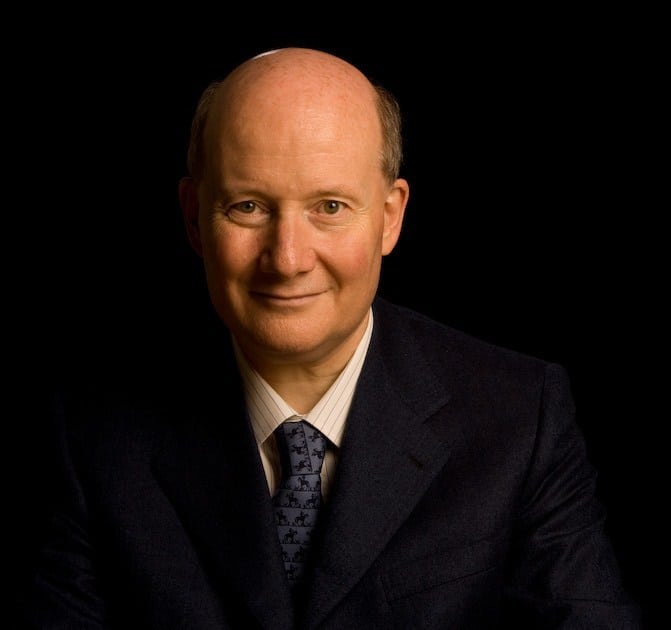
Massimo Introvigne (born June 14, 1955 in Rome) is an Italian sociologist of religions. He is the founder and managing director of the Center for Studies on New Religions (CESNUR), an international network of scholars who study new religious movements. Introvigne is the author of some 70 books and more than 100 articles in the field of sociology of religion. He was the main author of the Enciclopedia delle religioni in Italia (Encyclopedia of Religions in Italy). He is a member of the editorial board for the Interdisciplinary Journal of Research on Religion and of the executive board of University of Pennsylvania Press’ Nova Religio. From January 5 to December 31, 2011, he has served as the “Representative on combating racism, xenophobia and discrimination, with a special focus on discrimination against Christians and members of other religions” of the Organization for Security and Co-operation in Europe (OSCE). From 2012 to 2015 he served as chairperson of the Observatory of Religious Liberty, instituted by the Italian Ministry of Foreign Affairs in order to monitor problems of religious liberty on a worldwide scale.