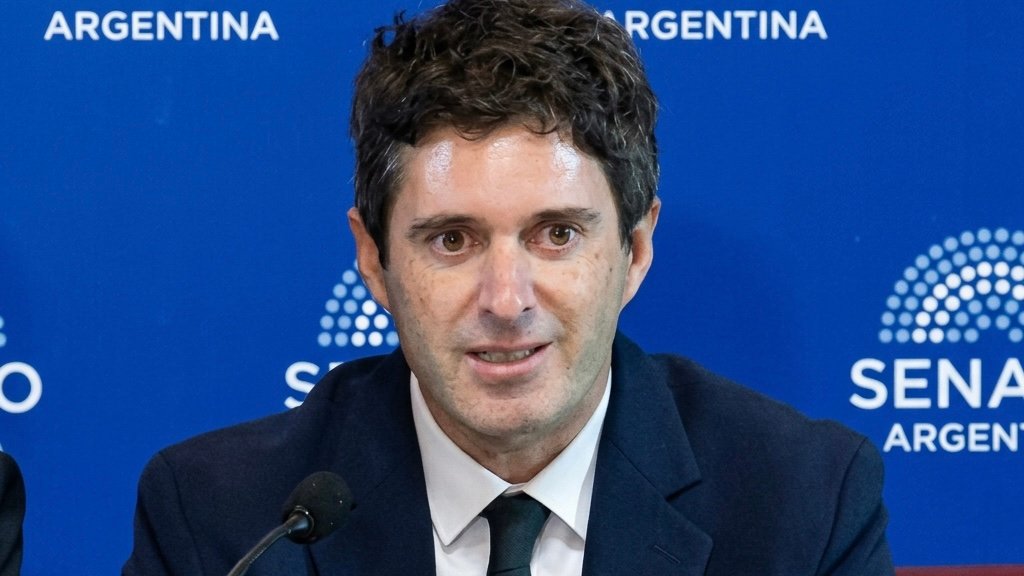
Acting on a request from Fernando Arrigo’s office, magistrate Leandro Gómez Constenla ruled without hearing the defense.
by Massimo Introvigne
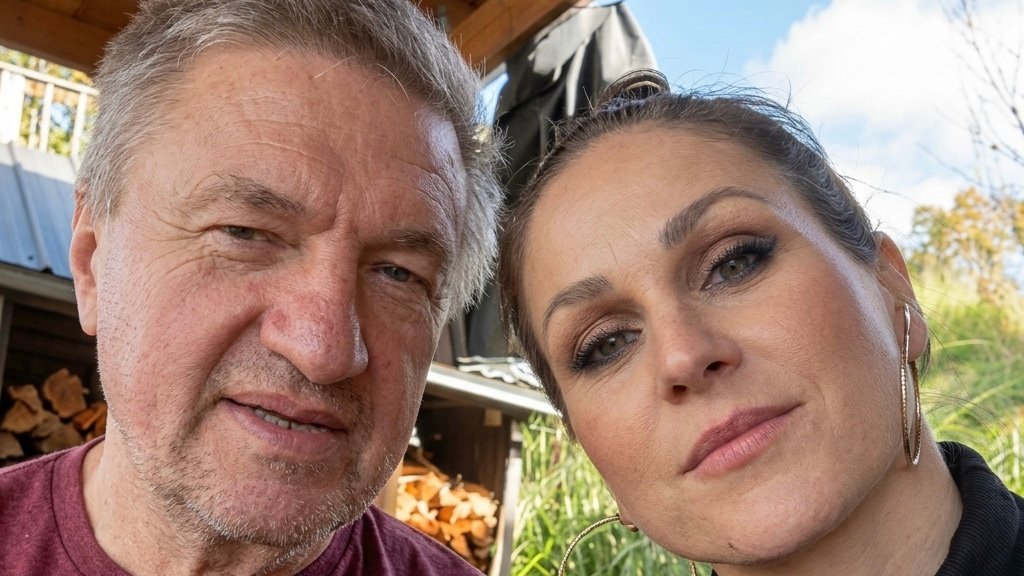
Konstantin Rudnev can no longer move his arms and legs normally. His reflexes have disappeared, his heart races at 120 beats per minute while he lies still, and his blood oxygen hovers around 93 percent. He spends his days in a house in San Vicente, in the province of Buenos Aires, where he is serving house arrest, wearing an electronic ankle monitor, and is visited by doctors almost every other day. In October 2026, a judge in San Carlos de Bariloche ordered that he be taken “urgently” by ambulance to the Fernández Hospital in the city of Buenos Aires and kept there under the permanent custody of the Argentine Federal Police. His family learned of the decision only after it had been issued.
Rudnev, the Russian dissident and founder of a spiritual school sometimes known as Ashram Shambala, was arrested in Argentina in 2025 together with other foreign citizens and charged under Article 145 bis of the Argentine Criminal Code, which punishes human trafficking. “Bitter Winter” has followed the case from the beginning, and many scholars of new religious movements regard it as yet another example of anti-cult narratives about “brainwashing” being turned into criminal accusations. Whatever one thinks of the charges, which have never been proved in a trial, the question now concerns the treatment of a seriously ill man in the custody of the state.
His medical history over the last months reads like a list of emergencies. On May 26 he underwent surgery for a right inguinal hernia. A complication followed: a hematoma that required a second operation on July 7 at the Naval Hospital Pedro Mallo. A recurrent hydrocele led to a third operation on September 15 at the Monte Grande private clinic, where his treating physicians work and where his records are kept. In August, a home visit found blood pressure of 167/112, shortness of breath, and pain. Neurologists diagnosed a bilateral demyelinating motor polyradiculoneuropathy of extreme grade, with signs of active nerve damage, and asked for an urgent spinal MRI and cardiological and pulmonary consultations.
On October 1, a board of three forensic doctors of the court’s own Forensic Medical Corps, assisted by a pulmonologist and in the presence of four experts appointed by the defense, examined Rudnev at his home. Their conclusions, contained in report IN No. 20,609/2026, were alarming. They described a neurological syndrome affecting all four limbs, apparently progressive, and possible cardiorespiratory involvement linked to it. They wrote that “at the time of the examination, the subject does not meet the physical conditions to remain held in a penitentiary institution.”
On October 9, Gustavo Javier Révora, an auxiliary prosecutor at the Decentralized Prosecutor’s Office of San Carlos de Bariloche, filed a one-paragraph request asking the judge to order the transfer to Buenos Aires’ Fernández Hospital “as soon as possible.” Révora is part of the team of Bariloche’s Fiscal General Fernando Arrigo, the controversial prosecutor who led the accusation against Rudnev and whose conduct has drawn three disciplinary complaints from international NGOs. Only a few weeks earlier, on September 3, Arrigo had opposed any suspension of Rudnev’s transfers, insisting that nothing in the medical documentation contraindicated moving him. Within days of Révora’s request, Judge Leandro Gómez Constenla, the Guarantees Judge of San Carlos de Bariloche, granted it in full. The court notified the parties of the decision on October 13.
The defense, led by lawyer Martín L. Sarubbi, was given no opportunity to present its position before the ruling. This violates the adversarial principle, a foundation of a fair trial, which requires that both parties be heard before a judge decides matters affecting the accused. The defense’s motions to appeal and to suspend the transfer have since been rejected.
Rudnev’s treating neurologist has stated that moving him is currently contraindicated. According to his treating physicians, he also has no acute need for hospitalization, and he is already under constant medical supervision at home. He has been hospitalized three times in recent months for examinations and treatment. The family insists that it has never objected to the necessary tests. ‘We are ready to arrange them under appropriate conditions, observing the medical contraindications,” they told “Bitter Winter.”
What they find incomprehensible is the judge’s refusal to allow Rudnev to be hospitalized at the Monte Grande clinic, where he has been followed for months, where two of his operations were performed, and where the doctors who know his case work. The ruling adopts the forensic board’s suggestion of a public hospital without explaining why a private clinic, with his complete records and the treatment already underway, would be inadequate.
According to the family, the Fernández Hospital itself has declined to admit him, citing a lack of beds and an inability to provide the conditions his treatment requires. The ruling foresaw this possibility and ordered that he be sent to “another public high-complexity center,” but the family has received no confirmation that any proposed alternative can meet his needs.
Some details of the ruling deepen their fears. The hospital must send the court a diagnostic and therapeutic plan within 72 hours of admission, then report every ten days, and inform the judge of any discharge. Federal police will guard Rudnev throughout his stay. A Russian interpreter will be present only during “indispensable” medical acts, meaning a man who speaks no Spanish and can barely move will spend most of his days in a public ward unable to communicate with those around him. Most tellingly, the judge wrote that the decision does not modify the coercive measure in force, and that once Rudnev is discharged he will decide on his place of detention “in the terms ordered” by the Federal Chamber of Criminal Cassation. On June 4, that court, composed of judges Carlos A. Mahiques, Mariano H. Borinsky and Guillermo J. Yacobucci, revoked the mitigation of his pretrial detention to house arrest and opened the way for his transfer to a federal prison once his health was certified.
The judge presents hospitalization as the means to reach an “objective” diagnosis. Read together with the reference to the Cassation decision, the family understands this as a hint that the hospital stay may serve to build the case for sending Rudnev back to prison, or to keep him confined under police guard for an indefinite period, under the pretext of additional examinations.
“The court’s own medical board acknowledged that Konstantin’s condition does not allow him to be in prison,” the family said. “Why, then, can he not undergo the necessary examinations at a private clinic that can provide him with the appropriate conditions and continue the treatment already begun?”
They also note what they see as a consistent pattern. Throughout the case, Judge Gómez Constenla has accepted the prosecution’s requests and rejected the defense’s, even when medical opinions supported the latter. The family says this conduct raises serious doubts about his impartiality and asks the competent authorities to examine the circumstances.
Argentina’s own law and the international instruments it has ratified, all cited in the ruling, place the state in a special position as guarantor of the life and health of those it deprives of liberty. Invoking these principles to justify an urgent transfer that the treating doctors consider dangerous, decided without hearing the defense, and to a hospital that reportedly cannot receive him, is a paradox that should trouble anyone who cares about due process. Konstantin Rudnev has not been convicted of anything. He is a sick man whose doctors urge caution, and whose family asks only to be heard.
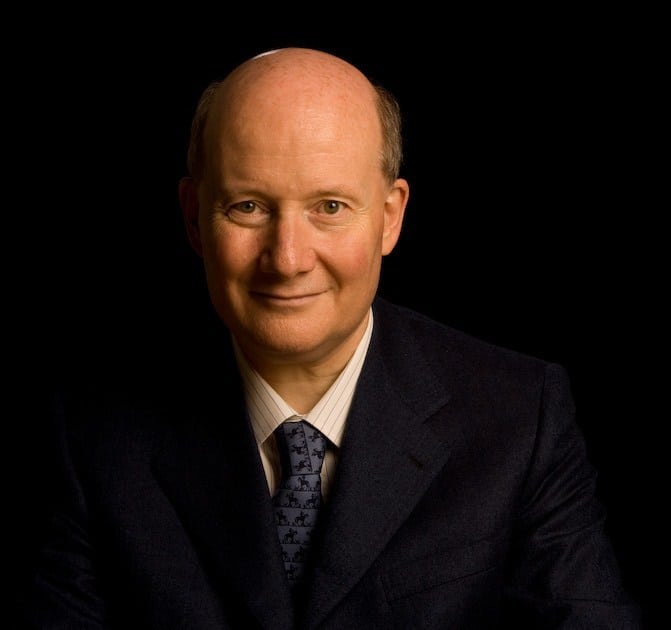
Massimo Introvigne (born June 14, 1955 in Rome) is an Italian sociologist of religions. He is the founder and managing director of the Center for Studies on New Religions (CESNUR), an international network of scholars who study new religious movements. Introvigne is the author of some 70 books and more than 100 articles in the field of sociology of religion. He was the main author of the Enciclopedia delle religioni in Italia (Encyclopedia of Religions in Italy). He is a member of the editorial board for the Interdisciplinary Journal of Research on Religion and of the executive board of University of Pennsylvania Press’ Nova Religio. From January 5 to December 31, 2011, he has served as the “Representative on combating racism, xenophobia and discrimination, with a special focus on discrimination against Christians and members of other religions” of the Organization for Security and Co-operation in Europe (OSCE). From 2012 to 2015 he served as chairperson of the Observatory of Religious Liberty, instituted by the Italian Ministry of Foreign Affairs in order to monitor problems of religious liberty on a worldwide scale.