A session explained in Taiwan how trafficking statutes are being turned against spiritual movements.
by Márk Nemes
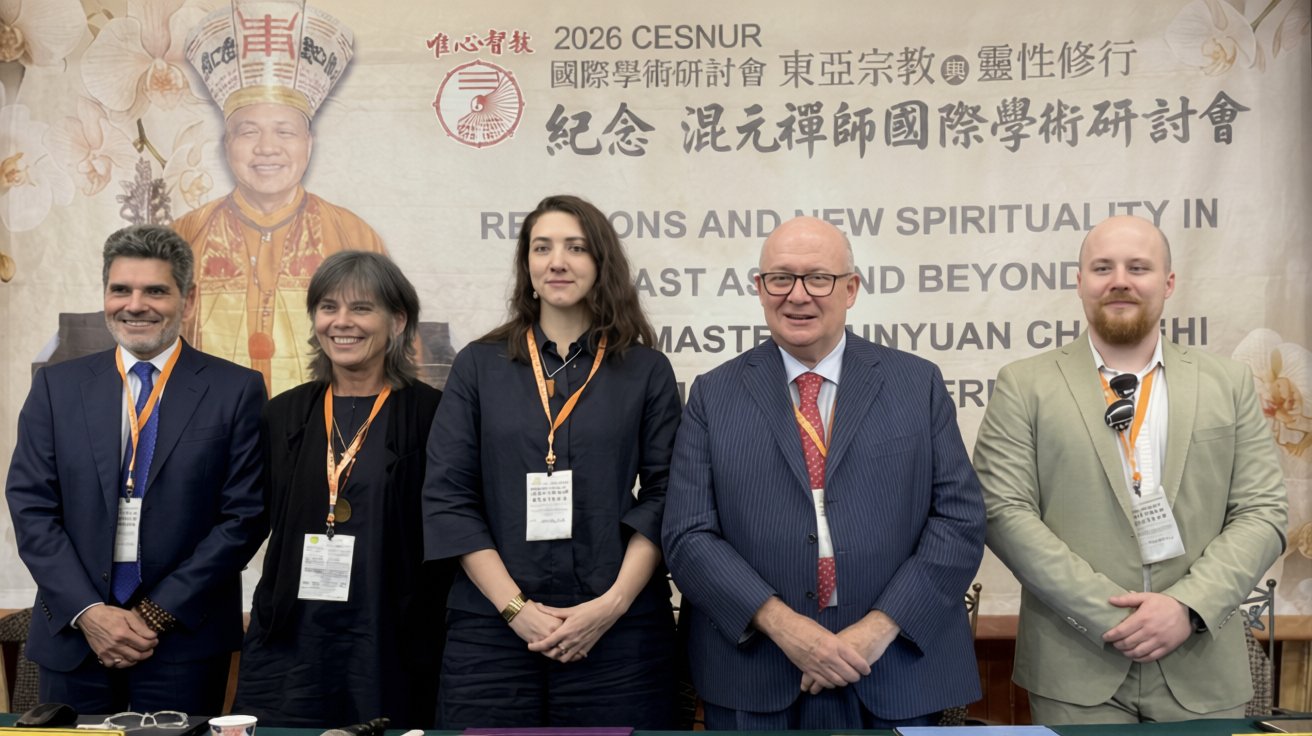
One session at the CESNUR 2026 international conference, held in Taichung, Taiwan, from October 10 to 12, examined the case of OneTaste, often mentioned in other panels as a precedent that has reintroduced “brainwashing” into American case law. I chaired the session, entitled “The OneTaste Case: The Return of ‘Brainwashing’ in American Courts of Law?”
Massimo Introvigne, an Italian sociologist and the managing director of CESNUR, reconstructed the history of OneTaste, which he described as inseparable from the life of its founder, Nicole Daedone, an American who also holds an Italian passport. Born in 1967, Daedone had a difficult childhood. Her parents divorced when she was five, and she went through a period of selective mutism before being recognized as a gifted child. A typical product of the Bay Area counterculture, she graduated with a degree in speech communication from San Francisco State University in 1994. She opened the 111 Minna Gallery, which hosted performances by Lawrence Ferlinghetti and other Beat Generation figures. After her father’s death, she joined an independent Theosophical group in 1995 and the San Francisco Zen Center in 1997, where she trained as a Buddhist nun before deciding that she wanted an embodied spirituality without celibacy.
Daedone, Introvigne explained, stood at the intersection of two San Francisco milieus. One was the network of Zen, Theosophical, and esoteric groups; the other, a little-studied genealogy of secular organizations teaching female sexual awareness, all descending from Lafayette Morehouse, founded by Victor Baranco. Daedone met Baranco shortly before he died in 2002 and attended groups founded by his former students, eventually developing her own practice of “orgasmic meditation” (OM). With Rob Kandell, she founded the Insight Institute in 2003, which later evolved into OneTaste, a name drawn from a Buddhist saying, and OneTaste Inc. was incorporated in 2010. Only a small group lived communally, in a former warehouse and then in a larger building on Folsom Street in San Francisco, and that experience ended in 2014.
A favorable 2009 article in “The New York Times,” a 2011 TED talk watched by two million people, and the book “Slow Sex,” published the same year by Hachette, made OneTaste fashionable. Its classes reached tens of thousands of participants in San Francisco, London, Paris, Hamburg, and Montreal, and Hollywood actresses were among its clients. In 2017, Daedone sold the company to senior practitioners to devote herself to further exploring Zen and Christianity, and she was baptized in a Baptist church in 2018.
Trouble came from journalist Ellen Huet, who acknowledged the help of anti-cult activists Janja Lalich and Steven Hassan in writing her articles and book, while Hassan counseled two former participants. A BBC podcast and the 2022 Netflix documentary “Orgasm Inc.” followed, and so did an FBI investigation.
Daedone, who had been ordained as a non-monastic Vajrayana practitioner by American Buddhist teacher Glenn Mullin, was traveling in Asia at the time and returned voluntarily to surrender. Convicted in 2025 and sentenced in 2026 to nine years in prison, she was not sentenced for sexual abuse, Introvigne said, but was found guilty of conspiracy to force labor in a trial where the word “brainwashing” was used repeatedly. Hassan himself, he added, has said that activists needed a test case for applying trafficking laws to “cults.” OneTaste fit the purpose: as a commercial company rather than a religion, it was less likely to be framed as a religious liberty case, and its teachings on sexual awareness made it vulnerable before a jury.

María Vardé, a Ph.D. candidate at the University of Buenos Aires, analyzed OneTaste’s doctrinal and ritual system based on Daedone’s five-volume “Eros Sutras,” training materials, and interviews with practitioners, coaches, and former members. Her central argument was that orgasmic meditation, or OM, makes sense only within a broader philosophy. In this system, Eros is an impersonal life force that animates bodies, draws people into connection, and may become perceptible in friendship, work, and ordinary encounters as well as in sexuality. Knowledge emerges from cultivated sensation, and spiritual growth is conceived as a descent into embodied and relational life. Daedone uses masculine and feminine as poles on a spectrum independent of biological sex, and presents her path as a feminine corrective to traditions that privileged transcendence over immanence.
Vardé explained that Daedone calls the opposite condition “tumescence,” a congestion of undigested emotions and desires taking forms such as shame, resentment, compulsive control, or addiction, and that its goal-oriented variant is “climax consciousness,” which loses contact with the present by anticipating discharge. Attention is the discipline that transforms this congestion, and the ideal is the “erotic mind,” able to remain receptive to sensation without being governed by it.
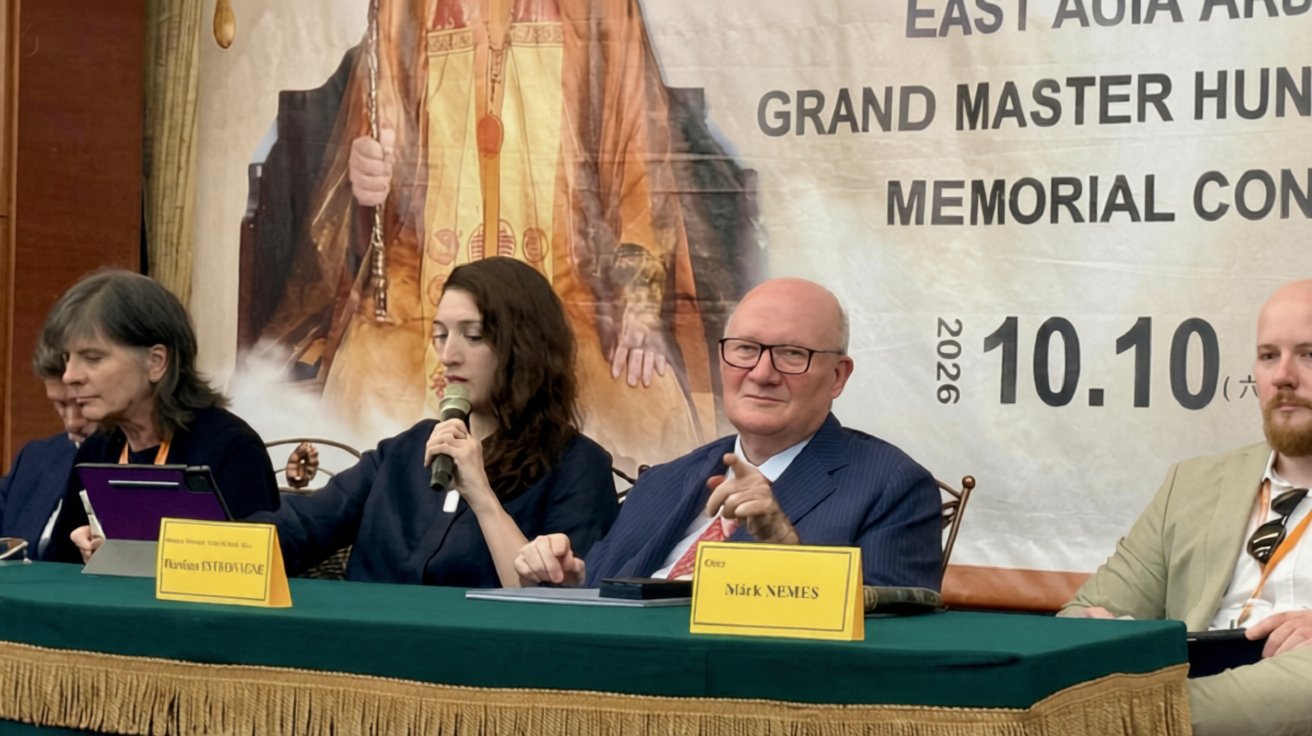
OM, in which one person gently strokes the clitoris of another for fifteen minutes while both attend to the point of contact, is the most distinctive expression of this philosophy, although it is optional. Practitioners regard it as distinct from both sex and foreplay. Detailed rules govern the “container”: the stroker remains clothed, reciprocation and further sexual activity are excluded, verbal notice precedes any contact, and either participant may stop at any time. Consent training begins with clothed exercises in making requests and accepting refusals. Interviewees, Vardé reported, described OM as helping them recognize their own desires, set limits, and listen to others. She concluded that OneTaste can be understood as a contemporary spiritual movement organized around training attention through embodied practice.
Holly Folk, a professor at Western Washington University in Bellingham, Washington, traced how laws intended to protect people have been turned against religious minorities. Theories of “thought reform” and “brainwashing,” born in the anti-communist climate of the 1950s and later applied to new religious movements to justify deprogramming, suffered severe setbacks in American courts. In “United States v. Kozminski” (1988), the Supreme Court held that psychological pressure, however extreme, does not amount to involuntary servitude without physical or legal coercion. In “United States v. Fishman” (1990), a federal court in California found brainwashing theories scientifically unsound. A failed 1994 lawsuit by Margaret Singer and Richard Ofshe confirmed their exclusion from most courtrooms.
The Trafficking Victims Protection Act of 2000, Folk argued, reintroduced through the back door the psychological coercion standard rejected in “Kozminski.” Designed for victims of real traffickers, it began to be applied to religious minorities around 2010. Israel’s 2011 case against Daniel Ambash introduced the notion of “mental slavery” and denied his wives, who wanted to testify for the defense, any standing as competent adults. The 2019 conviction of NXIVM leader Keith Raniere became, whatever its merits, a precedent allowing prosecutors to bypass the evidentiary hurdles of proving brainwashing. Argentina’s 2022 raid on the Buenos Aires Yoga School, whose largely elderly members were accused of “forced prostitution,” was a further example, as was the April 2026 raid in England on the Ahmadi Religion of Peace and Light, carried out on the complaint of a single apostate. In both cases, Folk noted, the media let the public imagine the worst by never explaining the legal technicalities behind the trafficking charges. She warned that activists openly aim to circumvent constitutional protections of religious freedom, citing developments in Japan, South Korea, and the United States, and that models such as Hassan’s “BITE” could be used against any group a government dislikes.
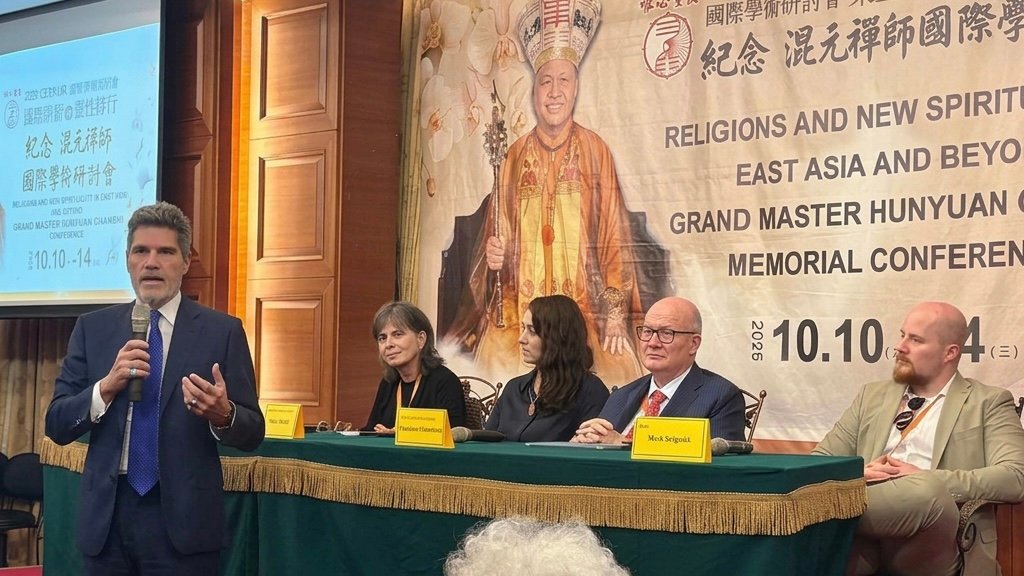
John Lauro, the New York attorney who represents Nicole Daedone, offered a trial lawyer’s perspective. Joining the defense as the trial began, he immediately saw its religious implications, since Daedone practiced a form of tantra with roots in Buddhism and Hinduism, and the prosecution mocked those beliefs while characterizing spiritual teaching as the “serious harm” required by the statute. No physical harm, isolation, or separation from families was alleged. Of some 35,000 practitioners, nine college-educated women, some with doctorates, testified that years later they had come to regard themselves as “brainwashed,” a term the court admitted without any clinical definition. Under such a theory, Lauro observed, Jesus himself could be prosecuted as a trafficker, since he persuaded followers to leave homes, families, and jobs to follow him. In fact, that Jesus was a “cult leader” and a “trafficker” has been seriously argued in a recent book by popular anti-cultist Be Scofield.
Lauro described the case as a clash between a feminism that recognizes women’s agency and a newer one that, under the label of “coercive control,” treats them as lacking free will and lets the government decide who the victims are. According to Lauro, prosecutors and FBI agents told reluctant witnesses that they had only believed they enjoyed OneTaste because they had been brainwashed, and co-defendant Rachel Cherwitz, who refused to call herself a victim, was arrested by 25 agents at four in the morning. The appeal is pending. Lauro, who also represents Falun Gong and Shen Yun in civil trafficking suits, noted that the Maryknoll Sisters, the Church of Scientology, the Salvation Army, and a Christian group in Wyoming have all been sued under the same statute. Older and newer religions alike are at risk, he concluded, and silence would only allow the government to keep accumulating power through trafficking laws.
In the discussion that followed, conference participants agreed that the now fashionable use of trafficking charges against new religious and spiritual movements poses a serious threat to religious liberty. In the United States, TVPA should be amended to include a clause protecting normal religious and spiritual activities from trafficking charges.

Márk Nemes is a historian and a graduate in the academic study of religions. He received his doctorate in philosophy at the University of Szeged’s PhD program in 2025 and works as a researcher at the Hungarian Academy of Arts’ Research Institute of Art Theory and Methodology. As an awardee of the Hungarian National Eötvös Scholarship, he served as a visiting researcher at CESNUR from 2023 to 2024. For the past 10 years, he has focused on researching new, alternative, and emergent forms of religiosity in Hungary, Iceland, the US and most recently, in Italy. Since 2025, he serves as the Deputy Director of CESNUR