The Argentine proceedings against Konstantin Rudnev are a paradigmatic case of the abusive use of pre-trial detention to extract confessions.
by Patricia Duval
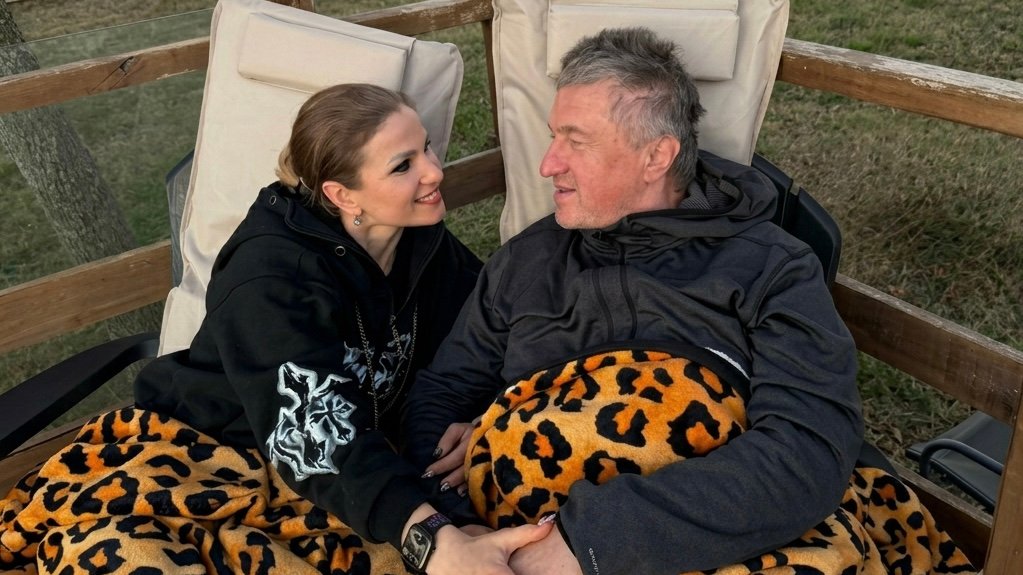
After his Russian nightmare and emigration to what he hoped would be more favorable climes, Konstantin Rudnev and his wife lived peacefully in Argentina, particularly in the Bariloche region, where they enjoyed the great outdoors.
They had been living there for six months when they were arrested in March 2025 at the Bariloche airport as they were preparing to board a flight to Buenos Aires, and then on to Brazil, to visit that country.
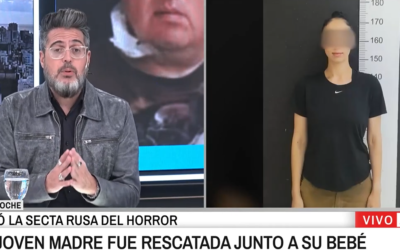
The harsh reality of the transnational persecution they were suffering was brought home to them when they were caught up in a dragnet operation targeting a group of Russian citizens suspected of participating in a human trafficking ring that he allegedly led as an “evil cult leader.”
Rudnev later learned of the secret investigation and the extremely flimsy grounds on which it was opened.
Aside from the irregular circumstances surrounding his arrest and arbitrary detention, the most striking aspect of his case, from the perspective of international human rights law, is the abusive use of pre-trial detention to extract confessions.
These practices by the Argentine authorities—which at times constitute a flagrant violation of the prohibition of torture and degrading treatment—transform what should be a search for the truth into a quest for a confession, based on an unofficial presumption of guilt.
This practice runs counter to all of Argentina’s commitments to respect human rights.
Irregularity of the arrest and detention and ill-treatment
From the moment of his arrest, Rudnev had no access to a lawyer, nor was he informed of the reasons for his arrest and charges against him.
The transcript of the first hearing on April 3, 2025, revealed that he had been arrested on the prosecutor’s verbal order, given by phone to the airport police. It also revealed that the “theory of the case” supporting the launching of criminal proceedings, according to the prosecutor, was that Rudnev was an “evil cult leader.”
The detention at the airport, the search, and the seizure of all money, documents, and personal belongings were carried out without a lawyer present and without any opportunity to contact one, or to make a phone call to seek and retain private legal counsel. Authorities ignored requests for this opportunity from the moment of detention.
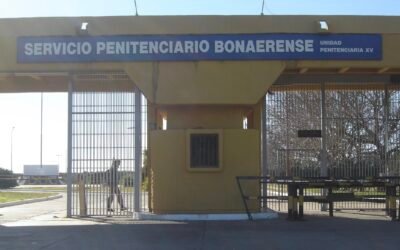
Konstantin Rudnev was immediately singled out of the group of Russian suspects as the “evil cult leader” and sent to a high-security prison in Rawson, where he was detained from March 29, 2025, onward.
He was transferred from Bariloche airport wearing only a T-shirt. They took all his belongings. He was kept that way when he arrived at Rawson prison, in the southern part of the country near Patagonia, where temperatures are extremely low, especially as winter approached.
There, he was put immediately in solitary confinement and was taken to see doctors at 4 a.m., without any explanation. He was forced to take three pills daily, was never told what medications they were, and was forced to open his mouth so guards could check that he had swallowed them.
No interpreter was provided. Occasionally, prison staff used Google Translate on their phones. However, most translations were inaccurate, and not all guards or doctors used it. Most of the time, there was no translation at all.
Later, only after the filing of a habeas corpus, did his lawyer obtain prison medical reports and discover that he had been given strong blood pressure–lowering medications, which explained his constant severe weakness and episodes of fainting, including actual loss of consciousness.
Rudnev’s first in-person meeting with a private lawyer arranged by his wife took place on April 9, twelve days after his arrest.
From the moment of his detention, Konstantin was held in solitary confinement for 10 days in a punishment cell, used a bucket as a toilet, was not provided even with a spoon, and had to eat with his hands during that entire period. Drinking water came directly from the tap and was of poor quality, which caused him severe diarrhea.
Only after the lawyer’s visit on April 9 was Konstantin Rudnev removed from solitary confinement, transferred to a general pavilion with approximately 24 detainees, and provided with some basic personal items.
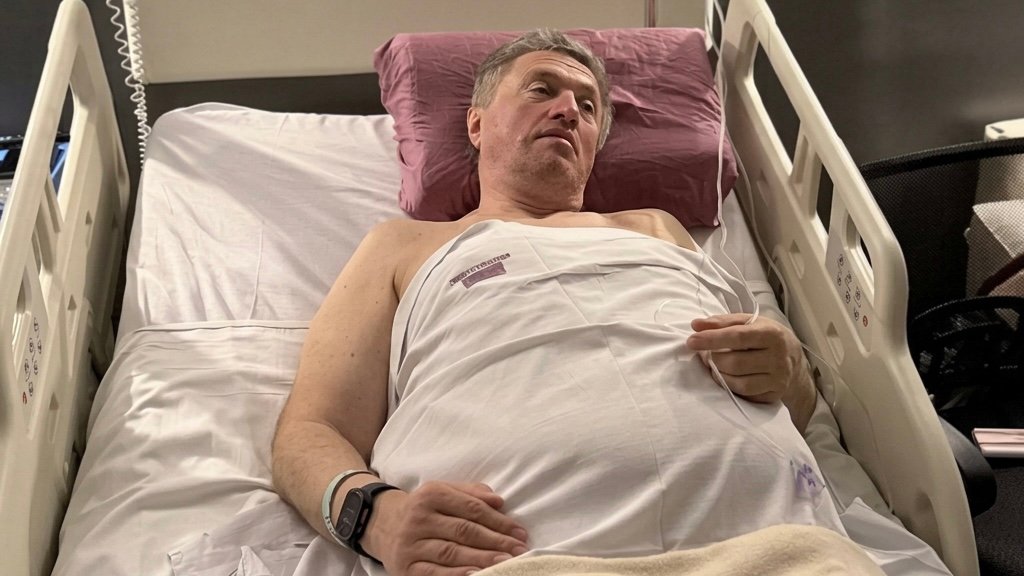
The pavilion housed 23 other inmates who smoked heavily, which caused him respiratory problems due to his lung disease. Rudnev entered prison at the age of 57, suffering from several serious medical issues, including progressive pulmonary fibrosis, a life-threatening condition.
Over the course of the following year, until May 2026, he remained detained in the same high-security wings under extreme conditions and lost 53 kilograms as a result of the mistreatment he endured and the lack of adequate medical care.
Despite a court decision issued months after his arrest granting Rudnev a certified official interpreter, the prison never properly involved any translator. Rudnev continued to be taken to doctors and examinations without translation.
The court ordered him to remain under house arrest, as he was scheduled to be admitted to the hospital on May 26, 2026, to undergo several emergency surgeries due to the deterioration of his health while in custody.
In addition to the numerous violations of his rights—including his inability to properly organize his defense in the absence of an interpreter and with only partial access to the criminal case file concerning him—the mistreatment he suffered constituted degrading treatment and acts of continued psychological pressure.
Even when he was granted house arrest for emergency surgery, Rudnev had to spend almost 24 hours sitting in a transport vehicle, on cold metal benches, despite all of his health problems. Rudnev was not allowed to travel by plane or ambulance, forcing him to make the journey in the most grueling way possible. This was done even though his wife had already made all the arrangements and the flight had been confirmed.
The reasons for this inhumane treatment can only be understood by viewing it within the context of a systematic strategy aimed at extracting confessions.
International human rights rules
Rudnev’s prolonged detention and ill treatment constitute, in several respects, a violation of international human rights standards.
His pre-trial detention was originally ordered until April 3, 2026, for one year, and was then extended for an additional year.
The Argentine Code of Criminal Procedure does allow an extension of pre-trial detention of up to three years in cases involving suspected organized or transnational crime, as is the case with the charges brought against Rudnev: “Article 334. Admissibility and procedure. In cases where the collection of evidence or the conduct of the trial proves complex due to the quantity or nature of the facts, the large number of defendants or victims, or because the case involves organized or transnational crime, the judge may, at the request of either party, duly authorize the application of the time limits provided for in this Title. Article 335. Time Limits. Once this procedure is authorized, it will produce the following effects: a. The maximum duration of the entire procedure will be extended to six (6) years; b. The maximum duration of the preliminary investigation will be extended to two (2) years, which may be extended only once for a period not exceeding one (1) year.”
These provisions were applied in Rudnev’s case to extend the preliminary investigation to April 3, 2027 (two years), with a possible extension of one additional year (three years of preliminary investigation in total).
These articles establish a specific legal framework for transnational crimes, requiring complex investigations across multiple countries and allowing detention for up to three years without trial. They should never have been applied to Rudnev, since no transnational organization was ever identified and no investigation was conducted in any other country. Rudnev was no longer the leader of a spiritual yoga group that the Russian government had accused of “brainwashing.”
The application of these provisions to his case actually violates Argentina’s international human rights obligations, in particular the UN Standard Minimum Rules for Non-custodial Measures (Tokyo Rules), adopted by the General Assembly on December 14, 1990, which provide that: “6.1 Pre-trial detention shall be used as a means of last resort in criminal proceedings, with due regard for the investigation of the alleged offense and for the protection of society and the victim. 6.2 Alternatives to pre-trial detention shall be employed at as early a stage as possible. Pre-trial detention shall last no longer than necessary to achieve the objectives stated under rule 5.1. It shall be administered humanely and with respect for the inherent dignity of human beings.”
These rules were violated through the unduly prolonged detention and inhumane treatment of Konstantin Rudnev.
So were the UN Standard Minimum Rules for the Treatment of Prisoners, revised and unanimously adopted as the Nelson Mandela Rules by the General Assembly on 17 December 2015, to ensure safe, secure, and humane conditions for all detained individuals.
The UN General Assembly adopted these to update the outdated 1955 prison standards and honor Nelson Mandela’s legacy and the 27 years he spent as a political prisoner.
They provide, in particular, core protections for pre-trial detainees designated as “untried prisoners” or “unconvicted prisoners”: “Presumption of Innocence: Rule 111 specifies that unconvicted (untried) prisoners must be dealt with in accordance with the presumption of innocence and treated differently from convicted persons. Mandatory Separation: Rule 11 (and specifically Rule 11b) mandates that untried/pre-trial detainees must be kept strictly separate from convicted prisoners.
Single-Cell Accommodation: Rule 113 states that pre-trial detainees should ideally sleep alone in individual rooms, except where local climate or custom dictates otherwise.”
The revision added absolute bans on torture, clear limits on solitary confinement, and guarantees for equal healthcare.
Ironically, Argentina actually supported these reforms. It played a central role in drafting and revising the Standard Minimum Rules for the Treatment of Prisoners, by hosting expert meetings and participating in the drafting of the consolidated text.
Argentina has, in particular, supported an absolute ban on torture and cruel, inhuman, or degrading treatment—a position contradicted by its implementation in practice, particularly in the case of Rudnev.
Systemic gaps and domestic violations
While Argentina’s federal laws may reflect the Mandela Rules on paper, independent monitoring by the Procuración Penitenciaria de la Nación (PPN) reveals major implementation shortfalls, particularly regarding the widespread overuse of pre-trial detention.
The Mandela Rules emphasize that pre-trial detention should be a measure of last resort. However, in Argentina—particularly within the Buenos Aires provincial system—over 50% of the total incarcerated population consists of pre-trial detainees who have not yet received a sentence.
In particular, modern investigative and legal organizations like the Instituto de Estudios Comparados en Ciencias Penales y Sociales (INECIP) point out that pre-trial detention is used as systemic, legal leverage to force “abbreviated proceedings” (juicios abreviados), which act as a form of institutional coercion to extract confessions. The mechanism functions through specific legal and systemic vulnerabilities. Pre-trial detention is primarily used to elicit confessions through procedural “blackmail,” by leveraging the possibility of a “juicio abreviado.”
In Argentina, defendants can be held in pre-trial detention for months or years due to structural judicial backlogs. They can also be held in pre-trial detention on suspicion of “organized or transnational crime,” as in Rudnev’s case.
Prosecutors utilize this prolonged deprivation of liberty as bargaining power. They offer a “juicio abreviado” where the defendant must formally confess to the crime in exchange for a significantly reduced sentence or immediate release based on time already served. For an innocent individual enduring squalid, overcrowded prison conditions, confessing to a crime they did not commit is often the fastest way to regain their liberty.
Independent research highlights that pre-trial detention in regions like the Province of Buenos Aires routinely operates as an “anticipation of punishment” (pena anticipada) rather than a precautionary measure.
Because defendants are treated as though they are already guilty, the psychological distress of indefinite incarceration breaks their resolve.
Reasons given for Rudnev’s continued pre-trial detention
This is precisely the case of Konstantin Rudnev. In this case, there are no valid grounds for his continued detention.
The prosecution continues to repeat the same arguments: that he is the leader of an international organization, that he has unlimited resources, that he has no roots in Argentina that would justify house arrest, and that he purchased two tickets at the airport, which they present as evidence that he tried to flee.
His attorney has long refuted these arguments, most recently during a hearing on September 28, 2026, regarding his continued house arrest.
No problems have arisen during his 130 days of house arrest, and Rudnev has complied with all of his obligations. Rudnev remaining in Argentina longer than his visa allowed demonstrates his desire to stay in the country, not his intention to flee. Nevertheless, the Prosecution continues challenging his house arrest and is trying to have him sent back to the high-security prison, despite his physical condition that requires constant specialized medical care and monitoring.
Even the doctors’ opinion—that his health makes it impossible for him to return to prison, which would amount to a death sentence—is not enough to dissuade them from pursuing this course of action. They now want to send their own forensic experts to determine that his return to the high-security prison is possible and to ensure his re-incarceration by any means necessary.
Meanwhile, the Prosecution has not taken any significant investigative action. For the second year in a row, they are currently examining all the phones and computers. They are also trying to analyze the tablets and medications seized from various locations—this has already been going on for a year and a half. They examine them, find no drugs, examine them again, and then order a third expert analysis. There are no new developments in this case; all the evidence shows that the charges are baseless.
Apparently, the Prosecution is more focused on doing everything possible to put Rudnev back in prison to exert pressure on him—so he sits there, and they can push him into signing an agreement. This is why all their efforts seem to be directed solely at securing his pre-trial detention. They are not actually investigating the case; they are not interviewing witnesses or performing any new investigative acts. Their only concern seems to be securing his detention to put pressure on him and force him into an agreement.
For a year and a half now, the Prosecution has been battling defense attorneys in dozens of legal proceedings to keep him in pre-trial detention. Prosecutors constantly offer Konstantin Rudnev a “juicio abreviado.” As he and his wife have learned, this is a very common scheme in Argentina: people are placed in preventive detention and then pressured to confess to crimes. Rudnev refused. He said he would not confess because he had committed no crimes.
In every conversation between the Prosecution and his lawyer, the Prosecution again proposes a deal and insists that Rudnev admit guilt. They apply pressure in every possible way. This is precisely why they want him in prison—to force him to confess to crimes he did not commit.
Conclusion
Rudnev’s case is a textbook example of the tactics used by unscrupulous prosecutors to circumvent the judicial system and the human rights safeguards enshrined in the treaties.
Although the systemic over-reliance on pre-trial detention does not function as a tool for physical interrogation to extract raw confessions, as was common during historical military regimes, prosecutors utilize this prolonged deprivation of liberty as bargaining power.
His case is also a textbook example of the presumption of guilt that is systematically applied when a suspect is labeled as a “cult leader.” The suspect is presumed guilty, and then prosecutors look for evidence to support their “theory,” as in Rudnev’s case, and, lacking such evidence, they put pressure to extract a confession.
How much longer are we going to tolerate so-called democracies resorting to pre-trial detention and mistreatment to extract confessions, thereby endangering the lives of “suspects”?
And how much longer are we going to tolerate members of religious or spiritual minorities being considered second-class citizens who cannot even benefit from the presumption of innocence?

Patricia Duval is an attorney and a member of the Paris Bar. She has a Master in Public Law from La Sorbonne University, and specializes in international human rights law. She has defended the rights of minorities of religion or belief in domestic and international fora, and before international institutions such as the European Court of Human Rights, the Council of Europe, the Organization for Security and Co-operation in Europe, the European Union, and the United Nations. She has also published numerous scholarly articles on freedom of religion or belief.