China inherited a territorial claim. It also inherited an unanswered political obligation to Uyghurs.
by Asiye Uyghur
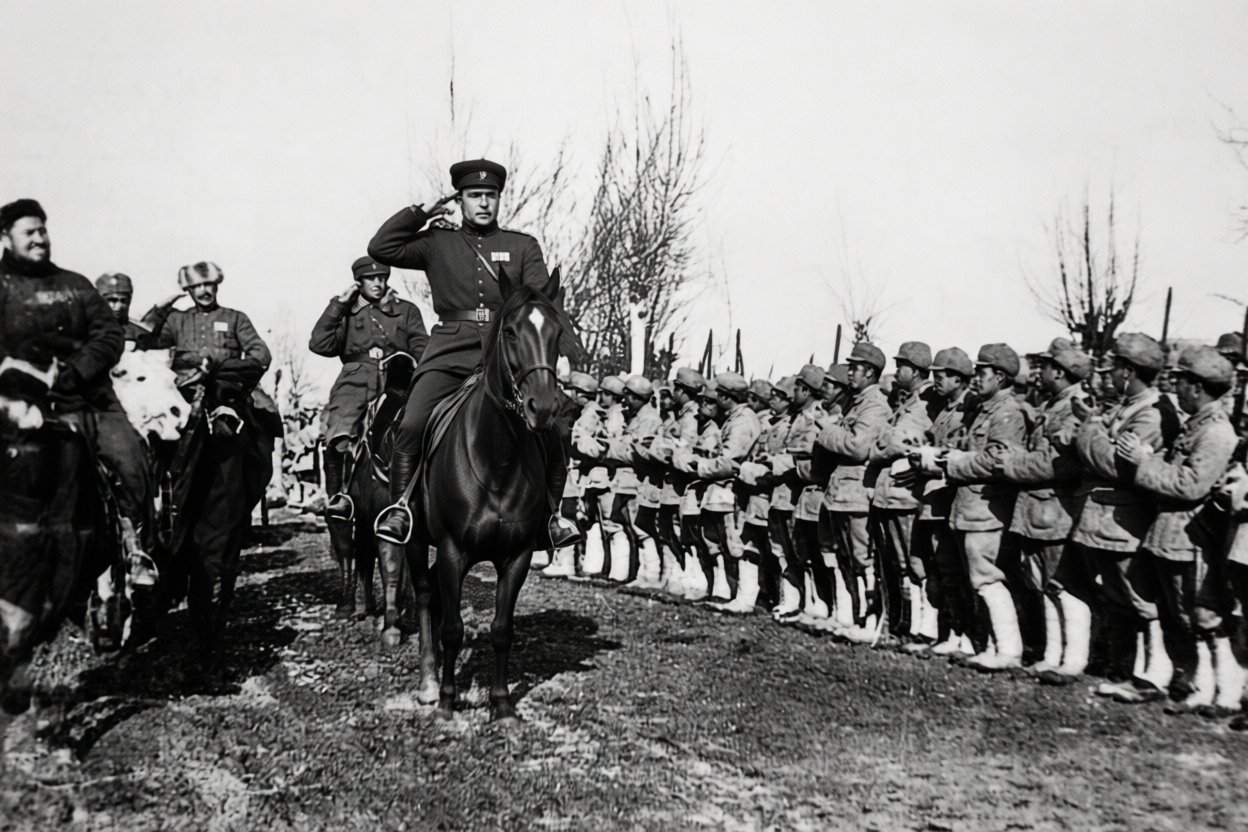
In a scene from the Uyghur film “Nasreddin Afandi,” a whole roast chicken is placed before a king and his family. Nasreddin is asked to divide it fairly. He assigns each member of the royal household a symbolic piece—the head to the king and other portions to the rest of the family—while the person who controls the division retains the substantial share.
The scene is not merely comic. It is about power: whoever decides how a whole is divided can make an unequal arrangement look orderly, generous, even fair.
That logic offers a way to understand the political architecture of the Uyghur Region today.
China calls the territory the “Xinjiang Uyghur Autonomous Region.” Yet Beijing’s own 2021 white paper states that regional ethnic autonomy and autonomous areas “are not the exclusive possession of any ethnic group.” Beijing thus explicitly denies that the territory designated as Uyghur autonomous is an autonomous homeland belonging to the Uyghur people.
Eighty years after Uyghur-led representatives negotiated a political settlement with China’s then-central government, that position raises an unresolved question: What became of the commitments made to Uyghurs in China’s name before the People’s Republic of China was founded?
An agreement made under narrowing choices
In November 1944, the Second East Turkestan Republic was proclaimed in the Three Districts of Ili, Tarbaghatay, and Altay amid resistance to Kuomintang (KMT) rule. Its survival depended heavily on Soviet material support and on the protection afforded by its proximity to the Soviet border.
The Three Districts were not politically uniform, and the movement included Uyghurs, Kazakhs, and other peoples. Soviet influence was deep. Moscow’s assistance was not an altruistic commitment to Uyghur independence. Stalin’s policy was shaped above all by Soviet border security, influence in Central Asia, and his wider bargaining position toward China.
That reality became sharper as World War II ended. The Yalta Conference of February 1945 linked Soviet entry into the war against Japan to strategic concessions in Northeast Asia. In the negotiations that followed, Moscow’s interests in Manchuria and Mongolia became part of a broader settlement with the KMT government. For Stalin, a Soviet-aligned Mongolia was a vital buffer.
Uyghur freedom was not formally “traded away” in a Yalta clause. But the political outcome was unmistakable. Moscow no longer treated an independent Uyghur state as an objective worth defending. In July 1945, Stalin pledged to support Chiang Kai-shek’s government and withhold support from the insurgents in the Uyghur Region. Once Stalin chose accommodation with China, the continued expansion of the Second East Turkestan Republic became strategically inconvenient.
The Soviet Union curtailed the support on which the Three Districts depended and pressed their leaders toward negotiations with the KMT. The resulting settlement was not made between equal powers acting under free conditions. Without Soviet backing, the National Army could not easily continue the war or protect the population against a KMT counteroffensive.
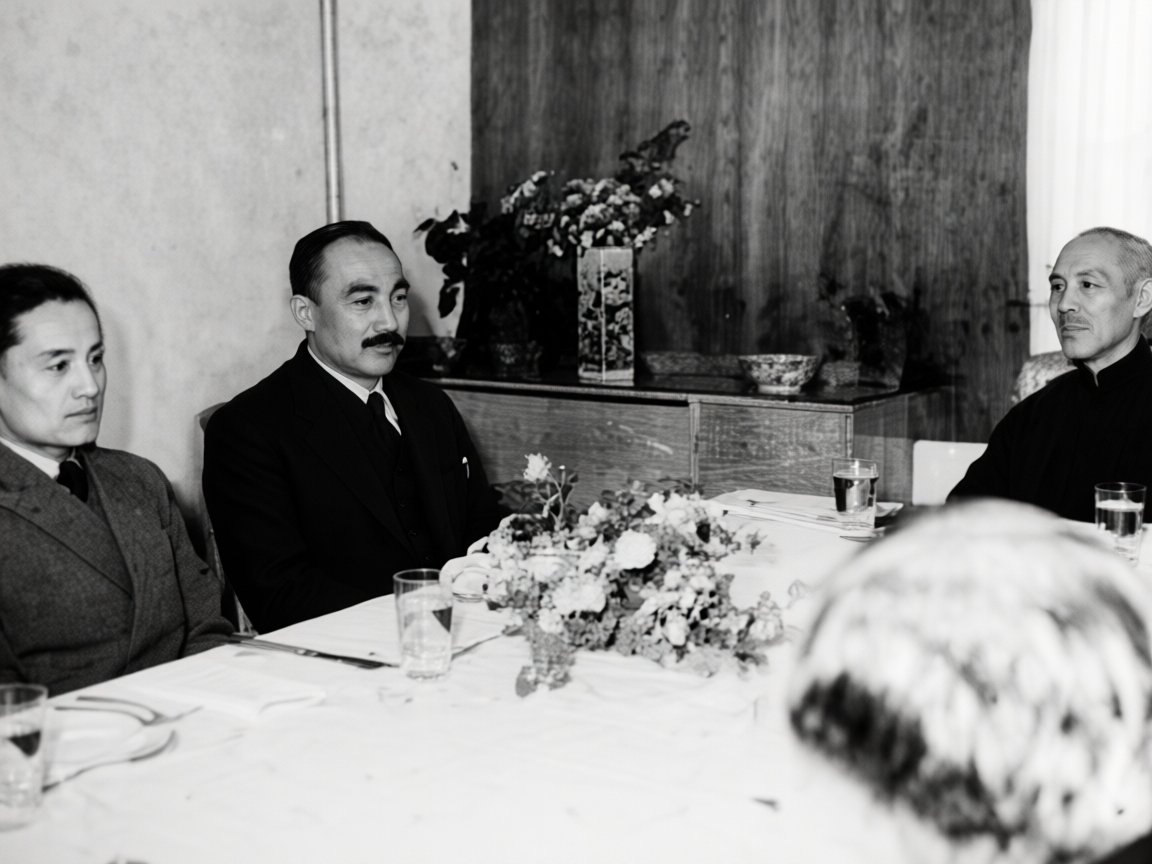
On January 2, 1946, representatives of the KMT government and a delegation from the Interim Government of the Second East Turkestan Republic signed the core agreement known as the Eleven-Point Peace Terms. The agreement and its subsequent addenda addressed local political participation, freedom of religion, the use of local languages and Chinese in public affairs, cultural and educational rights, detainees, representation in a coalition provincial government, and the future of the National Army. Historian Wang Ke’s study reproduces and analyzes its provisions. A second addendum was signed in June, clearing the way for the coalition government.
The settlement did not resolve the conflict. The coalition arrangement broke down amid widening political divisions and failures to honor its commitments. But neither its incomplete implementation nor the internal divisions of the Three Districts cancels the central historical fact: Uyghur-led representatives entered the settlement as a negotiating party and an organized political force, not as passive recipients of Chinese rule.
China’s own record of Stalin’s intervention
The later record shows why rejecting the settlement was not a risk-free alternative.
A study published by the Chinese Academy of Social Sciences describes Soviet policy in 1949 with striking clarity. It reports that Stalin urged the Chinese Communist Party (CCP) not to delay “occupying Xinjiang,” warning that delay could enable the United States to intervene. The study says Stalin offered 40 fighter aircraft to assist Chinese forces. It also records Mao Zedong’s assessment that the Soviet Union was “eager” for the CCP to take the region quickly and could provide various forms of help, “including dozens of aircraft for combat.”
The same study says the Soviet Union later made 30 to 50 transport aircraft available to help create an air route across Shaanxi, Gansu, and Qinghai and speed the People’s Liberation Army’s advance. It also records Moscow’s transfer to the new Chinese government of weapons and ammunition stored in the Uyghur Region—material originally supplied to local forces for armed struggle after the Soviet break with the KMT-aligned ruler Sheng Shicai.
These admissions show how a Soviet policy that had once enabled the Three Districts was redirected to facilitate a Communist Chinese takeover. Had the Three Districts rejected the Eleven-Point Peace Terms after losing Soviet backing, they would have faced the KMT on one side and the withdrawal—or eventual reversal—of their only external security guarantor on the other.
The question was no longer only whether the National Army could win a battle. It was whether a small, landlocked polity could survive after its patron had decided to accommodate the state that claimed its territory.
A political agreement, not a gift from Beijing
The CCP’s own historical accounts do not deny that the agreement existed. On the contrary, they state that the Three Districts’ advance compelled the KMT to enter negotiations and praise Ahmetjan Qasimi, Abdulkerim Abbasov, and Ishaq Beg for helping to conclude or implement the Eleven-Point Peace Terms. Party history materials say so explicitly.
This matters. The agreement was not a benevolent concession handed down to passive subjects. It was a negotiated political settlement between a Chinese central government and an organized, Uyghur-led, multiethnic political and military force. The Three Districts delegation was treated as a party capable of making demands, entering an agreement, and participating in government with the central authorities.
Beijing has not erased this history. It has absorbed it into a different story, presenting the Three Districts movement as an early chapter in the CCP’s eventual “liberation” of the region. What disappears in that retelling is the political meaning of the agreement itself: Uyghurs were not merely recipients of policy. They were a political people whose representatives negotiated rights, institutions, and authority.
Territorial continuity cannot be selective
The People’s Republic of China did not present itself in 1949 as a new state seceding from China. It claimed to replace the KMT as the government of China. Beijing’s claim to authority over the Uyghur Region therefore rests on continuity with the prior Chinese state.
But continuity cannot be treated as a menu.
The 1946 agreement was not a treaty between two internationally recognized states, and it cannot simply be invoked today as an automatically enforceable international treaty. The point is one of political and historical consistency, not a claim to a straightforward legal remedy. A government that invokes continuity to claim its predecessor’s territorial jurisdiction must still account for the commitments made in that predecessor’s name.
Why were the guarantees of representation, language, culture, and political participation not preserved? Who decided that a negotiated settlement could be replaced by a system designed unilaterally from Beijing? On what basis can the state inherit the land while rejecting the political obligations that accompanied its rule?
Autonomy arrived after the structures that limited it
The chronology is revealing.
Beijing’s own records show that, by 1954, five autonomous prefectures and six autonomous counties had already been established in the Uyghur Region—before the Uyghur Autonomous Region itself was created in 1955. These were not Uyghur autonomous units. They were designated for Mongols, Kazakhs, Kyrgyz, Hui, Sibe, and Tajiks.
The arrangement was striking. Mongols received the Bayingolin and Bortala autonomous prefectures. Kazakhs received the Ili Kazakh Autonomous Prefecture and the Mori and Barkol autonomous counties. Hui communities received the Changji Hui Autonomous Prefecture and Yanqi Hui Autonomous County. Other units included the Kizilsu Kyrgyz Autonomous Prefecture, Qapqal Sibe Autonomous County, Tashkurgan Tajik Autonomous County, and Hoboksar Mongol Autonomous County.
Uyghurs, by contrast, received no Uyghur-named autonomous prefecture or county within the territory that bears their name. The title “Uyghur Autonomous Region” was created only after this network of subregional autonomous territories had been put in place. Although the PRC had already adopted policy and constitutional provisions on regional autonomy, the national Law on Regional Ethnic Autonomy that now supplies the basic statutory framework was enacted only in 1984, 29 years after the region was named autonomous.
At the same time, a powerful central-state structure was being planted across the region. The Xinjiang Production and Construction Corps, or Bingtuan, was established in October 1954, one year before the Uyghur Autonomous Region was created. Beijing describes it as serving land-reclamation and border-defense functions. Its 2014 white paper records that, by the end of 2013, the Bingtuan administered 70,600 square kilometers through 14 divisions and 176 regiments. It was dissolved in 1975 and restored in 1981. Today, it combines Party, government, military, and enterprise functions, and its economic planning is directly supervised by the state. It is not an institution of Uyghur political self-rule.
That is where the Nasreddin Afandi scene becomes more than a metaphor. The political architecture had already divided the whole: autonomous territories were designated for other peoples, while the Bingtuan occupied a vast, centrally directed territorial, economic, and security space. The political effect was to leave Uyghurs with the name of the region, but without a distinct Uyghur territorial unit below it and without control over the institutions shaping the region’s land, security, and political future.
What recognition would mean now
The question is not whether an 80-year-old agreement can be mechanically revived. It is whether Beijing can claim uninterrupted sovereignty over the Uyghur Region while refusing to acknowledge the unfinished political account that came with that claim.
Recognizing the spirit of the 1946 settlement would require more than repeating the word “autonomy.” It would mean restoring the conditions that make autonomy meaningful: the free use and development of the Uyghur language; protection of religious and cultural life; genuine representation; and a meaningful Uyghur voice in decisions over land, institutions, and the structures that govern their homeland.
China did not erase the agreement. It incorporated the agreement into its own historical narrative while leaving its central political promise unanswered.
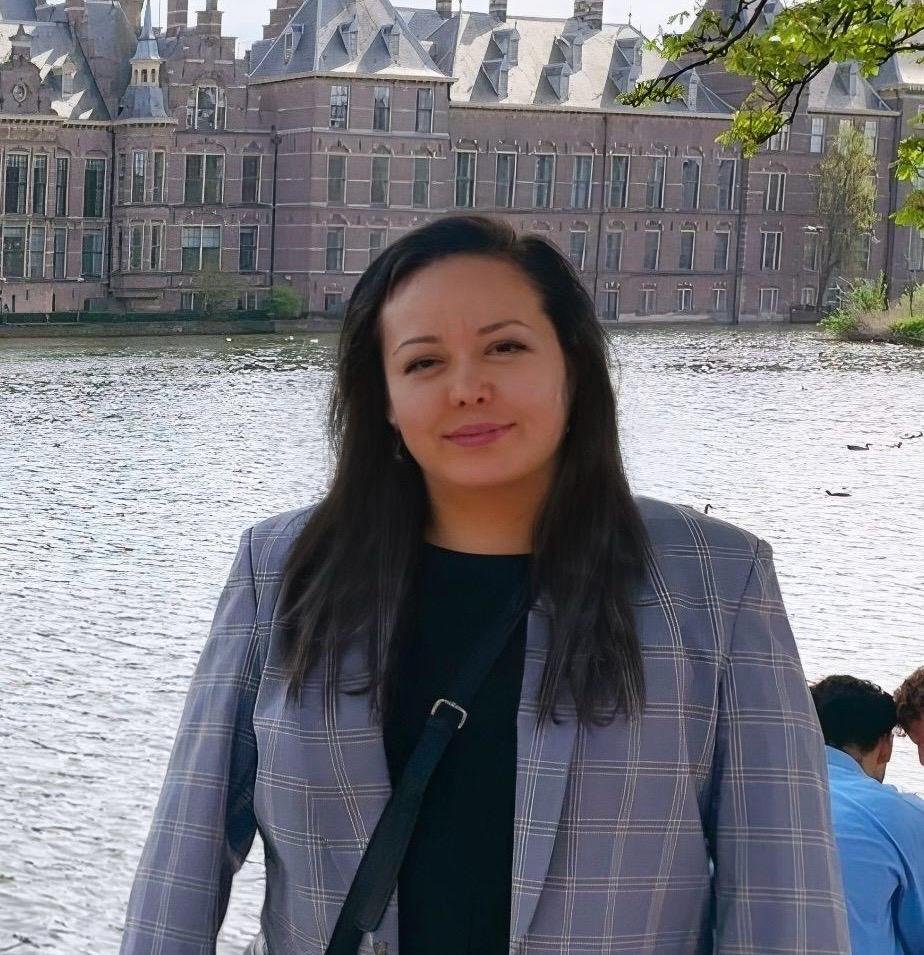
Asiye Uyghur is a Netherlands-based Uyghur writer and political commentator. Before the closure of Radio Free Asia’s Uyghur Service, she worked there as a political commentator. She currently publishes commentary and analysis in English, Dutch, and Chinese on Uyghur human rights, cultural repression, information control, and Chinese state policies related to Uyghurs through platforms including Global Voices, the Uyghur Human Rights Project (UHRP) as a guest contributor, and the Dutch publication “De Kanttekening.”