Power and legitimacy determine how much influence an accusation holds. Groups labeled as “cults” are seldom given fair treatment.
by María Vardé
Article 3 of 4. Read article 1 and article 2.

In earlier articles in this series, I argued that accusations against a leader can move beyond individual responsibility and extend to the doctrine and to ordinary members of the group, generating stigma. I then examined how this process can produce serious repercussions in legal and state spheres. But this phenomenon does not operate in a vacuum. It depends, to a large extent, on the position each group occupies within a given society’s hierarchy of religious legitimacy. Some traditions possess institutional density, cultural familiarity, the capacity for public defense, and sufficient legal resources to better withstand a campaign of discredit. Others, by contrast, enter into controversy with precarious or nonexistent legitimacy. This asymmetry is fundamental.
Stigma is not simply a negative opinion about certain groups. In a now-classic 2001 article titled “Conceptualizing Stigma,” sociologists Bruce G. Link and Jo C. Phelan explained that stigma is a broader social process that includes labeling, stereotyping, separation between a “we” and a “they,” status loss, and discrimination. But this process—they explain—only operates effectively when there is an asymmetry of power.
For this analysis, power may be understood in terms of social, economic, and political capital. This inequality is what allows certain classifications to prevail and have real consequences. This is why some forms of religious belonging become socially burdensome much more quickly than others when controversy erupts. Not because their members are objectively more responsible, but because they occupy a weaker position in the order of public recognition.
To claim that large churches never face media campaigns or legal consequences for abuses committed by their clergy would be false. In a study on the social construction of a moral panic surrounding pedophile priests, sociologist Massimo Introvigne recalled that there were extensive cultural campaigns and also massive litigation against Catholic dioceses, some of which resulted in bankruptcies. The point, therefore, is not that large institutions are entirely shielded from controversy. Rather, even in the midst of very serious crises, hegemonic religions are not morally rewritten as mere cover for abuse, nor are ordinary believers collectively treated as accomplices or incapable victims. The institution has sufficient resources, spokespersons, allies, history, and recognition to better resist the stigmatization of its members.
Thus, it is more useful to speak of a continuum than to draw a rigid opposition between “large, powerful religions” and “small, weak religions.” At one end of this continuum are institutions with a long historical presence and social capital, such as the Catholic Church in most Western countries. In the intermediate zone are numerically large traditions, such as Jehovah’s Witnesses (JWs) or The Church of Jesus Christ of Latter-day Saints, which have millions of adherents and robust organizational structures, yet remain socially more vulnerable to attack than historically dominant churches.
In a 2021 study, Introvigne argued that JWs often function as “canaries in the coal mine” of religious freedom, in the sense that they are frequently among the first to experience new forms of legal or cultural hostility that may later extend to other groups. Within this framework, he showed how specific controversies surrounding cases of sexual abuse are used to call into question not only individual conduct, but also the organization’s institutional religious freedom to regulate its internal life. The offensive, therefore, is not limited to punishing potential crimes; it also seeks to reduce the group’s religious autonomy.
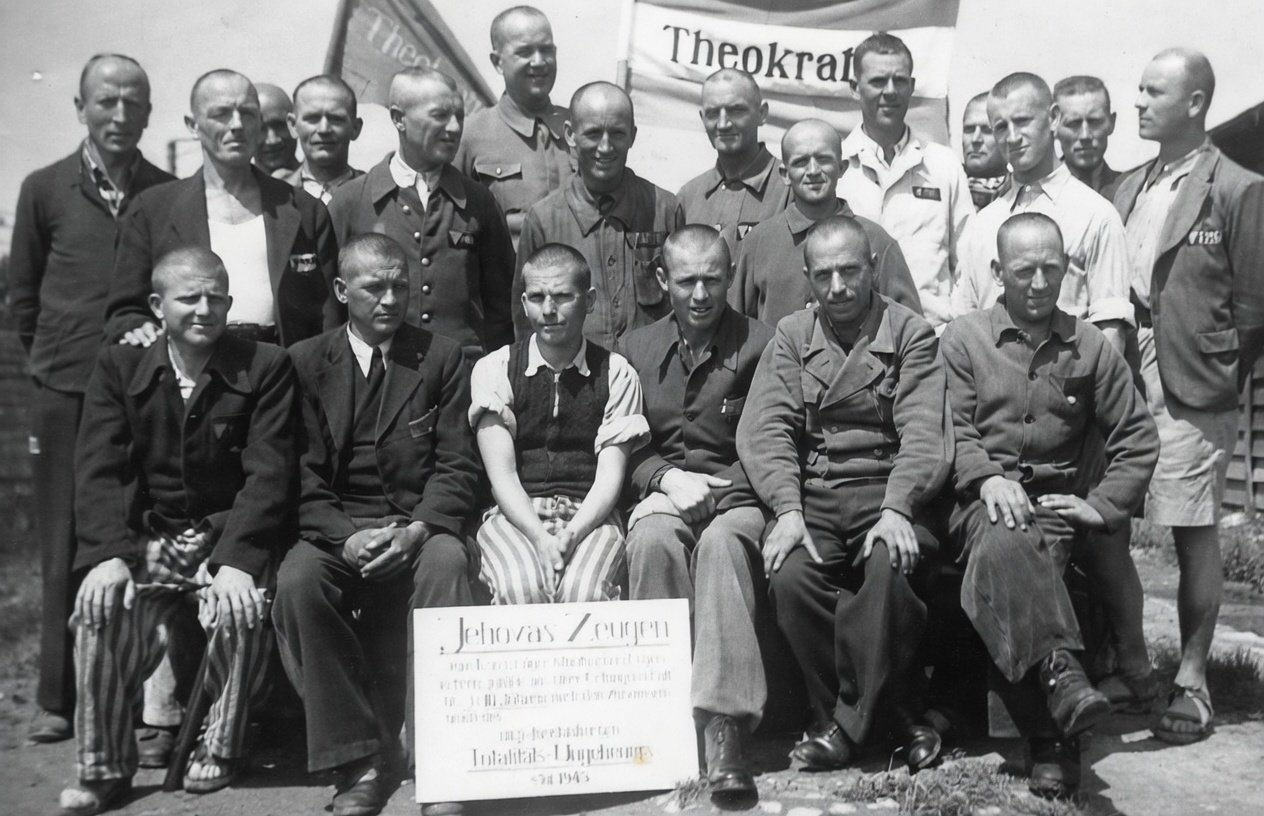
This logic reappears in certain recent media representations. A production by The Telegraph, for example, portrayed JWs as exceptionally reluctant to cooperate with justice in matters of sexual abuse, due to their refusal to disclose religious communications protected by confidentiality. Introvigne had pointed out that media outlets frequently attack JWs regarding their handling of sexual abuse, consistently ignoring that the group’s present official policies actively encourage victims to report to secular authorities and explicitly state that the congregation will not shield perpetrators. The issue of confessional secrecy and the protection of certain religious communications is not exclusive to this tradition; it also applies to other traditions, including the Catholic Church. Even so, the journalistic narrative tended to construct the JWs as a morally suspect exception.
A similar point can be made about The Church of Jesus Christ of Latter-day Saints, a global tradition with enormous organizational capacity and public presence. However, its position within the hierarchy of legitimacy remains more fragile than that of historically hegemonic churches. One relevant example is a case decided by the Arizona Supreme Court in 2023, closely followed by Bitter Winter, originated in the sexual abuse committed over seven years by Paul Adams against his older daughter and her infant sister. In the course of these abuses, Adams confessed his crimes to a Latter-day Saint bishop, which led to a disciplinary hearing and his excommunication in 2013. After Adams later boasted of his crimes on social media and was arrested in 2017, the Church was sued by Adams’ children.
Subsequently, the judicial controversy centered not only on Adams’s clearly established crimes but also on whether the Church could be held responsible for failing to report what it had learned in a confessional context. Although a lower court initially ruled that Adams had waived the clergy-penitent privilege through his later public conduct, Arizona appellate courts rejected that reasoning, holding that public admission of the crimes did not waive the privilege over the confession itself. The decision allowed the Church to refuse to answer questions or produce documents protected by the state’s clergy-penitent exemption, which shields confidential religious confessions from compelled disclosure. The case shows that a serious accusation can also bring into question the institutional standing of an internal religious practice, even though similar protections exist in other traditions.
The difference with mainline churches, then, is not that these groups are entirely unprotected. It is that their public defense requires greater effort and unfolds on less favorable terrain. They may win litigation, mobilize resources, and invoke principles of religious freedom. Still, they remain more exposed to campaigns that blur the line between individual crimes, internal discipline, doctrine, and collective dangerousness. Following Abe’s assassination in Japan, campaigns based on a controversial and non-scientific use of the term “cult” extended not only against the Unification Church but also against other groups, including Jehovah’s Witnesses, creating a context of increased scrutiny, stigmatization, and harmful consequences. The expansion of stigma spreads by contagion to traditions that, although large, remain vulnerable.

At the other end of the continuum are smaller groups, less familiar to the public. There, suspicion often spreads much faster and is more devastating. In the first installment of this series, we examined how, in cases such as Ashram Shambhala, Christian Gospel Mission, La Luz del Mundo, and MISA, the media dramatization of individual accusations against religious leaders expands almost categorically toward other unaccused believers and even toward their theological principles and other groups that may (or may not) be related. The intensity and speed of suspicion and stigmatization depend on each group’s relative position within the social field.
The lower the accumulated symbolic capital and the less familiar a group is to the public and institutions, the easier it is for an accusation against a leader to become a collective disqualification. Conversely, the greater the symbolic capital, historical presence, and response capacity, the more difficult it becomes for this expansion of suspicion to reach the doctrine as a whole or the ordinary membership.
Returning to Link and Phelan, what becomes clear here is that power is not an external complement to stigma, but one of its constitutive conditions. Some forms of religious belonging are read as ordinary, even amid scandal. Others quickly become marks of suspicion. In the field we study, this means that the same accusation can produce very different effects depending on the group involved. In some cases, there will be severe controversy but no collapse of social credibility. In others, a complaint, a television series, or a lawsuit may be enough to render the entire collective suspect, with serious consequences for its members’ everyday lives. That is the subject of the next and final installment of this series.

Maria Vardé graduated in Anthropological Sciences at the University of Buenos Aires and is currently a researcher at the Instituto de Ciencias Antropológicas, Facultad de Filosofía y Letras, Universidad de Buenos Aires (Institute of Anthropological Sciences, Faculty of Philosophy and Humanities, University of Buenos Aires). She has written and lectured on archeology, spirituality, and freedom of religion or belief.