A clear trend appears in Beijing’s policies: any cultural aspect that visibly expresses Uyghur identity is gradually targeted and suppressed.
by Asiye Uyghur
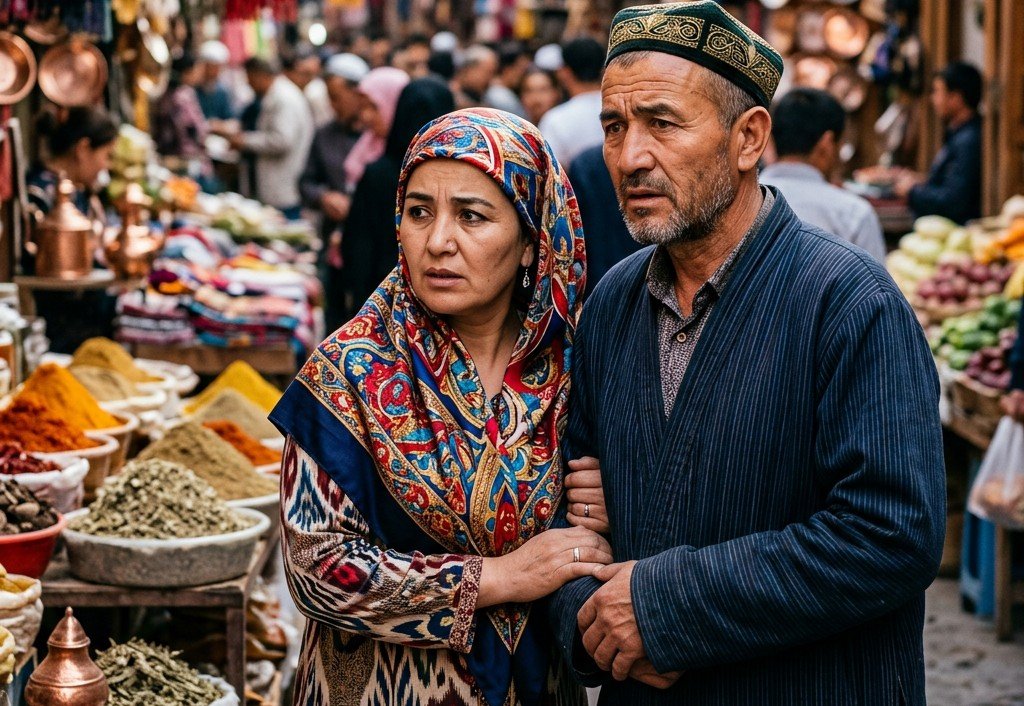
In recent years, leaked documents, videos, and eyewitness accounts from the Uyghur region have revealed a troubling truth to the international community. The Chinese Communist Party’s campaign against the Uyghurs involves not just political control; it is a systematic cultural cleansing that affects language, religion, education, family structures, clothing, and everyday life.
Two recent pieces of evidence illustrate this clearly. A leaked 2017 government directive, along with video footage, shows that Uyghur women are restricted from wearing hijabs or face coverings under the pretense of “de-radicalization.” Citizens are encouraged to report anyone dressed “abnormally.” Another video shows that authorities pressured a Chinese business to change its brand logo because it featured a man wearing a traditional Uyghur four-cornered cap, the Doppa, which was deemed to contain “sensitive Xinjiang elements.”
When placed together, these incidents reveal an ironic yet accurate picture of Beijing’s rule: when Uyghur culture is commercialized or turned into entertainment, it is praised as “Xinjiang characteristics.” However, when actual Uyghurs practice or wear these cultural symbols in everyday life, they are seen as signs of “danger” and “extremism.” This double standard is at the center of Beijing’s dangerous logic in the Uyghur region.
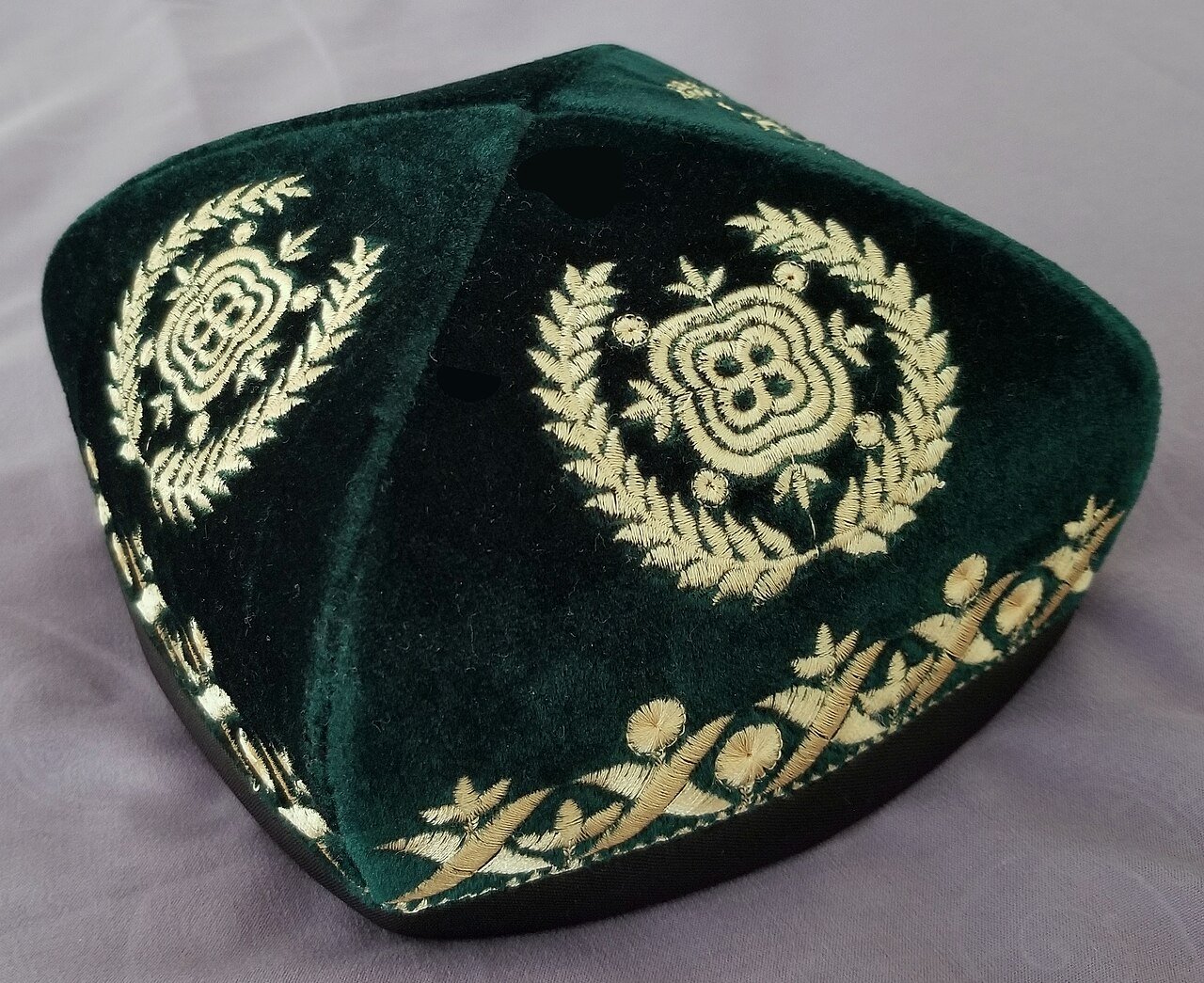
Beijing has long tried to link traditional Uyghur clothing with terrorism narratives. This idea is based on a deliberate distortion of history. Traditional headwear like the Doppa predates the arrival of Islam in the Uyghur region by centuries, making any historical connection to modern political extremism impossible. Rather than being solely a religious item, the Doppa is an important national symbol shaped by thousands of years of oasis culture, agricultural civilization, and Silk Road exchanges.
Archaeological and historical evidence support this deep heritage. Discoveries throughout the region—including the Astana Graves in Turpan, the Miran ruins, and the Buddhist frescoes of the Kizil and Bezeklik Thousand Buddha Caves—show people wearing headwear similar to today’s Doppa long before Islam arrived. The traditional designs on a Doppa, such as the Badam (almond) motif, floral scrolls, and geometric patterns, reflect ancient Central Asian traditions of nature worship, fertility symbols, and cosmic order. The four corners often symbolize the seasons or cardinal directions, linking back to pre-Islamic shamanistic and oasis beliefs.
In short, the Doppa is primarily a cultural and civilizational symbol, with religious significance coming second. By ignoring its historical and artistic background, Chinese authorities reduce it to a political label tied to “radicalization.”
A clear trend appears in Beijing’s policies: any cultural aspect that visibly expresses Uyghur identity is gradually targeted and suppressed. This includes Uyghur language education, mosques, traditional weddings, music, clothing, and symbols such as the Doppa and the hijab. Numerous reports from UN experts, human rights groups, and leaked Chinese government documents have shown how ordinary displays of Uyghur identity have been politicized under Beijing’s “de-extremification” policies.
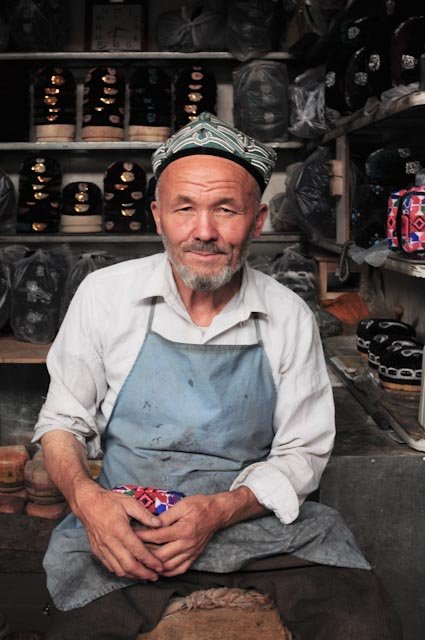
True terrorism is not defined by clothing. Hundreds of millions of Muslim women around the world wear the hijab, and traditional caps are worn in Central Asia, Turkey, and the Arab world without those countries labeling their people as “potential terrorists.” Yet Beijing operates on a troubling premise: the more Uyghur someone appears, the more suspicious they are. By this logic, wearing a hijab indicates “religious fanaticism.” Wearing a Doppa suggests “ideological conservatism.” Growing a beard can lead to state surveillance. The existence of a distinct culture itself is increasingly seen as a security threat.
This creates one of the most absurd contradictions in Beijing’s governance of the Uyghur region. On one hand, the Doppa, ethnic dances, and traditional architecture are heavily commercialized to boost tourism, regional branding, and propaganda about “exotic Xinjiang.” On the other hand, real Uyghurs are met with suspicion when they publicly wear or practice their cultural traditions. A recent video shows that a Doppa is acceptable when used on commercial packaging to market products, but someone wearing it in public may face restrictions and scrutiny.
This reveals a deeper political reality: Beijing does not necessarily oppose the cultural symbols themselves; it opposes Uyghurs living as active participants in that culture. Uyghur culture is tolerated only when it is stripped of its political significance, commercialized, and turned into a harmless museum artifact. The symbols may stay, but the people behind them must remain politically invisible. This is not just political repression; it is a form of cultural colonialism.
After the attacks on September 11, 2001, Beijing quickly adopted the global “War on Terror” language in its domestic policies. Issues related to ethnic identity, human rights, and cultural preservation were reframed as “counter-terrorism” and “security” matters. As a result, mass internment camps were rebranded as “vocational training centers.” Broad cultural restrictions became “de-radicalization,” and religious freedom was labeled a “security concern.” The Doppa and hijab were gradually absorbed into this wider security message, even though many Uyghur cultural symbols predate Islam and have no link to modern extremism.
What is being targeted now is not just religious practice but also the historical memory and cultural continuity of an entire civilization.
The real threat is not the Doppa but the erasure of a people.
The danger does not come from Uyghur women wearing hijabs or Uyghur men wearing Doppas. The real threat lies in a state systematically denying a people’s historical roots while trying to destroy their cultural continuity. Once a people can no longer freely use their language, wear their clothing, tell their history, or keep their traditions alive, their collective identity begins to fade, even if they continue to exist physically.
This is why many scholars, human rights organizations, and UN experts warn that what is happening in the Uyghur region is not merely “security governance” but a deeper process of cultural destruction.
The Doppa is not terrorism.
It is not extremism.
It is not a sign of a dangerous ideology.
It is the living continuation of thousands of years of Uyghur oasis civilization, Silk Road exchanges, and artistic heritage. What truly threatens an authoritarian regime is not the embroidered cap itself but the fact that beneath that cap still exists a distinct people who refuse to disappear, who resist total assimilation, and who continue to remember who they are.
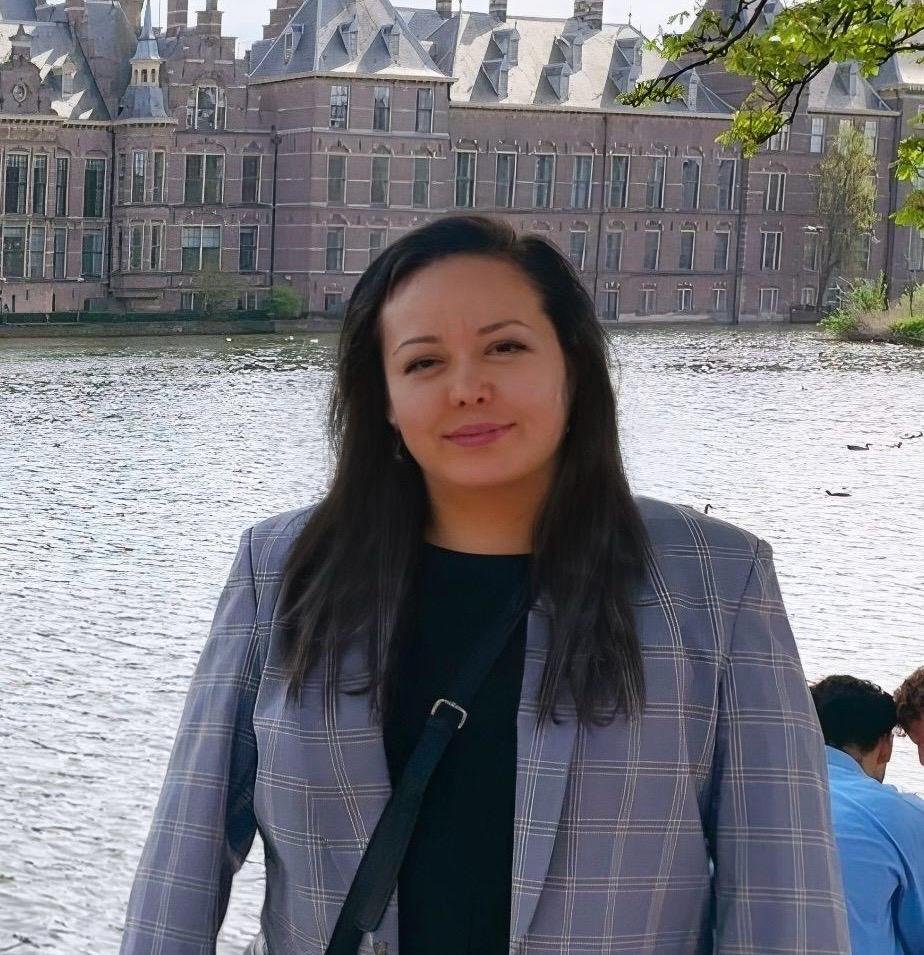
Asiye Uyghur is a Netherlands-based Uyghur writer and political commentator. Before the closure of Radio Free Asia’s Uyghur Service, she worked there as a political commentator. She currently publishes commentary and analysis in English, Dutch, and Chinese on Uyghur human rights, cultural repression, information control, and Chinese state policies related to Uyghurs through platforms including Global Voices, the Uyghur Human Rights Project (UHRP) as a guest contributor, and the Dutch publication “De Kanttekening.”