A revered statue’s grounds become a horse-racing field. Cultural erasure in historical Tibet now proceeds through construction as much as demolition and removal.
by Lopsang Gurung
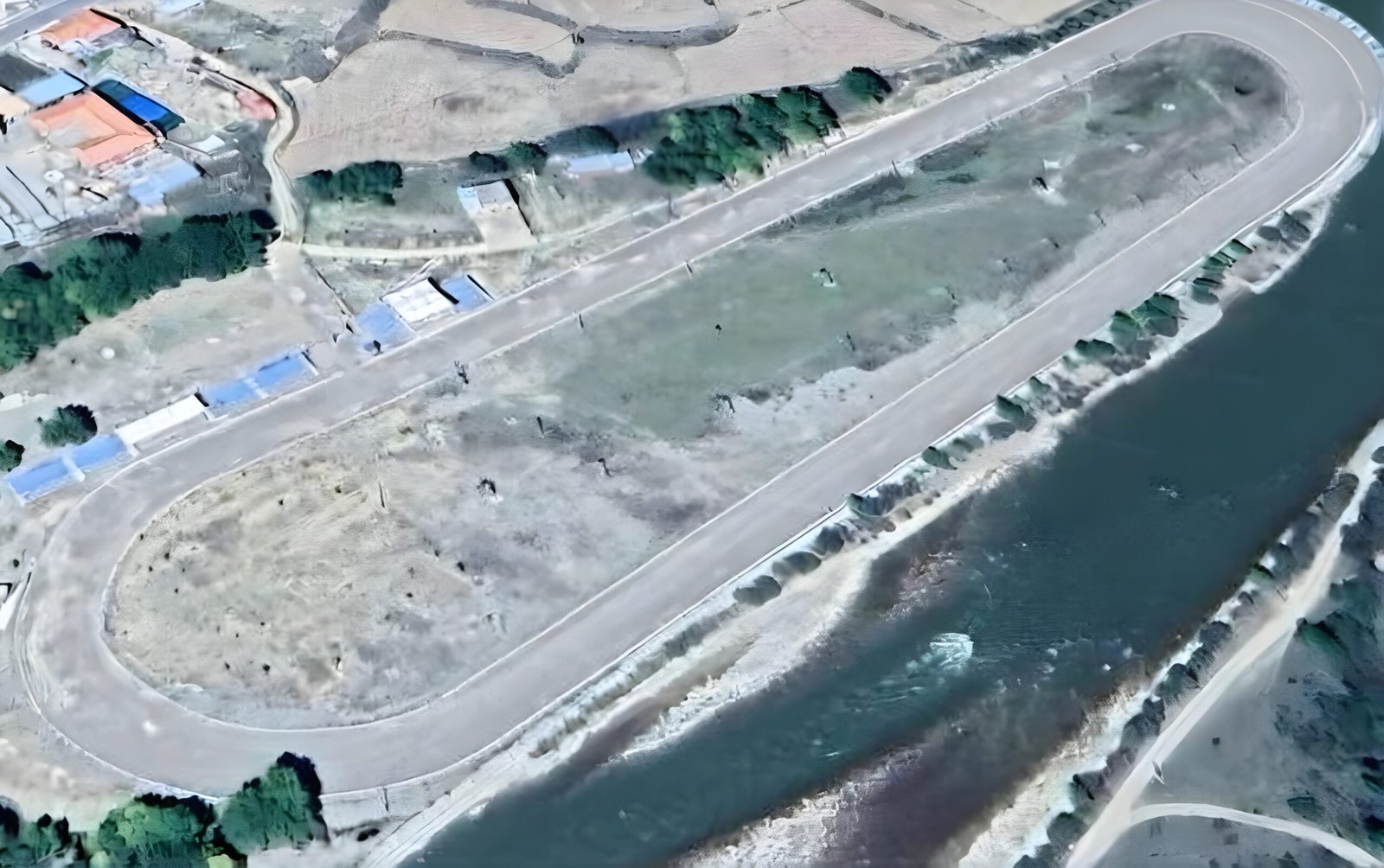
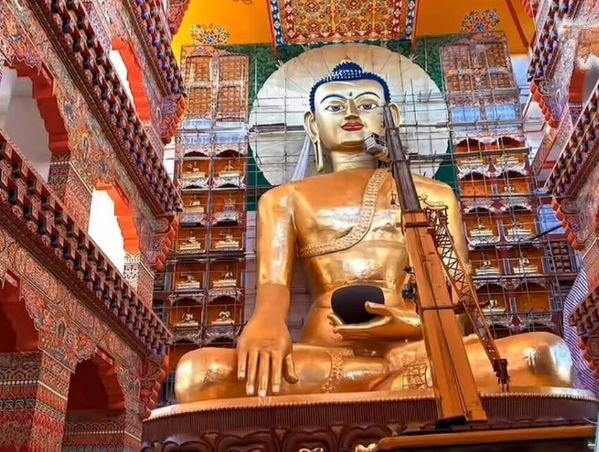
Drakgo County is part of historical Tibet and is today in the Garzê Tibetan Autonomous Prefecture of China’s Sichuan Province. A news item from there would be surreal if it were not so familiar. A place that once held a towering statue of the Buddha, a site of devotion for local Tibetans, and a landmark visible for miles has now been turned into a horse-racing field. The statue itself was removed in December 2021, part of a wave that swept through the region. The Buddha that once stood outdoors as a public object of devotion has been moved into the monastery’s Dukhang, the assembly hall where only monks and a limited number of lay visitors can see it. The statue survives, but its visibility, its function, and its meaning have been radically altered.
The latest development reveals the next stage of the campaign: not only removing Tibetan religious culture, but also overwriting it with something else.
The large Buddha statue had stood near Ganden Rabten Namgyal Ling Monastery. At the time, the authorities did not explain the reasons, and the removal was carried out under tight restrictions. Witnesses reported that even documenting the event was dangerous. The site was left empty. Now it has been repurposed as a racetrack, a transformation that is as symbolic as it is literal. Horse-racing is not foreign to Tibetan culture, but here it serves as a replacement rather than a continuation. A sacred space has been overwritten by a secular spectacle, a transformation that signals who now decides what the land is for. The message is that Tibetan religious presence can be confined indoors, while the outdoors—the visible, the communal, the symbolic—belongs to the state.
This is not an isolated case. In the same period, the authorities shut down Ganden Nangten School, which had served the local monastic community. The school was razed, and two large new buildings were erected in its place. Their purpose remains unclear, while the message is clear: Tibetan religious education is to be replaced, not repaired. In November 2021, monks were forced to destroy a large statue of Guru Rinpoche inside the monastery, a work of gold and silver more than forty feet high. The destruction was carried out under orders, and those who resisted were detained.
The aftermath was also predictable. Several monks and laypeople were arrested, taken to a so-called transformation through education facility, and held without clear charges. Their current situation is unknown. The local Party secretary who oversaw these campaigns, Wang Dongsheng, died suddenly in early 2024 after falling from a building, but the policies he enforced remain firmly in place.
The conversion of the Buddha statue’s grounds into a horse-racing field is a deliberate rewriting of space, a way of ensuring that what once stood there cannot easily be remembered. A sacred site becomes a recreational one; a place of prayer becomes a place of spectacle. The transformation is meant to appear modern, even festive, but it rests on the erasure of a community’s history and the silencing of those who tried to protect it.
In Drakgo, as in so many parts of Tibet, the authorities no longer rely only on demolition to reshape the landscape. They build. They remove. They replace. They overwrite. And in doing so, they hope that the memory of what was lost will fade. But for the Tibetans who watched their statues removed and their schools closed, the new racetrack is not a sign of progress. It is a reminder that cultural destruction can gallop forward even after the dust of the bulldozers has settled.

Uses a pseudonym for security reasons.