Hubbard believed that, unlike mere illustration, art always elicits a contribution from its audience.
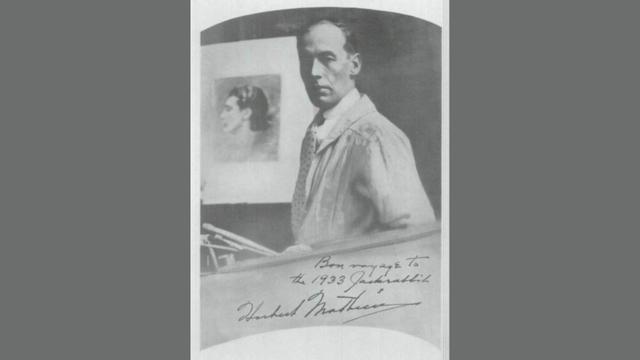

Hubbard believed that, unlike mere illustration, art always elicits a contribution from its audience.

Per il fondatore di Scientology, se la tecnica mette in pericolo la trasmissione del messaggio, l’artista dovrebbe cambiare la tecnica piuttosto che il messaggio.
The founder of Scientology believed that, if the technique endangers the transmission of the message, the artist should change the technique rather than the message.

Per tutta una cultura, “essere artisti si identificava con l’essere amorali, depravati, oziosi e dediti al bere”. Quella cultura, secondo Hubbard, sbagliava.
For a certain culture, being a good artist came to be “commonly identified with being loose-moraled, wicked, idle, and drunken.” That culture, Hubbard believed, was wrong.

Il fondatore di Scientology ha dedicato molta attenzione all’estetica. I suoi testi sul tema rimangono però poco noti.
The founder of Scientology devoted much attention to aesthetics. However, his texts on the subject remain little-known.

Five books by French scholar Christophe Stener rediscover a forgotten but not irrelevant character of 20th-century literature and esotericism.

Čiurlionis: the Lithuanian painter’s works include several symbolic references that may be attributed to Theosophical influences, but the relation remains conjectural.

Čiurlionis was a friend and pupil of Polish symbolist painter Kazimierz Stabrowski, a prominent Theosophist, and also read the works of Flammarion, another Theosophist.