The prosecutor had requested thirteen years. But innocent defendants should be acquitted, not receive “lenient” sentences to save the prosecutors’ face.
by Massimo Introvigne
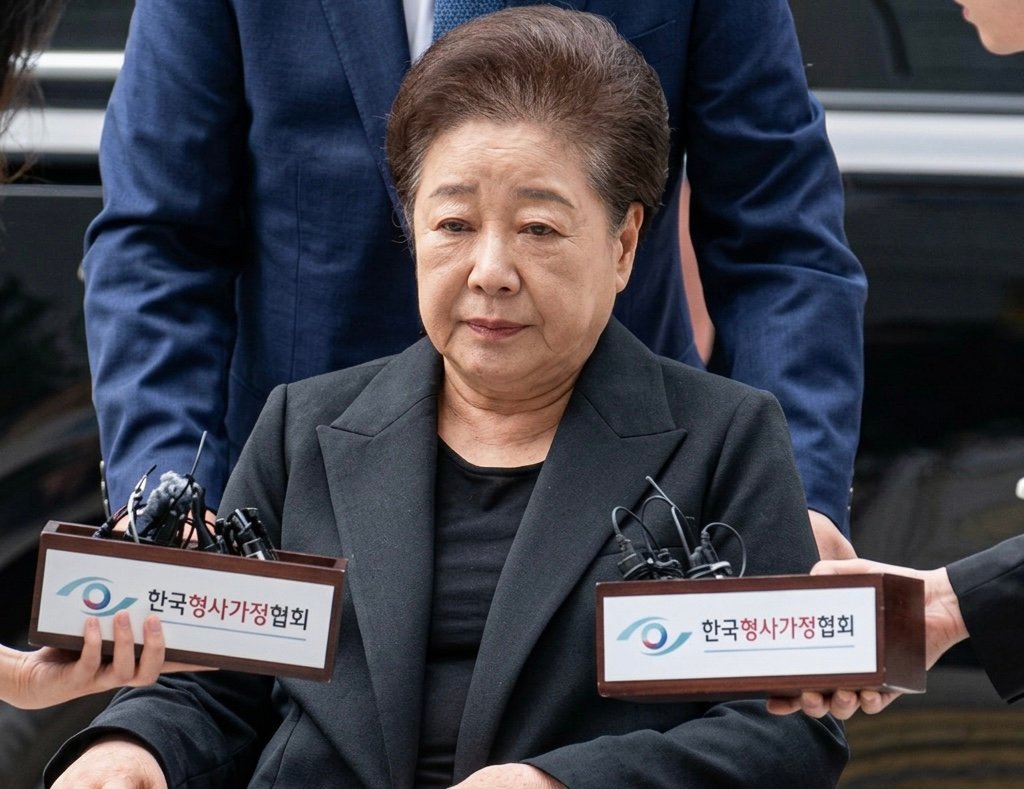
The Seoul Central District Court delivered a first-degree verdict in one of the criminal cases involving Mother Hak Ja Han Moon, the 83-year-old leader of the Family Federation for World Peace and Unification (FFWPU), formerly known as the Unification Church. The prosecution of the religious leader has become a symbol of the pressures conservative believers face in Korea today. Observers have followed a judicial process that expanded, contracted, and changed shape in ways that reveal the disturbing climate surrounding religion in the country.
This magazine’s position is not one of doubt, uncertainty, or ambiguity. Mother Han is innocent and should have been acquitted.
The case decided on August 31 began with allegations that Mother Han had authorized the gift of a Chanel handbag and a diamond necklace to the former First Lady. The special prosecutor later added claims that Mother Han was responsible for the financial support FFWPU provided to politicians in violation of the laws governing political contributions. The prosecutor merged these accusations into a single narrative and presented them as evidence of an attempt to influence political life.
A separate, still-pending case concerns contributions reportedly made by FFWPU members to several other MPs. After months of investigation, prosecutors concluded there is no evidence that Mother Han knew about these contributions. She has not been indicted in this second case and is no longer part of it, although other FFWPU leaders remain defendants.
There are other cases against Mother Han. One involves the alleged mass enrollment of FFWPU members in the conservative PPP party, which, even if true, in other countries would be considered part of the normal exercise of religious believers’ rights to participate in political life. Another concerns the alleged embezzlement of church funds—a case of stealing from her own pocket, given how intertwined the leader’s and the corporation’s funds are in new religious movements. Further charges and cases may be added, given the broad latitude afforded to special prosecutors on a mission to destroy the FFWPU.
The first case, the only one decided on August 31 in first degree, and subject to appeal, rests entirely on the testimony of a former FFWPU executive who was expelled from the movement. His accounts have shifted repeatedly. Documents, timelines, and his own earlier statements contradict him. He has adjusted his narrative each time prosecutors modified their theory. His credibility has collapsed under the weight of inconsistency and self‑interest. He sought to protect himself by accusing Mother Han, and the prosecution chose to rely on him as its foundation.
The prosecutor requested a penalty of thirteen years, which even the court regarded as disproportionate. The donations and gifts cited in the decision total less than 250,000 dollars. Presenting such modest sums as evidence of a grand political scheme creates an absurd impression. Korean politicians may be cheap, but it is difficult to believe that their national and international political choices could be bought for the price of a modest apartment in Seoul. The disproportionate request suggests political retaliation by the special prosecutor appointed to investigate the wrongdoings of the so-called “heretical cults” rather than a sober application of the law.
The court’s decision to sentence Mother Han to two years in jail, rather than the requested thirteen, restores a modicum of common sense to the case. But this is not good enough. Let me repeat this. Mother Han is innocent. Nothing in the record shows that she ordered, approved, or even knew of the acts of the FFWPU’s rogue executive. Innocent defendants should be acquitted, not sentenced “leniently” to save the prosecutors’ face.
Her prosecution has become part of a wider campaign against conservative religion in South Korea. Pastor Son Hyun‑bo of Segero Church, Chairman Lee Man‑hee of Shincheonji, and other leaders have faced similar pressures and have been arrested. Authorities have embraced expansive interpretations of election and contribution laws that, if accepted, would prevent believers from participating in political life. The consequences of this and of the other pending Mother Han cases reach far beyond one defendant.
The decision punishes an older woman whose life has been devoted to religious and humanitarian work. Millions worldwide call her the Mother of Peace. It also reveals that South Korea continues down a path where conservative religious communities are treated as political adversaries and where prosecutors use fragile testimony to dismantle movements they dislike. Campaigns against these groups in Korea are carried out with disturbing connections to Japanese anti-cult organizations and the Chinese Communist Party.
The case against Mother Han has become a symbol of this trend, and her innocence stands as a reminder of the dangers facing religious freedom in the country.
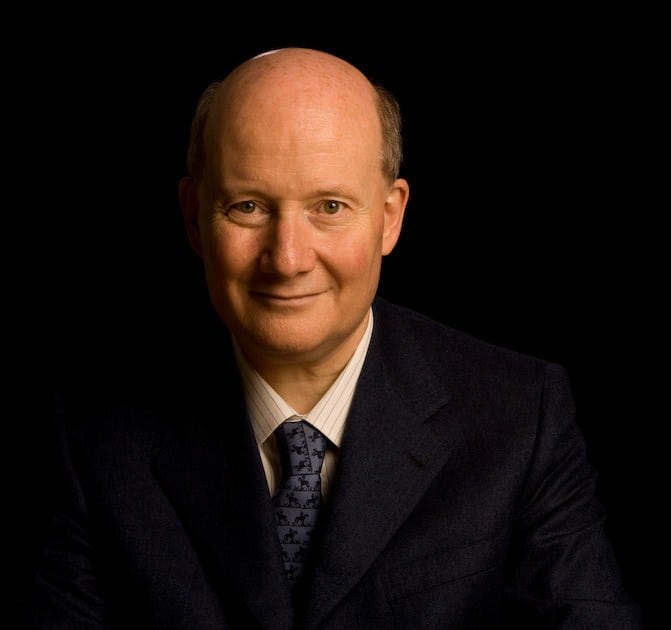
Massimo Introvigne (born June 14, 1955 in Rome) is an Italian sociologist of religions. He is the founder and managing director of the Center for Studies on New Religions (CESNUR), an international network of scholars who study new religious movements. Introvigne is the author of some 70 books and more than 100 articles in the field of sociology of religion. He was the main author of the Enciclopedia delle religioni in Italia (Encyclopedia of Religions in Italy). He is a member of the editorial board for the Interdisciplinary Journal of Research on Religion and of the executive board of University of Pennsylvania Press’ Nova Religio. From January 5 to December 31, 2011, he has served as the “Representative on combating racism, xenophobia and discrimination, with a special focus on discrimination against Christians and members of other religions” of the Organization for Security and Co-operation in Europe (OSCE). From 2012 to 2015 he served as chairperson of the Observatory of Religious Liberty, instituted by the Italian Ministry of Foreign Affairs in order to monitor problems of religious liberty on a worldwide scale.