Remember the “Indian cult” who asked female employees to be removed during its visit to the Tour Eiffel? It was fake news, an official report says.
by Massimo Introvigne
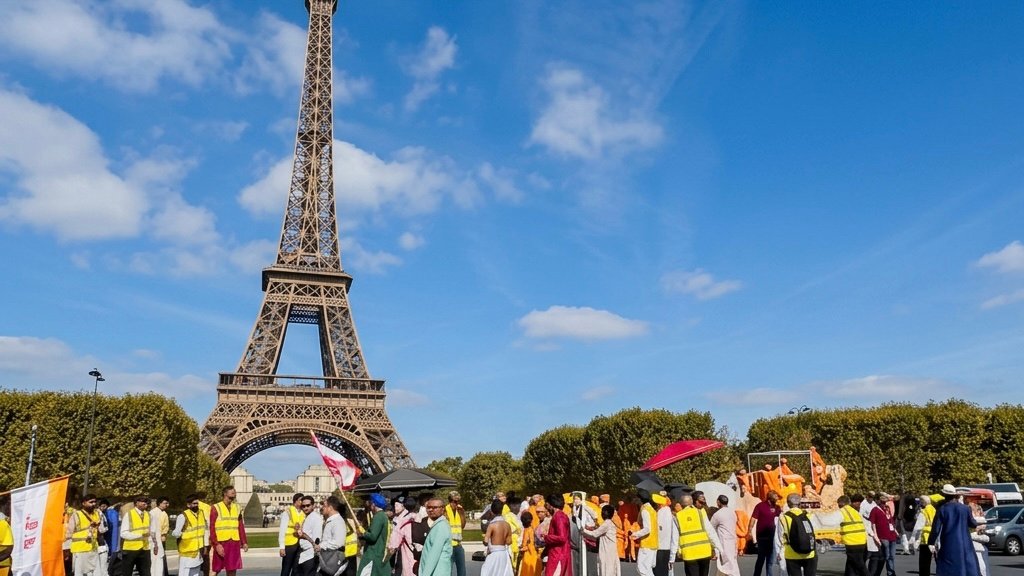
A controversy erupted in France at the beginning of September 2026, when a delegation of Bochasanwasi Akshar Purushottam Swaminarayan Sanstha (BAPS) visited the Eiffel Tower during events connected with the inauguration of its new temple in Bussy-Saint-Georges. Female employees were instructed to leave their posts, avoid certain areas, or be replaced by male colleagues. Staff walked out on September 7, and the monument closed for a day. Politicians reacted instantly, and several media outlets framed the episode as a case of gender discrimination imposed by a Hindu “cult” on a national landmark.
The most serious allegation claimed that BAPS had demanded the removal of all female employees along the entire route of the visit. This narrative circulated widely and appeared in headlines and video captions. Yet an investigation ordered by the City of Paris did not confirm that accusation. The report found no request from BAPS to exclude women from the route of its delegation. The Hindu organization was thus exonerated of the exclusion requirement attributed to it.
I followed the story closely because I already knew BAPS well. The movement has more than one million members and belongs to the wider Swaminarayan Hindu devotional tradition, which has more than twenty million followers worldwide. I have visited BAPS temples in India, the United Kingdom, and the United States, often together with my wife, and we were always received with courtesy and sympathy. The rules at issue concern male ascetics who have taken vows of brahmacharya. They avoid physical contact and close interaction with women, including handshakes, which differs from avoiding public settings where women are present. The idea that the delegation insisted that all female personnel be removed from the Eiffel Tower seemed inconsistent with what I had observed over the years.
The investigation found that the BAPS delegation’s request concerned brahmacharyas’ physical or close contact with women only. BAPS never asked to exclude women along the entire route. The report described a chain of decisions inside the Eiffel Tower operating company that gradually transformed a request about contact into staffing instructions that sidelined female employees. Men staffed security posts, female customer-relations employees were asked to move away from the group, a cleaner was told to wait until her break, and a woman working in an elevator was replaced during the delegation’s descent. The inquiry noted that the message had been distorted through word of mouth and that no legal or ethical advice had been sought before implementing these arrangements.
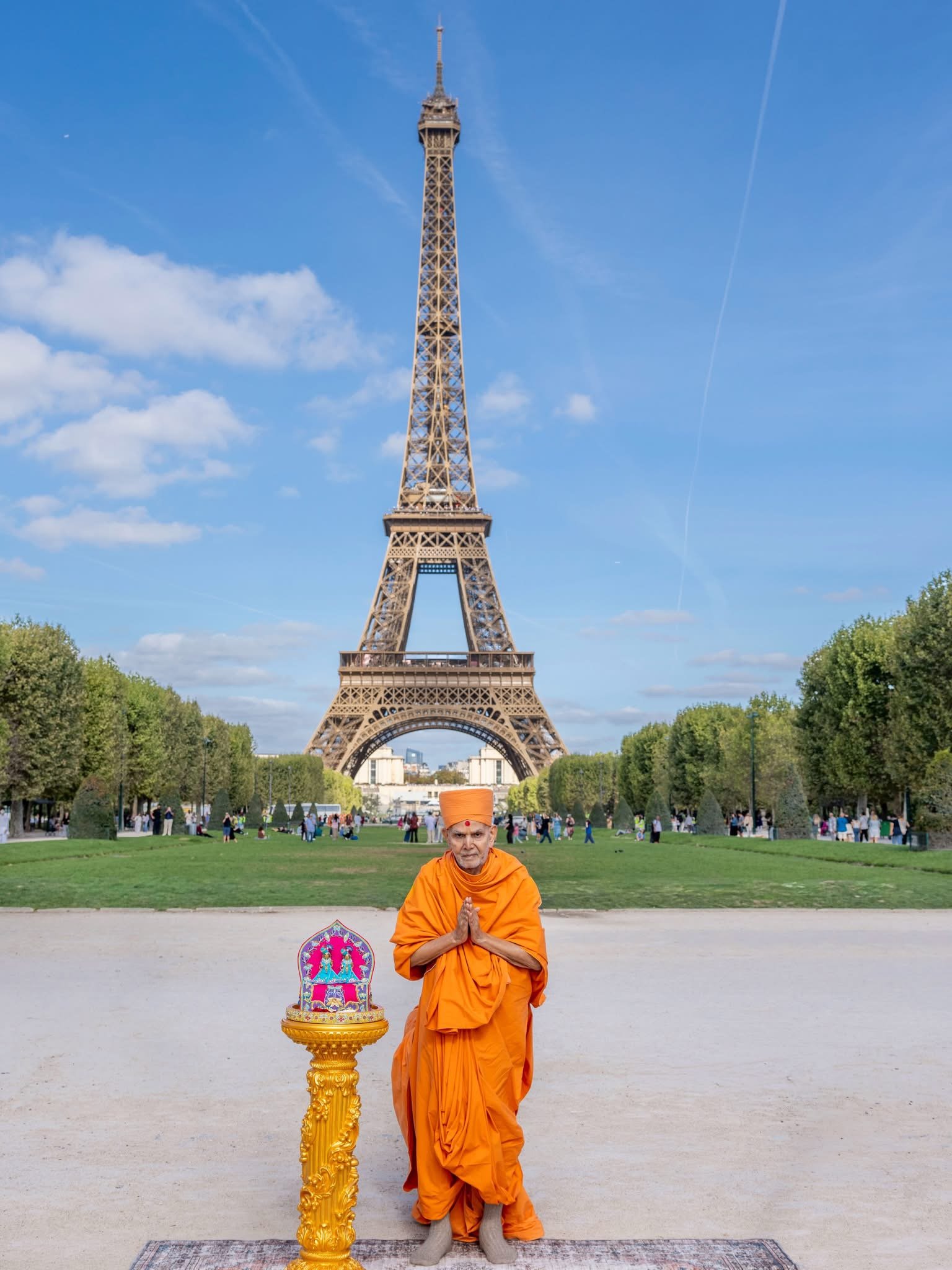
The operator, SETE, acknowledged operational failures. Its director general will leave at the end of 2026 following the internal investigation. The Paris inquiry, however, distinguished between the operator’s responsibilities and those of the Hindu delegation. BAPS France welcomed the findings and reiterated that it had never asked for female employees to be hidden, removed, or excluded. The controversy thus rested on two layers: the discrimination experienced by the staff and the attribution of a specific demand to BAPS that the investigation did not substantiate.
Several French outlets merged these layers. They presented the sidelining of female employees as the direct result of a categorical request by BAPS, even while the investigation was still underway. The initial coverage relied on a real fact, the sidelining of female employees, but added an attribution of responsibility presented with excessive confidence. The inquiry’s conclusions directly contradict that attribution and call for corrections, article updates, and clear information for readers. Without such revisions, the original misrepresentation remains accessible and continues to shape public perception.
This episode intersects with another front where BAPS has been targeted. “Bitter Winter” has already reported on the case in the United States concerning volunteer work for the construction of the large BAPS temple in Robbinsville, New Jersey.
The Department of Justice closed criminal investigations without charges, although a civil lawsuit continues. The accusations belong to a new fashion imported into the United States from Argentina, in which nonsalaried religious volunteer work is treated as trafficking. The Paris scandal, built around a distorted narrative of exclusion at the Eiffel Tower, appeared at a moment when BAPS was already under attack and may have been used to reinforce campaigns in the American legal and media environment.

The French context added its own biases. The country has a long tradition of suspicion toward minority religious movements, and the term “secte” (to be translated as “cult,” not as “sect”) carries strong negative connotations. A Hindu organization associated with ascetic rules about contact with women offered an easy target.
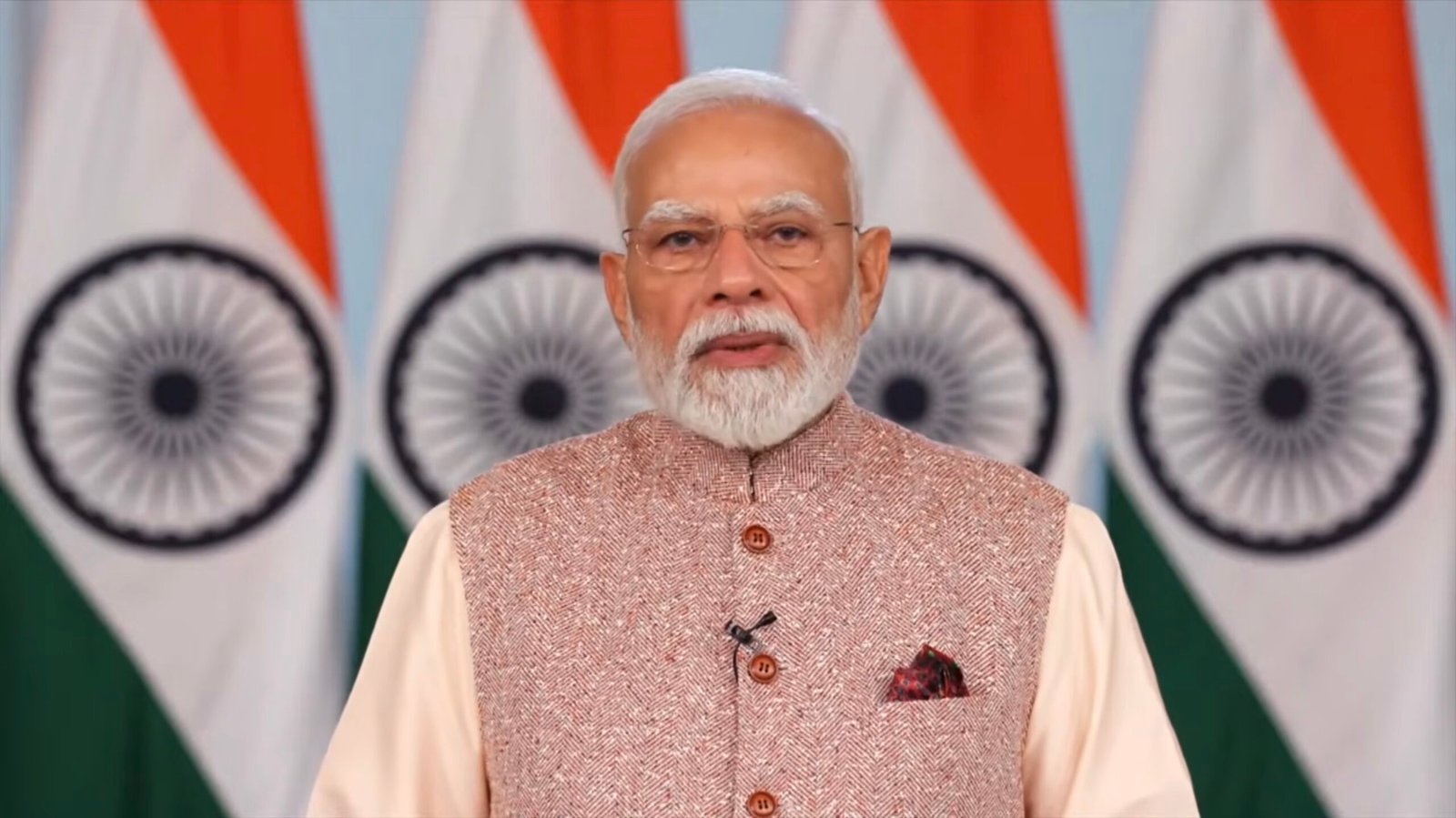
BAPS clearly has powerful enemies, perhaps tied to certain Indian political circles. One day after the Eiffel Tower incident, Prime Minister Narendra Modi spoke via video at the inauguration of the new BAPS temple in Paris, an event that placed the organization at the center of attention. The combination of gender, religion, and Indian politics created conditions for sensational coverage.
Journalism requires distinguishing between what has been established and what remains to be verified. In this case, the misattribution of a demand to exclude women transformed a workplace issue into a narrative about a “cult” imposing its rules on a national monument. Correcting that narrative involves revisiting earlier pieces, adjusting categorical formulations, apologizing, and telling readers, with the same emphasis, that the official inquiry did not confirm the central accusation against BAPS.
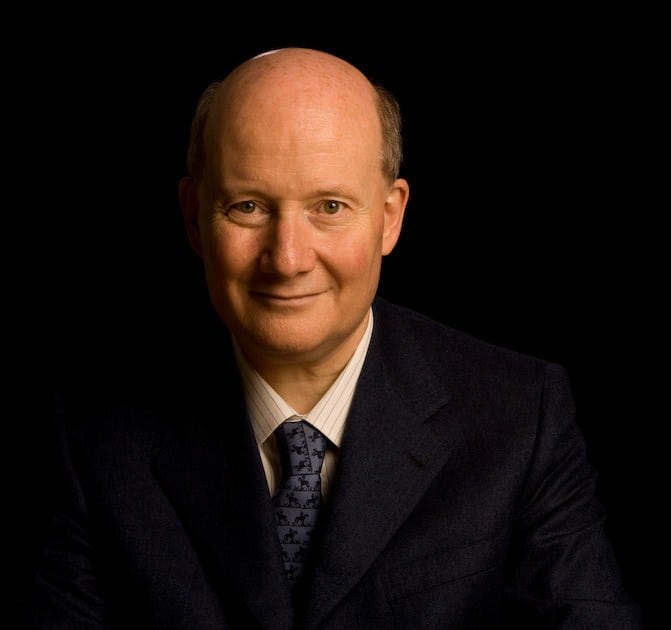
Massimo Introvigne (born June 14, 1955 in Rome) is an Italian sociologist of religions. He is the founder and managing director of the Center for Studies on New Religions (CESNUR), an international network of scholars who study new religious movements. Introvigne is the author of some 70 books and more than 100 articles in the field of sociology of religion. He was the main author of the Enciclopedia delle religioni in Italia (Encyclopedia of Religions in Italy). He is a member of the editorial board for the Interdisciplinary Journal of Research on Religion and of the executive board of University of Pennsylvania Press’ Nova Religio. From January 5 to December 31, 2011, he has served as the “Representative on combating racism, xenophobia and discrimination, with a special focus on discrimination against Christians and members of other religions” of the Organization for Security and Co-operation in Europe (OSCE). From 2012 to 2015 he served as chairperson of the Observatory of Religious Liberty, instituted by the Italian Ministry of Foreign Affairs in order to monitor problems of religious liberty on a worldwide scale.