A leading journalist documented, with statistical data, how activists and media fabricated a climate leading to the dissolution of the religious organization.
by Massimo Introvigne
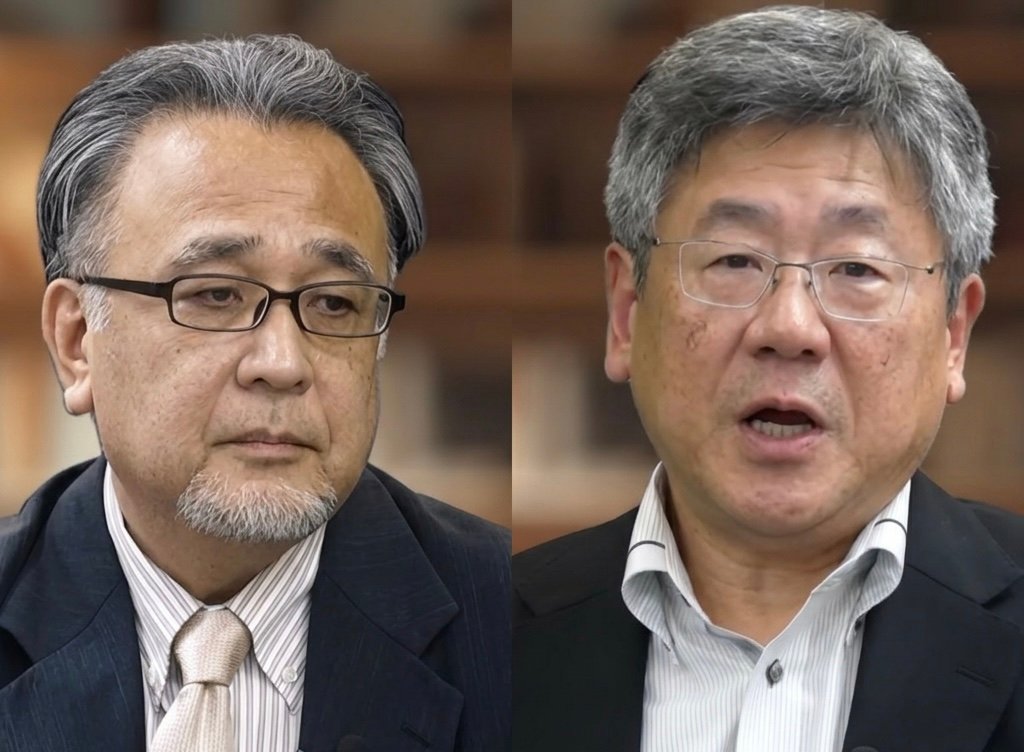
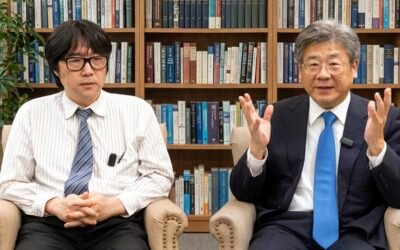
A long conversation between literary critic Eitaro Ogawa and journalist Fumihiro Kato has produced one of the most detailed reconstructions yet of how the Unification Church (now called the Family Federation for World Peace and Unification) became the center of a political storm after the assassination of Shinzo Abe. Kato has spent years cultivating a reputation as a meticulous fact-checker in Japan’s online conservative sphere, a man who reads documents line by line and treats footnotes as evidence rather than decoration. His followers on X describe him as a digital ombudsman who examines what the mainstream press leaves in the margins. In this case, he examined everything, and the picture that emerges is a study in how a narrative can be assembled with speed, emotional force, and political purpose.
Kato begins with the hours immediately following July 8, 2022, the day when Abe was assassinated. Television networks adopted a solemn tone, and the country appeared united in grief. That atmosphere dissolved with astonishing rapidity. At around eight in the evening, the online edition of the “Mainichi Shimbun” published an interview containing the chilling remark that there had been a reason Abe was killed. At the Nara Prefectural Police press conference that same night, a leak introduced the idea that the perpetrator’s mother had ties to a religious organization. Reporters were already discussing security failures, and the new information redirected speculation toward a group that had not yet been named. The decisive moment arrived in the early hours of July 10, when the photo weekly “FLASH” published an article timed with the opening of polling stations for the House of Councillors election, presenting the perpetrator as a tragic second-generation religion member. Within hours, the frame of the story shifted from mourning to religious issues, then to consumer complaints, and finally to the plight of second-generation believers. By July 11, the media had entered a campaign-like mode that treated the Unification Church as a national emergency.
Kato’s quantitative analysis reveals the scale of this transformation. Between July 10, 2022 and May 31, 2023, news organizations posted 4,246 tweets directing readers to coverage of the group. In July alone, roughly 300 media articles appeared, followed by nearly 1,000 in August. Natural language processing showed that the most frequent nouns were lawmakers, prime minister, organization, and points of contact. Names such as Prime Minister Kishida and Abe dominated the landscape. The verb-linked noun that appeared with overwhelming frequency was relationship. Words that would normally anchor a discussion of wrongdoing, such as donations or harm, appeared only sporadically. The reporting revolved around political responsibility and alleged deep collusion between the Liberal Democratic Party and the Unification Church. The fact that politicians and the group had ties was repeated endlessly, although the nature of those ties remained undefined. In that vacuum, the idea took hold that the existence of a relationship was itself incriminating, and public opinion moved toward supporting a dissolution order without a clear understanding of the facts.
Kato’s correlation analysis visualized the architecture of this narrative. At the center of the network diagram were terms such as Prime Minister Kishida, political situation, relationship, and LDP. Words associated with the Unification Church’s alleged wrongdoings, including donations and spiritual sales, appeared on the periphery. The structure suggested a sequence in which interpretations promoted by the anti-Unificatio-Church and left-leaning National Network of Lawyers Against Spiritual Sales were taken up by the Constitutional Democratic Party for questioning in the Diet, and the direction of attack targeted the Kishida administration. Concrete issues involving the Unification Church served as material for political confrontation, while the reporting consistently revolved around the political situation. Even coverage of the government’s response was framed as evidence of administrative illegitimacy rather than an attempt to address alleged problems.
The emotional tone of the reporting further shaped public perception. Coverage of mass weddings relied on adjectives that would normally be used sparingly in objective journalism. The term “urawakai,” meaning young and innocent, appeared with unusual frequency. Between 2004 and 2024, it appeared in the media outside Unification Church contexts only twice, in promotional material for television programs. Its use in this context encouraged viewers to imagine inexperienced young women being deceived. The wide-show program “Miyaneya,” which devoted extensive attention to the issue, relied on notorious anti-Unification-Church activists, including journalist Eight Suzuki and attorney Masaki Kito, whose search volume rose more through gossip than through substantive commentary. Their role resembled that of scandal interpreters rather than information providers. Through this lens, the group was depicted as a stain on the community’s moral fabric, and that image was projected onto Prime Minister Kishida and the LDP, even though the connection was tenuous.

Despite the intensity of the media campaign, Kato’s data suggest that public engagement was limited. “Miyaneya” recorded a 7 percent audience rating during its coverage of the issue, but once background viewing was excluded, the number ofhbv households actively engaged amounted to only 2 to 3.5 percent. Google searches for “Unification Church” surged on July 17, 2022, then fell sharply within days, and by October interest had nearly vanished. Searches were concentrated in parts of Tokyo and in Nara City, rather than nationwide. Yet the media presented this limited interest as a national atmosphere, creating pressure on the Kishida administration. Fearing the loss of public support, the government and the LDP adopted hard-line measures, including severing ties with the Church and requesting a dissolution order. The Ministry of Education, Culture, Sports, Science and Technology justified its stance by citing anxiety and confusion among many people, an expression that reflected the influence of a manufactured atmosphere rather than concrete evidence.
The interview concludes with a warning. Kato describes the sequence of events as a form of information warfare in which activists disseminated a narrative, the media amplified it, and the public followed under pressure to conform. The fact that the Tokyo District Court and High Court cited civil lawsuits from forty years ago as grounds for dissolution is an alarming precedent. If the judiciary yields to an abstract social problem created by reporting, without concrete ongoing criminal facts, the result is a form of judicial suicide. Should the Supreme Court endorse this trajectory, Japan risks becoming a society in which a damaging reputation created by activists or the media can erase individuals or organizations without legal protection. The implications extend far beyond the fate of a single religious group. They concern the foundations of judicial independence and human rights in a society where political pressure can be disguised as reporting.

Massimo Introvigne (born June 14, 1955 in Rome) is an Italian sociologist of religions. He is the founder and managing director of the Center for Studies on New Religions (CESNUR), an international network of scholars who study new religious movements. Introvigne is the author of some 70 books and more than 100 articles in the field of sociology of religion. He was the main author of the Enciclopedia delle religioni in Italia (Encyclopedia of Religions in Italy). He is a member of the editorial board for the Interdisciplinary Journal of Research on Religion and of the executive board of University of Pennsylvania Press’ Nova Religio. From January 5 to December 31, 2011, he has served as the “Representative on combating racism, xenophobia and discrimination, with a special focus on discrimination against Christians and members of other religions” of the Organization for Security and Co-operation in Europe (OSCE). From 2012 to 2015 he served as chairperson of the Observatory of Religious Liberty, instituted by the Italian Ministry of Foreign Affairs in order to monitor problems of religious liberty on a worldwide scale.