The statute allowing dissolution should be interpreted restrictively. This is not reflected in the High Court’s decision.
by Manabu Ishizaki
Article 5 of 6. Read article 1, article 2, article 3, and article 4.
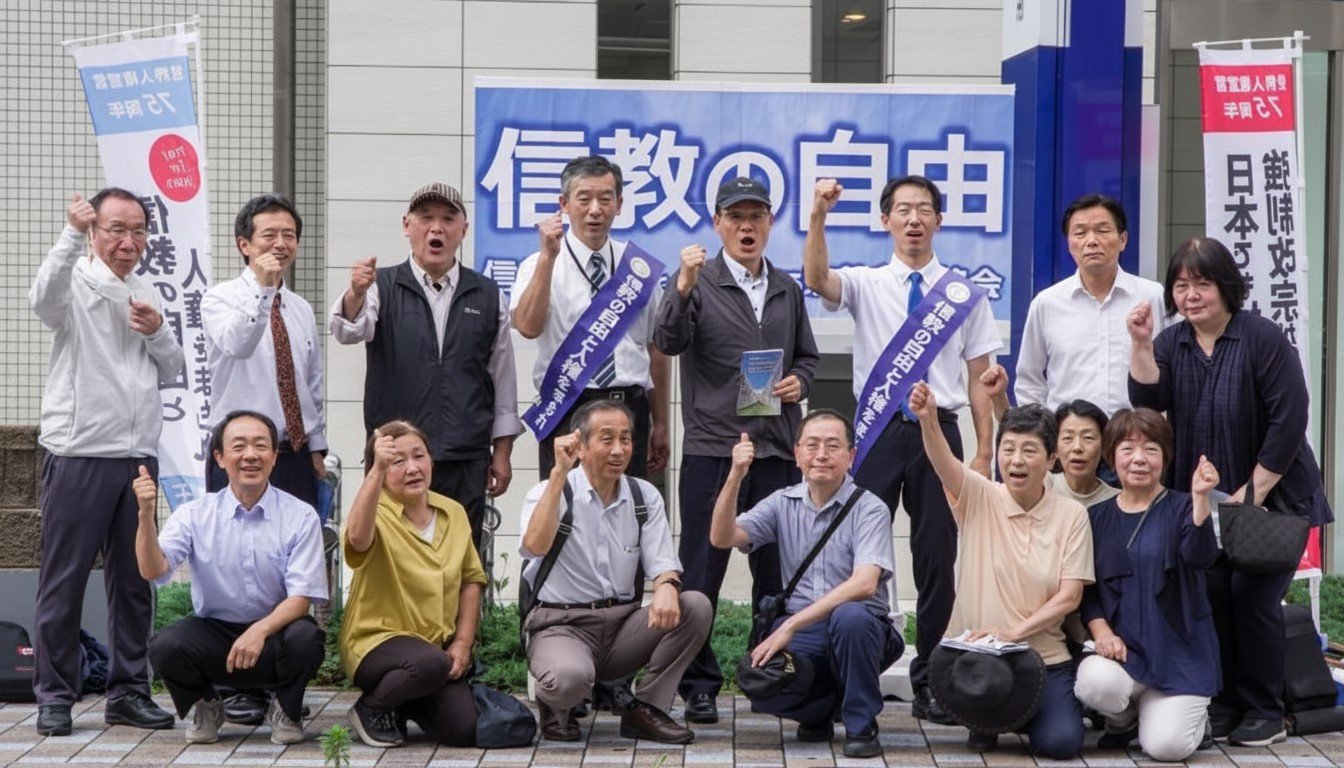
A Narrow (Limiting) Interpretation of Article 81, Paragraph 1, Item (i) of the Religious Corporations Act
With respect to the term “laws and regulations” in this item, one commentary explains that it “refers, of course, to all statutes, orders, ordinances, and the like.” It is also understood that “the actor of the conduct falling under this item is the religious corporation.” The expressions “substantially” (ichijirushiku) and “clearly” (akiraka ni) are interpreted as “emphasizing that the conduct in question is objective and manifest” (Yoshio Watanabe, “Article-by-Article Commentary on the Religious Corporations Act” [4th rev. ed.], Gyosei, 2009, p. 378).
Moreover, the decision of the Supreme Court of Japan dated March 3, 2025 (LEX/DB No. 25574121) held that even if acts constituting a tort under Article 709 of the Civil Code are construed as acts “in violation of laws and regulations” within the meaning of this item, such an interpretation “does not run counter to the text of the provision,” and “rather accords with its purpose.” The reasoning is that “acts constituting a tort under Article 709 of the Civil Code involve the intentional or negligent infringement of the rights of others or legally protected interests; accordingly, such acts may give rise to a situation clearly recognized as substantially harming the public welfare, making it inappropriate to continue to confer legal capacity on the religious organization concerned.”
The phrase “public welfare,” as used in Articles 12 and 13 of the Constitution, is highly abstract; however, in constitutional theory, the mainstream approach remains to determine its content through a balancing of interests (Satoshi Yokodaido and Toshihiro Yoshida, “Constitutional Literacy,” Yuhikaku, 2022, p. 228). That is, it is understood that “by comparing the interests achieved by restricting a right with the interests preserved by not restricting it, if the former is judged to be of greater value, the restriction of the right is permissible” (Nobuyoshi Ashibe, op. cit., p. 105). The “public welfare” referred to in Article 81, paragraph 1, item (i) of the Religious Corporations Act should be understood in the same sense.
Accordingly, the benefit obtained by depriving a religious organization of legal personality through a dissolution order must, given that the right to acquire legal personality is a constitutional right (indeed, one about spiritual freedom), be of greater value than that right to justify such a restriction.
It is therefore necessary to ask whether the harm caused by acts constituting a tort under Article 709 of the Civil Code—even where such harm is recognized—can be regarded as more significant than the interest secured by not restricting the constitutional right of a religious corporation to acquire legal personality. The former typically concerns the protection of economic interests, which do not directly implicate life or bodily liberty and are, in principle, capable of redress through claims for damages. By contrast, the latter, as discussed above, constitutes an indispensable interest for a religious organization to function legally and in practice.
Furthermore, Article 81, paragraph 1, item (i) includes the term “substantially.” What, then, constitutes an economic tort that “substantially” infringes the economic interests of others? It should be limited to exceptional cases—such as those that fundamentally deprive others of the basis of their livelihood and cannot readily be remedied by ex post claims for damages.
In any event, acts constituting torts vary widely, ranging from those affecting life and bodily integrity to those affecting economic interests. If acts constituting torts under Article 709 of the Civil Code are to be included within “acts in violation of laws and regulations,” then preventing such acts must be of sufficient importance to justify restricting the constitutional right of religious organizations to acquire legal personality.
In addition, a dissolution order is permissible only where it is “clearly” recognized that the conduct of the religious corporation substantially harms the public welfare. Since this term “clearly” appears in a statutory provision that restricts a constitutional right—namely, the right of religious organizations to acquire legal personality—it must be interpreted in a highly restrictive manner. It must not be construed to include vague risks such as a mere “possibility” that the public welfare may be substantially harmed; rather, the danger must be present, and of such a nature that it cannot be prevented by other means.
In this regard, the Supreme Court of Japan’s decision in the Izumisano Civic Hall case (March 7, 1995, Minshu Vol. 49, No. 3, p. 687) is instructive. There, in interpreting the phrase “where there is a risk of disturbing public order” under a municipal ordinance, the Court limited its meaning to the prevention of “danger that the holding of a meeting will result in harm to life, body, or property, thereby undermining public safety,” and further held that “it is not sufficient that there is merely a likelihood of such a dangerous situation; rather, a clear and imminent danger must be specifically foreseeable.”
Similarly, in the Narita New Law case (July 1, 1992, Minshu Vol. 46, No. 5, p. 1425), the Court narrowly interpreted the statutory definition of “persons engaging in violent, destructive activities” to mean “persons who are actually engaging in such activities or for whom there is a high probability of doing so.” These precedents provide useful guidance.
It should also be noted that constitutional scholars have pointed out that, while it is “strongly argued” that the competent authority should exercise its power to question religious corporations under the Religious Corporations Act or to seek dissolution orders, “there is no doubt that some problematic religious corporations exist and that there is a need to address them. However, it is not appropriate to grant administrative authorities comprehensive powers to regulate and supervise religious activities; rather, the authority to regulate religious activities must be justified on a case-by-case basis.” The Act on Prevention of Improper Solicitation of Donations by Corporations, etc. (Act No. 105 of 2022) is cited as an example of such specific and targeted regulation (Hajime Tajika, op. cit., p. 53).
Accordingly, the requirement under Article 81, paragraph 1, item (i) that conduct “clearly” and “substantially” harm the public welfare should be interpreted to mean that there must be a present occurrence of grave harm that cannot be prevented even through enforcement measures under such targeted statutes as the Act on Prevention of Improper Solicitation of Donations.
Assessment of the Tokyo High Court Decision in the Present Case
In light of the foregoing, the Tokyo High Court’s decision in this case (March 4, 2026; not yet reported; hereinafter, the “Decision”) is evaluated from a constitutional law perspective as follows.
First, although a limiting interpretation consistent with the purpose of the law was required with respect to the phrase “an act that is clearly recognized as substantially harming the public welfare” in Article 81, paragraph 1, item (i) of the Religious Corporations Act, the Decision failed to undertake such an interpretation. Instead, it readily affirmed the impropriety of the appellant’s purposes, the egregious nature of the manner of solicitation of excessive donations, and the gravity of the resulting harm. In doing so, it treated the acts of individual adherents as acts of the religious corporation itself, based on findings such as that the appellant “tacitly tolerated” such solicitation conduct or “failed to take sufficient measures to prevent it despite being able to readily recognize that such conduct would continue” (p. 156). It further found, without adequate explanation, that such conduct “restricted the free will of the targeted individuals and placed them in a condition in which it was difficult to make appropriate decisions as to whether to make donations” (pp. 156–157), and assessed the seriousness of the outcome by including settlement payments corresponding to property damage and emotional distress (p. 157). As an interpretation of a legal provision that results in the deprivation of a constitutional right—the right of religious organizations to acquire legal personality—this approach is highly inappropriate. This is because it fails to account for the balancing of interests that the statutory language presupposes, instead weighing only those factors unfavorable to the appellant.
In this respect, the Decision may be evaluated as having erred in constitutional interpretation—by failing to take into account the constitutional right of religious organizations to acquire legal personality (Non-Contentious Case Procedures Act, Article 75)—and, as a consequence, having misinterpreted Article 81, paragraph 1, item (i) of the Religious Corporations Act.
Second, having found that the appellant fell within the scope of Article 81, paragraph 1, item (i), the Decision rejected the appellant’s argument that the interests infringed by the solicitation of excessive donations were merely “private interests.” It instead characterized the interest harmed as “the public interest in maintaining a social order in which ordinary citizens can live peacefully without having their property interests infringed” (p. 158). However, without examining the present existence of such harm, the Decision abruptly inflated the weight of this interest on one side of the balance and thereby affirmed the applicability of the provision. At the same time, it failed entirely to place on the other side of the scale the constitutional right at issue—namely, the right of religious organizations to acquire legal personality. Moreover, while acknowledging that “the number of cases and the amount of damage after the so-called compliance declaration are not necessarily clear,” and even suggesting that they may have remained “at roughly the same level as before” (p. 159), the Decision nevertheless concluded that it was “clear” that acts substantially harming the public welfare were being committed. Such a conclusion cannot reasonably be sustained. Here again, the Decision commits an error of legal interpretation by failing to conduct the required balancing of interests.
Third, about the necessity of dissolving the appellant, the Decision states that “there is no clear evidence of civil litigation concerning problematic solicitation conduct after the shooting of former Prime Minister Shinzo Abe,” yet nonetheless asserts that there remains a “risk” that such conduct will continue (p. 162). Once again, there is no demonstration that the risk is present and cannot be prevented by other means. Despite the absence of clear evidence and reliance merely on a speculative “risk,” the Decision readily approves the deprivation of the appellant’s legal right—namely, the right of a religious organization to acquire legal personality. This, too, constitutes an error in constitutional interpretation.
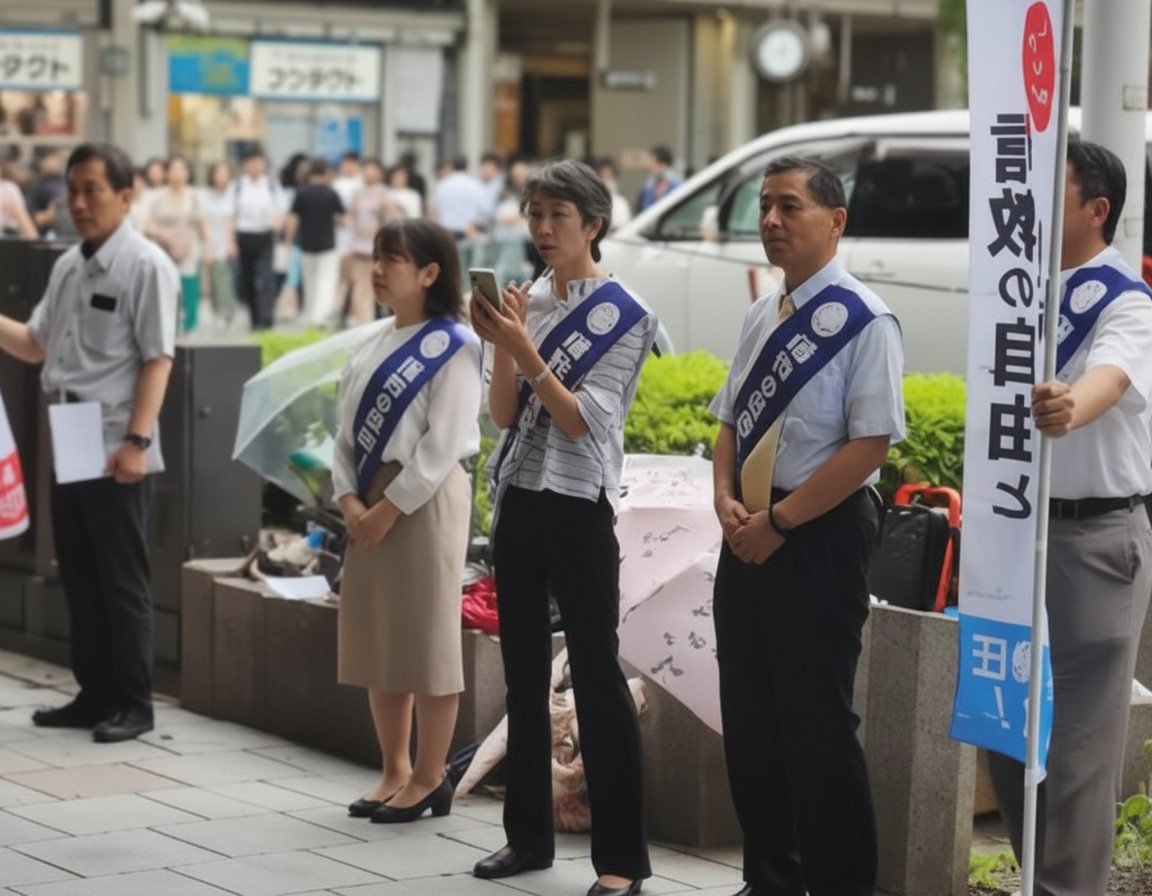
Ultimately, the fundamental cause of the Decision’s multiple errors in interpreting both constitutional law and the Religious Corporations Act lies in its failure to recognize that Article 20, paragraph 1 of the Constitution guarantees religious organizations the right to acquire legal personality. Instead, the Decision states that “even if a dissolution order dissolves a religious corporation, believers are not prevented from maintaining or newly forming a religious organization without legal personality, nor are they prevented from engaging in religious acts or preparing facilities and materials for such purposes. In other words, a dissolution order does not entail any legal effect prohibiting or restricting the religious acts of believers” (p. 161). By taking this position, the Decision effectively denies the constitutional right that should be placed on one side of the balancing scale, leaving that side empty while loading only the opposing interests onto the other side. In other words, it failed to conduct the required balancing of interests.
For these reasons, the Decision, having fundamentally erred in its constitutional interpretation, should be quashed by the Supreme Court.

Manabu Ishizaki (photo omitted for privacy reasons) is a Japanese constitutional scholar and professor in the Department of Law, Faculty of Law, Ryukoku University. Born in 1968 in Kanagawa Prefecture, he graduated from the Department of Law at the Faculty of Law, Meiji University, in 1992. He completed the doctoral program at the Graduate School of Law, Ritsumeikan University, in 1997. He became an assistant at the Faculty of Law, Asia University in 1998, a full-time lecturer in 1999, and an associate professor in 2002. He became a professor at the Ryukoku University Law School in 2010 and at the Faculty of Law, Ryukoku University, in 2017. Professor Ishizaki specializes in constitutional law, with research focusing on modern human rights theory, Article 9 of the Japanese Constitution, and the rights of persons with a psychiatric disability. His major publications include “The Transition of Human Rights” and “Real Constitutional Law” (co-edited).