A case of such importance and consequences should have been conducted in open court. That it was not was a further violation of the Constitution.
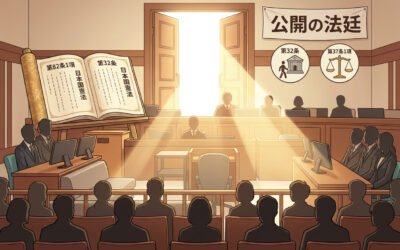

A case of such importance and consequences should have been conducted in open court. That it was not was a further violation of the Constitution.
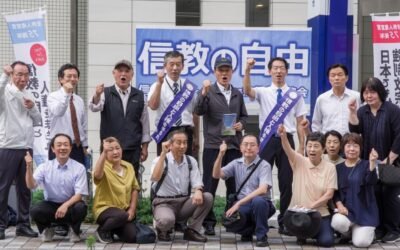
The statute allowing dissolution should be interpreted restrictively. This is not reflected in the High Court’s decision.

Freedom of religion or belief should always be taken into account when dealing with the dissolution of a religious body.

The path to full freedom of association in France was long and not easy. What was achieved there has inspired scholars of the Japanese Constitution.
The associations’ right to exist and operate as legal persons is a fundamental, universal right. The Japanese Constitution also recognizes it.

A leading Japanese Constitutional Law scholar offers a critical analysis of the High Court decision.
Manabu Ishizaki (photo omitted for privacy reasons) is a Japanese constitutional scholar and professor in the Department of Law, Faculty of Law, Ryukoku University. Born in 1968 in Kanagawa Prefecture, he graduated from the Department of Law at the Faculty of Law, Meiji University, in 1992. He completed the doctoral program at the Graduate School of Law, Ritsumeikan University, in 1997. He became an assistant at the Faculty of Law, Asia University in 1998, a full-time lecturer in 1999, and an associate professor in 2002. He became a professor at the Ryukoku University Law School in 2010 and at the Faculty of Law, Ryukoku University, in 2017. Professor Ishizaki specializes in constitutional law, with research focusing on modern human rights theory, Article 9 of the Japanese Constitution, and the rights of persons with a psychiatric disability. His major publications include “The Transition of Human Rights” and “Real Constitutional Law” (co-edited).