Nothing in today’s anti-cult agitation can be compared to the scale of the Rwandan genocide. Yet, the logic is the same: dehumanization, fear, and hate speech.
Massimo Introvigne*
*A paper presented at the Fourth World Conference for Religious Dialogue and Cooperation, Skopje, North Macedonia, June 24, 2026.
Article 2 of 2. Read article 1.
The Rwandan genocide shows how media can transform prejudice into action, how words can become weapons, and how the spiral of intolerance can accelerate when extremists capture communication channels. Similar mechanisms operate in contemporary campaigns against new religious movements labeled as “cults,” and the same logic of intolerance, discrimination, and persecution continues to threaten minorities today.
When we move from the Rwandan genocide to contemporary campaigns against new religious movements, we must begin with a clear and necessary disclaimer. Nothing in today’s world of anti-cult agitation, discriminatory laws, or violent incidents can be compared to the scale of the genocide of the Tutsi or to the millions of deaths that followed in the Congo wars. Rwanda stands alone in its magnitude and horror. Yet, although the scale is incomparable, the mechanisms are disturbingly familiar. The same spiral of intolerance described in the Rome Model—intolerance, discrimination, violence—can be observed, in milder but still dangerous forms, in the treatment of religious minorities stigmatized as “cults.” The logic is the same: dehumanization, fear, and the construction of an existential threat that justifies exceptional measures.
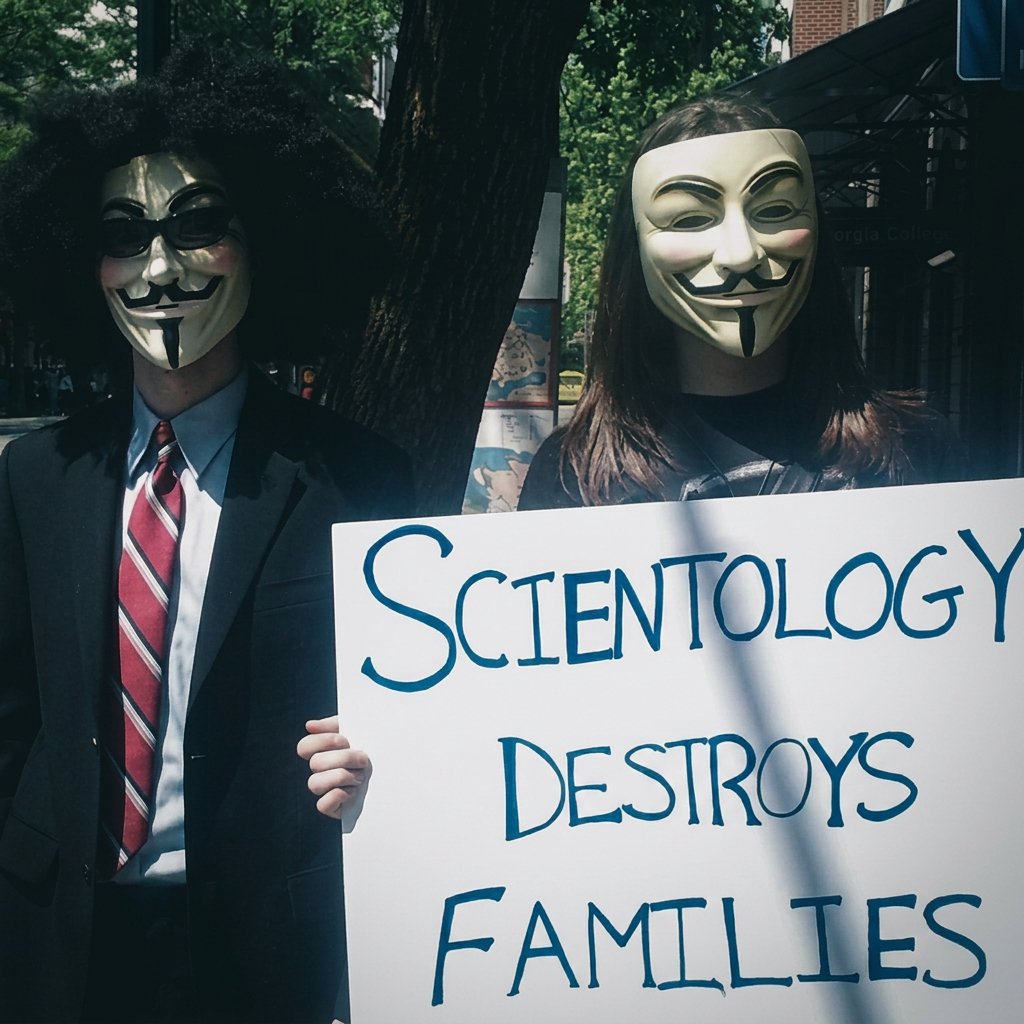
This is not a new insight. Twenty-five years ago, in an article published in “Terrorism and Political Violence,” I examined how moral panics against so-called “cults” had already produced violence. Drawing on the work of Philip Jenkins and others, I argued that when media, activists, and politicians inflate a perceived threat, society enters a state of collective hysteria. In this climate, groups labeled as “cults” are no longer seen as neighbors or fellow citizens but as dangerous conspirators. The result, I argued, was a new and under-recognized phenomenon: anticult terrorism. This was not a metaphor. By the year 2000, there had already been arson attacks and murders of Jehovah’s Witnesses and Latter-day Saints missionaries, bombings of Unification Church centers in France, attacks against the Argentinian movement New Acropolis, and assaults on Scientology facilities.
The reaction to my article was predictably hostile among anticult activists, but the category endured because it described a real pattern. In 2018, when the “Journal of Religion and Violence” invited me to serve as guest editor for a special issue on “New Religious Movements and Violence,” I emphasized that the relationship between new religious movements and violence is bidirectional. Some groups perpetrate violence, from internal abuse to terrorist attacks. But others are victims of violence, discrimination, and terrorism. Academic literature had long focused on the first category; it was time to acknowledge the second as well.
Recent events have confirmed this need. In 2019, a teenager in Sydney stormed a Scientology church, claiming he wanted to “rescue” his mother. He killed a Taiwanese Scientologist. At trial, he was declared not criminally responsible due to schizophrenia. Anticult activists celebrated the verdict as a vindication of their narrative: the boy was a mental health case, not a murderer. Yet a man was dead. The border between paranoia and ideological violence is thin. As the saying goes, real paranoids have real enemies. When a society constructs a group as dangerous, omnipotent, and malevolent, individuals with fragile mental health may interpret their personal grievances through that narrative and act violently. This is precisely how moral panics become terrorism.

The same dynamic explains why Scientology expressed concern when teenagers recently invented the “sport” of running into its facilities to see how long they could remain before being expelled. To some, this seemed like harmless mischief. But precedents suggest caution. When a group is systematically the victim of hate speech, even playful transgression can escalate into violence. The spiral of intolerance begins with ridicule, moves to discrimination, and can end in tragedy.
Another recent example is the hate campaign against the Ahmadi Religion of Peace and Light (AROPL)—a small Shia-derivative movement not to be confused with the large Sunni-derivative Ahmadiyya Community. In the United Kingdom, sensationalized media reports and online hostility created a climate of suspicion. A single ex-member made accusations that were amplified far beyond their evidentiary value. The result was a police raid involving 500 officers, a level of force utterly disproportionate to the allegations. This was the second stage of the Rome Model: discrimination through administrative overreach. But the spiral did not stop there. Racist and right-wing extremists, emboldened by the media narrative, attacked the AROPL headquarters, throwing stones, injuring those inside, and attempting to set the building on fire. Here again, intolerance led to discrimination, and discrimination to violence.

The pattern repeats itself. First, a group is labeled a “cult,” a term with no legal definition but immense emotional power. Then media narratives portray it as manipulative, dangerous, or socially disruptive. Politicians call for investigations. Bureaucracies respond with raids, seizures, or punitive regulations. And finally, individuals—sometimes mentally unstable, sometimes ideologically motivated—commit acts of violence, believing they are defending society. This is the Rome Model in action, not in the catastrophic form seen in Rwanda, but in a form that still destroys lives, stigmatizes minorities, and corrodes democratic norms.
The assassination of former Japanese Prime Minister Shinzo Abe in 2022 is a case in point. The killer, Tetsuya Yamagami, claimed he acted because his mother had donated to the Unification Church. The Japanese media, influenced by decades of anti-cult activism, framed him not as a terrorist but as a tragic victim. Yet the logic of terrorism was clear: he killed a political figure he did not know personally, for ideological reasons. In fact, this was a textbook case of anticult terrorism. The moral panic surrounding the Unification Church did not pull the trigger. Still, it created the narrative framework that made the crime intelligible to the perpetrator and excusable to many observers.
What connects these cases is not their scale but their structure. The same mechanisms that operated in Rwanda—dehumanization, conspiracy narratives, the construction of an existential threat—are at work today in campaigns against religious minorities. The media play a central role in shaping perceptions, amplifying fears, and legitimizing exceptional measures. When a group is portrayed as a danger to society, the spiral of intolerance begins. And once it begins, it is difficult to stop.
This is why the Rome Model remains relevant. It reminds us that intolerance is not harmless. It is the first step in a process that can lead to discrimination and, in some cases, to violence. It reminds us that media narratives matter, that words can kill, and that societies must be vigilant in protecting the dignity and rights of all groups, including those that are unpopular or misunderstood.
The lesson of Rwanda is not that every moral panic leads to genocide. It is that every genocide begins with a moral panic. The lesson for today is that the spiral of intolerance, once set in motion, can have unpredictable and devastating consequences. Whether the target is an ethnic minority or a religious movement labeled a “cult,” the logic is the same. And the responsibility to break the spiral before it reaches its final stage belongs to all of us. Words matter, narratives matter, and the defense of human dignity begins with resisting the first step on the slippery slope.

Massimo Introvigne (born June 14, 1955 in Rome) is an Italian sociologist of religions. He is the founder and managing director of the Center for Studies on New Religions (CESNUR), an international network of scholars who study new religious movements. Introvigne is the author of some 70 books and more than 100 articles in the field of sociology of religion. He was the main author of the Enciclopedia delle religioni in Italia (Encyclopedia of Religions in Italy). He is a member of the editorial board for the Interdisciplinary Journal of Research on Religion and of the executive board of University of Pennsylvania Press’ Nova Religio. From January 5 to December 31, 2011, he has served as the “Representative on combating racism, xenophobia and discrimination, with a special focus on discrimination against Christians and members of other religions” of the Organization for Security and Co-operation in Europe (OSCE). From 2012 to 2015 he served as chairperson of the Observatory of Religious Liberty, instituted by the Italian Ministry of Foreign Affairs in order to monitor problems of religious liberty on a worldwide scale.