Advance publication will start in “Bitter Winter” on July 27, followed by a special issue of “The Journal of CESNUR”.
by “Bitter Winter”

A commission of ten international scholars has completed a landmark, multidisciplinary study of the life, teachings, and legal cases of Russian spiritual teacher Konstantin Rudnev and of his school, often referred to as “Ashram Shambhala,” although he never founded an organization with this name and does not manage any organized activity today. The results will first appear from July 27 as a ten-part series in the daily magazine “Bitter Winter” and, subsequently, in expanded and annotated form, in the September/October issue of “The Journal of CESNUR.” The “Journal” edition will open with a foreword by James T. Richardson, Professor Emeritus of Sociology and Judicial Studies at the University of Nevada, Reno, widely regarded as one of the foremost international authorities on the relationship between law and religion.
The series begins with an in-depth reconstruction of Rudnev’s early life by Massimo Introvigne, Italian sociologist, managing director of CESNUR, and one of the world’s best-known specialists in new religious movements. Introvigne shows how Rudnev’s biography—shaped by Soviet repression, yoga practice, and a sincere search for inner transformation—contradicts the caricature of the “cult leader” disseminated by Russian authorities and repeated uncritically abroad.
The second article, by Patricia Duval, a Paris-based human rights attorney specialized in international law who regularly defends religious liberty cases at the United Nations in Geneva, examines the Russian criminal case. Duval documents systemic violations of due process, the use of discredited notions such as “brainwashing,” and the ideological framework of “spiritual security” that has long been used to repress minority spiritual movements in the Russian Federation.
In the third contribution, Alessandro Amicarelli, a London human rights lawyer and President of the European Federation for Freedom of Belief (FOB), focuses on the Montenegro phase of Rudnev’s story. Amicarelli analyzes how Russian accusations and media narratives were imported into Montenegrin legal and political debates, how they influenced local decisions about Rudnev’s status, police harassment, and media slander, and how this intermediate stage became a crucial link in the chain that eventually led to his presence in Argentina.
The fourth article, by María Vardé, researcher at the Institute of Anthropological Sciences of the University of Buenos Aires and Ph.D. candidate in legal anthropology, explores the Argentine case from an anthropological perspective. Vardé demonstrates how misinformation originating in Russia migrated transnationally, shaping local judicial interpretations, reinforcing preexisting anxieties about “cults,” and leading to a prosecutorial obsession with Rudnev as a “cult leader” and his detention based on unsubstantiated charges.
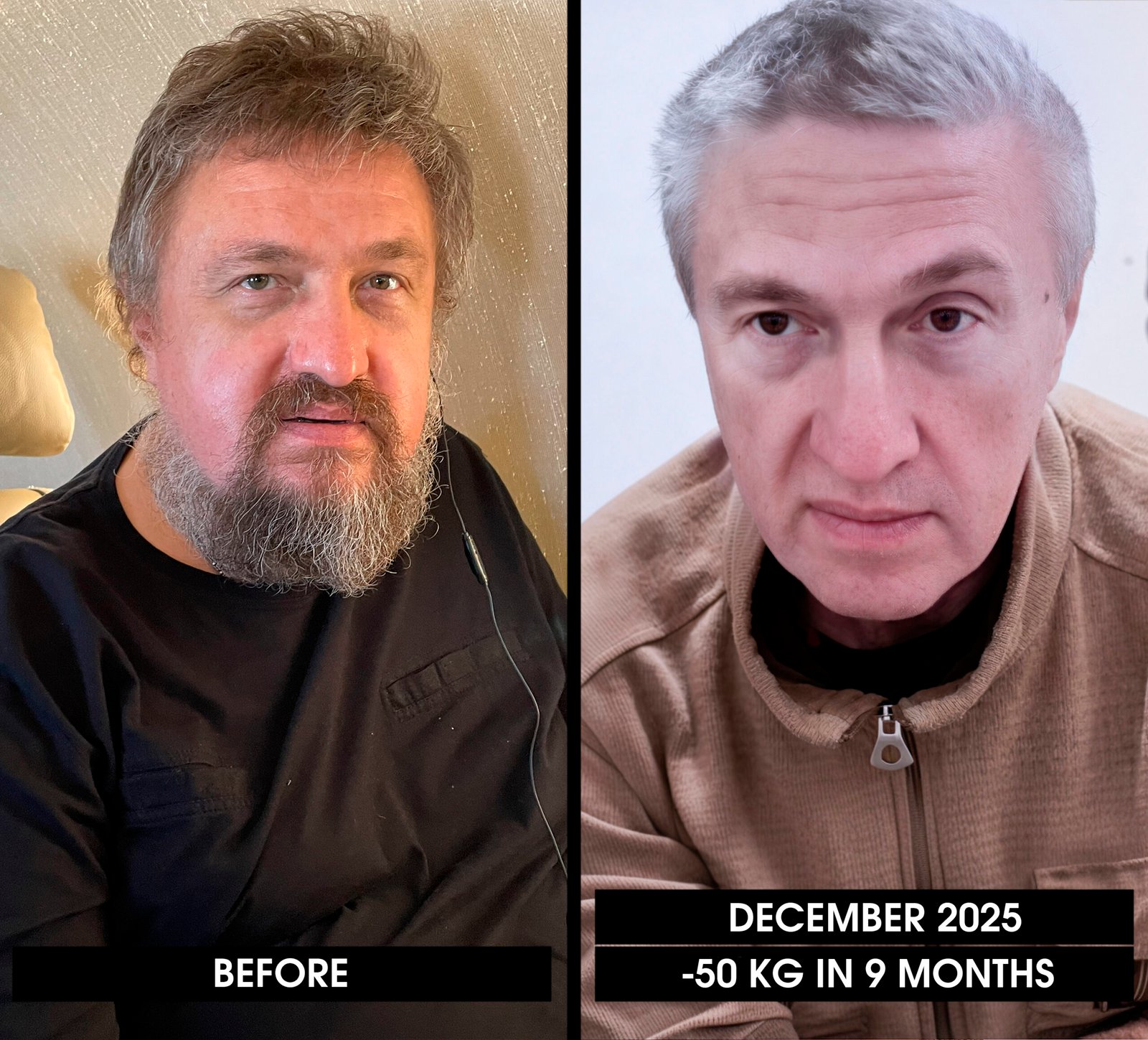
The fifth study, authored by Márk Nemes, researcher at the Hungarian Academy of Arts’ Research Institute of Art Theory and Methodology, Budapest, and deputy director of CESNUR, offers a detailed reconstruction of Rudnev’s teachings. Nemes situates Rudnev’s system within the history of yoga, esotericism, and post-Soviet spiritual experimentation, clarifying its internal coherence and its emphasis on attention, self-observation, and the transformation of thought.
In the sixth article, Karolina Maria Kotkowska, Assistant Professor at the Jagiellonian University in Kraków, Poland, and a specialist in esotericism, contextualizes Rudnev’s ideas within contemporary esoteric currents. She explains how his eclectic synthesis, which includes teachings on astrology, secrecy, and sexuality, reflects broader trends in late-Soviet and post-Soviet spirituality, and why outsiders so easily misunderstood it.
The seventh contribution, by Susan Palmer, Affiliate Professor in the Religions and Cultures Department at Concordia University in Montreal and a leading scholar of new religious movements, presents ethnographic insights into the lived experience of Rudnev’s students. Palmer documents how practitioners understood his teachings, why many continued to follow them independently after his arrest, and how their testimonies diverge sharply from media stereotypes.

In the eighth article, Willy Fautré, cofounder and director of Human Rights Without Frontiers in Brussels, analyzes the role of anti-cult organizations in Russia and Europe. Fautré traces how sensationalist narratives about Rudnev were constructed, amplified, and exported by the Russian Orthodox Church’s anti-cult activists, becoming a convenient tool for both state and nonstate actors.
The ninth study, by Rosita Šorytė, former Lithuanian diplomat and member of the Scientific Committee of FOB, examines media coverage. Šorytė shows that Rudnev was slandered not only by proregime Russian outlets but also by certain dissident media outlets, which reproduced the same stereotypes for different ideological reasons—an aspect rarely acknowledged and crucial to understanding how misinformation spreads across political divides.
Finally, Marco Respinti, Italian scholar, journalist, senior fellow at the Russell Kirk Center for Cultural Renewal in Mecosta, Michigan, and director-in-charge of “Bitter Winter,” whose articles also regularly appear in “The European Times” and other media outlets, reconstructs the transnational media campaign that slandered Rudnev in Europe. Respinti demonstrates how misinformation, in part produced by French anti-cultists, became institutionalized, weaponized, and detached from verifiable evidence, shaping public perception and judicial outcomes far beyond Russia’s borders.
Taken together, these ten studies reveal a consistent pattern: the public image of Konstantin Rudnev was built on misinformation, sensationalism, and fabricated accusations that targeted a Russian political and spiritual dissident and ignored his actual teachings and biography. The commission’s findings show that Rudnev’s spiritual system was neither exploitative nor manipulative but part of a broader post-Soviet search for meaning, and that the legal cases against him in Russia and Argentina relied heavily on recycled narratives rather than documented facts.
The publication of this series marks the beginning of what we can call “Rudnev Studies 2.0,” a new phase in the scholarly engagement with Rudnev’s thought and the reasons for his persecution. It signals a shift away from controversy and rumor toward a serious, evidence-based examination of texts, testimonies, and documents. Hopefully, this collection will help dispel decades of misunderstanding, fake news, and slander originating in Russia and traveling transnationally to Montenegro, Argentina, and beyond, opening the way for a more accurate and responsible discussion of Rudnev’s life and teachings.