The defense announces it will ask the Osaka High Court for a sentence of “no more than ten years.” It wants to retry the Unification Church instead of the assassin.
by Massimo Introvigne
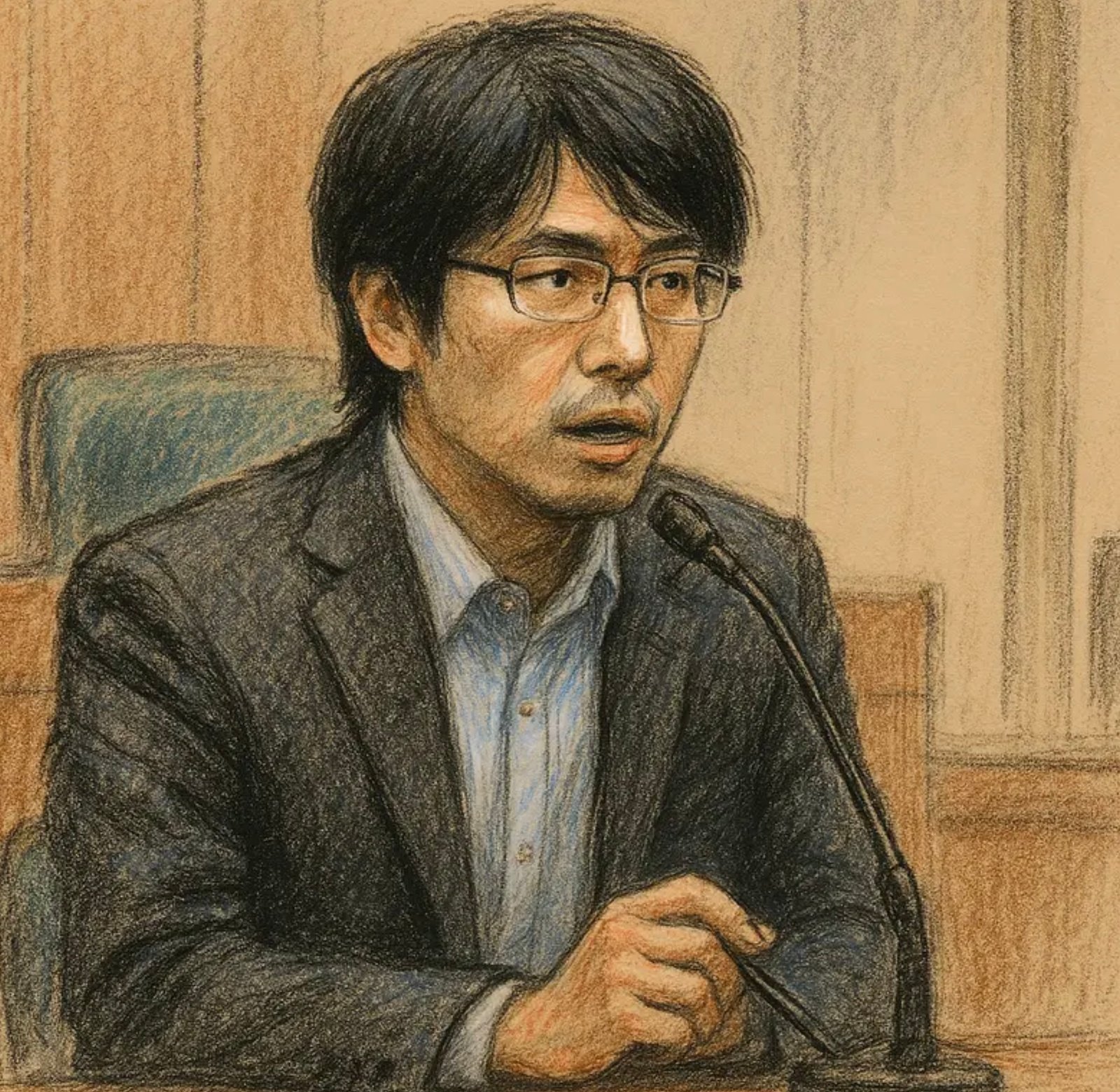
On November 25, 2026, the lawyers of Tetsuya Yamagami met the press in Nara, the city where their client shot Shinzo Abe in the back on July 8, 2022. They announced what they will ask of the Osaka High Court when the appeal opens, probably in the spring of 2027. They will ask that the man who murdered the longest-serving Prime Minister in Japanese history, with a homemade gun, in broad daylight, in front of a crowd, after months of preparation, be sentenced to “no more than ten years” in prison. At trial, they had asked for twenty. They explain that the earlier figure reflected the limits the Nara District Court placed on the evidence they wanted to present. Now that they feel free to say what they think, they think ten.
I have spent the past year writing a book on this case, “The Silent Conspiracy: How China Teamed with Japanese and Korean Anti-Cult Activists to Destroy the Unification Church,” which is now with the publisher. I believed I had lost the capacity to be surprised by anything the anti-Unification-Church camp in Japan would do. I was wrong. There are things one can discuss calmly and things one cannot. A lawyer who tells reporters that ten years is a fair price for the life of Shinzo Abe belongs to the second category.
Let me be precise about what the defense is proposing, because the proposal is worse than it sounds. The lawyers do not contest that Yamagami killed Abe. He confessed and told the court that his real target had been the Unification Church’s leader, Hak Ja Han, whom the members call Mother Han, and that he settled for Abe because she was out of reach. He probably lied, because in earlier correspondence he had said he understood that killing Abe would create a national scandal that might lead to the destruction of the Unification Church, while killing Mother Han would not.
The lawyers contest the life sentence he received. The argument is that the District Court “improperly limited” questioning about the Church’s “teachings and activities.” Had they been allowed to present “detailed evidence about the church’s activities,” they say, the judges would have understood the defendant’s motive and how he “came to decide” to kill and would have been more lenient. Everybody who follows this case knows what the “detailed evidence” would be. It would be the arrest of Mother Han in Seoul, the Korean investigations, the dissolution orders in Tokyo, the stories about donations of decades ago, the whole dossier that Japanese television has been broadcasting for four years. Most of it has nothing to do with Abe. A part of it even happened after Nara, which is to say after Yamagami had already pulled the trigger.
The defense is again asking the High Court to put the Unification Church on trial in the assassin’s place. The District Court refused to do that and said why. On January 21, 2026, when it sentenced Yamagami to life imprisonment, it acknowledged his hostility toward the Church and toward Abe as the Church’s supposed sympathizer. Then it said something the defense and the press did not want to hear. It stated that between such feelings and the planning and execution of a murder there was “a significant leap,” and the defendant’s upbringing had had “no substantial influence” on the crime. The judges also noted that Yamagami had expressed regret without apologizing to Abe’s widow and without attempting any restitution. He has not done so since.
That “significant leap” is the whole case. It is what the appeal wants the High Court to forget. Consider what Abe actually did to deserve, in the defendant’s mind, a death sentence. In September 2021, he recorded a video message for a rally of the Universal Peace Federation, an organization founded by Reverend Moon and his wife that has worked with the United Nations and with heads of state across the world. In it, he said a few courteous words about Mother Han’s commitment to peace, of the kind politicians say by the hundred every year to every association that invites them. Yamagami saw the video and decided that death was the adequate punishment for a man who had greeted Mother Han. The defense now argues that the more we learn about the Unification Church, the more understandable this becomes.
Reverse the proposition and see where it leads. Any terrorist who kills a politician for having sent a greeting to a group the terrorist hates will be entitled to argue that the group was very bad, the politician should have known, and ten years will do. Every mayor who ever opened a mosque, every minister who ever addressed a synagogue, every parliamentarian who ever shook hands with a Jehovah’s Witness would live under that rule. The defense may not have thought this through. The judges of Osaka must.
The question before the High Court is not whether the Unification Church is a good or a bad religion. It is whether the moral worth of a victim’s acquaintances is a mitigating factor in his murder. No civilized legal system has ever said so. The defense is asking Japan to be the first.
There was, in fact, a line of argument available to the lawyers that would have been more honest but uncomfortable for many. Yamagami killed Abe twenty years after his mother’s bankruptcy. What filled those twenty years, and the months before July 2022, was something other than childhood memories. It was reading. Yamagami said at trial that the website of the anti-cult activist Eight Suzuki had been a main source of his rage. Suzuki was not alone and was part of a broader machinery: the National Network of Lawyers Against Spiritual Sales, the television programs, and the “experts” who explained for thirty years that the Unification Church was an evil “cult,” that its members were brainwashed, and that something had to be done.
In Italy, we called the Marxist intellectuals who never touched a weapon but whose teachings inspired the terrorists of the Red Brigades the “evil teachers.” A defense that argued that its client’s feeble mind had been worked on for years by evil teachers, until a courteous video message looked to him like a declaration of war, would have told the truth about Nara and perhaps won some leniency for the assassin.
The lawyers cannot make that argument because the evil teachers are their colleagues. The two lawyers who testified at the Nara trial about the Church’s “spiritual sales,” as background to the defendant’s state of mind, were lawyers of the Network. The press that applauded the defense’s strategy is the press that built the narrative Yamagami consumed. The experts the defense would call on appeal are the experts who created the atmosphere in which a disturbed man concluded that killing a former Prime Minister was a reasonable response to a video. The defense cannot blame the evil teachers because they sit at its table. So, it blames the victim instead and asks for ten years “or less.”
Ten years is a sentence Japanese courts hand down for robberies in which nobody dies. A man who shot a sixty-seven-year-old statesman in the back, whose widow has heard no word of apology, would walk out of prison at fifty-six, younger than his victim was when he died. He would be received, we may fear, as something of a hero by the people who have spent four years explaining that his act had “social significance,” as the “Mainichi Shimbun” once wrote before apologizing for the phrase and running a series against the Unification Church anyway.
The Osaka High Court will have the last word, and Japanese appellate courts have a long record of resisting pressure from the press. It should resist this one. The question it will decide has little to do with what Japan thinks of the Unification Church. It is whether Japan still believes that murder is murder, whatever the victim’s political opinions, and whether the lesson of Nara is that assassins must be punished or that those who send greeting cards to unpopular groups deserve to die. The men who met the press on November 25 have given their answer. The rest of the country, I hope, has not yet given its.
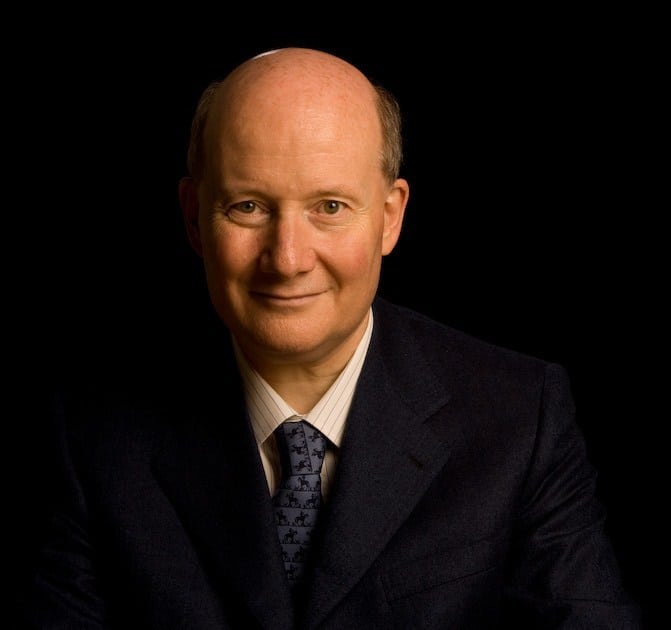
Massimo Introvigne (born June 14, 1955 in Rome) is an Italian sociologist of religions. He is the founder and managing director of the Center for Studies on New Religions (CESNUR), an international network of scholars who study new religious movements. Introvigne is the author of some 70 books and more than 100 articles in the field of sociology of religion. He was the main author of the Enciclopedia delle religioni in Italia (Encyclopedia of Religions in Italy). He is a member of the editorial board for the Interdisciplinary Journal of Research on Religion and of the executive board of University of Pennsylvania Press’ Nova Religio. From January 5 to December 31, 2011, he has served as the “Representative on combating racism, xenophobia and discrimination, with a special focus on discrimination against Christians and members of other religions” of the Organization for Security and Co-operation in Europe (OSCE). From 2012 to 2015 he served as chairperson of the Observatory of Religious Liberty, instituted by the Italian Ministry of Foreign Affairs in order to monitor problems of religious liberty on a worldwide scale.