A Harvard scholar retells the “cult wars” with wit and fresh insights, confirms that courts rightly rejected Margaret Singer, yet trusts anti-cult narratives too much.
by Massimo Introvigne
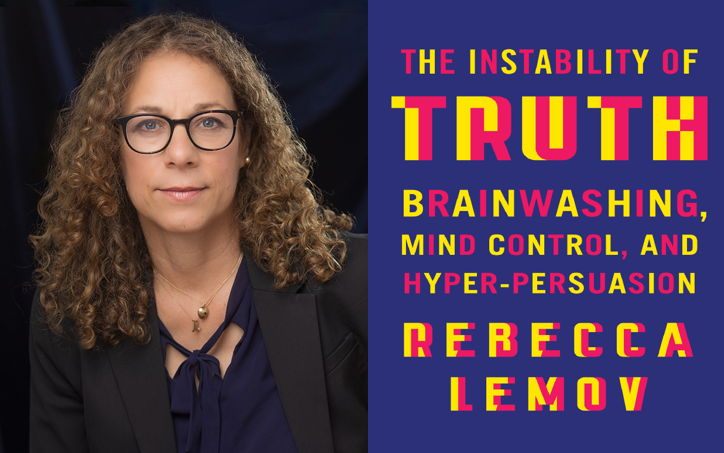
Rebecca Lemov teaches the history of science at Harvard University, and for more than ten years she has offered a course called “Brainwashing and Modern Mind Control Techniques.” Her new book, “The Instability of Truth: Brainwashing, Mind Control, and Hyper-Persuasion” (New York: W. W. Norton, 2025), is the fruit of that teaching and of years spent in archives, from the papers of Louis Jolyon West at UCLA to those of Robert Jay Lifton at the New York Public Library. The book has already been translated into Japanese, as was my own Cambridge Element “Brainwashing: Reality or Myth?” (2022), and the two volumes may now be read side by side in a country where the debate on “cults” has become incandescent after the assassination of former Prime Minister Shinzo Abe in 2022.
The Cambridge Element tells, within the strict page limits of that series and from the point of view of the sociologists of new religious movements, a story Lemov tells at much greater length. She correctly identifies these sociologists as a group generally hostile to the very idea of brainwashing. I am one of them, and I write this review from that perspective. It is meant to be critical but respectful, because Lemov’s book deserves respect. It is well written, often witty, and based on serious archival research. It summarizes a story largely known to scholars of new religious movements, and it adds new insights we should engage with.
The book is divided into three parts. “Brainwashing Arrives” covers the Korean War, the American prisoners of war who chose to stay with their captors, and the Cold War research on interrogation, hypnosis, and LSD that followed. “Brainwashing Spreads” moves to the Manson Family, the Patty Hearst trial, deprogramming, and the “cult wars” of the 1980s and 1990s. “Brainwashing Evolves” brings the story to the present, with chapters on social media, chatbots, and the cryptocurrency culture Lemov calls “hopium.” Her method relies on what she calls the “two superpowers” of her discipline: the “actor’s category,” which asks how the people involved used a word before the analyst imposes a definition, and Niklas Luhmann’s “second-order observer,” who watches the observers themselves.
Lemov does not hide her thesis. “Does brainwashing really exist? I’m always asked. The answer is yes,” she writes. “Against the typical view holding (until recently) that brainwashing is a myth or something ridiculous, I argue that it must be taken seriously.” She also argues that it “must be understood in a new way, linked to trauma, its emotional taproot, and grasped dynamically rather than cartoonishly.” This is where the readers of my Cambridge Element will part ways with her, but before explaining why, it is fair to list what she gets right.
The first merit is philological. Lemov agrees with scholars of new religious movements on the dubious origins of the word. The journalist and CIA agent Edward Hunter, who introduced “brain-washing” to the English-speaking public in 1950 and later boasted that it was “the word I gave” to the public, presented it as a colloquialism of “the plain people of China.” Lemov consulted Chinese scholars, who told her that the two characters for “wash” and “brain” were not habitually put together at that time and do not appear in Chinese dictionaries of the era. Her conclusion matches what I reached in the Cambridge Element: “So brainwashing was not quite a translation, but closer to an invention.”
Lemov is equally reliable on the transfer of Cold War research to “cults.” She accurately describes the problems involved in applying studies of American prisoners in Korea and of Western residents in Communist China to young Americans who joined new religions in California in the 1970s. Physical coercion, the essential element of the Korean and Chinese camps, was absent in the second case. Lemov reports that even the CIA, around 1961, concluded that “you could not create a totally controlled automaton, with or without force,” and she notes the “emerging consensus” that “the Korean War dynamics did not translate to these new cult contexts, especially where the coercion was internal rather than external.”
Her portrait of Robert Jay Lifton is also valuable. Anti-cult activists routinely quote Lifton’s 1961 book on Chinese “thought reform” as if it proved the existence of brainwashing in new religious movements. Lemov shows a more complicated Lifton. He declined to testify in court cases after the Hearst trial, his interests ranged widely in psychohistory, and he was “torn” about the cult issue. She also reports the tribute he paid in his foreword to Singer’s 1995 book: “Margaret Thaler Singer stands alone in her extraordinary knowledge of the psychology of cults.” The two dimensions coexist. I debated Lifton in Sweden in 2001, and I found that his support of the anti-cult camp was largely political, part of a battle against what he regarded as authoritarian forces of all kinds, while his scholarly model of thought reform remained more nuanced than Singer’s and more cautious about laws and lawsuits. Lemov captures this ambivalence well.
She does not forget a detail anti-cultists seldom mention. Lemov reminds her readers that Stanley Milgram’s famous obedience experiments, often invoked to make brainwashing plausible, were controversial among his own colleagues. They brought him fame and also “inchoate suspicion in the highest circles of the academic world,” and “he did not win tenure at Yale, despite his renown.” The theory of the “agentic shift” he derived from them is, Lemov admits, “often derided as the least satisfying part of Milgram’s experiments.”
Some of Lemov’s insights are new. Scholars of new religious movements have normally dated the rise of the American anti-cult movement to the early 1970s and the mass suicide and murders of Jonestown in 1978. Lemov suggests that the Manson case may have been more influential than we have generally believed. The 1969 murders and the 1970–1971 trial, in which the prosecution successfully argued that Manson’s young female followers had acted under his control, put the “potential danger of cults in middle-class American life” under a spotlight. Lemov quotes the parents of Kathy Crampton, one of the first victims of deprogramming, explaining why they hired Ted Patrick to abduct their daughter from the Love Israel group: “Charles Manson was tried only for murder, not for destroying the minds of his followers.” She adds that “the deprogramming industry, which Henrietta Crampton helped to start, formed almost immediately after the Manson trial.” The point deserves further research, and Lemov deserves credit for raising it.
Lemov’s history of deprogramming is another strong point of the book. She tells the story of Ted Patrick, the self-styled “Black Lightning” who coined the word and boasted of having “liberated” 2,600 people, with a wealth of details. She describes his three-step method, which consisted of kidnapping the victim in a public place, confining her in a room with sealed windows and doors, and subjecting her to a relentless barrage of questions until she would “snap.” She reports the conservatorships granted by some California judges in the early 1980s, which allowed parents to keep adult children under their control and expose them to deprogramming “at greater length and lawfulness.” She also mentions the testimony of those who described “lasting harm from the deprogramming itself,” including a fourteen-year-old boy tied to a chair for five days.
Lemov’s narrative, however, ends in the 1990s, when “most deprogrammers were renaming themselves ‘exit counselors,’ and were no longer abducting individuals but merely providing information.” The reader may conclude that coercive deprogramming belongs to history. It does not. It continued underground in the United States, and María Vardé and I have published reports that Rick Ross, the deprogrammer whose 1995 defeat in the Jason Scott case led to the bankruptcy of the old Cult Awareness Network, was still involved in coercive deprogramming as late as 2020, in the case of a member of the Jesus Christians. In Japan, thousands of members of the Unification Church were abducted and confined by their families with the help of professional deprogrammers, often in very violent ways. The practice ended only after the Tokyo High Court ruled in 2014 in favor of Goto Toru, a Unification Church member held against his will for more than twelve years, and the Supreme Court confirmed the decision in 2015. In South Korea, deprogramming continues to this very day, particularly against members of the Christian new religious movement Shincheonji. In 2018, one of them, Gu Ji-In, was killed by her father while trying to escape the deprogrammers, and her death led to massive street demonstrations. A book that mentions Japan and its new “cult war” would have benefited from these facts.
Lemov’s reconstruction of the “cult wars” is witty and entertaining, although not always accurate. She confesses that she once asked herself, “Who could possibly be pro-cult?” and discovered that the opponents of Margaret Singer were “mostly, academic social scientists specializing in the history and sociology of religion.” She names James T. Richardson, David G. Bromley, Thomas Robbins, Eileen Barker, and Susan Palmer. Since she focuses mostly on sociologists, she does not mention the important contributions of historians such as J. Gordon Melton to Singer’s downfall, nor those of psychologists such as Dick Anthony and H. Newton Malony.

Her description of Susan Palmer made me smile. Lemov quotes a 2001 essay where Palmer, with tongue-in-cheek self-irony, described herself as working in the “not-quite-respectable, morally problematic, and impecunious field of ‘cult’ studies,” traveling the “yellow brick road” of research and encountering “oddly coherent worldviews constructed higgledy-piggledy out of the most incongruous elements.” Lemov’s portrait of a “butterfly-catcher” is not aggressive. Her conclusion, however, is unfair. She writes that Palmer’s approach “seemed to tune out the potential harms” of the groups she studied. In fact, Palmer’s fascination did not prevent her from seeing the abuses in some movements, including in Rajneeshpuram and among the Children of God. What Palmer and many of us argued is that “some” of the abuse accusations against new religious movements were not believable, while others were true. Distinguishing between the two categories is the job of a scholar, and it does not amount to denying that abuses exist.
More generally, Lemov fails to see that there were always nuances in what she calls the “pro-cult” camp. Not all scholars had exactly the same positions. Barker, whose “The Making of a Moonie” (1984) Lemov calls “interesting if narrow,” spent decades creating spaces of dialogue with the critics of new religious movements. Some of us, including me, served as expert witnesses for prosecutors as well as for defense attorneys. Lemov writes that the sociologists “tended to accept the stories of current members” and “to reject or minimize accounts by ex-members,” adding that “one had to ‘not believe’ ex-members, to borrow the language of #MeToo.” This is a caricature of a large body of scholarship, to which I will return, distinguishing between different kinds of ex-members.
Speaking of expert witnesses, one of Lemov’s most useful contributions is her discussion of money. She reports both accusations that were thrown around during the “cult wars.” Scholars of new religious movements were accused of being wined and dined at conferences organized by the Unification Church and the Church of Scientology, and of sometimes serving as expert witnesses for them. Anti-cult scholars, including Singer, were accused of making a lot of money as expert witnesses. Lemov lends some credibility to both accusations, but she honestly acknowledges that there is no comparison between the two.
Singer, Lemov writes, “gradually built up a new occupation, with herself as its foremost practitioner—the cult expert consultant.” After the Hearst trial, “she began to receive large fees that came with legal success. This livelihood was supplemented by her other work as a guest lecturer at various University of California campuses.” Expert testimony, in other words, was her main livelihood, and teaching was the supplement. “Her rate for consultation, which would become a flashpoint in the coming cult wars, was $350 per hour, in 1980—a factoid that would become a liability.” The phenomenon was not limited to Singer. Lemov reports that law professor Alan Scheflin knew “one medical expert who charged $900 an hour,” and that “one leading anti-cult figure was overheard to complain that the time taken to file an amicus brief ‘would cost him $500,000 in lost fees.’”
The “cult wars” were nasty, and accusations were thrown out liberally. However, some facts are facts, and Lemov notes that “it is still the case that, in their eventual lawsuit against their enemies the APA and a group of sociology of religion scholars, Singer and her colleague Richard Ofshe would ask for $15 million each in damages, reflecting their estimated loss of earnings as experts whose views on brainwashing had been systematically tarnished.”
Let me be precise about what these figures mean. Scholars in the so-called “pro-cult” camp are also paid when they serve as expert witnesses, and our professional associations do not regard this as unethical. What matters, for me and I believe for Lemov, is that for none of us did expert testimony become a main profession, as it did for Singer. The enormous sums anti-cultists made through “consultancy” and testimony have no equivalent in the other camp, and they make the claim that the scholars who criticize anti-cultists “do it for the money” ludicrous. If money were our motivation, we would have switched to the anti-cult camp long ago, since that is where, it seems, the real money is.
Lemov also discusses the ill-fated report of the APA (American Psychological Association) task force known as DIMPAC (Deceptive and Indirect Methods of Persuasion and Control), chaired by Singer, and its rejection by the APA. This part of the book is important because, to this very day, anti-cult activists connected with the European federation FECRIS describe as an “APA-lie” something I allegedly invented, namely the theory that the APA dismissed Singer’s brainwashing theory. According to them, it never did. Lemov, a historian who does not belong to the “pro-cult” camp, settles the question. “The outcome was quite clear,” she writes. “On May 11, 1987, the ethics board of the APA ruled largely negatively against the Singer approach to brainwashing in cults, opining that the report DIMPAC supplied ‘lacks . . . scientific rigor.’” One of the reviewers noted that the report was “so unscholarly in tone” that it resembled “an over-the-top coercive ‘brainwashing’ text itself.” The implication, Lemov adds, was that “Singer and the other experts—but especially Singer—should not be allowed to call herself an expert to give testimony.”
Based on documents CESNUR made public, Lemov accurately reconstructs what happened next. “Singer’s livelihood was diminished, as well as that of her professional partner, Richard Ofshe. In 1992, they unsuccessfully sued their academic enemies for conspiring to destroy their careers and professions through reputational assault. A second lawsuit in 1994 against the APA and several enemy scholars was dismissed as frivolous—the judge deemed the conflict a scholarly dispute over psychological theories, pointing to First Amendment protections—so that, with the court invoking the SLAPP rule (strategic lawsuits against public participation), they were forced to pay their antagonists’ legal fees.” Lemov also admits that the “flawed and sloppy report” became the basis of Singer’s most successful book: “Teaming up with a young sociologist named Janja Lalich, Singer turned the ill-fated report into a highly successful 1995 book called ‘Cults in our Midst.’” Those who quote “Cults in Our Midst” today as an authoritative source seldom mention that the APA rejected its core arguments eight years before publication.

Some details of Lemov’s account need correction. The DIMPAC task force was established by the APA in 1983, and its report was not requested by the United States Supreme Court. The “Molko” case was pending before the Supreme Court of California. The body that rejected the report on May 11, 1987, was the APA’s Board of Social and Ethical Responsibility for Psychology (BSERP). Lemov also condenses into one “very complex kerfuffle” two separate events. In February 1987, the APA itself signed an amicus brief in the “Molko” case stating that Singer’s theory of “coercive persuasion” was not accepted by the scientific community. It withdrew its signature in March, for procedural reasons, explicitly stating that it was not endorsing the opposite views. The rejection of the DIMPAC report came in May. More importantly, Lemov writes that Singer’s reputation was ruined “due to a calculated and fairly vicious campaign by her professional enemies.” This is the narrative Singer and Ofshe presented in their lawsuits, and the court that dismissed their second case rejected it, deeming the conflict a scholarly dispute protected by the First Amendment.
Lemov’s analysis of court cases is generally accurate. She tells the stories of “George v. International Society for Krishna Consciousness,” of the “Molko and Leal” lawsuit against the Unification Church, and of the Transcendental Meditation “self-levitation case” of Robert Kropinski, whose award was reversed on appeal in 1988 because Singer’s theory lacked “a significant following in the scientific community, let alone general acceptance.” It is strange, however, that she does not mention the crucially important “Fishman” decision. In 1990, in “United States v. Fishman,” Judge D. Lowell Jensen of the United States District Court for the Northern District of California excluded the testimony of Singer and Ofshe, who appeared for a defendant claiming that his fraud had been caused by his brainwashing in Scientology. After examining hundreds of documents, including the APA’s rejection of the DIMPAC report, Judge Jensen concluded that “theories regarding the coercive persuasion practiced by religious cults are not sufficiently established to be admitted as evidence in federal courts of law.” “Fishman” established the precedent that is still followed in most American courts, and without it the end of Singer’s career as an expert witness cannot be explained.
The omission also distorts Lemov’s reading of “Molko,” a case she describes as the moment when brainwashing “went from legally viable to a kill shot of a legal argument.” In fact, the 1988 “Molko” decision of the Supreme Court of California, written by Judge Stanley Mosk, was a partial victory for the plaintiffs. Judge Mosk held that the issue of brainwashing could be discussed in court only where the recruitment had been deceptive, as in this case, where the recruits had not been told which movement they were joining. The case was later settled out of court. It was “Fishman,” two years later, that closed the door to Singer in federal courts.
“Fishman” or no “Fishman,” Lemov’s conclusions on the legal status of brainwashing coincide with those of scholars of new religious movements. Singer’s position, she writes, “had no teeth and would never stand up in any courtroom, though she would testify in dozens of them.” “The Singerian point of view, while valuable in many ways, became a caricature when loosed in a courtroom.” In the end, “brainwashing lacks a legal foothold.” If your definition of scientific is what produces “a yes-or-no deterministic truth (which in a sense, is what a courtroom demands), brainwashing will never be scientific.” Lemov notes that the recent successful prosecutions of Keith Raniere of NXIVM and of Lawrence Ray at Sarah Lawrence College “hinged on charges of racketeering, sexual trafficking, and forced labor,” and that “even Singer’s allies acknowledge” that “brainwashing is not useful in a legal sense.” That brainwashing sometimes comes back nowadays disguised as “trafficking” is a different matter, and one Lemov does not discuss.
The consequences are wider than Lemov admits. If brainwashing cannot be used in courts as a weapon against new religious movements, laws criminalizing brainwashing under its various new labels, such as “psychological subjection” or “mental manipulation,” are both wrong and ineffective. Such laws punish conversions to unpopular beliefs through a concept that, as Lemov concedes, cannot meet the standards of proof criminal law requires. They are also useless, since several cases show that real crimes committed in religious or pseudo-religious settings can be prosecuted through ordinary criminal laws. Italy learned this lesson when its Constitutional Court struck down the crime of “plagio” in 1981. Countries that have adopted or are considering similar laws would do well to read Lemov’s chapters on the courts.
Where Lemov is less convincing is in her use of anti-cult sources. She attended meetings of the International Cultic Studies Association (ICSA), the main anti-cult organization in the United States, including one in Santa Fe in November 2019, and she reports what she heard there with sympathy and sometimes without enough critical distance. To her credit, she recognizes that ICSA’s estimate that 2,500,000 people joined “cultic groups” in the United States and Canada is problematic. “It is hard to estimate and provide accurate data,” she writes, “because several components are difficult to define consensually—for example, the abusive cultic group itself.” Everything depends on the definition of “cult,” and anti-cult organizations themselves, as Lemov notes, have stopped publishing lists of which groups are and are not cults.
The same caution is missing when Lemov discusses the children of members. Here she reports uncritically the anti-cult position on second-generation members. “Those who are born into cults do not ‘decide’ to join but have the decision made for them. They are genuinely coerced, persuaded, trained, and imbued in a totalizing designed-to-be-inescapable thought system,” she writes. “Second or third generation adults (SGAs, TGAs) in cults were often abused as children, often sexually trafficked (frequently it is family trafficking).” This is a caricature, which generalizes from a few cases, those of the Children of God and of groups raided by the FBI, through the dangerous use of the word “often.” Children raised in religious minorities are socialized into their parents’ beliefs exactly as children raised in mainline churches, in Judaism, or in Islam are. Their parents’ religion is not a “thought system” designed “to be inescapable,” as shown by the many second-generation members who leave these movements as adults, and by the many others who freely decide to stay.
The controversy about the second generation is now raging in Japan, where the assassination of Shinzo Abe by Tetsuya Yamagami, the son of a Unification Church member, created what Adam J. Lyons calls a new “cult war.” Lyons has shown in “Nova Religio” that Yamagami’s manifesto bears “the hallmarks of a second-generation grievance narrative” and that, after the assassination, “popular concerns about controversial new religious movements have shifted away from converts towards the second-generation cohort as a class of victims.”

Lyons, Holly Folk, and other scholars have documented that the second-generation members who report abuse are a tiny percentage. The class action launched against the Unification Church in Japan after the assassination, widely advertised in the media, has gathered only a few dozen dissatisfied second-generation ex-members. By contrast, tens of thousands of second-generation members have signed petitions declaring that they were and are happy in the movement, and they have found articulate spokespersons who have launched a counter-movement. A Japanese reader of Lemov’s book will find no trace of them.
More generally, Lemov does not consider scholarship that distinguishes between “apostates,” that is, ex-members who become militant critics of the movements they have left, and the majority of ex-members who simply go on with their lives. Since the 1980s, studies by Stuart A. Wright, David G. Bromley, and others, including the volume “The Politics of Religious Apostasy” edited by Bromley in 1998, have shown that apostates are a minority of former members, that their narratives are often shaped by their interactions with anti-cult organizations and deprogrammers, and that the accounts of the silent majority of leavers are very different. What scholars of new religious movements asked is that apostates should not be regarded as the only legitimate voice of all former members.
Lemov does not share the dismissal of Singer by scholars of new religious movements. Neither does she side with the anti-cultists who try to reintroduce Singer’s ideas into courts of law, sometimes under new labels. She has shown that this is a lost cause. Her position is that Singer’s theory, while legally useless, remains “valuable in many ways” when used with caution, and together with other tools, to analyze “cults” and “cult-like” phenomena. Among them are some Singer did not anticipate, connected with social media, artificial intelligence, politics, and cryptocurrency. Close to the end of her chapter on the “cult wars,” Lemov asks, “might there not be value in reconsidering the work of Margaret Singer?”
The last part of the book contains some of its best pages. Lemov describes how social media platforms harvest our emotions, how “friendly-yet-somehow-predatory” chatbots create emotional dependence, and how crypto culture trades in what she calls “hopium.” These analyses are valuable, but they may be dissociated from Singer’s cult terminology and still maintain their value. Lemov herself offers the best argument for such a dissociation. Used as an allegation, brainwashing, she writes, “functions as a way of casting doubt on the faculties of those whose opinions one distrusts and disdains. . . . Its effect is to cut off the adequacy or right to be heard of this other person. It is an emotional response claiming the shroud of rational assessment.” Scholars of new religious movements have been saying exactly this for fifty years about the use of brainwashing against religious minorities. The label denies converts to unpopular religions the right to be heard, and it reduces their choices to symptoms.
In conclusion, “The Instability of Truth” offers useful historical reconstructions, including the debunking of partisan anti-cult accounts of the DIMPAC-APA incident. It admits that brainwashing cannot be used in courts as a weapon against new religious movements, which implies that laws criminalizing brainwashing are both wrong and ineffective. Yet Lemov still depends on anti-cult narratives to claim that brainwashing exists as a social phenomenon, including among second-generation believers. A more careful balancing of the narratives of apostate and non-apostate ex-members, and a closer look at the large majority of the second generation who do not see themselves as victims, might have led her to different conclusions. Even so, it is a book scholars of new religious movements should read, discuss, and engage with, perhaps hoping that their critics will read it too.
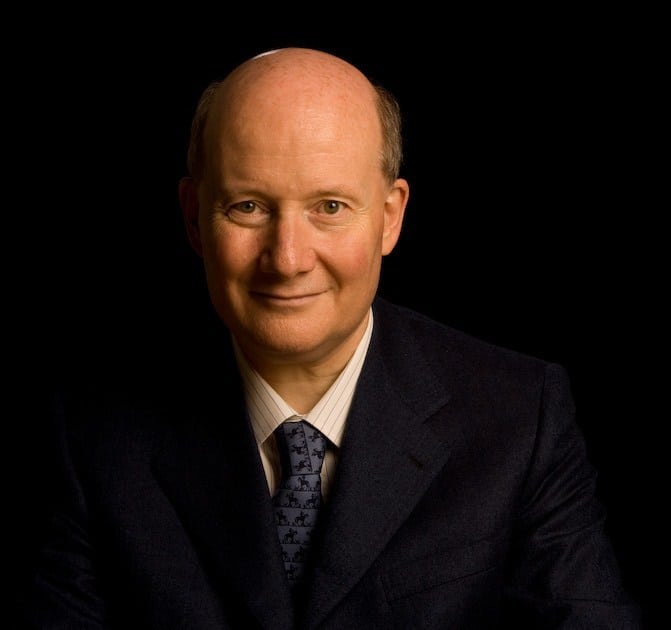
Massimo Introvigne (born June 14, 1955 in Rome) is an Italian sociologist of religions. He is the founder and managing director of the Center for Studies on New Religions (CESNUR), an international network of scholars who study new religious movements. Introvigne is the author of some 70 books and more than 100 articles in the field of sociology of religion. He was the main author of the Enciclopedia delle religioni in Italia (Encyclopedia of Religions in Italy). He is a member of the editorial board for the Interdisciplinary Journal of Research on Religion and of the executive board of University of Pennsylvania Press’ Nova Religio. From January 5 to December 31, 2011, he has served as the “Representative on combating racism, xenophobia and discrimination, with a special focus on discrimination against Christians and members of other religions” of the Organization for Security and Co-operation in Europe (OSCE). From 2012 to 2015 he served as chairperson of the Observatory of Religious Liberty, instituted by the Italian Ministry of Foreign Affairs in order to monitor problems of religious liberty on a worldwide scale.