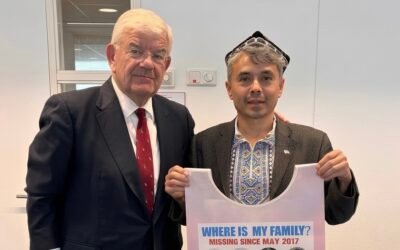
Beijing is turning two official (and manipulative) history books into material for schools, police forces, courts, and museums.
by Asiye Uyghur
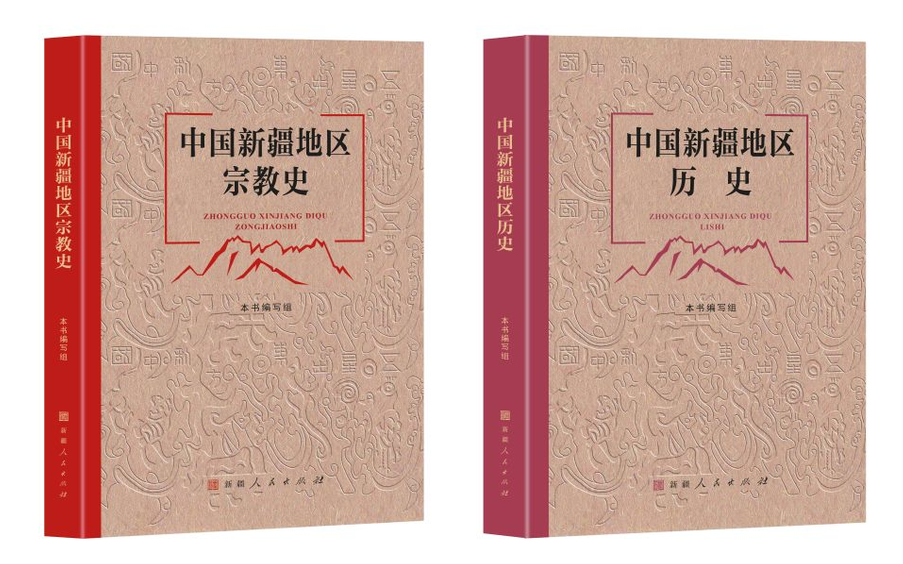
In Guchung County, in the northern part of the Uyghur region administered by China as Xinjiang, two new Chinese history books have become a compulsory political course for the entire police force. An official report on the county court states that the historical understanding promoted through these books is to be incorporated into adjudication, enforcement, mediation, and the explanation of the law. The report makes their intended application explicit.
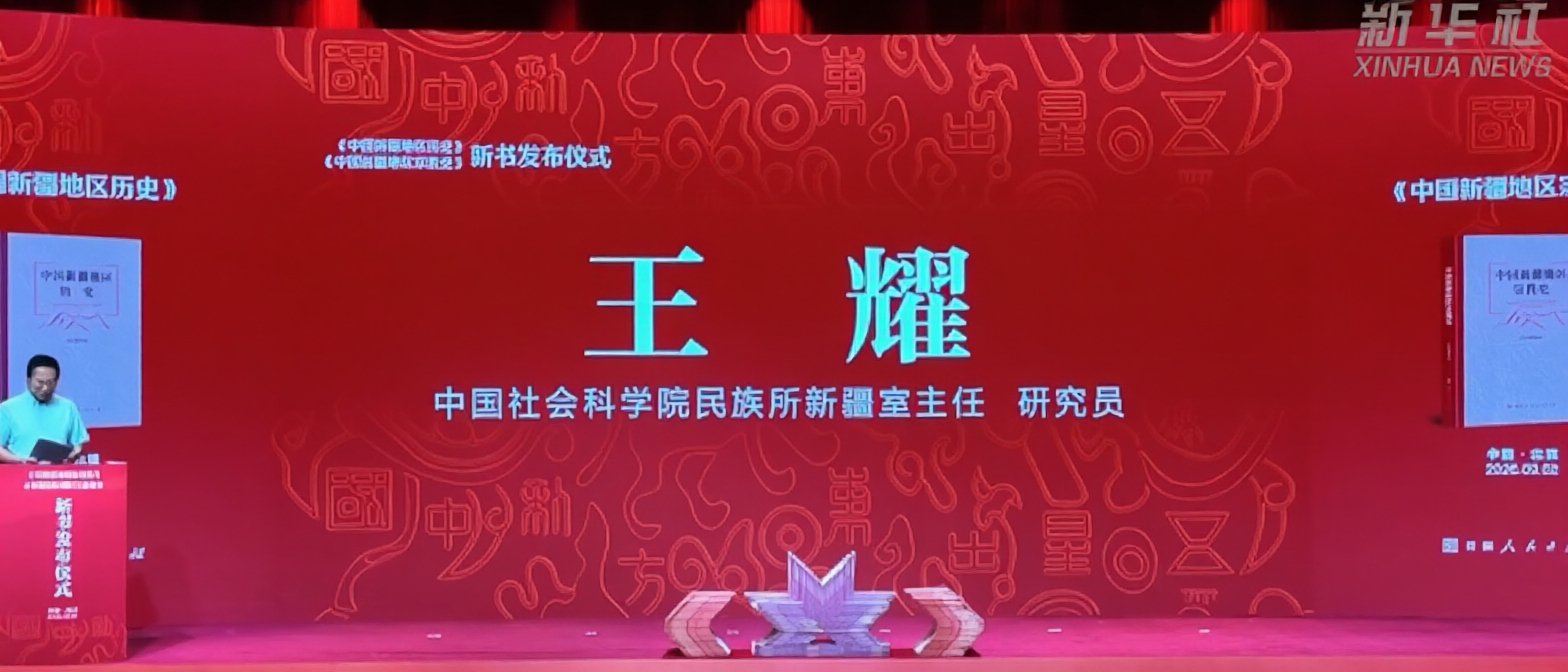
The books are “A History of China’s Xinjiang Region” (《中国新疆地区历史》) and “A Religious History of China’s Xinjiang Region” (《中国新疆地区宗教史》). The Propaganda Department of the Chinese Communist Party’s regional committee hosted the launch in Beijing on September 2, 2026. Xinhua’s account of the launch explicitly identifies “forging a strong sense of community for the Chinese nation” as their central organizing principle and adherence to the Sinicization of religion as their direction.
The central issue is how an official historical narrative is being made operational. These books are being carried from publication into the institutions that teach children, interpret cultural heritage, administer religion, and exercise state authority over Uyghur lives.
I was unable to obtain the complete texts of either volume while preparing this article. This commentary therefore examines the books’ publicly stated arguments, political purposes, and documented uses, drawing on statements by their chief editors and official accounts published by Chinese state media and government institutions. It does not claim to offer a comprehensive review of the books themselves.
A historical narrative becomes an institutional requirement
Local official reports show how these volumes are being disseminated.
In Qorghas County, they have entered the Party school’s training curriculum and have been incorporated into ideological and political lessons in schools. Plans also call for their inclusion in the accounts delivered by tourist guides, according to an October 15 report.
The institutional setting changes the force of the message. A claim presented in a book can be examined alongside another book. When the same claim is incorporated into police political training and the stated work of a court, it acquires an additional form of authority. The question is no longer only whether a historical interpretation is convincing, but what room remains to dispute it within institutions expected to apply it.
In Alaqagha Township in Kuchar, medical insurance bureau officials discussed the books with village representatives, linking their contents to insurance benefits and the activities of village-based work teams. The bureau’s October 27 account describes this integration of historical instruction and public services.
An official report quoted a religious worker at Hotan’s Jame Mosque on studying the volumes and explaining their message to believers. The remarks appeared within an account explicitly promoting the Sinicization of religion.
A report on a museum-sector meeting is more specific still. It describes incorporating the books into exhibitions and interpretation, with a three-stage review by exhibition organizers, experts, and museum leadership to maintain the prescribed ideological direction. The head of the Hotan regional museum proposed using the books as the basis for exhibition outlines for mobile museums. These proposals appear in the regional culture and tourism department’s report.
The museum review process makes that distinction especially clear. Expert assessment can test the dating, provenance, or interpretation of an object. Here, the official report also calls for safeguarding the ideological direction of the exhibition. The additional requirement makes political acceptability part of the process by which visitors encounter historical evidence. An object’s presence in a museum cannot independently verify a narrative when its public interpretation must first pass that test.
These reports document an organized program of dissemination and institutional use. They do not establish what residents privately believe, nor does the court report demonstrate how any particular judgment has been decided. The documented policy is nevertheless significant: historical instruction is being linked explicitly to the exercise of public authority.
Making history a default setting
Gu Guanghai, president of the regional Academy of Social Sciences, has stated the purpose openly. In an article published on the website of the National Ethnic Affairs Commission, he calls for the books to be used as a “weapon,” made required reading for cadres, and established as basic texts for young people’s education. He seeks to make the prescribed historical understanding people’s “default setting.” His article sets out this program explicitly.
The word “default” describes more than persuasion. It identifies the desired endpoint: an account that people accept before asking which sources were selected, which were excluded, and whose experiences the narrative suppresses. Combined with compulsory police study and the proposed review of museum interpretation, it reveals a program for embedding that account in institutional routines.
The conclusions institutions are expected to transmit
A November 13 article in the “People’s Daily” makes this approach particularly clear. Xing Guangcheng, a scholar at the Chinese Academy of Social Sciences, begins by praising the history volume for its “high political standing.” He presents even the conflicts between the Huns (recorded in Chinese sources as Xiongnu) and the Han dynasty as a process of internal integration within what is now called the Chinese nation. The article’s ultimate conclusion is that Communist Party leadership guarantees the region’s long-term stability. These claims appear in the newspaper’s own appraisal. A 2025 study in PNAS identified direct genetic lines of descent connecting some European Huns with individuals from the Xiongnu elite; this supports a historical connection without establishing that the two populations were identical in their entirety. The study provides the evidence.
Here, historical events are arranged along a trajectory that legitimizes the present government. Distinctions between wars, negotiations, temporary submission, and independent rule involving different states are compressed into the single concept of internal unity.
If the borders of today’s state are made the starting point of historical inquiry, everything that happened within those borders becomes, in advance, the internal history of one country. That history is then used to prove that the present borders have existed “since ancient times.” The reasoning is circular.
Peter Perdue’s “China Marches West” examines the role of the Mandzhur Empire’s conquests in the formation of the territory of present-day China. The book’s description emphasizes this history of expansion. Absorbing it into a story of unity “since ancient times” obscures when and how rule was established, who resisted it, and what political alternatives existed.
Kashghari’s dictionary is not a title deed to today’s map
Mahmud al-Kashghari’s “Dīwān Lughāt al-Turk,” or “Compendium of the Turkic Dialects,” illustrates why names must be distinguished from political ownership.
In the entry for “Tawghach,” on page 341 of volume I of Robert Dankoff and James Kelly’s English translation, Kashghari explains a threefold division of Ṣīn: an upper, eastern part called Tawghach; a middle part called Khitay; and a lower part identified as Barkhan, in the vicinity of Kashgar. He adds that, in the usage of his own time, Tawghach was known as Māṣīn and Khitay as Ṣīn. The passage can be checked in the translated text.
Historian Peter Golden interprets Lower Ṣīn as the eastern lands of the Qarakhanid state, the middle division as the Khitan Liao state, and Tawghach–Māṣīn as the area under Song rule. His discussion appears in “The Turkic World in Mahmûd al-Kâshgharî,” particularly note 96.
These names thus belonged to a historical geographical framework encompassing territories under different rulers. Kashgar’s inclusion in that framework did not make its population Han or turn the Qarakhanids into a Chinese dynasty.
In my earlier essay, “Who Owns ‘China’?”, I drew on Abdushukur Muhammedimin’s research on Chin and Machin to question the automatic equation of older names with the modern state. The distinction remains fundamental: a geographical name is not, by itself, a certificate of ethnic identity or territorial ownership.
The slippage between Han Chinese and China
The English equivalents of the ethnic designation “Han” are “Han,” “Han people,” or “Han ethnic group,” not “China.” The word “Han” in the widely used expression “Han Chinese” preserves precisely this distinction.
“China” functions as the name of a state or a historical geographical designation. “Chinese,” depending on context, can refer to citizenship, language, culture, or ethnicity. When these meanings are left undifferentiated, the history of one people can readily become the history of an entire state’s territory and then be presented as evidence of ownership over that territory.
The result is a linguistic trap. The Uyghur homeland is included under the state’s name, while the historical owners that name evokes in the reader’s imagination are often the Han. Uyghurs remain inside the territorial claim but are displaced as the principal subjects of their homeland’s history.
The name Han itself does not establish an eternal union between an unchanging people and an unchanging territory. Nanjing University historian Hu Axiang traces the name through Liu Bang’s political title, Hanzhong, and the Han River. In this account, the name passed from a river and place to a dynasty and subsequently to a people. His explanation is available in a discussion published by Nanjing University.
Agnieszka Joniak-Lüthi’s research further demonstrates that the boundaries of the Han category changed over time. Under Mongol Yuan rule, the category “Hanren” (“Han people”) included not only northern Han but also Khitan, Jurchen, and Koreans, while the population of the south was classified separately. She examines these changes in “The Han: China’s Diverse Majority.”
If the historical formation of Uyghur identity is subject to scrutiny, Han identity must be examined by the same standard. Treating one people’s identity as historically formed and another’s as timeless is not equal scholarly treatment.
Religious history is also tied to present policy
At a September 29 symposium, Yu Shangping, chief editor of the religious history volume, stated that no regime combining religious and political authority had ever been established in the region and that politics had consistently held primacy over religion. The report also presented Sinicization as the “historical choice” of the region’s religions. These assertions are recorded in the account of the symposium.
An assertion covering the region’s entire history requires precise definitions and evidence for each period. Political supremacy over religious institutions does not, by itself, establish a separation between state and religion. Nor can the religious authority of rulers, the place of religious law, or the political influence of religious figures be settled by repeating a present-day policy formula.
Musa Sayrami’s “Tarikh-i Ḥamidi” reveals the complexity of these questions. Alongside his account of the uprising that began in 1864, Yaʿqub Beg’s government and the Mandzhur Empire’s reconquest, Sayrami drew on Islamic scholarship to analyze justice, power, and defeat. This perspective is described in Columbia University Press’s introduction to the English translation.
Sayrami’s work must be read through the political and religious concepts of its own time. It cannot simply be compressed into today’s formula about the primacy of politics over religion. Describing Sinicization as a historical choice also leaves a basic question unanswered: how is the choice of believers distinguished from a requirement imposed by the state?

Whose histories are permitted to circulate
Turghun Almas’s “A Brief History of the Huns,” “Ancient Uyghur Literature,” and “The Uyghurs” are inseparable from this debate.
In a 2008 study published in “China and Eurasia Forum Quarterly,” Nabijan Tursun records the publication of “The Uyghurs” in 1989 and the government’s banning of it alongside the other two works. He analyzes this in the context of efforts to align Uyghur historiography with state objectives. His article, “The Formation of Modern Uyghur Historiography and Competing Perspectives toward Uyghur History,” documents the conflict.
Almas’s works sought to narrate the political and cultural history of Uyghurs in its own right. The Orkhon Uyghur state, the Qarakhanids, and the Qocho Uyghur state occupy important places in “The Uyghurs.” An archival account of the book describes its use of Uyghur and Turkic-language materials alongside Chinese historical records and the research of foreign Orientalists.
His conclusions should be examined. Banning a book, however, does not prove it wrong. As the two official volumes are now introduced into schools and museums as authoritative history, why is there no equal opportunity to read works that challenge them?
The asymmetry matters. The state has the institutional capacity to circulate its preferred account, train officials to repeat it, and incorporate it into education and public interpretation. The banning of competing Uyghur works restricts the sources against which that account can be tested. Uniformity produced under these conditions cannot demonstrate scholarly consensus.
The mechanism is now visible. An official account is presented as settled history, incorporated into political training, and carried into classrooms, public services, religious instruction, and museum displays. The people whose history is being narrated encounter it through institutions that possess authority over their daily lives.
The test is whether the state permits the account to be challenged: whether contrary sources can circulate, conclusions can be reexamined, and Uyghur historians can participate on equal terms. Without those conditions, institutional repetition gives a narrative reach and authority, not independent verification.
Uyghurs are a distinct people with their own language, culture, history, and national identity. Their history is not the political property of the state within whose present borders their homeland lies. They have the right to write it, question it, and transmit it to the next generation. Beijing’s campaign reaches beyond control of what people are told about the past. It seeks to determine which account of that past the institutions governing their future will recognize.
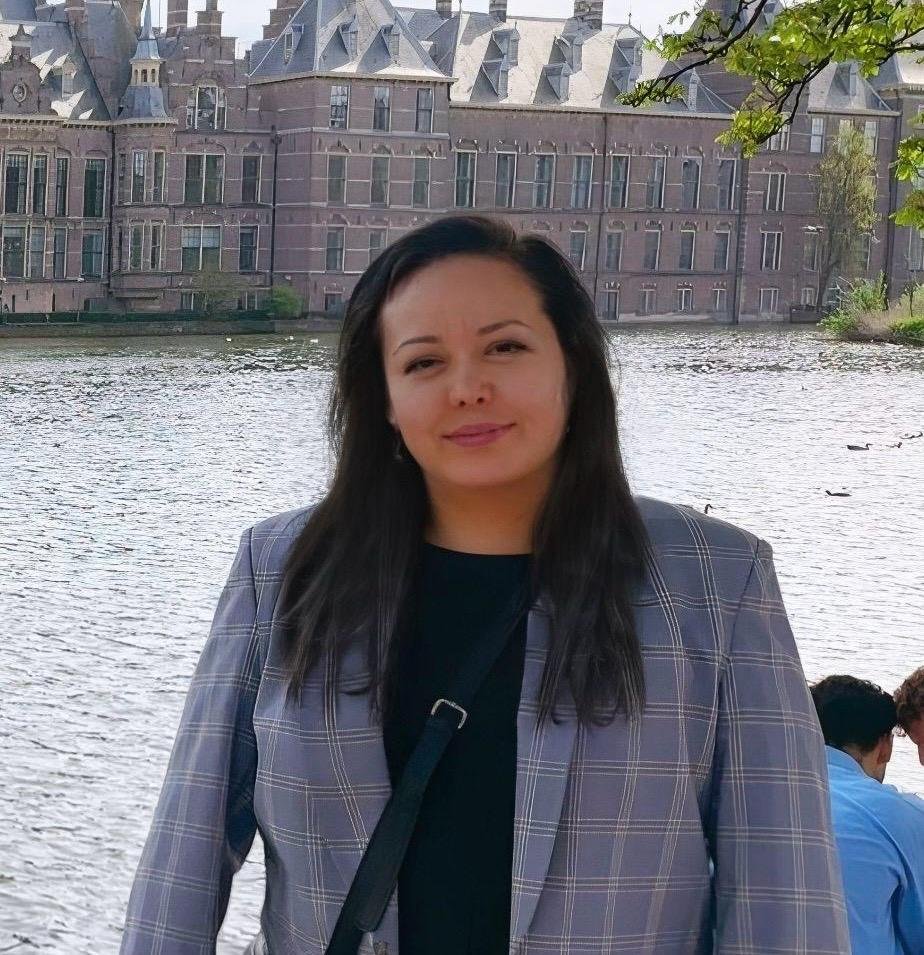
Asiye Uyghur is a Netherlands-based Uyghur writer and political commentator. Before the closure of Radio Free Asia’s Uyghur Service, she worked there as a political commentator. She currently publishes commentary and analysis in English, Dutch, and Chinese on Uyghur human rights, cultural repression, information control, and Chinese state policies related to Uyghurs through platforms including Global Voices, the Uyghur Human Rights Project (UHRP) as a guest contributor, and the Dutch publication “De Kanttekening.”