The mayor’s reception of the “lonely Uyghur” exposes the political meaning of Chinese violence inside a city of international justice.
by Abdurehim Gheni Uyghur
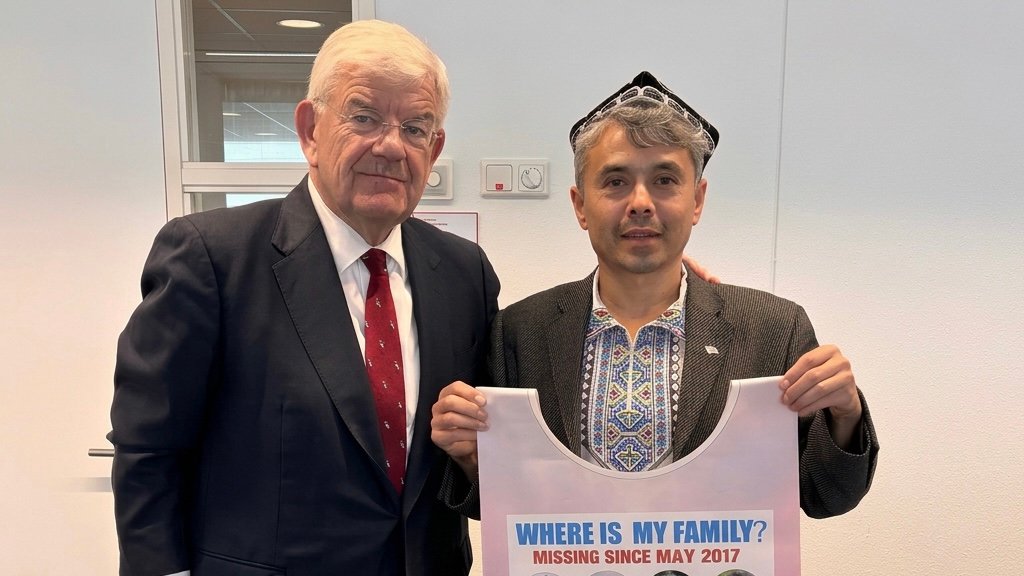
On October 8, 2026, a politically and humanitarianly significant event took place in The Hague (Den Haag), a city known worldwide as a symbol of peace, law, and justice. The Mayor of The Hague, Jan van Zanen, received me at City Hall. I am a Uyghur human rights activist, known for my solo protests and a direct victim of the Chinese government’s transnational repression. The mayor held a sincere conversation with me that lasted nearly 30 minutes.
Rombout Alkema, the city government’s senior policy and security adviser, joined the mayor. The presence of a senior security official showed that the municipality regarded the meeting as more than a citizen voicing a grievance. For the city government, it was an urgent political matter concerning China’s transnational repression in Europe and the security of Uyghur activists.
In my view, this meeting is a moral victory of truth and conscience over the Chinese Communist Party’s genocide and psychological terror against the Uyghurs. I want to share in detail what I experienced at the meeting.
The background to this meeting goes back to February 14, 2026. That day, Chinese groups were celebrating the Lunar New Year in the Atrium of The Hague City Hall. To draw attention to the Uyghur genocide, I staged a peaceful solo protest.
I held a placard reading: “Restoring East Turkistan’s independence is the only guarantee of saving the Uyghurs.” It also depicted Chinese army tanks invading East Turkistan and the Chinese government’s bloody hand covering the mouths of Uyghurs. I had no intention of disturbing public order. I planned to hold up my placards quietly until a police officer or security guard escorted me out.
Instead, Chinese individuals rushed at me from all sides. They twisted my neck and arms and tore the placards from my hands. At that moment, I felt as though I had been taken out of the city of peace and justice and thrown back into occupied East Turkistan, dragged from my home to an internment camp. So I shouted, “Freedom for East Turkistan! Freedom for the Uyghurs! Chinese government, stop the Uyghur genocide!” I cried out to draw people’s attention and to free myself from their grip.
From an international law standpoint, this was more than physical harm suffered by a single person. It was an open threat to freedom of expression, freedom of political opinion, and the right to peaceful assembly, all of which are protected by law in democratic societies. It shows that the Chinese government is trying to silence Uyghur voices around the world.
The Hague is home to the International Court of Justice, the International Criminal Court, and many other international justice institutions. An attack on a Uyghur human rights activist inside a government building in such a city carried political and symbolic weight. For that reason, I was invited to testify at a city council meeting on May 20, 2026. After my testimony, several political parties asked the mayor to meet with me separately to hear the facts and learn directly about my well-being. Finally, on October 8, the mayor formally received me as “a human rights activist who suffered violence and psychological harm inside City Hall.”
During the meeting, I told the mayor about the February 14 attack, and also about the psychological terror China has used to silence me and about the fate of my family.
Since May 23, 2017, I have had no contact with 19 members of my family in East Turkistan, and their whereabouts remain unknown. My family is a living example of the millions of Uyghurs who have suffered under China’s genocide.
From July 8 to 12, 2024, the Court of the Citizens of the World, a people’s tribunal in The Hague, held proceedings against Xi Jinping on charges defined in the Rome Statute. I was invited to testify. Two days before my testimony, China took my sick father and my brother out of the camp and forced them to call me. The authorities then sent me, via Telegram, a video of my gravely ill father lying in bed, with my brother standing beside him, urging me to back down. The aim was to torture me psychologically and make me abandon my testimony.
I did not give in to this attempt to break me. I went to the tribunal, testified, and played the video in the courtroom. The court staff rose to their feet, and some came to me, took my hand, and expressed their sympathy. They told me, “We respect your efforts to make China’s cruelty heard.” I also showed the same video to the mayor, and tears came to my eyes involuntarily.
Two months later, I learned that my father had died in the camp. Shohret Hoshur, a Radio Free Asia reporter, confirmed the news. I believe the Chinese government did this to take revenge on me.
The mayor asked me, “Are you in contact with your relatives now?” I replied, “My phone connects to the whole world, except to my family in East Turkistan under Chinese occupation.” He was astonished. I told the mayor about my eight years of continuous struggle.
In 2018, a year after losing contact with my family, I began my solo protests. They took place at Dam Square in Amsterdam; in front of the Dutch Parliament and the Chinese Embassy in The Hague; at the Eiffel Tower in Paris; and in front of the United Nations in Geneva. During these protests, I told passersby about the situation in my occupied homeland. I also met many party leaders and officials. I wrote to King Willem-Alexander, Prime Minister Mark Rutte, and Foreign Minister Stef Blok, asking them to use diplomatic channels to have the Chinese Embassy or the Chinese Foreign Ministry clarify what had happened to my 19 family members. The Dutch Ministry of Foreign Affairs told me it had contacted the Chinese side, but China did not respond for nearly two years.
On August 14, 2020, carrying an East Turkistan flag, I entered the grounds of the Chinese Embassy and demanded answers in person: “Chinese government! Where are my 19 missing family members? Today I have come to demand an accounting from you. Will you take me to a camp too? Why are you killing the Uyghurs?” The embassy’s security guard blocked me and pushed me out. The police arrived, detained me, and fined me 1,000 euros. Al Jazeera showed the footage worldwide.
About a month after this incident, the Dutch Ministry of Foreign Affairs delivered a letter to me that the Chinese Embassy had sent to the Ministry. After nearly two years of silence, China responded only after the embassy incident attracted worldwide attention. The letter stated that five of my relatives had been sentenced to prison terms ranging from 3 years to 16 years and 6 months, and that my mother had died of illness on October 9, 2014. It ended with a single line: “the remaining relatives are living normal lives.” In other words, the Chinese government openly acknowledged these long prison sentences, yet described everyone else’s situation as “normal.”
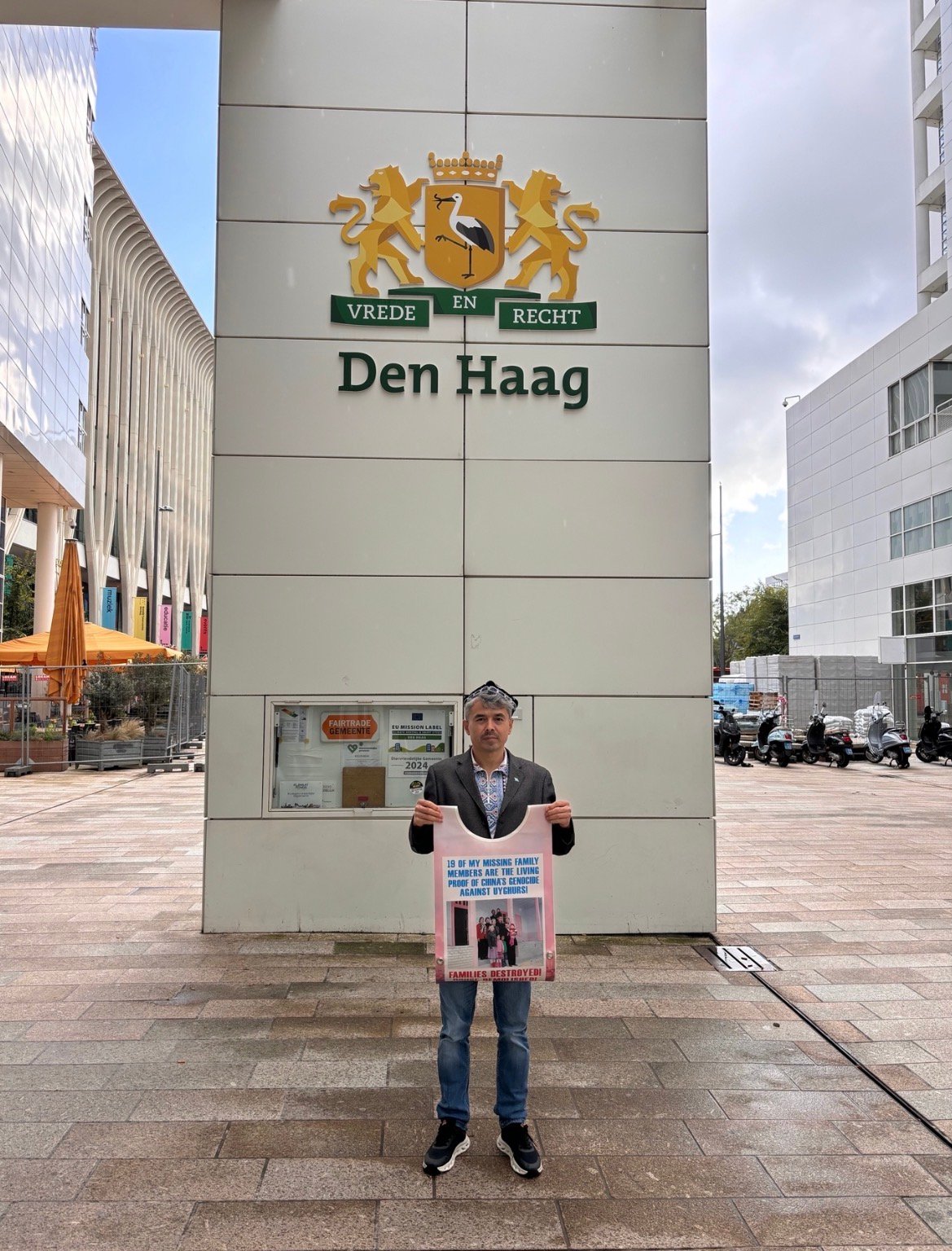
I did not believe this word “normal.” My phone could not reach any of those people. So I protested again in front of the embassy, wrote a letter to the Chinese government and put it in the embassy’s mailbox, and released a video statement: “If my family members are alive and normal, why does my phone not connect to a single one of them? You have deceived the world by making relatives of some Uyghur activists in the diaspora speak against them on your television, saying ‘we are living well.’ Now put one of my relatives on your television to speak against me!” The Chinese government could not produce a single person. For me, this is sufficient ground to reject the claim that they are “living normal lives.”
I showed the mayor photographs of my 19 family members and a photo of the compound where I grew up, which the Chinese authorities forcibly demolished.
One more thing deserves mention. After I entered the embassy grounds on August 14, 2020, the Chinese Embassy complained, and the Hague municipal government no longer permitted my protests in front of the embassy. I also told the mayor about this.
During the meeting, I presented the mayor with a Uyghur doppa (traditional cap) and a 3D map of East Turkistan. I then made the following requests: to inquire into the fate of my 19 family members through the Chinese Embassy in The Hague or through the diplomatic channels of the Dutch Ministry of Foreign Affairs; to help Uyghur voices be heard in the Dutch media and to support work documenting my human rights struggle; and to consider security measures against transnational threats.
I also thanked the mayor for the decision to stop hosting the Chinese New Year celebration at the City Hall of the city of peace and justice.
The mayor asked why I chose the Netherlands rather than another country. In high school, I read in my world history class about the influence a small country like the Netherlands had on the world during its Golden Age, and I was fascinated. Later, I learned that the Netherlands is world-famous for its agricultural technology. I came here seeking asylum, intending to learn Dutch agricultural technology, return to my homeland, and equip Uyghur farmers with new techniques. So far, I have mastered more than 20 agricultural techniques. Returning home has not yet been possible, but I believe my homeland will one day be free, and I will serve my people with these techniques.
The mayor asked about my five children and how China’s violence has affected their inner lives. After watching the video of February 14, my children told me: “Dad, you are not afraid of the Chinese. You are not afraid of the police. You are brave, and we are proud of you.”
This meeting went beyond hearing a victim’s account. China’s genocide against the Uyghurs, its policy of enforced disappearances, and its transnational repression were once again brought before political institutions in Europe.
The Hague, the capital of international justice, has heard an issue that is much more than one Uyghur’s tragedy. It tests how far international law is enforced and whether democratic societies can defend their own principles.
The sincere conversation between the mayor, his security adviser, and me, and their sympathy for the violence I suffered, show that China’s plot to break me psychologically has failed. This is a moral victory for me and for the cause of East Turkistan.
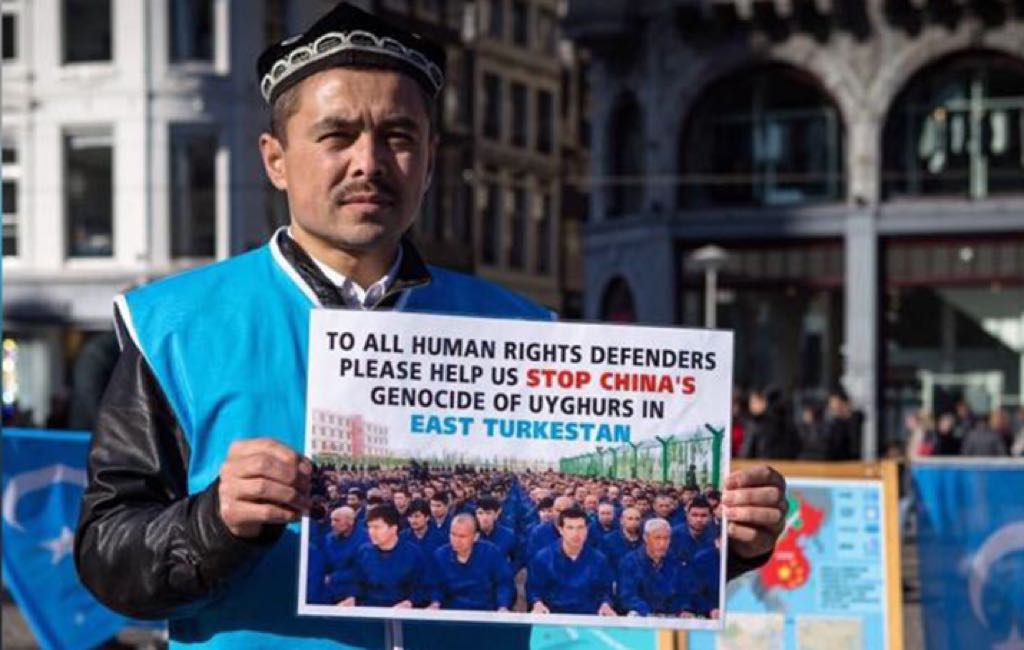
Abdurehim Gheni is a Uyghur activist living in the Netherlands who became famous for his solo protests in Dam Square in Amsterdam. He also educates tourists to the reality of the Uyghur genocide.