What’s in a name? What is “China” and who is “Chinese”? How the term “Chinese nation” was socially and politically constructed to promote Han imperialism.
by Asiye Uyghur
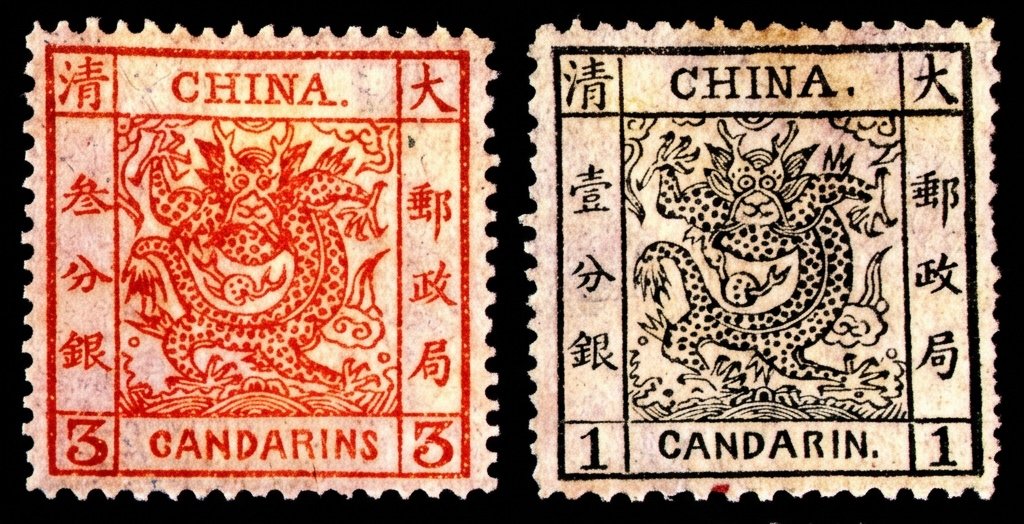
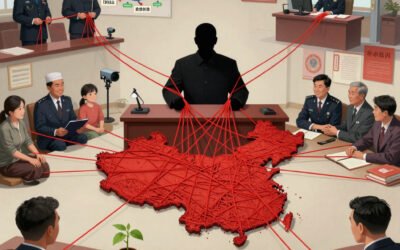
When the world says “China,” whose land does it imagine? When it says “Chinese,” whose people and culture does it see? “China” is a historical geographical name that cannot be reduced to one modern state or people. As the Mandzhur Empire collapsed, the peoples it had ruled should have been able to determine the political futures of their own lands. Instead, modern Han political thinkers, including Liang Qichao and Sun Yat-sen, joined the claim to the Mandzhur imperial inheritance to the construction of a “Chinese nation.” Sun later explicitly proposed assimilating other peoples around the Han and changing the name of the Han people to the “Chinese nation.” The People’s Republic has inherited and intensified this political logic. “China” is made to cover the lands of Uyghurs, Tibetans, Mongols, and others, while “Chinese” evokes, above all, the Han people and Han culture. These peoples are included in the territorial claim but excluded from the image of its historical owners. Who has the power to write the history of this land as the history of one people? The answer bears on identity, sovereignty, and self-determination.
In his 1990 essay “The Geographical Scope of Chin and Machin”, the Uyghur scholar Abdushukur Muhammedimin objected to translating every historical occurrence of “Chin” and “Machin” as the modern “China.” Citing the “Dīwān Lughāt al-Turk” (Compendium of the Turkic Languages), he distinguished “Upper Chin,” “Middle Chin,” and “Lower Chin.” An English translation of Kashgari’s text identifies Kashgar as “Lower Sin,” using “Sin” to render the name. Muhammedimin examined the geographical meanings of these names in Turkic sources. His argument challenges the practice of reading the modern state backward into every older reference to “Chin.” My next question is political: how did the post-Mandzhur claim to the empire’s former territories become, in international perception, joined to “Chinese” as an image of the Han? The land contains many peoples, yet the name is made to present only one as its historical subject.
Apply the same standard to national identity
Some prominent Han historians emphasize that Uyghurs once called themselves Kashgaris, Khotanis, or Muslims, and use these descriptions to question the historical continuity of Uyghur national identity. The same standard must then be applied to the history of the Han: people identified with Henan, Shandong, or Guangdong, with their localities, dialects, lineages, and ruling dynasties. A nationwide national identity was also constructed in modern times. Liang Qichao and Sun Yat-sen helped build it. The modern reorganization of a national identity does not mean that its people, language, and history did not exist before it. The history of identity formation cannot be used to cast doubt on Uyghurs while the modern Han identity is treated as an eternal, self-evident fact.
Calling Uyghur, Tibetan, and Mongolian homelands “China” does not turn their peoples into Han. Yet when an account of “China” tells only Han history, it makes those peoples strangers in the histories of their own lands.
A revolutionary slogan and an imperial inheritance
The 1905 oath of the Revolutionary Alliance declared: “Expel the Tatars, restore Zhonghua, establish a republic, and equalize land rights.” Its opening words carried an unmistakable anti-Mandzhur ethnic nationalism. “Tatars” was a slur, turning opposition to Mandzhur rule into an appeal to exclude a people. After the revolution, however, the new republic claimed to inherit the vast lands under Mandzhur rule, including the homelands of Mongols, Tibetans, and Uyghurs. If the Mandzhur rulers were portrayed as alien rulers to be expelled, why did every territory they ruled automatically become the republic’s inheritance?
The slogan “Five Races Under One Union” offered a political language for keeping those lands: Mandzhurs, Mongols, Hui, Tibetans, and Han were to be gathered into one republic. But inclusion in a state did not give these peoples an equal say over their lands and political futures. The broad category “Hui” did not adequately recognize Uyghurs’ distinct history, language, or political identity. A revolution that had called for the removal of Mandzhur rulers turned to the inheritance of the Mandzhur Empire’s territory. To justify this inheritance, it recast the empire’s different peoples as members of a single nation.
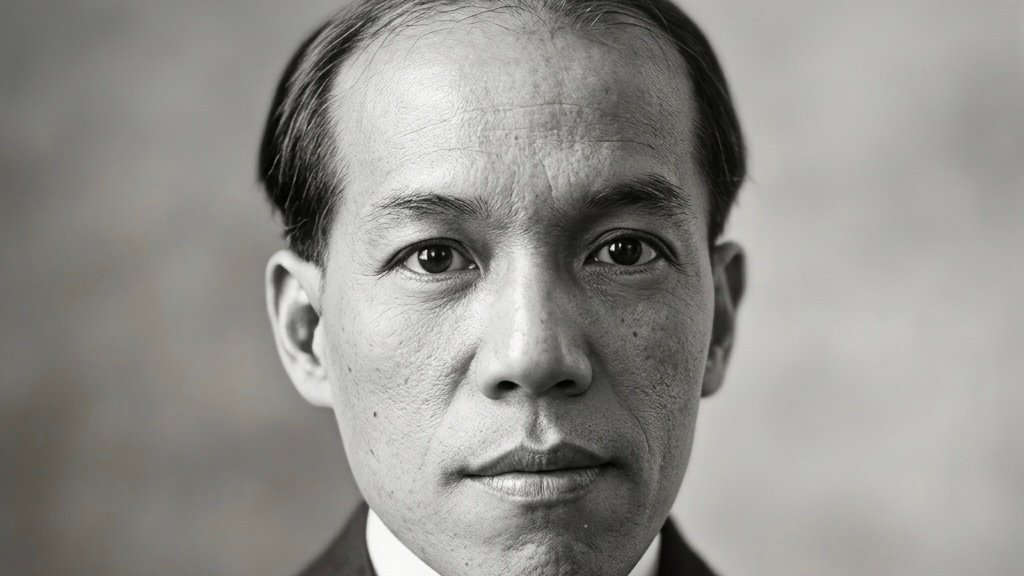
Sun Yat-sen did not invent the term “Zhonghua minzu” (“Chinese nation”). Liang Qichao had used it by 1902 and developed it further in 1905. Scholars note that Liang’s early uses of “Chinese people” and “Chinese nation” could refer specifically to the people now called Han. The term later expanded to encompass all peoples over whom the state claimed authority. The shift from the name of one people to a name for all did not remove the cultural center from which the claim was made.
In a March 6, 1921 speech on the Three Principles of the People, Sun made his preference explicit. He called for Mandzhurs, Mongols, Hui, and Tibetans to be “assimilated into our Han people,” and proposed to “change the name of the Han people to the Chinese nation.” Drawing on his understanding of the American model, he wanted to bring other peoples into a new common name centered on the Han. He defended this position by invoking foreign powers’ ambitions in Mandzhuria, Mongolia, and Tibet. A claim to defend territory cannot erase the consent and self-determination of the peoples living there.
The 1924 declaration of the Kuomintang’s First National Congress also recognized the right of the peoples within China to self-determination. That promise collided with the assimilation Sun had advocated openly in 1921. Which principle would determine how power was distributed? In a 2014 study published by the Chinese Academy of Social Sciences, historian Zheng Dahua described the earlier approach as a unitary idea of the Chinese nation built on assimilation.
I call the expansion of Han nationalism across the entire state, with other peoples required to redefine themselves around its center, “pan-Hanism.” This names a structure of power: one people’s standard language, historical account, and political loyalty set the terms of everyone’s national identity. Even when separate ethnic classifications remain on paper, schools, history, and public life can still be organized around the standards of one people.
Writing an empire’s history as one nation’s history
In an excerpt from “A History of Chinese Civilization: Constructing a Non-Han-Centered Historical View,” Japanese historian Okada Hidehiro distinguishes the older uses of “Zhongguo” from the meaning of a modern nation-state. Citing works including the “Book of Songs” and the “Records of the Grand Historian,” he argues that the geographical reach of the earlier term did not match today’s borders. He also traces the modern joining of a shared Han ancestry, national identity, and state territory. His questions challenge the fiction of an unchanging country with unchanging borders. Read alongside Uyghur historical sources, his work points to a struggle over narrative power: whoever draws every past “Zhongguo” onto the same modern map can turn other peoples’ histories into an ancestral estate.
The Mandzhur Empire governed its territories through multiple languages and institutions, including Mandzhur, Han, Mongolian, and Tibetan ones. To write that complex imperial history backward as the “since ancient times” story of a single nation is to make a decisive substitution: a past relationship of rule becomes an unquestionable claim of national ownership today.
The question is who gets to tell the story. The histories of Uyghurs, Tibetans, Mongols, Mandzhurs, and Zhuang people cannot be absorbed into one continuous story of Han cultural development merely because the present-day state claims their homelands within its borders. Modern borders do not automatically decide which people own an ancient polity, a cultural inheritance, or a historical figure. Historical contact and shared life do not erase conquest, resistance, negotiation, and different political choices.
In my earlier account of the 1946 Eleven-Point Peace Terms, I showed that a Uyghur-led delegation negotiated with the central government of the time over language, religion, and political participation. Uyghurs were an organized negotiating party, not passive recipients waiting for autonomy to be handed down. A government that claims continuity to inherit territory must also answer for the political commitments made in its predecessor’s name.
Different homelands, a shared struggle against erasure
Uyghurs have been subjected to genocide. Tibetans, Mongols, and other peoples under Chinese rule also face policies that weaken their languages, cultures, historical memory, and collective identities. The state must not be allowed to divide these connected experiences with different administrative names, school systems, and propaganda. Nor should those targeted be made to compete over whose suffering deserves recognition. Solidarity begins with recognizing each people’s homeland, name, and right to decide its future.
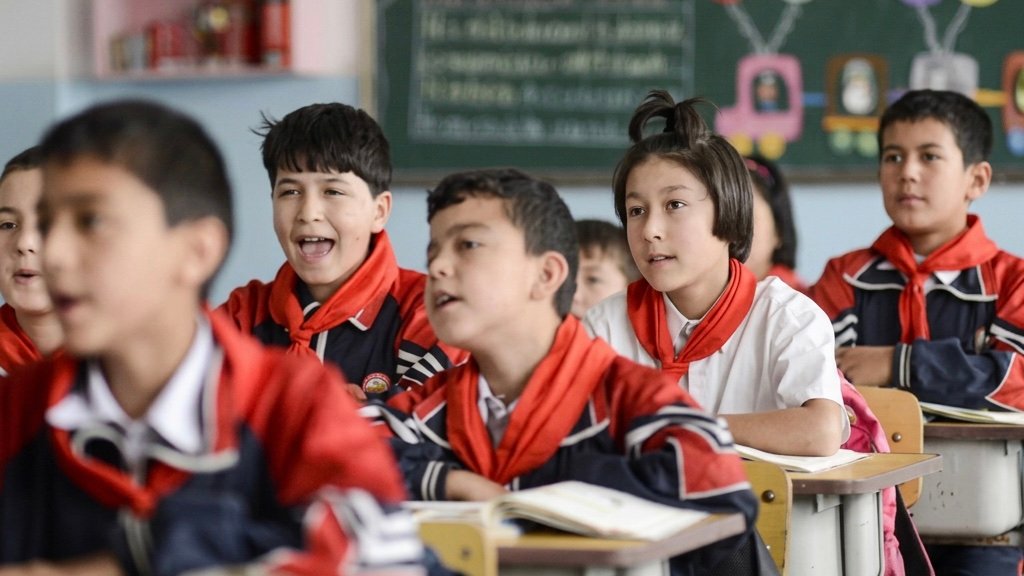
United Nations experts have warned about Tibetan children’s separation from their families in boarding schools and about Uyghur children’s separation from their families and restrictions on mother-tongue education. Mongolian-language education faces pressure from policies promoting the state’s common language. Removing children from the languages of home and from local memory, then telling the world to call it “progress,” is a shared mechanism by which state power reshapes a people’s future. Mandzhur and Zhuang experiences, too, must be told through their own records and voices, not on behalf of them by Beijing’s narrative of the “Chinese nation.”
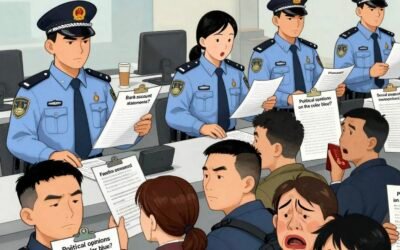
In the Uyghur region, I have traced official education plans that connect preschool instruction, the closure and merger of village schools, boarding schools, and classes in predominantly Han provinces, to vocational training and labor transfers. The state is doing more than asking children to learn another language. It is reorganizing their relationships with family, mother tongue, faith, and future work. State programs such as “Fanghuiju” (“Visit the People, Benefit the People, and Bring Together Their Hearts”) and “Pair Up and Become Family” carry this intervention into Uyghur homes. What a family says, believes, and understands about its own identity can become an object of political surveillance.
A 2023 decision on education about “consciousness of the Zhonghua national community” in the Uyghur region requires the campaign to run through schooling and calls for promoting the state’s common language and nationally compiled textbooks. The Law on Promoting Ethnic Unity and Progress, in force since 2026, makes this community-building project a nationwide legal policy. Language education, historical narrative, community life, and loyalty to the state become parts of one undertaking. The state calls it unity. If a people cannot freely pass on its language, raise its children, tell its history, and decide its political future, that “unity” demands its disappearance.
Genocide is not a figure of speech
The United States government determined that the persecution of Uyghurs constitutes genocide. The UN Human Rights Office’s 2022 assessment documented mass arbitrary detention, discriminatory restrictions, and other grave abuses, and concluded that they may constitute crimes against humanity. Evidence concerning population controls and the separation of children from their families demands independent investigation and accountability. The different terms used by legal institutions must not become an excuse to delay protecting Uyghurs.
The erasure of identity and forced assimilation facing Tibetans, Mongols, and other peoples must be investigated with equal seriousness. Uyghurs’ struggle to stop genocide does not conflict with those peoples’ struggles for language, religion, land, and self-determination. We share a demand: stop invoking the “Chinese nation” to decide whether other peoples may continue to exist as themselves.
Why does the world accept the state’s story?
The world often encounters a land through official maps, diplomacy, and the names a government asks others to use. Once “China” is accepted as the present state’s exclusive designation, and “Chinese” is imagined as Han, a chain of assumptions follows: the state speaks for the land; the Han speak for the state; therefore Han history speaks for everyone on that land. None of these steps gives the other peoples a voice. Other peoples are pushed to the margins before their stories are even heard. Economic relationships, official media, cultural exchanges, and limits on independent investigation then give the story of “development, unity, and stability” more channels of circulation than the languages and memories of the peoples under state rule.
UN investigations, the determinations of governments, and Uyghur testimony already exist. Yet international legal mechanisms largely operate through states, and political bargaining and national interests shape enforcement. The veto held by permanent members of the UN Security Council is one structural obstacle to international accountability. Propaganda also benefits from a vocabulary that collapses “state,” “people,” “civilization,” and “territory” into one.
I have written about how Beijing uses “aid,” “ethnic unity,” and “becoming family” to enter Uyghur homes, while extending influence abroad through sister cities, business, and cultural ties. The methods differ, but benign words must be measured against actual power relations. Official photographs of schools, jobs, and attractive cities cannot answer who may refuse, who may speak a mother tongue, who controls the land, and who may independently tell the past.
The power of this naming lies in the claim that follows it: an imperial inheritance becomes one nation’s property; the histories of many peoples become a single government’s story; and those who object are accused of threatening unity. To respect history is to allow Uyghurs and other peoples to be its narrators, in their own names, languages, and sources. The futures of Uyghurs, Tibetans, Mongols, other peoples subjected to annexation and assimilation, and the people of Taiwan cannot be decided for them by the English name “China” or the characters 中国, “Zhongguo.” No state’s claim to a geographical name can extinguish a people’s land, identity, or right to self-determination. If the international community knowingly conceals those rights beneath ambiguous names and gives political cover to the abuses, it becomes morally complicit.
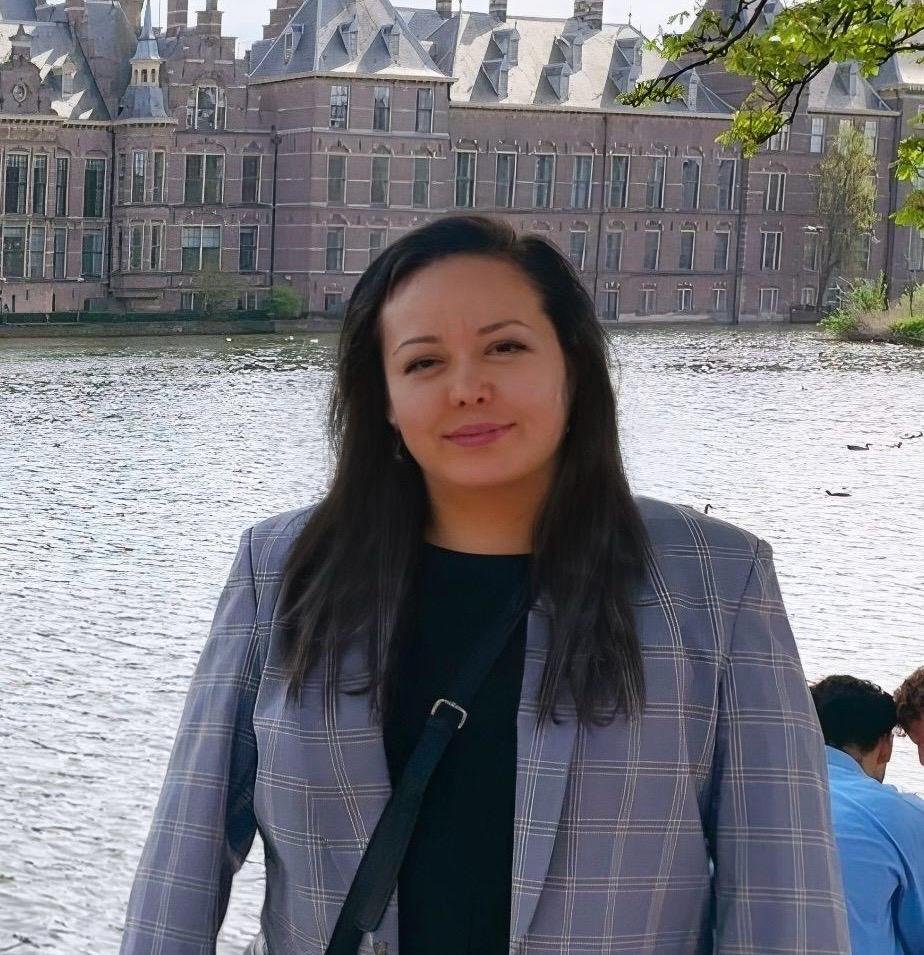
Asiye Uyghur is a Netherlands-based Uyghur writer and political commentator. Before the closure of Radio Free Asia’s Uyghur Service, she worked there as a political commentator. She currently publishes commentary and analysis in English, Dutch, and Chinese on Uyghur human rights, cultural repression, information control, and Chinese state policies related to Uyghurs through platforms including Global Voices, the Uyghur Human Rights Project (UHRP) as a guest contributor, and the Dutch publication “De Kanttekening.”