The former US Ambassador-at-Large for International Religious Freedom tells the stories of Christians, Tibetan Buddhists, Falun Gong practitioners, and Uyghurs who defied the Communist Party.
by Massimo Introvigne
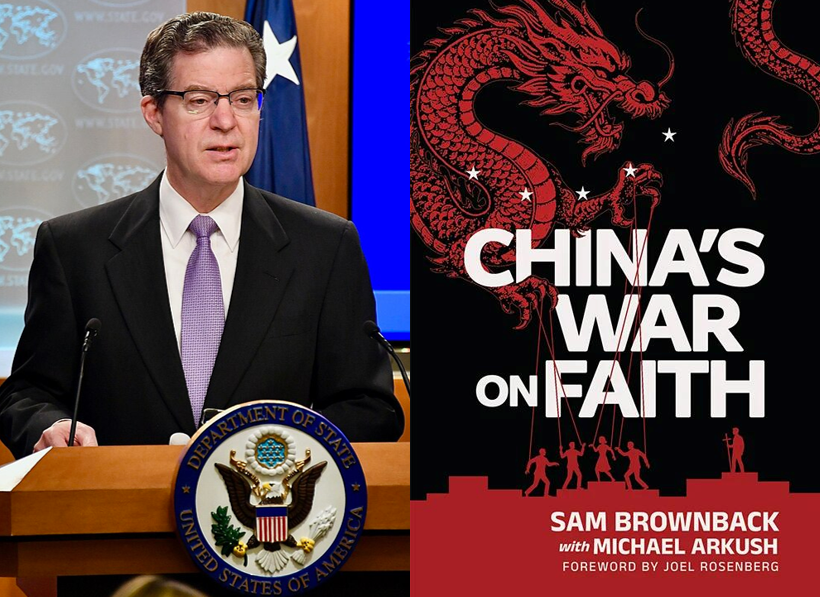
Shelves of books on religious persecution in China have been written by scholars, and many of them are excellent. Few have changed government policy. Sam Brownback thinks he knows why. “I’m not a historian or an academic,” he writes at the start of his new book. Instead, he offers the stories of survivors he has met in person, because “stories are more powerful than data.”
The book is “China’s War on Faith” (New York: Republic Book Publishers, 2026). Brownback wrote it with journalist Michael Arkush, and the novelist Joel C. Rosenberg contributed the foreword. Few people are better qualified to write on this subject. Brownback is the only living American who has served as a congressman, a senator, a governor, and an ambassador. From 2018 to 2021, he was the US Ambassador-at-Large for International Religious Freedom, and since he arrived in the Senate in 1996, he has defended religious liberty “for everyone, everywhere, all the time.” For this reason, the Chinese Communist Party (CCP) has banned him from entering China.
The introduction is titled “Three Genocides.” In it Brownback argues that the CCP is committing three genocides at the same time, against the Uyghurs in Xinjiang (which he prefers to call East Turkistan), against Falun Gong practitioners, and against Tibetan Buddhists. It is also persecuting Christians who refuse to put the Party above the Bible. The CCP, he notes, has killed more of its own people than any other regime in history. He compares the world’s indifference to the silence that once surrounded the Holocaust. He asks how this indifference can last “in a world where everyone has a smartphone, with access to the facts and the pictures at their fingertips.”
The first and longest part of the book is about Christians. Its first hero is Peter Xu, one of the founders of the house church movement and known as “the Billy Graham of China.” He was born in Henan in 1940 and was imprisoned five times for preaching the Gospel. In 1997, already in his late fifties, he was hung for almost four hours from the bars of a sliding prison door, which the guards opened wide to stretch his chest until he could hardly breathe. “I saw it as my portion of the sufferings of Christ,” he told Brownback from his present home in Colorado. “It made me love Jesus even more.”
In the next chapter, Brownback turns to his own life. He grew up on a farm in Parker, Kansas, a village of 250 people, and found Christ at thirteen. Later, a cancer scare in 1995 led him to rethink his career. In a Senate Bible study, the chaplain, Dr. Lloyd Ogilvie, asked the senators how many constituents they had. All of them got the answer wrong. “Each of you has just one constituent,” the chaplain said, “and that constituent is God.” The chapter is candid and moving, and it explains why a Kansas politician made religious freedom in faraway countries his life’s mission.
Then comes the story of the Mayflower Church, which would make an extraordinary movie. Pan Yongguang was a surgeon who became a pastor after watching his sister’s fellow believers pray for his dying father. In 2019, he led sixty-four members of his Shenzhen congregation out of China, first to the South Korean island of Jeju and then to Thailand. There they faced deportation, and a five-foot-three pregnant woman stood up to the Thai police. The church finally settled in Midland, Texas. Brownback suggests, only half-jokingly, that Hollywood should tell this story instead of cooperating with Chinese censorship.
The chapter on Wang Yi, the pastor of the Early Rain Covenant Church in Chengdu, is the only one written without an interview. Wang has been in jail since December 2018, and his sentence is due to end in December 2027. Brownback had met him in 2006, when Wang was still a human rights lawyer and was among the first house church members ever received by a sitting American president, George W. Bush, who asked everybody to hold hands and pray. Before his arrest, Wang wrote that the authorities could separate him from his wife and children and destroy his reputation and his family, “However, no one in this world can force me to renounce my faith.”
Two more chapters complete this part. One is on Frances Hui, a young Hong Kong pro-democracy activist who now lives in Washington with a bounty on her head and whose parents have been detained and questioned in Hong Kong. “This is what authoritarianism does,” she told the author. “It strips away your power and your freedom—to think, to speak, to express yourself.” The other is on Nina Shea of the Hudson Institute, a Catholic human rights lawyer who began her career defending Andrei Sakharov and has documented the cases of the ten Catholic bishops imprisoned or missing in China, some of them in their nineties.
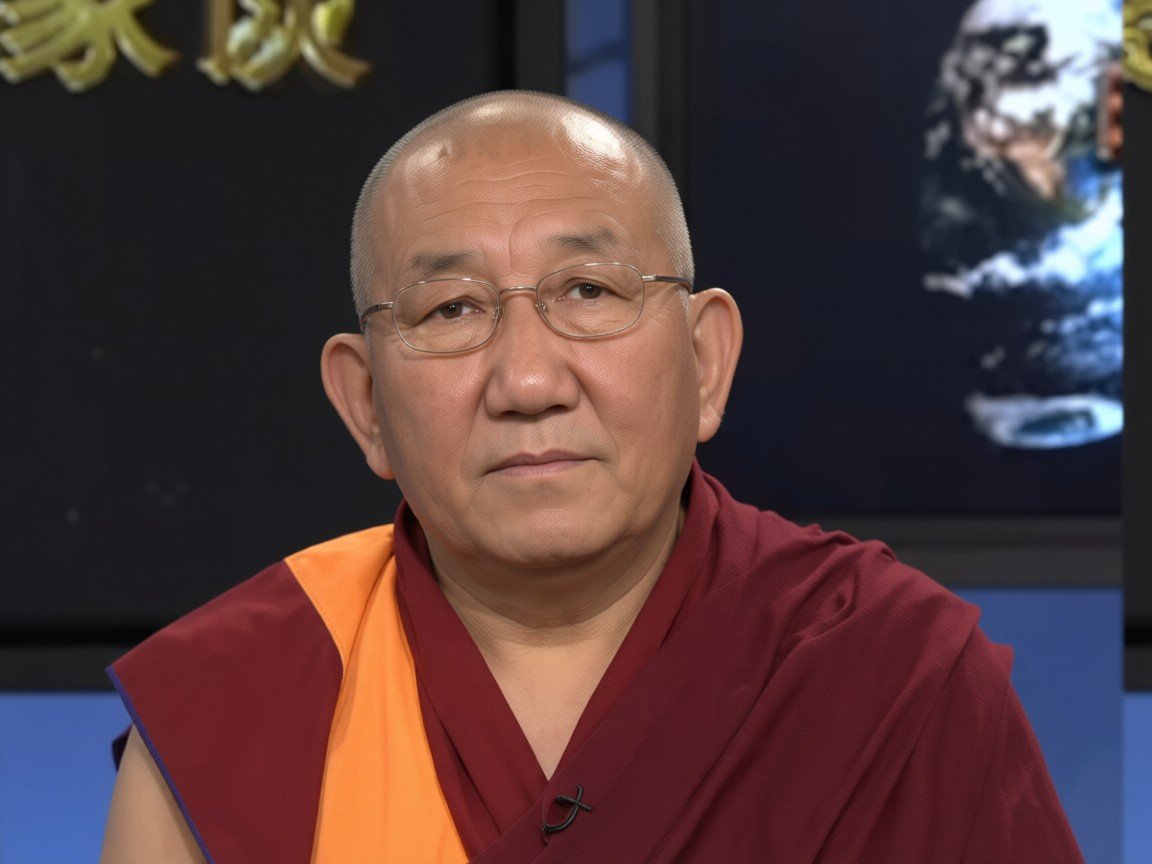
The second part is about Tibet. Arjia Rinpoche was the high lama of the Kumbum Monastery and was only eight in 1958, when soldiers of the People’s Liberation Army came to the monastery and arrested about five hundred monks in one day. He was forced to denounce his own teachers, and decades later he escaped to the United States through Guatemala. He now leads Buddhist centers in America, and he admitted to Brownback that his freedom has a bitter taste: “I’m still a Tibetan. I want to go back, and I can’t.” Arjia has sometimes blamed his people’s misfortunes on bad karma. Brownback respectfully disagrees and says the blame belongs to “the Chinese government. And the evil that is Communism.” The same part includes a warm portrait of former Congressman Frank Wolf, the father of the International Religious Freedom Act of 1998, who made a secret trip to Tibet in 1997 and, at eighty-seven, is still campaigning to ban lobbying on behalf of the CCP in Washington.
In the third part, the author introduces Wang Chunyan, a seventy-year-old Falun Gong practitioner. She was a successful businesswoman and bought a printing press to counter the CCP’s propaganda against Falun Gong after the crackdown of 1999. For that, she lost her company and her home and spent seven years in prison. Her husband, Yu Yefu, who never practiced Falun Gong, was harassed by the police and died in circumstances the authorities called a suicide, although his family saw on his skull the marks of a beating. Brownback discusses the evidence of forced organ harvesting from living prisoners, which has targeted both Falun Gong practitioners and Uyghurs.
The fourth part deals with the Uyghurs and is the most painful to read. Former NBA player Enes Kanter Freedom, a Turkish Muslim, sacrificed his career and a fortune by denouncing the treatment of Uyghurs and Tibetans while the league and its stars stayed silent. Brownback met Mihrigul Tursun in Washington in the fall of 2024. Her story of detention, torture, and the death of her infant son affected him so much that he called his daughters from the Uber on his way home. Interviews with scholar Adrian Zenz explain how the camps have now been partly replaced by long prison sentences and forced factory labor. Zenz calls the system “an incredibly calculated strategy” and adds, “The Nazis seem almost unsophisticated compared to this.”
In the afterword, Brownback offers a political program. The free world should admit that it is at war with the CCP and should link trade deals to progress in human rights. Congress should pass the bill against forced organ harvesting introduced by Congressman Chris Smith and ban lobbying for Beijing. American leaders should meet victims of persecution publicly, including Falun Gong founder Li Hongzhi. Brownback also calls on Pope Leo to demand the release of the imprisoned bishops and to visit Taiwan, and on President Trump to convene a White House summit of all faiths on religious freedom.
Readers may or may not share all of Brownback’s political opinions, and he is outspoken about Hollywood, the NBA, and American companies doing business in China. However, the book’s strength lies in its human encounters. Brownback writes in short, direct sentences and is not afraid to show his emotions. In one of the most moving passages, he asks himself whether he would have shown the same courage as the people he interviewed and confesses, “I would like to think the answer is yes, but I really have no idea.” The result is a book that readers who have never opened an academic study of Chinese religion will finish in a few evenings, and that may move them to act. Brownback hoped for exactly this.
No single volume, not even this one, can cover the whole range of religious persecution in China. Besides the groups Brownback discusses, new religious movements are also persecuted, often more harshly. In the 1950s, the ferocious campaign against Yiguandao led to millions of arrests and thousands of executions. Today that persecution has been revived. As I documented in my book “Inside The Church of Almighty God” (Oxford University Press, 2020), The Church of Almighty God is the target of a massive repression in China. “Bitter Winter” regularly reports on the persecution of dozens of other movements labeled as “xie jiao,” an expression that means “movements spreading heterodox teachings” and is sometimes, less correctly, translated as “evil cults.”
I understand that the “xie jiao” would require a separate volume. Perhaps Ambassador Brownback, who has bravely denounced the persecution of The Church of Almighty God in public speeches, will one day write it.
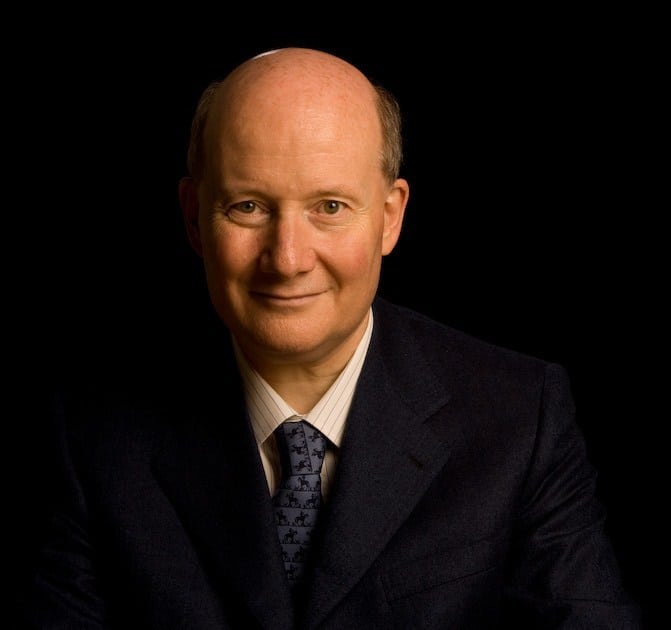
Massimo Introvigne (born June 14, 1955 in Rome) is an Italian sociologist of religions. He is the founder and managing director of the Center for Studies on New Religions (CESNUR), an international network of scholars who study new religious movements. Introvigne is the author of some 70 books and more than 100 articles in the field of sociology of religion. He was the main author of the Enciclopedia delle religioni in Italia (Encyclopedia of Religions in Italy). He is a member of the editorial board for the Interdisciplinary Journal of Research on Religion and of the executive board of University of Pennsylvania Press’ Nova Religio. From January 5 to December 31, 2011, he has served as the “Representative on combating racism, xenophobia and discrimination, with a special focus on discrimination against Christians and members of other religions” of the Organization for Security and Co-operation in Europe (OSCE). From 2012 to 2015 he served as chairperson of the Observatory of Religious Liberty, instituted by the Italian Ministry of Foreign Affairs in order to monitor problems of religious liberty on a worldwide scale.