A reporting ban on the Chester hearing has been lifted. What emerged there should trouble anybody who cares about justice in Britain.
by Massimo Introvigne
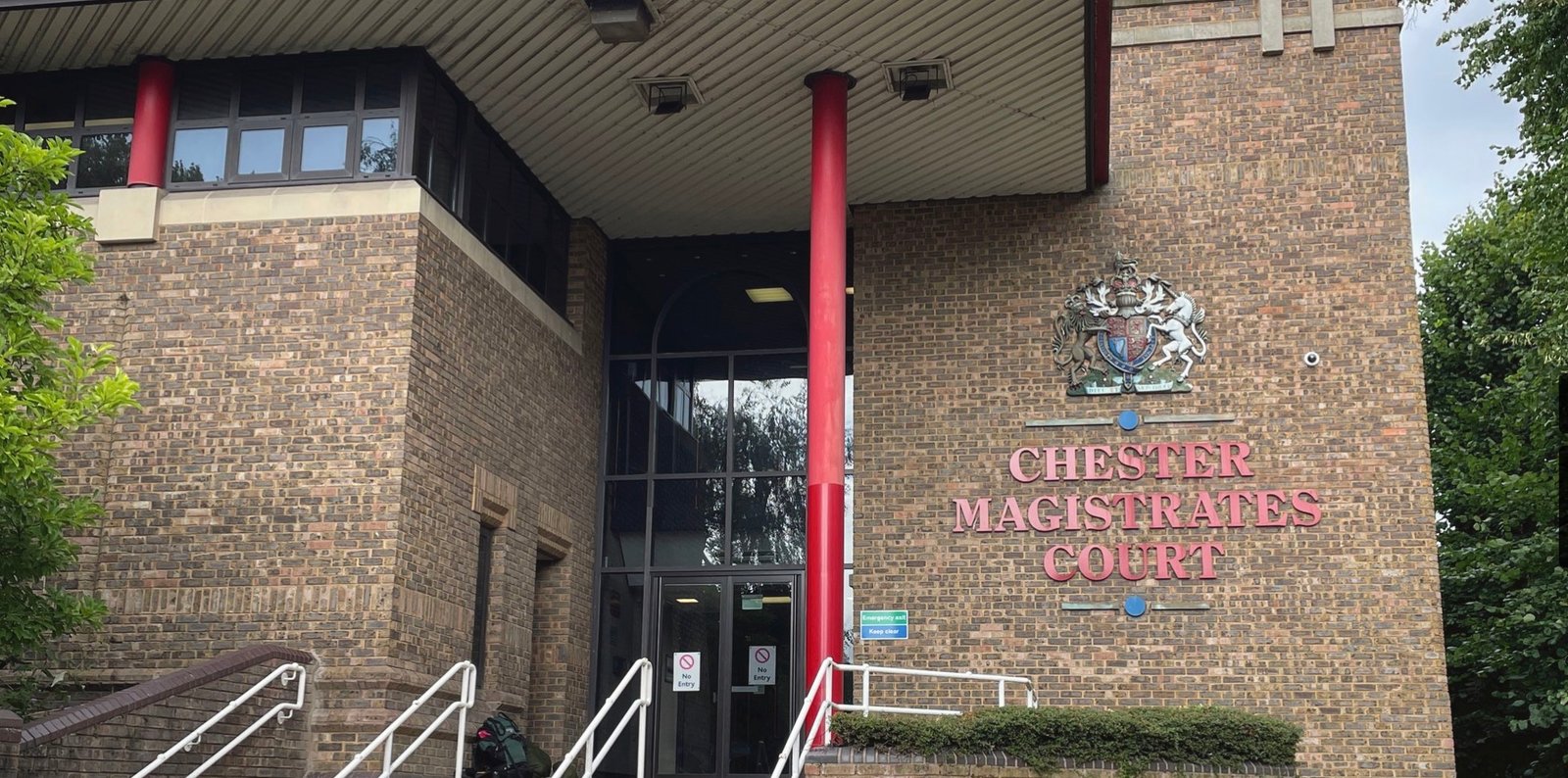
On October 22, Chester Magistrates’ Court heard seven members of the Ahmadi Religion of Peace and Light (AROPL), including its leader Abdullah Hashem, ask for the lifting of the interim orders that keep them away from their homes, their place of worship, and in several cases their families. “Bitter Winter” sent an observer, Marco Respinti. For almost three weeks, we were unable to publish his account, because the judge, at the request of Cheshire Constabulary, had restricted reporting on the hearing. On November 10, the restriction was lifted, except for the names of persons who are not parties to the proceedings. We have published Respinti’s observations. What follows is my comment as editor.
Readers should first know what AROPL is. I have studied the movement with several of my colleagues (a book is in preparation), and we interviewed its members in England in 2024 and 2026. AROPL was born within Twelver Shia Islam. In 1999, in Basra, Iraq, a civil engineer called Ahmed al-Hassan announced that the hidden Twelfth Imam had appointed him as the Yamani, the figure who in Islamic prophecy prepares the way for the Mahdi. He denounced the Shia clerical establishment of Iraq and Iran as corrupt, was persecuted, and has not been seen in public since 2007. In 2015, Abdullah Hashem, an American with an Egyptian father, proclaimed that al-Hassan had recognized him as the Qaim, the “Riser of the Family of Muhammad,” and founded AROPL. Its scripture, “The Goal of the Wise,” published in 2022, describes seven successive covenants between God and humanity, teaches reincarnation, and draws on both Islamic and Western esoteric traditions. It openly presents Hashem’s message as a new religion. AROPL imposes no hijab on women, lifts the ban on alcohol, moves Ramadan to December, and welcomes LGBT people. Believers who live around Hashem hold their property in common, as the first Christians did.
Such teachings have a price. Iran treats AROPL as a deviant religion and has jailed its members. Clerics in Iraq have called for their killing. Believers have been arrested or tried in Egypt, Algeria, Malaysia, Azerbaijan, Thailand, and other countries. In May 2023, 104 of them were beaten by Turkish police at the Bulgarian border while trying to seek asylum, and United Nations Special Rapporteurs had to warn Türkiye against deporting them. Two devotees have been killed, one in Somalia and one in Kenya. Hashem’s community first settled in Sweden, left after years of police harassment, and moved to Webb House, a former railway orphanage in Crewe, Cheshire. Some 100 people lived there, and another 150 came to worship.
The British campaign started in April 2025 with an article by an American online writer, Be Scofield, who called AROPL a doomsday “cult” taking over the world. In July 2025, “The Guardian” followed, and other media joined. As Rosita Šorytė documented in “The Journal of CESNUR,” Scofield explains in her own 2022 book, “Hunting Lucifer,” where her knowledge of “cults” comes from: astrology, tarot cards, the Akashic records, “downloads” from higher dimensions, and extraterrestrials on a “mothership” who guide her toward the groups she should dismantle. Everybody is entitled to spiritual experiences. Journalism and police work need other sources. Yet, incredibly, some continue to take Scofield seriously.
On April 29, 2026, some 500 police officers raided Webb House and two other properties in Crewe. The police say their investigation had started in March. From what was said in court, it rests on the complaint of one woman. Residents reported broken doors, tasers, pepper spray, and children taken from their beds, claims that deserve an independent inquiry. Television had drone footage of the operation on air some twenty minutes after it started, and the names of those arrested were made public two days later. On May 3, the day the police returned the building, crowds gathered at its gates. For a month, they threw stones, flares, and fireworks, hung “remigration” banners, and shouted that the residents should go “home.” A guard was hit on the head and needed stitches. The police themselves arrested protesters on suspicion of stirring up racial hatred and of attempted arson, and later reported that 25 people had been charged with public order offenses. I call these racist riots, and I see a direct line running from the headlines to the stones.
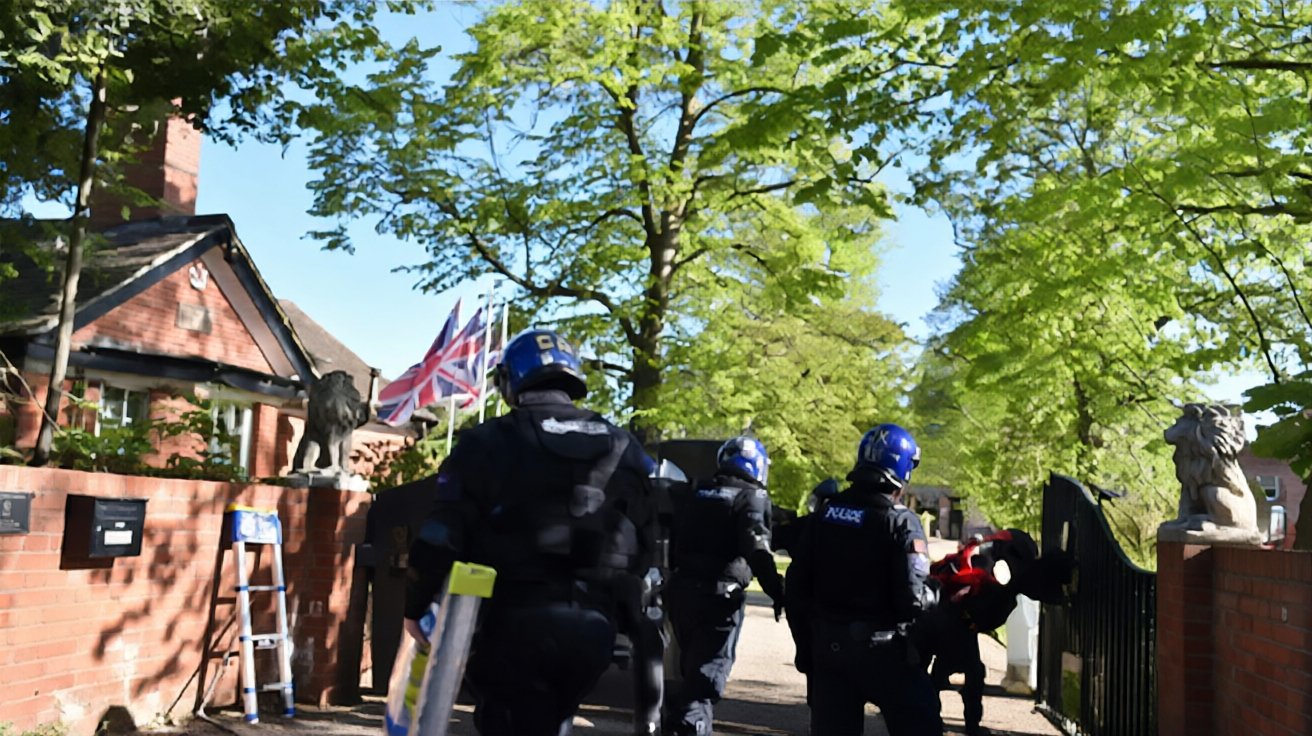
What emerged in Chester is known from our observer’s notes and from the account released by Bindmans, the law firm representing Hashem. Cross-examined by the defense, the senior investigating officer was asked about the complainant’s interviews, in which she claimed to have seen aliens, UFOs, fairies, and automatic weapons at Webb House, and to have been told that the religion had access to nuclear weapons. The officer agreed that nothing found in the search supported any of this, and that none of the roughly 100 residents had complained to the police. The defense told the court that, before going to the police, the woman had been in touch with journalists and with a known opponent of AROPL who has threatened the group with violence. A recording of the threats was played. The defense added that she has since published online a fictionalized version of her story, produced with artificial intelligence, and that a man who infiltrated the community for nine months on behalf of its opponents found no wrongdoing. One of those arrested as her alleged assailants, as we reported, first entered the United Kingdom in January 2025, while the alleged assault is dated to August 2023. It took the police five months to drop his case.
Nobody has been charged. The judge nonetheless extended the orders for six months, observing that the threshold for interim orders is low and that he was making no finding of fact against anybody.
On the day the reporting ban fell, Cheshire Constabulary issued its own statement. It should be read, and read critically. The police say that the investigation began in March 2026, after they were informed of allegations of serious sexual offenses, forced marriage, and modern slavery. Fourteen people were arrested. Thirteen remain on conditional bail and are barred from Crewe, and one has been released with no further action. The detective inspector in charge welcomes the extension of the orders, hopes they will offer “some reassurance to the local community,” and repeats that this is “not an investigation into the religion.” The statement then lists the seven persons concerned by name, age, and nationality, and the eleven conditions imposed on each of them.
The list shows how heavy the restrictions are. Those subject to the orders may not enter Crewe, contact the complainant, or have unsupervised contact with anybody under eighteen without the consent of a parent or guardian and the approval of social services. They may not travel into or out of the United Kingdom with anyone except their biological children, nor arrange transport or accommodation for anyone else, a spouse included. They may not take part in any arrangement by which people are encouraged to live in accommodation under their control or influence. They had to surrender their passports and cannot obtain new ones, must report to the police any address where they stay for more than twenty-four hours, and may not hold another person’s identity document, bank card, SIM card, or telephone. These are civil orders, as the statement itself notes, and they weigh on people who have been charged with nothing.
Each point calls for a question. The statement is silent on what was heard in Chester: the aliens and the fairies, the officer’s admissions under cross-examination, the judge’s remark that he was making no finding of fact. It calls the complainant “the victim,” a word that settles in advance what a trial, if there ever is one, would have to establish. It offers reassurance to a town where crowds stoned Webb House and waved “remigration” banners, and supplies that town with the nationalities of seven uncharged residents: American, British, Italian, German, Mexican. An inquiry that searches a place of worship for days, bans a religious leader from his own church, and forbids believers to live communally, which for AROPL is a religious practice, affects the religion, whatever the stated intention. Risk to the public should be measured on evidence, and the officer in charge conceded in court that the search confirmed none of the complainant’s most spectacular claims. Much of the additional material, the defense noted, comes from anonymous sources on the Internet. Concerns about children are grave words, and after six months they have produced no charge. Orders of this severity, lasting a full year with no trial in sight, start to resemble the penalty itself. I accept that the police must act on allegations of trafficking and sexual violence, and those of this woman should be investigated thoroughly. Investigating one complaint did not require 500 officers.
The senior officer told the court that the complainant’s account was “not untypical of victims’ accounts.” Trauma, we are often told, explains inconsistencies. Sometimes it does. Genuine victims of abuse may give confused or contradictory statements, and courts are right to make allowance for it. The argument fails once it becomes a device that makes every accuser believable by definition: whatever is false or preposterous in a story is attributed to post-traumatic stress, and whatever is left is declared true. Under such a rule, no accusation could ever be disproved.
I know of no larger police operation against a religious community in British history. Would 500 officers have been sent to an Anglican parish, a synagogue, or a mainline mosque on the word of one accuser who also saw UFOs? The difference lies in one word. Call a group a “cult,” and everything goes. Testimony nobody would otherwise believe becomes credible, a raid on a military scale becomes prudent, mobs feel licensed, and citizens convicted of nothing lose their normal lives. This is something we see routinely happening in China, Russia, and Iran. It should not happen in a democratic country.
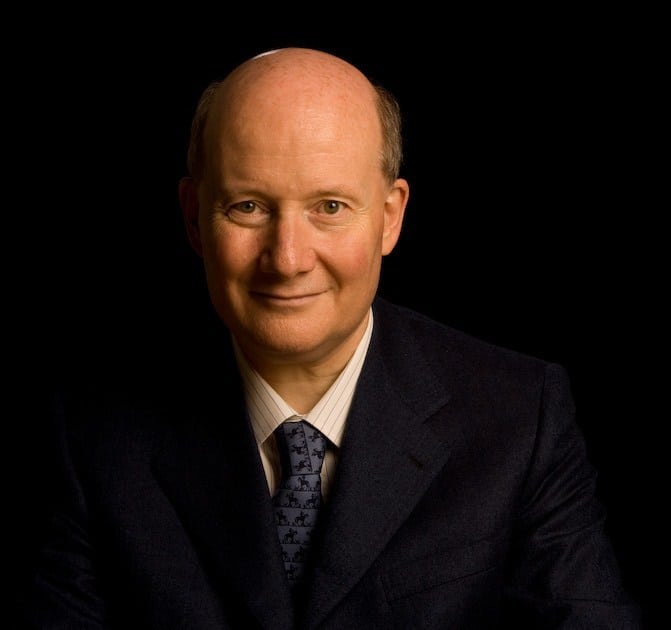
Massimo Introvigne (born June 14, 1955 in Rome) is an Italian sociologist of religions. He is the founder and managing director of the Center for Studies on New Religions (CESNUR), an international network of scholars who study new religious movements. Introvigne is the author of some 70 books and more than 100 articles in the field of sociology of religion. He was the main author of the Enciclopedia delle religioni in Italia (Encyclopedia of Religions in Italy). He is a member of the editorial board for the Interdisciplinary Journal of Research on Religion and of the executive board of University of Pennsylvania Press’ Nova Religio. From January 5 to December 31, 2011, he has served as the “Representative on combating racism, xenophobia and discrimination, with a special focus on discrimination against Christians and members of other religions” of the Organization for Security and Co-operation in Europe (OSCE). From 2012 to 2015 he served as chairperson of the Observatory of Religious Liberty, instituted by the Italian Ministry of Foreign Affairs in order to monitor problems of religious liberty on a worldwide scale.